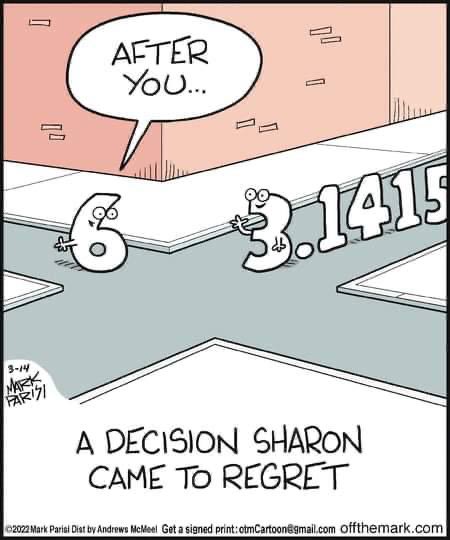
The Feynman point is the name given to the position in the decimal expansion of π where a sequence of six consecutive nines first appears. It is named after the physicist Richard Feynman, who allegedly joked that he would like to memorize the digits of pi up to that point and then say “and so on” as if π. were rational. The Feynman point occurs at the 762nd digit after the decimal point, which is much earlier than expected by chance. ✍️
Sir Isaac Newton's insane study routine ✍️
“He worked seven days a week, 18 hours a day, and he pushed himself even further”
Newton got admitted to Trinity College, Cambridge in the year 1661. In the year 1664, he got a scholarship to study for four more years to finish his MA but in the same year, England was hit by Bubonic plague due to which the University was closed for two consecutive years. Due to this reason, Newton had to go back to his home in Woolsthorpe. These two years turned out to be the most productive and mind-wrenchingly stressful years for Newton. During these two years, he spent most of his days, most of his hours, studying in a room with nothing but lighting candles, loads of books, and notes around. It is reportedly said that he used to get so engrossed in his works that he would forget and skip his meals. During this period, Newton used to spend 16–18 hours a day working and studying in his room totally undistracted. He came up with the theory of gravitation, his significant works in optics, and he also invented calculus during these bubonic plague times at his home. According to biographer Gale Christianson, Newton’s working habits were pathologically addictive and for him, there was no end to the day. He would just keep going on and on and on until he felt exhausted to death.
In the 1680s, when Newton was rigorously working to publish his lifelong works in his book Principia Mathematica, as mentioned by one of Newton’s employees, he would often go to sleep at 2 or 3 in the morning. He barely attended any social events or participated in any recreational activities.
[Full story: https://t.co/ZHbv99rPVY]
[Newton's portrait by Enoch Seeman, courtesy of National portrait Gallery]
.@jk_rowling's carefully phrased definition of “woman” is correct. The gamete-size definition is soundly based in evolutionary theory and has no exceptions – among humans, mammals, vertebrates, animals generally. And she’s right about beetroot.
https://t.co/DPrdyX9uwf
@JenniferSey I've thought about it, but where would I fit it in? After a long day's cooking and shopping for shoes and lipstick, I'm really only fit for a good hormonal cry and bed.
Interested in using projects and collections in Figshare? Our webinar is now available to view on-demand! 🍿
We cover all the basics on grouping sets of items in Figshare and the benefits of doing so. ✅
Catch up now: https://t.co/HIvjr90If0
Congratulations to all participants and winners of the 2023 Visualise Your Thesis! 🏆
We have loved watching all the videos and being part of it all. 🧡
You can watch all of the participating videos from 2023 here: https://t.co/SXQsHQUaTW
@VisualiseThesis@digitalsci#VYT2023
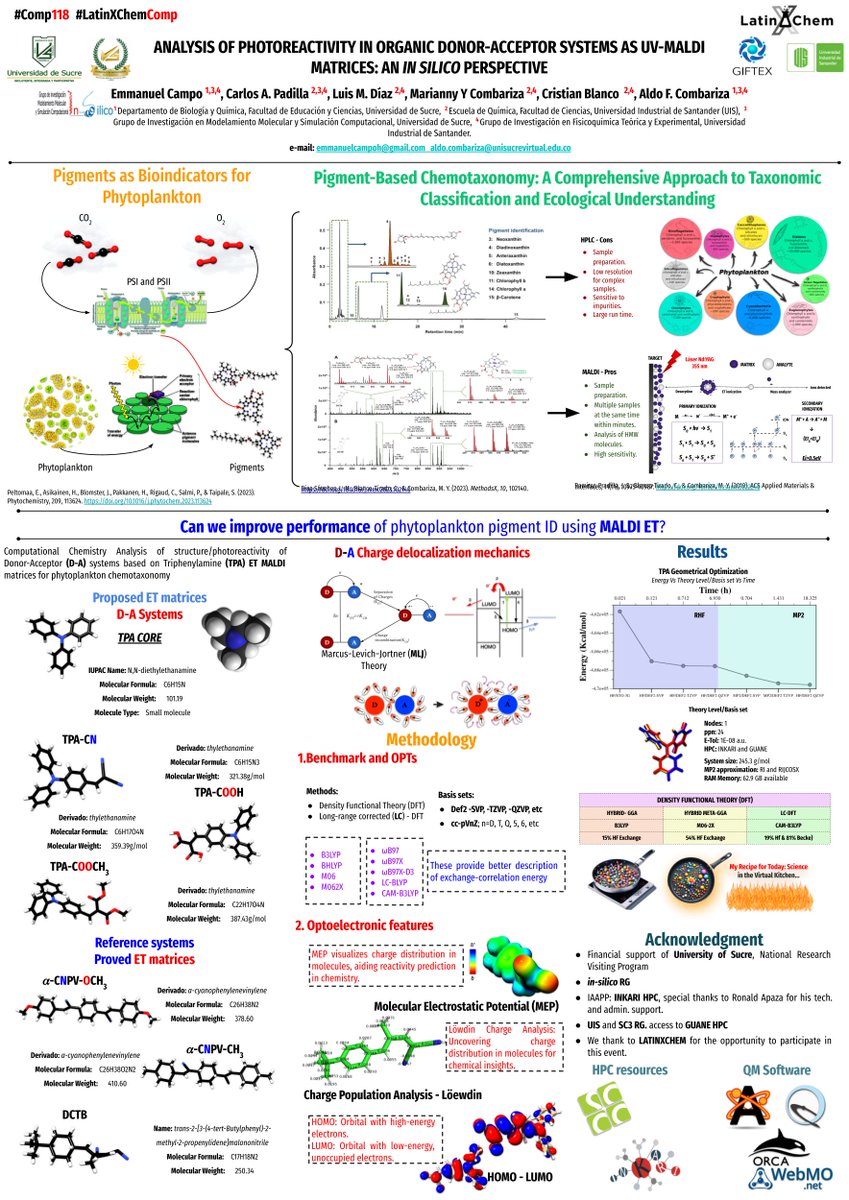
Hello @LatinXChem , I'm Emmanuel Campo, a Biology student. My work is "Analysis of Photoreactivity in Organic Donor-Acceptor Systems as UV-MALDI Matrices: An In Silico Perspective" #LatinXChemComp#Comp118@insilicoRG@Unisucre#LatinXChem23 . Feel free to ask any questions.
Hi @LatinXChem, I'm Maria J. Lara, an agriculture engineering student from Universidad de Sucre, and this is my work "Modeling a Sustainable Future: Creating a Starch Model for Molecular Dynamics" in the field of #LatinXChemComp. Feel free to ask. #Comp078@insilicoRG@unisucre
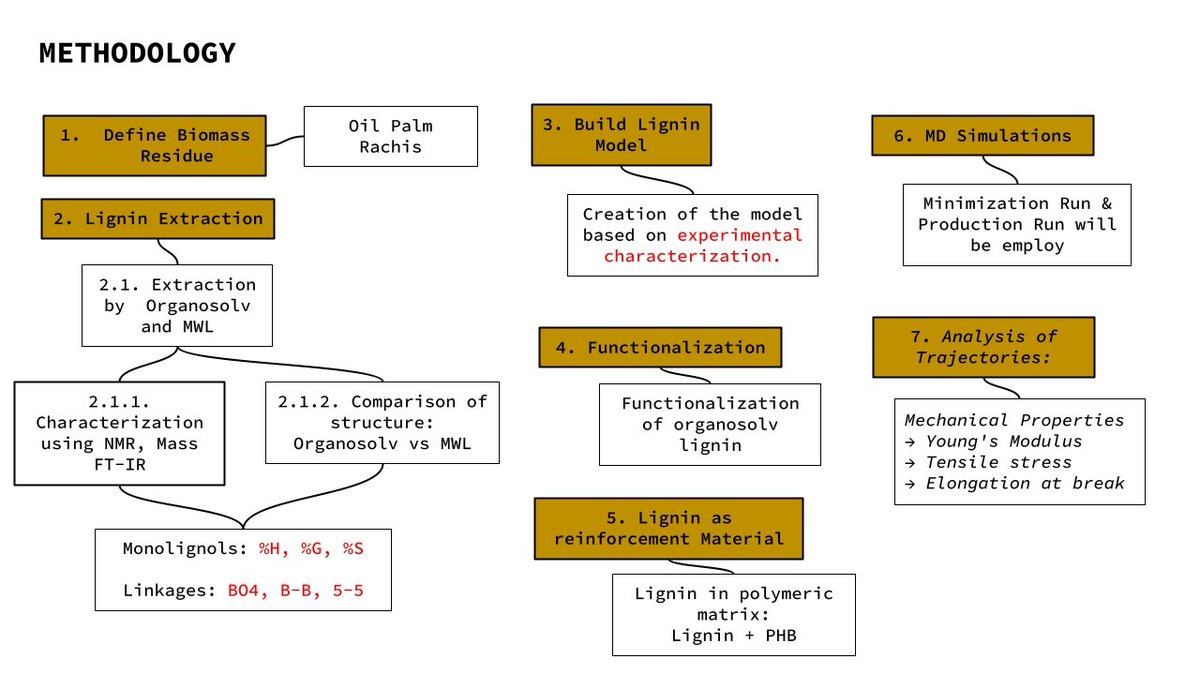
Experimental procedures will be conducted to extract and characterize lignin from oil palm rachis. This data will then be used to construct a computational atomic model, enabling the application of computational techniques in lignin research.
The primary interunit linkages in lignin include the prevalent β–O–4 aryl ether bond (45%–60% of monomer connections), as well as the 5–5 linkage (10%–20%) and β–5 linkage (10%–12%).
Lignin is mainly composed of three distinct 4-hydroxyphenylpropanoids: p-coumaryl, coniferyl, and sinapyl alcohols. These monolignols vary in methoxylation, resulting in p-hydroxyphenyl (H), guaiacyl (G), and syringyl (S) units.
Lignin, the second most abundant biopolymer on Earth, plays a crucial role in providing mechanical reinforcement, UV protection, as well as antimicrobial and antioxidant properties to plants. These characteristics underscore its potential as a reinforcing material in composites.









![PhysInHistory's tweet photo. Sir Isaac Newton's insane study routine ✍️
“He worked seven days a week, 18 hours a day, and he pushed himself even further”
Newton got admitted to Trinity College, Cambridge in the year 1661. In the year 1664, he got a scholarship to study for four more years to finish his MA but in the same year, England was hit by Bubonic plague due to which the University was closed for two consecutive years. Due to this reason, Newton had to go back to his home in Woolsthorpe. These two years turned out to be the most productive and mind-wrenchingly stressful years for Newton. During these two years, he spent most of his days, most of his hours, studying in a room with nothing but lighting candles, loads of books, and notes around. It is reportedly said that he used to get so engrossed in his works that he would forget and skip his meals. During this period, Newton used to spend 16–18 hours a day working and studying in his room totally undistracted. He came up with the theory of gravitation, his significant works in optics, and he also invented calculus during these bubonic plague times at his home. According to biographer Gale Christianson, Newton’s working habits were pathologically addictive and for him, there was no end to the day. He would just keep going on and on and on until he felt exhausted to death.
In the 1680s, when Newton was rigorously working to publish his lifelong works in his book Principia Mathematica, as mentioned by one of Newton’s employees, he would often go to sleep at 2 or 3 in the morning. He barely attended any social events or participated in any recreational activities.
[Full story: https://t.co/ZHbv99rPVY]
[Newton's portrait by Enoch Seeman, courtesy of National portrait Gallery]](https://pbs.twimg.com/media/GWKTOzFasAUB8yq.jpg)