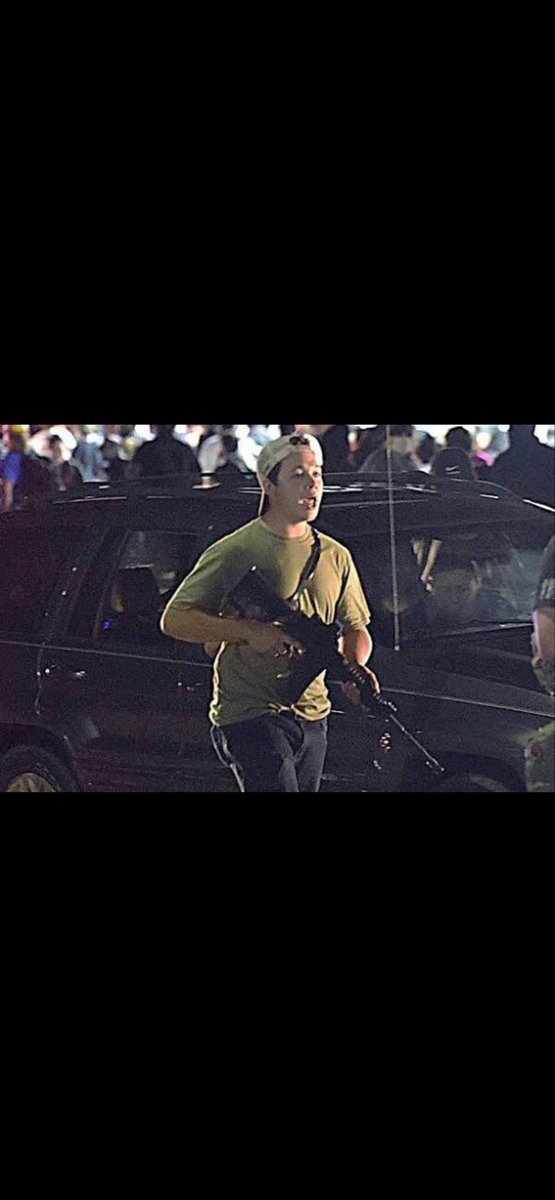
Come on fellow Republican friends! Let me go ahead and end the argument of “he shouldn’t have brought a gun!” Well most all agreed that he made a stupid decision & cost him his life but…Remember defending this guy & screaming 2nd amendment! I did as well! They BOTH had the right!
I have so much to say about this weekend’s Minneapolis killing but it is not my lane on here, and frankly I prefer to discuss it with people in real life. Believe me when I say my heart breaks…but I will stick to my lane. As passions grow, among many of my fears I worry one fundamental dichotomy gets lost:
1) A four-year election cycle is far too short to begin to resolve America’s deep structural problems, in particular the fiscal. The fiscal and monetary policy situation and its effects (like a real wage that has gone nowhere for the median American family over the past 50 years while the Gini coefficient “inequality” exploded) lie at the root of a problem that goes far deeper than for whom one votes and whether that leader is on one’s side. These are the very problems that term limits on Congress would have avoided (it’s easy to vote for long-term ballooning spend and ever larger government when you are long gone from office as those costs come home to roost). This is the one fault line the Founding Fathers missed when they sat down to forge an incredible experiment. For all their creativity and imagination in turning government on its head (of the people, by the people, for the people), the Founders could not conceive that someone would actually want the job. Office was “community service”…it meant time away from a farm or plantation or business, and it cost real money to go to DC for a small stipend a few months out of the year. What a laughable notion today.
2) A four-year election cycle feels too long and out of sync with the speed at which events transpire and information is transmitted and absorbed today. If elections were held tomorrow, the degree of anti-incumbency would probably be epic (“if you thought Mandami was something”).
The unresolvable tension between these two time horizons all but guarantees further legal, regulatory, and other chaos, and as a consequence — capital flight.
This single instance, even a tragic one, is part of a larger trend. The more the US looks like an emerging market, the more I expect we will trade like one.
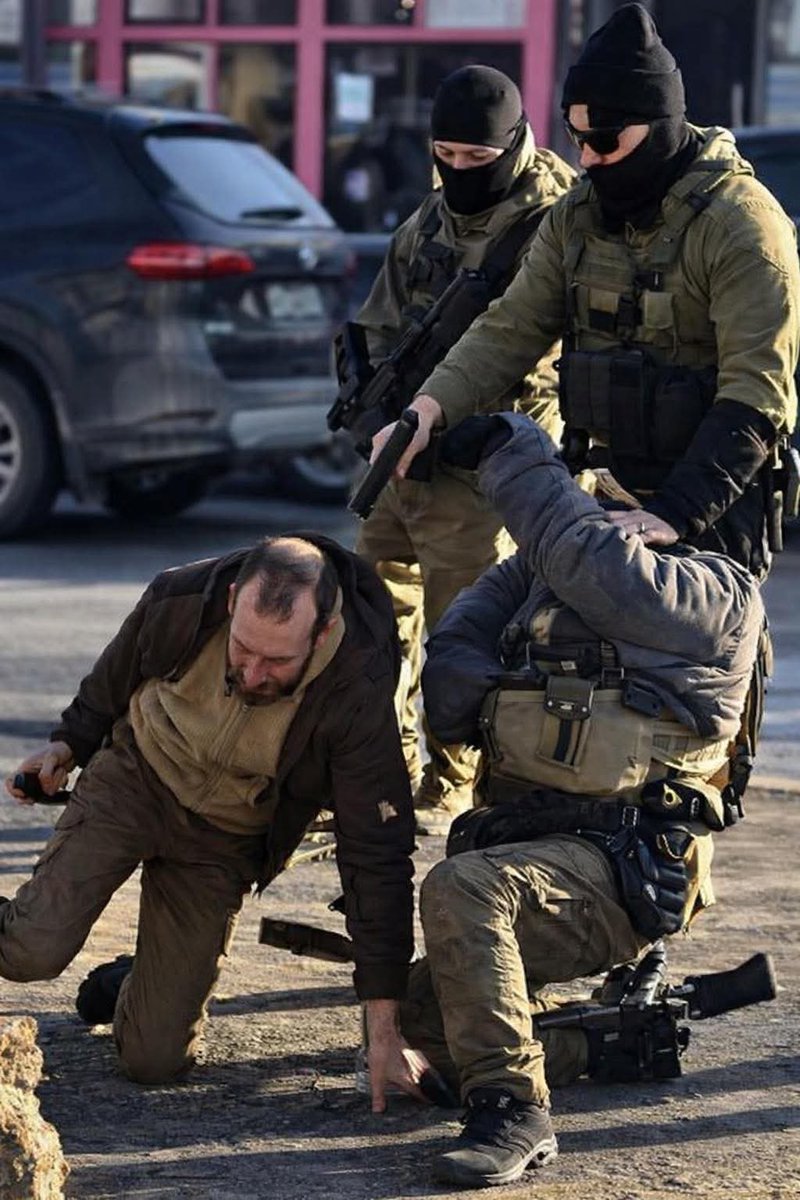
One of these is from Kent State 1970. The other is Saturday morning in front of a Minneapolis donut shop.
Fast forward four years, and I’m not sure the market in 1970 and 2026 won’t trade at dissimilar multiples.
We can confirm Alex Pretti was a nurse at the Minneapolis VA Medical Center. As President Trump has said, nobody wants to see chaos and death in American cities, and we send our condolences to the Pretti family. Such tragedies are unfortunately happening in Minnesota because of state and local officials’ refusal to cooperate with the federal government to enforce the law and deport dangerous illegal criminals.
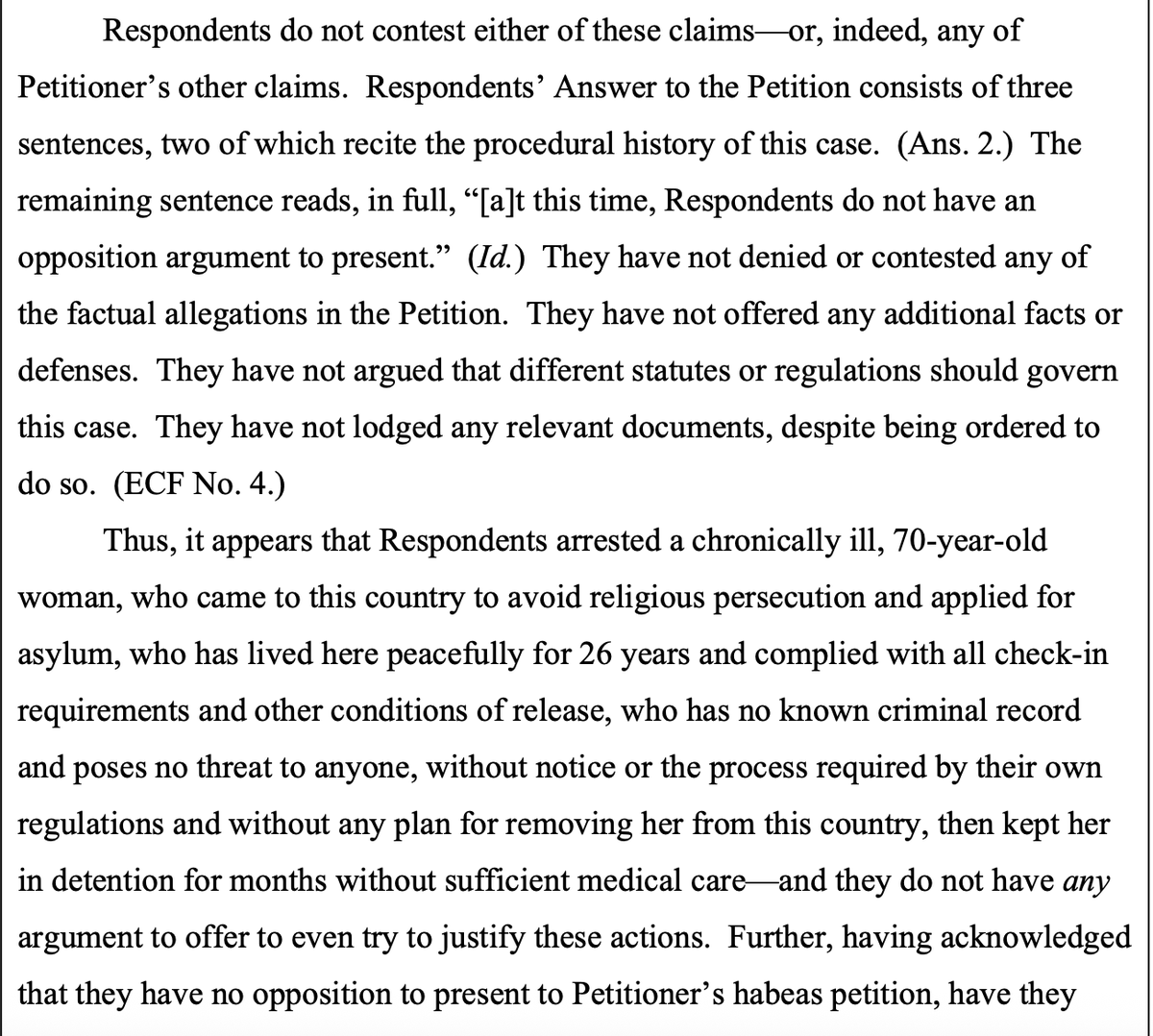
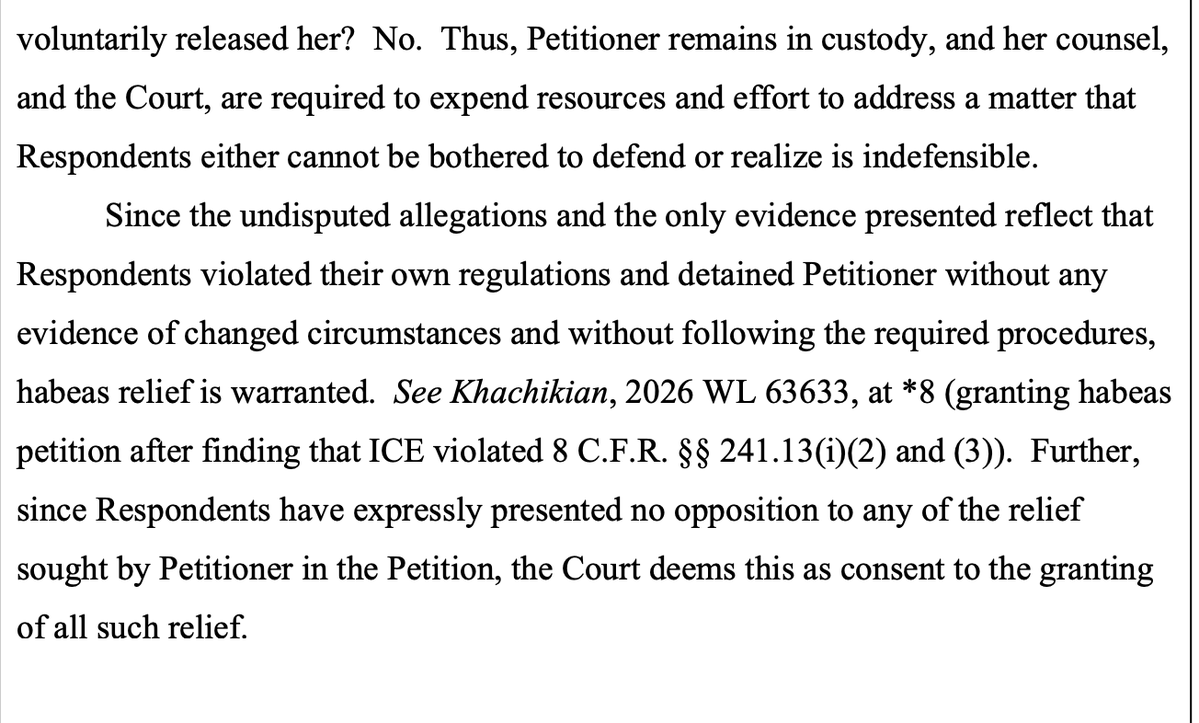
Since July, I've tracked at least 2,300 cases in which federal judges have ruled ICE has illegally detained people without bond or due process.
This is one that stands out:
https://t.co/qSfcJJG5Zv
Who Will Build NYC if Builders Are the Enemy?
As a New Yorker Jew, I'm surrounded by people who have been in real estate their entire lives. I am not trying to feed a stereotype, but that's my reality. They aren't activists or online commentators. They are people who bought their first buildings with all their savings, carried debt through rate hikes, fixed things themselves when there was no money to hire, and stayed in New York through high crime, recessions, 2008, COVID, rising taxes, insurance increases, and an ever-expanding book of laws and codes. None of them were promised fairness before they started, and none of them were protected from risk. They succeeded very slowly, and painfully, but with responsibly.
That experience is exactly what is missing from the worldview of Zohran Mamdani, and it shows in every part of his housing agenda. Mamdani has never built anything. He never signed a personal guarantee, never met payroll, never carried a mortgage through a rough month, never had to choose between fixing a boiler now or hoping it survives another winter because there is no cash. He has only operated in a political world where consequences are abstract and other people absorb the risk. When you have never operated in the real economy, it becomes easy to believe that shortcuts are solutions.
It is also why his message resonates with a certain type of voter. The people demanding “housing reforms” are not bad people. They are frustrated renters who feel like the system is rigged against them. I understand the frustration. But frustration doesn't change math. Housing is hard. Ownership is a very slow process. Building anything meaningful in this city takes years of stress, and debt. The people calling for "landlord policies" often want the outcome without the grind, the stability without the risk, and the reward without the years of sweating that every responsible adult who succeeded here had to endure. But it does not work like that.
NYC is in housing crisis. Citywide vacancy sits around 1.4 percent, a level economists consider an emergency. Median rents keep rising anyway, with Manhattan near $4,800 and Brooklyn around $3,800, even under an already thick layer of regulation. The reason is obvious. Supply has not kept up. In a good year, New York adds roughly 30,000 units. The city needs hundreds of thousands more over the next decade just to stabilize prices. At the same time, construction costs here are among the highest in the country, financing is extremely difficult, and insurance is wildly expensive
Mamdani’s proposals take that fragile situation and make it worse. When you cap upside while leaving downside unlimited, rational people stop participating. Developers do not argue on X. Lenders do not protest. They simply reallocate. Projects stop coming up. Renovations are postponed. New construction dies before a shovel hits the ground. The people I know in real estate are not angry. They are disengaging. Some are buying elsewhere. Some are sitting on cash. Some are done entirely. And when that happens, tenants do not win. Buildings deteriorate, supply tightens further, and rents rise anyway.
What Mamdani offers is emotional satisfaction, not solutions. He tells voters that prices are high because someone else is greedy, not because the city has spent decades making housing harder and almost impossible to build. He frames landlords as villains instead of participants in an ecosystem that only works when incentives align. That framing feels good, but it does not produce housing. It produces resentment, fear, and withdrawal.
Everyone I know who made it in this city did it the same way. Slowly, without shortcuts. Policies written by people who never did that do not create fairness or affordability. They create shortages. NYC doesn't have a landlord problem. It has a confidence problem. And a city that teaches people to hate the builders while demanding more building is a city sabotaging its own future.
‘Financializing’ everything is just a way to create levels of casino capitalism with information advantages for insiders - who then proceed to rip off people who don’t understand the ‘financial products.’
The key lesson of 2008 is to stop trying ‘to financialize everything.’
@MBTA 15 minutes? I got to the platform at government center at 8:54 and got to copley at 9:04. Delayed communication with the cars left us knowing nothing, i wouldve gotten off earlier if you mentioned the issue was prolonged. We stopped at least 3 times for 15 mins each.
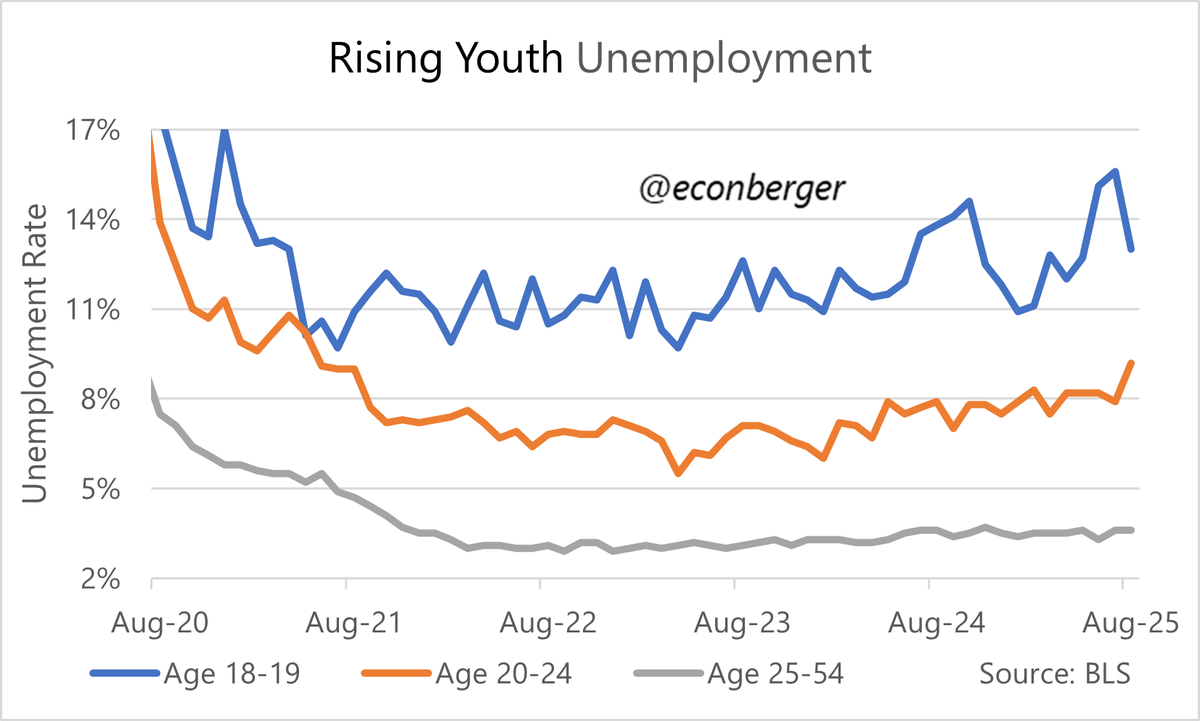
6/ Unemployment for people in their late teens fell in August (and is a little lower than a year ago - very noisy series), but that for people in their early 20s rose to its highest level since the spring of 2021.
"If you're not using AI, you're going to lose your job to somebody who uses AI. That we know for certain."
This isn't about AI replacing humans.
It's about AI-enhanced humans replacing those who refuse to adapt.
The window to position yourself is closing fast:
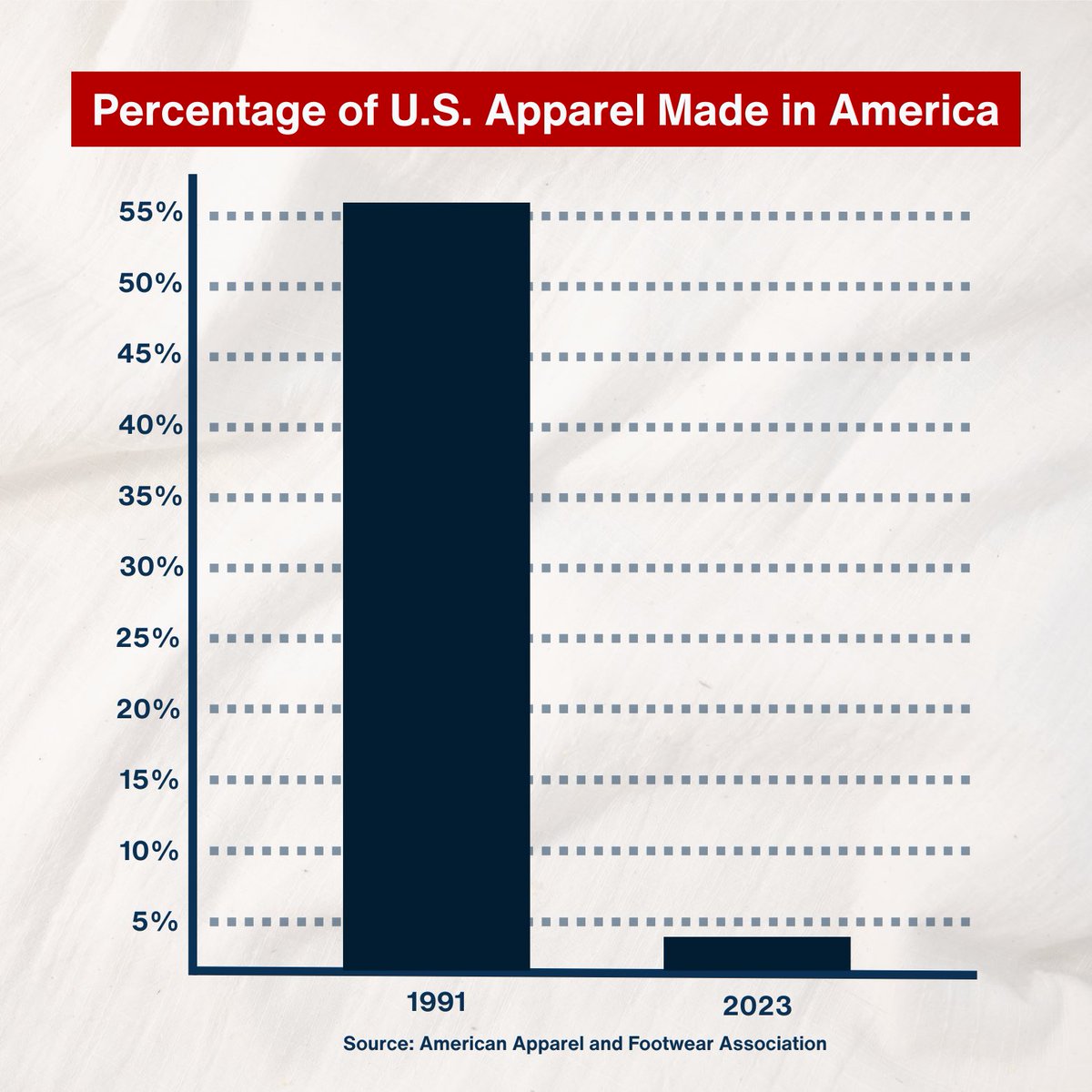
"Made in america is a national security priority" - shows chart of apparel 😂
The argument makes sense for semiconductors and other items, not seeing the connection between apparel manufacturing and national security but hey maybe thats just me
Reviving apparel production in America is not a pipe dream. It was not that long ago we were manufacturing 56% of U.S. apparel in America.
“Made in America” is an economic and national security priority of this administration.
@POTUS’ trade actions are ushering in a reshoring renaissance as companies pledge billions of dollars to expand U.S. manufacturing.
100 days into this presidency, Americans are paying the price - higher prices, crashing retirement accounts, and broken promises.
But the American people are turning, thanks to your voices. Keep it up.
It's up to us to demand something better.
People are going to chase this headline hard come Sunday night and into Monday. Equities are likely to rip higher, and the vol sellers will come out in full force. But then the cold reality will set in—this isn’t the same market regime. The reflexive bid that used to drive equities higher is no longer there.
Why? Because the fuel has been drained. Excess margin has been eroded by recent volatility. Growth expectations will continue to be slashed as global trade remains under pressure from Trump’s policies. And the appetite for U.S. equities? It’s evaporating. Foreign investor confidence has been shaken by the unpredictability and recklessness of these policy shifts.
This is another round of headline-driven musical chairs—nothing more than exit liquidity for smart money that understands the regime has changed. The problem is, too many are still trying to fight that idea because they’ve been conditioned by years of the old playbook.
So yes, dance, my fellow traders. That’s how we get paid. But don’t stay too long at this party. When the music stops and the doors swing open, someone’s getting dragged out in cuffs.
Stocks were going down BEFORE the tariff news (Liberation day), they will continue their decline AFTER this one as well.