Big news from the White House. States with clear, innovation-friendly AI laws will now be better positioned to receive federal support. This could reshape the map for AI investment and research. 🧵
🔗 https://t.co/Zc0JqZItP0
Important work being done by @HouseCommerce to make sure legitimate concerns about data centers are address in the context of facts and American AI leadership. ⤵️
🚨 BREAKING
@HouseCommerce members are calling for an investigation into China’s efforts to stop the development of American AI and data centers.
The 21st century must be led by America, and @HouseCommerce is ensuring that happens.
Read the letter and more ⬇️
https://t.co/6Fdw8lx9CS
Fascinating finding: actively religious Americans may be among the most confident in AI.
They are not standing outside this moment. Many are leaning in and helping shape how these tools serve human flourishing.
https://t.co/ASzU8BPbbG
Thoughtful and balanced perspective by @JDVance on AI.
He’s exactly right. This White House has been committed to establishing safety standards that enable innovation.
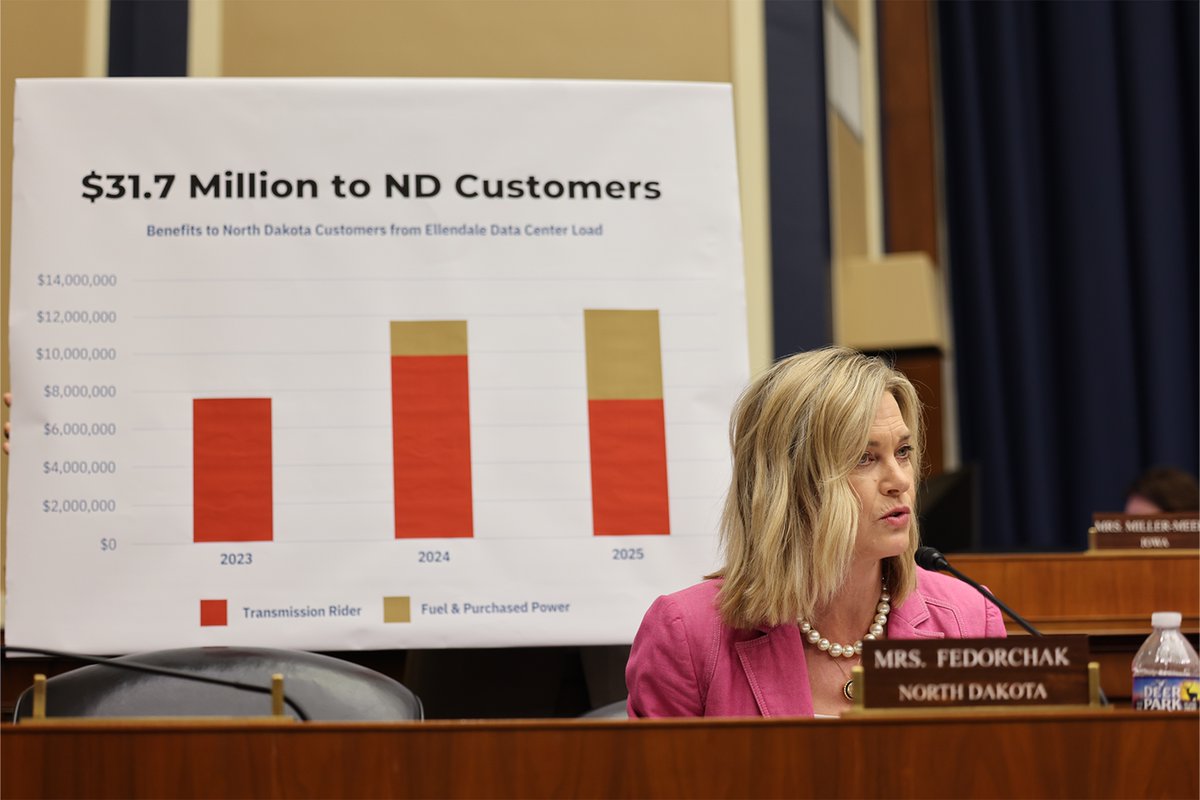
Hate to be the bearer of bad news, but data center usage is a VERY small percentage of electricity costs today. The surge in costs can be attributed to transmission and green energy mandates...
Your utility bill should provide a breakdown of costs each month. If it doesn't, demand transparency...
It is insane the amount of misinformation there is about data centers. @Protectaxpayers launched a new project debunking the myths about data centers on a state by state basis. Maryland is first up.
Big numbers!
New poll finds 69% of voters support President Trump’s AI framework.
Only 19 percent of voters are opposed.
Congress it is time to act.
Great write up by @MatthewFoldi
The is no AI jobs apocalypse.
AI will create jobs and transform the economy for the better if we create the conditions that will allow AI to flourish. Check out the latest from @a16z. to learn more.
⤵️
Slowing data center development would not just affect AI. It would strain the infrastructure behind banking, logistics, manufacturing, health care, cloud services, research, and national security. Less compute means less economic capacity.
There will be no AI jobpocalypse.
The story that AI will lead to massive unemployment is stoking unnecessary fear. AI — like any other technology — does affect jobs, but telling overblown stories of large-scale unemployment is irresponsible and damaging. Let’s put a stop to it.
I’ve expressed skepticism about the jobpocalypse in previous posts. I’m glad to see that the popular press is now pushing back on this narrative. The image below features some recent headlines.
Software engineering is the sector most affected by AI tools, as coding agents race ahead. Yet hiring of software engineers remains strong! So while there are examples of AI taking away jobs, the trends strongly suggest the net job creation is vastly greater than the job destruction — just like earlier waves of technology. Further, despite all the exciting progress in AI, the U.S. unemployment rate remains a healthy 4.3%.
Why is the AI jobpocalypse narrative so popular? For one thing, frontier AI labs have a strong incentive to tell stories that make AI technology sound more powerful. At their most extreme, they promote science-fiction scenarios of AI “taking over” and causing human extinction. If a technology can replace many employees, surely that technology must be very valuable!
Also, a lot of SaaS software companies charge around $100-$1000 per user/year. But if an AI company can replace an employee who makes $100,000 — or make them 50% more productive — then charging even $10,000 starts to look reasonable. By anchoring not to typical SaaS prices but to salaries of employees, AI companies can charge a lot more.
Additionally, businesses have a strong incentive to talk about layoffs as if they were caused by AI. After all, talking about how they’re using AI to be far more productive with fewer staff makes them look smart. This is a better message than admitting they overhired during the pandemic when capital was abundant due to low interest rates and a massive government financial stimulus.
To be clear, I recognize that AI is causing a lot of people’s work to change. This is hard. This is stressful. (And to some, it can be fun.) I empathize with everyone affected. At the same time, this is very different from predicting a collapse of the job market.
Societies are capable of telling themselves stories for years that have little basis in reality and lead to poor society-wide decision making. For example, fears over nuclear plant safety led to under-investment in nuclear power. Fears of the “population bomb” in the 1960s led countries to implement harsh policies to reduce their populations. And worries about dietary fat led governments to promote unhealthy high-sugar diets for decades.
Now that mainstream media is openly skeptical about the jobpocalypse, I hope these stories will start to lose their teeth (much like fears of AI-driven human extinction have).
Contrary to the predictions of an AI jobpocalypse, I predict the opposite: There will be an AI jobapalooza! AI will lead to a lot more good AI engineering jobs, and I’m also optimistic about the future of the overall job market. What AI engineers do will be different from traditional software engineering, and many of these jobs will be in businesses other than traditional large employers of developers. In non-AI roles, too, the skills needed will change because of AI. That makes this a good time to encourage more people to become proficient in AI, and make sure they’re ready for the different but plentiful jobs of the future!
[Original text in The Batch newsletter.]
More news about how AI is changing the medical landscape for the better. We need a national AI framework that will keep these innovations coming, not throttle them.
https://t.co/YDSVvsoXH7
Thank you @HouseCommerce for working to make sure we have the grid to lead the world in AI. Vital work being done by @boblatta. Essential that the United States, not China, wins the AI future.
Last week, Chairman @BobLatta led an Energy hearing on legislation to strengthen our grid and power American AI—without driving up costs for families.
To beat China in the AI race, we need reliable, affordable energy. @HouseCommerce is building the grid to get us there.
AI continues to make incredible medical advances on a regular basis. Let’s empower these developments, and not hold them back. Patients are counting on them.
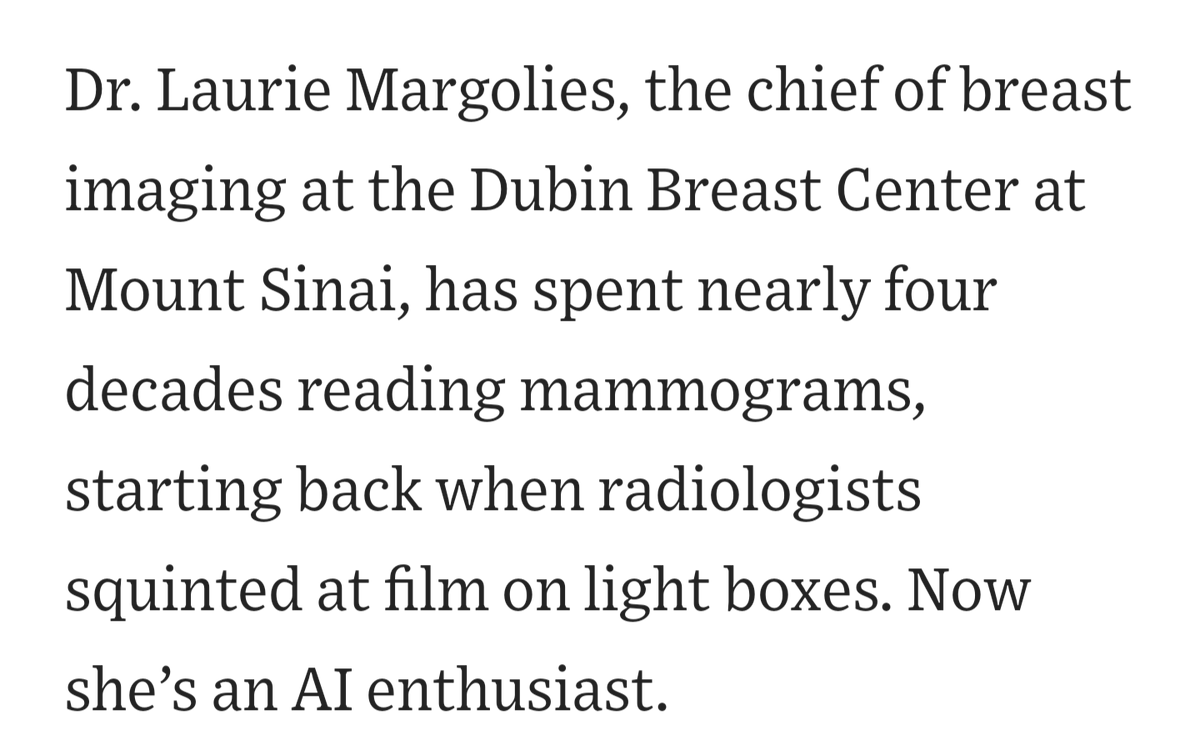
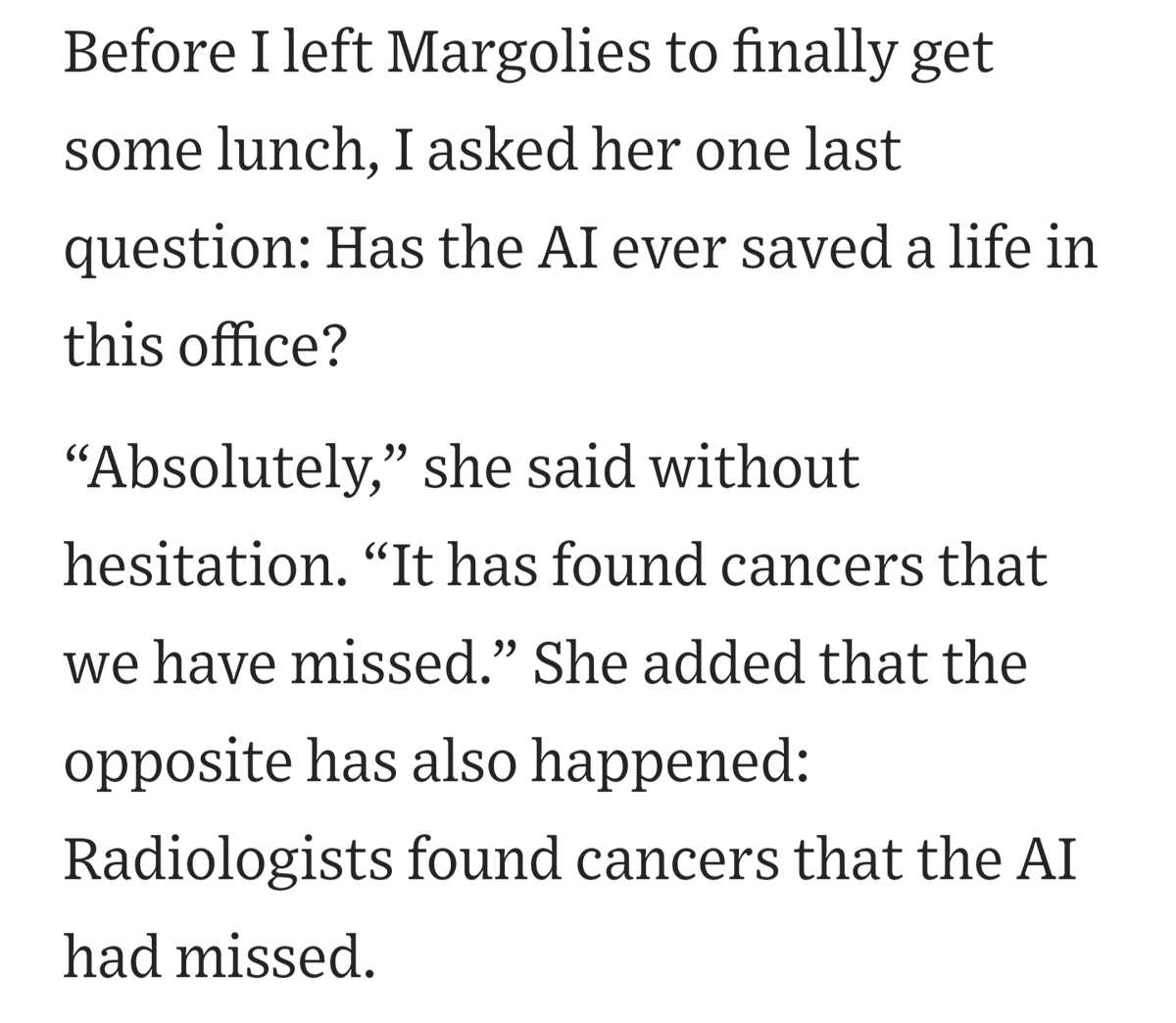
important new @wsj article by @JoannaStern on breast cancer detection and role that AI can play in helping augment human doctors and catching what they might otherwise miss:
This is the present and possible future of AI and health care: making miracles happen. Let's create a national framework that allows health care and AI to thrive.
A Mayo Clinic-developed artificial intelligence (AI) model can help specialists detect pancreatic cancer on routine abdominal CT scans up to three years before clinical diagnosis. It identifies subtle signs of disease before tumors are visible, when curative treatment may still be possible. The findings, published in Gut, mark a milestone in Mayo Clinic's multiyear research effort to enable earlier detection of one of the deadliest cancers.
Learn more: https://t.co/EJySSkaW3P
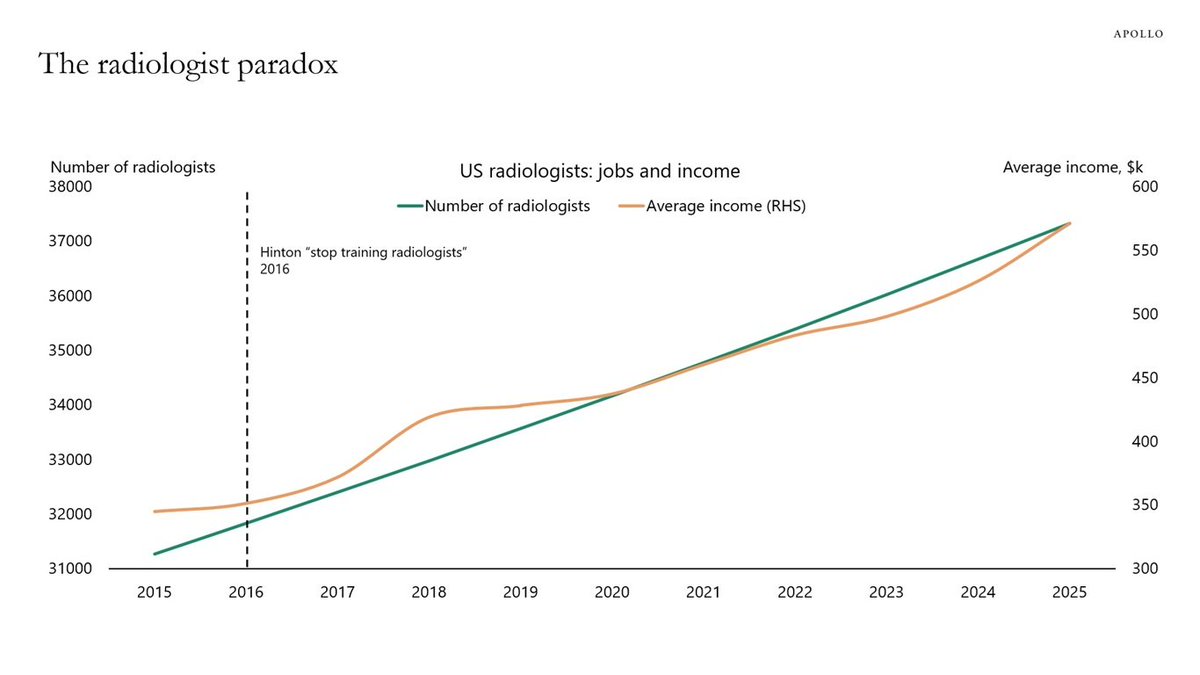
"A decade ago, AI was supposed to replace radiologists. Today, radiologists make more than $500,000 per year, and their employment continues to grow, see chart below. Reading scans is a task, not a job, and when the task gets cheaper, demand for the job grows."
This legislation is a constructive step toward turning the Task Force’s recommendations into action. We welcome bipartisan efforts to advance a pro innovation, pro competitiveness AI agenda that helps secure American leadership.
.@aftfuture congratulates @RepTedLieu and @JayObernolte for building on the bipartisan work of the House AI Task Force and advancing practical solutions to strengthen American leadership in AI.
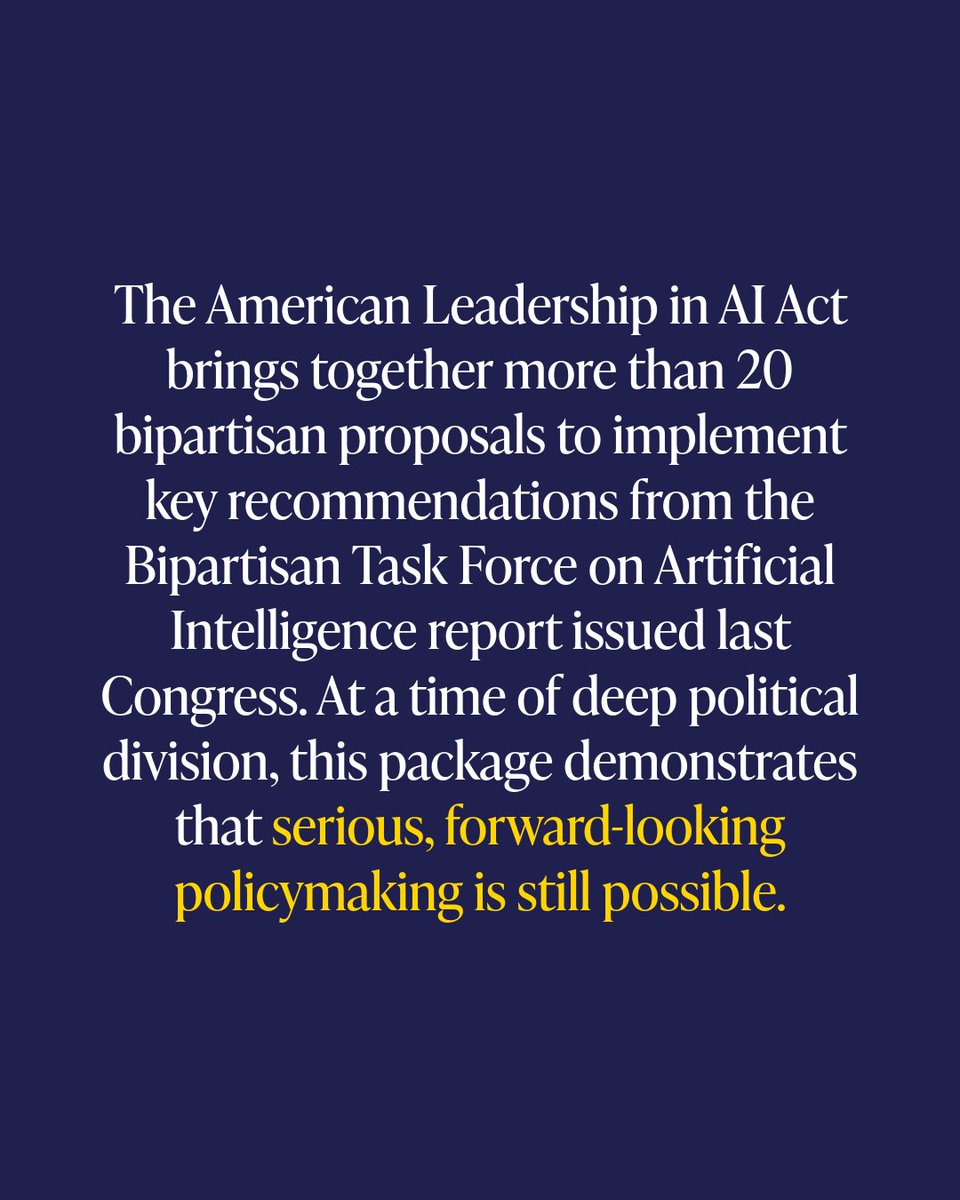
The American Leadership in AI Act brings together over 20 bipartisan legislative proposals to strengthen U.S. leadership in AI.
AI presents a wide range of policy challenges and opportunities, and we should continue working to advance thoughtful solutions.
Read more here: https://t.co/QF3ZgSKrxG
AI policy should protect Americans, support innovation, and keep the United States competitive. That requires serious bipartisan work and a clear national approach to boost U.S. leadership in AI.
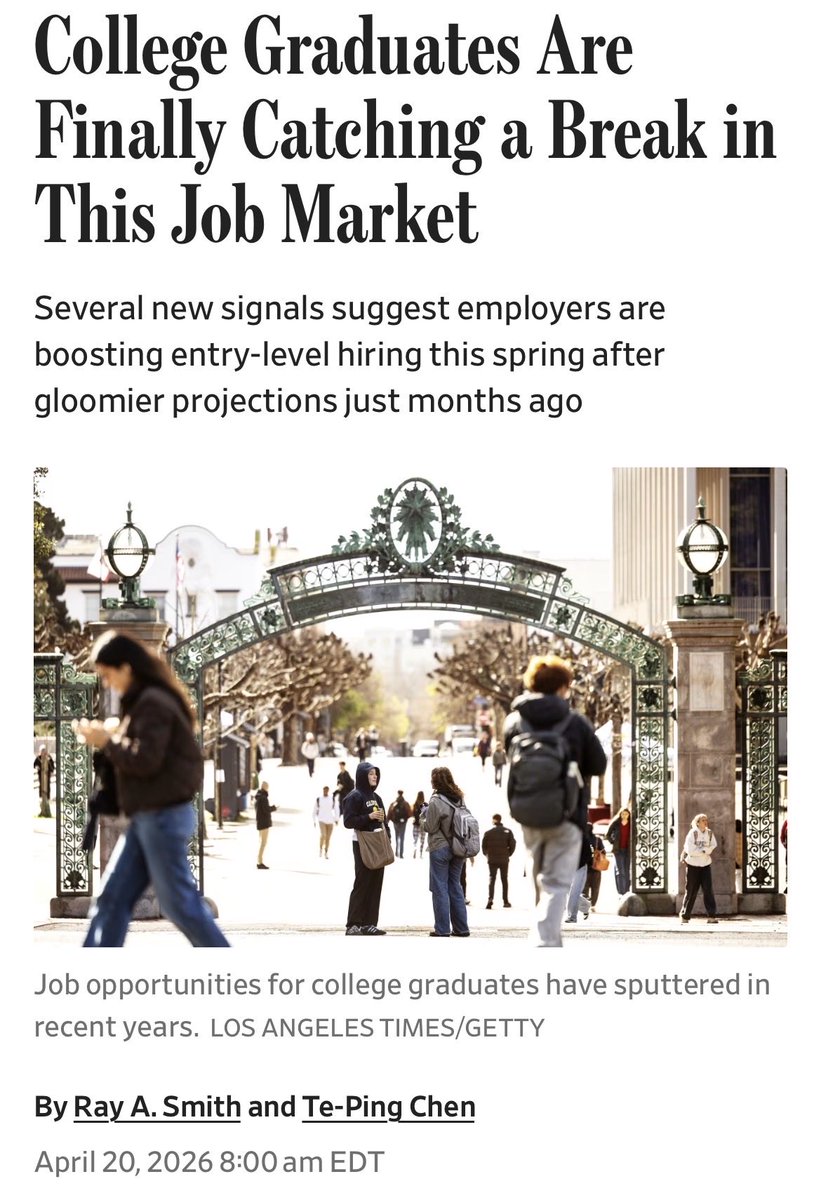
Narrative violation: Hiring of new college graduates is up 5.6% over last year. Youth unemployment for degreed 20–24‑year‑olds fell to 5.3% from 8.9%. Weren’t we told that 50% of entry-level jobs were going away?






![AndrewYNg's tweet photo. There will be no AI jobpocalypse.
The story that AI will lead to massive unemployment is stoking unnecessary fear. AI — like any other technology — does affect jobs, but telling overblown stories of large-scale unemployment is irresponsible and damaging. Let’s put a stop to it.
I’ve expressed skepticism about the jobpocalypse in previous posts. I’m glad to see that the popular press is now pushing back on this narrative. The image below features some recent headlines.
Software engineering is the sector most affected by AI tools, as coding agents race ahead. Yet hiring of software engineers remains strong! So while there are examples of AI taking away jobs, the trends strongly suggest the net job creation is vastly greater than the job destruction — just like earlier waves of technology. Further, despite all the exciting progress in AI, the U.S. unemployment rate remains a healthy 4.3%.
Why is the AI jobpocalypse narrative so popular? For one thing, frontier AI labs have a strong incentive to tell stories that make AI technology sound more powerful. At their most extreme, they promote science-fiction scenarios of AI “taking over” and causing human extinction. If a technology can replace many employees, surely that technology must be very valuable!
Also, a lot of SaaS software companies charge around $100-$1000 per user/year. But if an AI company can replace an employee who makes $100,000 — or make them 50% more productive — then charging even $10,000 starts to look reasonable. By anchoring not to typical SaaS prices but to salaries of employees, AI companies can charge a lot more.
Additionally, businesses have a strong incentive to talk about layoffs as if they were caused by AI. After all, talking about how they’re using AI to be far more productive with fewer staff makes them look smart. This is a better message than admitting they overhired during the pandemic when capital was abundant due to low interest rates and a massive government financial stimulus.
To be clear, I recognize that AI is causing a lot of people’s work to change. This is hard. This is stressful. (And to some, it can be fun.) I empathize with everyone affected. At the same time, this is very different from predicting a collapse of the job market.
Societies are capable of telling themselves stories for years that have little basis in reality and lead to poor society-wide decision making. For example, fears over nuclear plant safety led to under-investment in nuclear power. Fears of the “population bomb” in the 1960s led countries to implement harsh policies to reduce their populations. And worries about dietary fat led governments to promote unhealthy high-sugar diets for decades.
Now that mainstream media is openly skeptical about the jobpocalypse, I hope these stories will start to lose their teeth (much like fears of AI-driven human extinction have).
Contrary to the predictions of an AI jobpocalypse, I predict the opposite: There will be an AI jobapalooza! AI will lead to a lot more good AI engineering jobs, and I’m also optimistic about the future of the overall job market. What AI engineers do will be different from traditional software engineering, and many of these jobs will be in businesses other than traditional large employers of developers. In non-AI roles, too, the skills needed will change because of AI. That makes this a good time to encourage more people to become proficient in AI, and make sure they’re ready for the different but plentiful jobs of the future!
[Original text in The Batch newsletter.]](https://pbs.twimg.com/media/HIIb1VGaUAAZoAB.jpg)