We have introduced the Bitcoin Banking Adoption Index.
Major-bank Bitcoin adoption is accelerating, but still early: 32% overall as measured by the index. $BTC
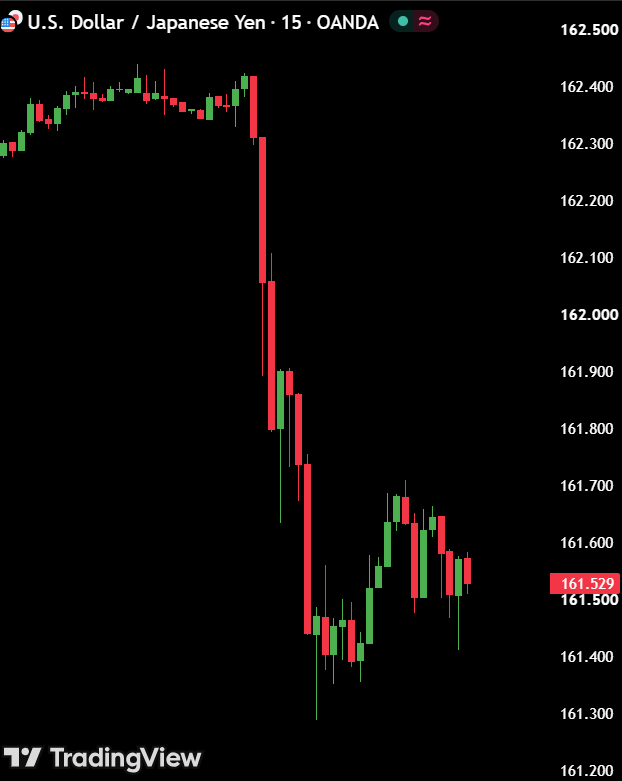
🚨 BOJ HAS STARTED TO STRENGTHEN THE YEN
And it's something that will impact every asset holder.
Today, Japan's Finance Minister Satsuki Katayama said that Japan is seeking to encourage its Government Pension Investment Fund to boost investment in domestic assets.
She also hinted at "yen repatriation," where Japanese investors, corporations, and institutions sell foreign assets to convert them back into Japanese yen.
Currently, Japan has over $1T+ in foreign assets, and their goal is to sell them for yen.
Most of these foreign assets are T-bills or USD, which means selling them could spike the US bond yields.
Additionally, this action will trigger a yen carry unwind similar to the one in August 2024, which rattled the markets.
BREAKING: Japan's 10-Year government bond yield has surged to 2.83%, its highest level in 29 years.
Japan's 10-Year bond yield is up 9.1 bps in the last four weeks and 137.4 bps over the past year.
Rising bond yields are a warning sign for risk assets.
Elon Musk acabou de provar que a propriedade na América é uma ficção legal.
Musk: “Você é tributado pelo que ganha, tributado pelo que compra e tributado pelo que possui.”
Pense no que o imposto predial realmente significa.
Você trabalhou por décadas. Pagou tudo integralmente. A escritura está em seu nome.
Pare de pagar à governo sua taxa anual. Veja-os tomarem e venderem para alguém que pagará.
Você nunca possuiu aquela casa. Você estava apenas alugando de uma entidade com a qual nunca assinou um contrato.
O imposto de renda conta a mesma verdade em uma embalagem mais suave.
O governo não toma uma porção dos seus ganhos. Eles decidem quanto do seu próprio trabalho você tem permissão para manter.
Isso não é semântica. É uma confissão de quem o sistema acredita que seu tempo pertence primeiro.
O imposto sobre vendas enterra-se no recibo. Duas pessoas trocam valor voluntariamente. Um terceiro que não contribuiu nada leva uma fatia simplesmente por permitir que isso aconteça.
Agora empilhe todos os três.
Tributado quando você cria. Tributado quando você gasta. Tributado quando você segura. Tributado novamente quando você morre e tenta passá-lo para seus filhos.
Em nenhum ponto desse ciclo o sistema reconhece sua produção como sua.
Porque o dinheiro não é uma abstração. É a vida humana cristalizada.
Todo dólar tributado é uma hora que você já viveu, já sangrou por ela, já se foi.
O Estado não está gerenciando uma economia. Está reivindicando domínio sobre o tempo que você nunca recuperará.
E gastando em sistemas que você nunca pediu e ativamente se opõe.
A instituição que extrai tudo isso não enfrenta nenhuma obrigação de desempenho. Um contratado que não entrega nada é demitido. Uma burocracia que queima trilhões recebe um aumento de orçamento no próximo ano fiscal.
A SpaceX paga impostos às agências que obstruem seus lançamentos. A Tesla financia os reguladores que redigem regras para proteger seus concorrentes.
Os construtores não estão subsidiando o governo. Eles estão financiando seu próprio atrito.
O código tributário tem 74 mil páginas. Não porque a economia exija isso. Porque a extração teve que ser enterrada em complexidade suficiente para que você parasse de perguntar para quem ele foi desenhado para proteger.
O passado pertencia às pessoas que tributavam o mundo.
O futuro pertence às pessoas que o constroem.
FT Exclusive: BlackRock has limited withdrawals from one of its flagship private credit funds following a surge in redemption requests, as investors retreat from the asset class and questions about credit quality intensify. https://t.co/WbyvWSweL7
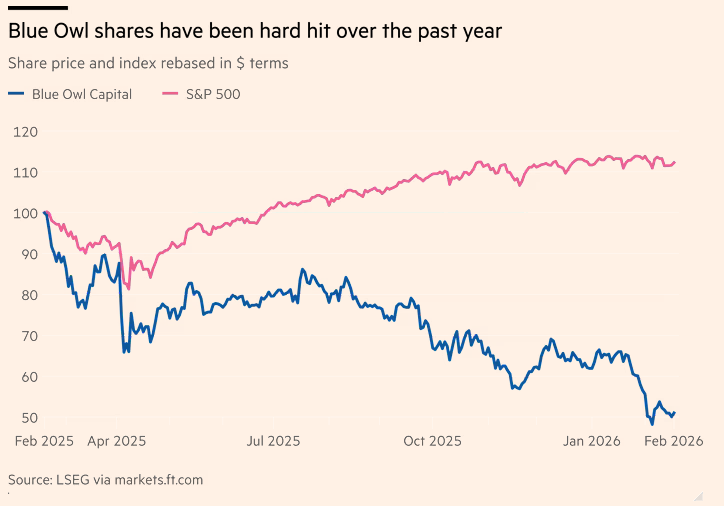
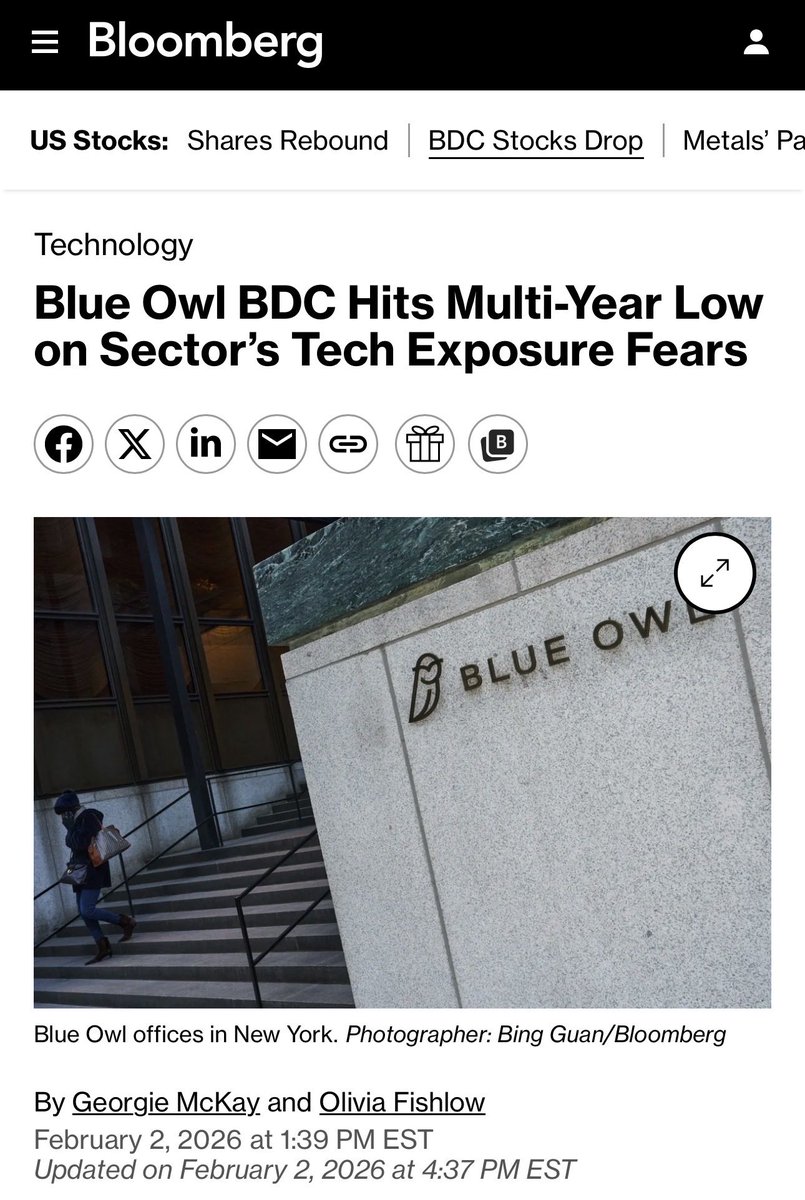
Shares of Blue Owl Capital are on track for their biggest monthly decline in nearly four years, as investor anxiety grows over turbulence in the $1.8 trillion private credit industry. https://t.co/wTKcpHADQx
🚨BIG WARNING: THE FIRST MAJOR DOMINO HAS FALLEN.
Today, Blue Owl Capital announced that it permanently halted redemptions for Blue Owl Capital Corp II (OBDC II), its $1.7 billion private credit fund aimed at retail investors.
And this is not a small thing.
Blue Owl Capital is a major alternative asset manager with $307.5 billion in AUM.
The reason they are permanently halting redemptions for Blue Owl Capital Corp II (OBDC II) is to manage a "liquidity mismatch" caused by a surge in withdrawal requests.
But isn't this issue related to Blue Owl only?
Well, this is certainly not the case.
Blue Owl’s move to permanently restrict redemptions is signalling broader stress in $3 trillion private credit market.
Here are a few warning signs:
Roughly 40% of direct lending companies are generating negative free operating cash flow.
30% of companies with debt maturing before 2027 have negative EBITDA, making them extremely difficult to refinance.
Default rates for middle-market (MM) borrowers have reached 4.55% and are only rising .
Downgrades have outpaced upgrades for seven consecutive quarters.
If the stress continues in the private credit market, it'll first impact the small businesses for whom the private credit market is a critical funding source.
Additionally, it'll cause refinancing costs to go up and will result in more defaults, which will create a vicious cycle.
The only way to stop this is by lowering interest rates and providing liquidity.
This is probably why the Fed pumped $18 billion into the economy overnight, as more entities are experiencing a liquidity crunch.
But this amount is too small to stop stress in the private credit market.
The Fed would have to go full dovish here, or the dominos will continue to fall.
🚨Private credit is flashing a warning sign last seen before the Great Financial Crisis:
Blue Owl Capital permanently halted investor redemptions at its retail private credit fund, OBDC II, backtracking from an earlier plan to reopen withdrawals.
The fund has been closed to redemptions since November 2025 after a failed merger that would have forced investors to take a -20% hit.
Redemptions in Q3 2025 nearly DOUBLED to $60 million, or 6% of the net asset value, forcing the firm to sell -$1.4 billion in credit assets across 3 funds.
The $1.4 billion portfolio sold spans 128 companies across 27 industries, with 13% of the loans concentrated in internet and software businesses, sectors increasingly vulnerable to AI disruption.
This comes as scrutiny into private credit loan quality intensifies after a string of high-profile defaults.
In August 2007, BNP Paribas freezing 3 funds due to "complete evaporation of liquidity" became the first domino of the Global Financial Crisis.
Blue Owl is not BNP Paribas, and private credit is not subprime mortgages, but the pattern of locking investors out when redemptions surge is familiar.
When a fund stops letting investors leave, it is no longer a liquidity issue.
It is a solvency question.
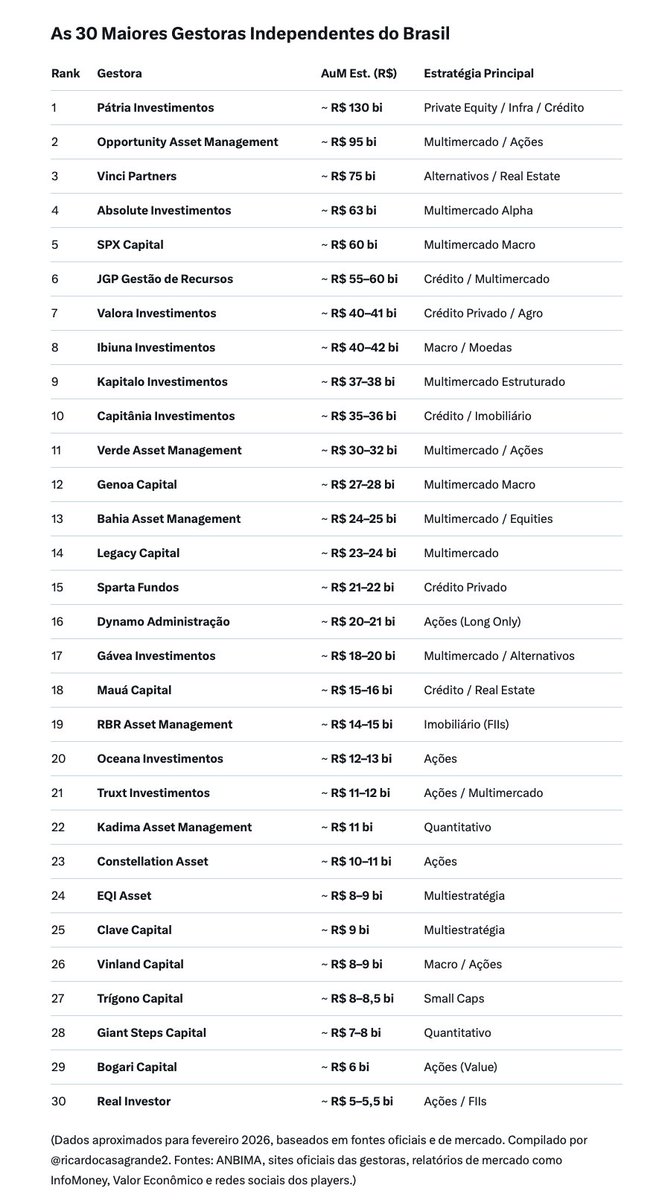
As 30 Maiores Gestoras Independentes do Brasil (AuM)
Fontes: ANBIMA, sites oficiais das gestoras, relatórios de mercado como InfoMoney, Valor Econômico e redes sociais dos players.)
Private lenders holding $100 billion in software loans are nervous
“…The selloff reflects a deepening anxiety over exposure to a sector currently being upended by artificial intelligence.
Fears of disruption have rattled credit globally, prompting software loans in the broadly syndicated market to trade off around 4 points last week.
An index that tracks software shares plunged 15% in January, its biggest monthly decline since October 2008.
“Software is the largest sector exposure for BDCs, at around 20% of portfolios, making the industry particularly sensitive to the recent decline in software equity and credit valuations,” Barclays analysts including Peter Troisi wrote in a note on Monday.
The total exposure was about $100 billion in the third quarter of last year, the analysts said, citing PitchBook data…..”
https://t.co/yBynIPTSK3
@rafaelgloves@nikolas_dm@FlavioBolsonaro Eu acho que foi ao contrario Nikolas deve ter falado: seu pai perdeu as eleições para o Lula com a maquina publica nas mãos
@FlavioBolsonaro chegou sua hora de eu te treinar nas redes sociais disse Nikolas
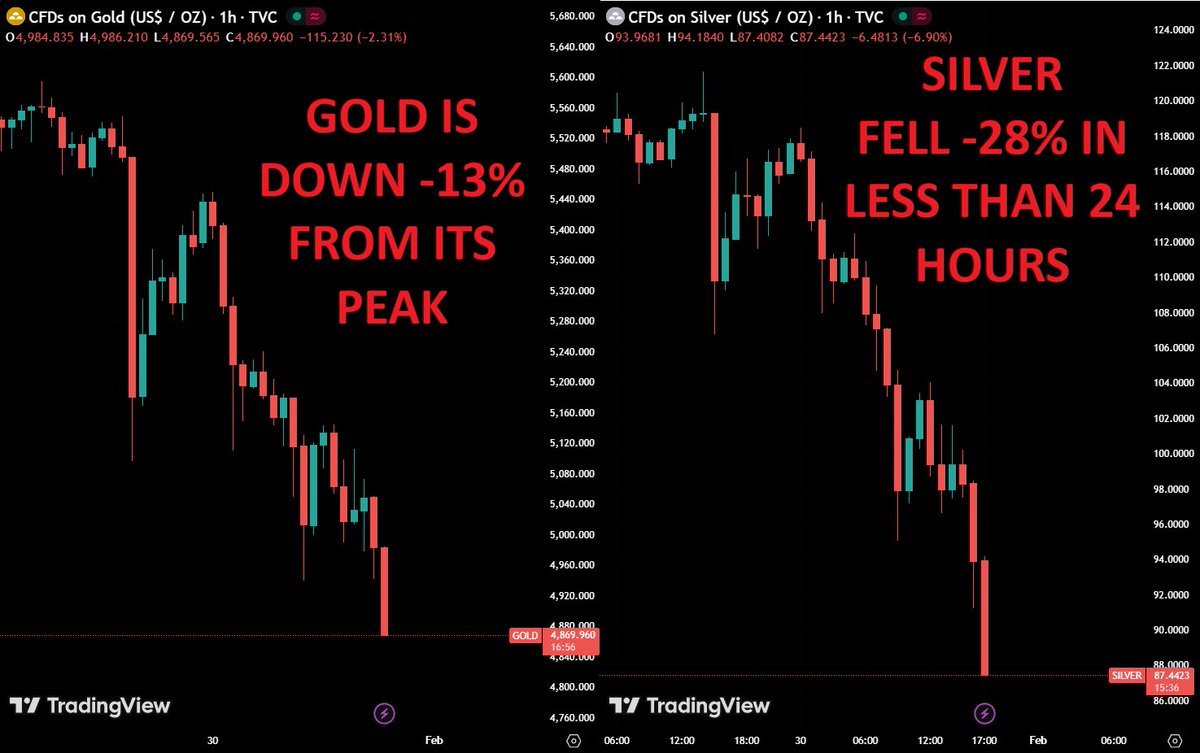
⚠️PRECIOUS METALS BLOODBATH IS UNPRECEDENTED:
Silver has dropped -28% in less than 24 HOURS erasing 2 weeks of gains.
Gold has declined -13% from its peak and entered an official correction.
From EXTREMELY overbought to short-term oversold in one day.
Where is the floor?
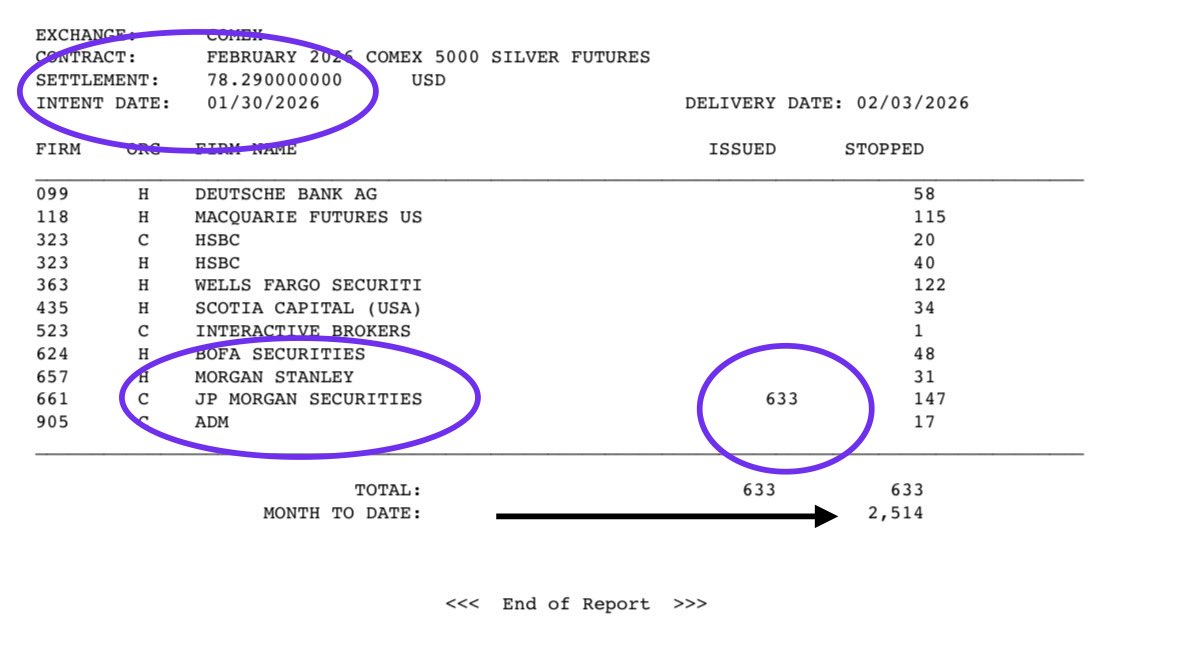
If you look carefully into the latest Comex report, $JPM closed its silver shorts EXACTLY at the very bottom of the price crash and from there it all started to come back up
This isn’t coincidence
This isn’t conspiracy theory
This is the proof the whole Friday crash was planned
SURREAL🔴
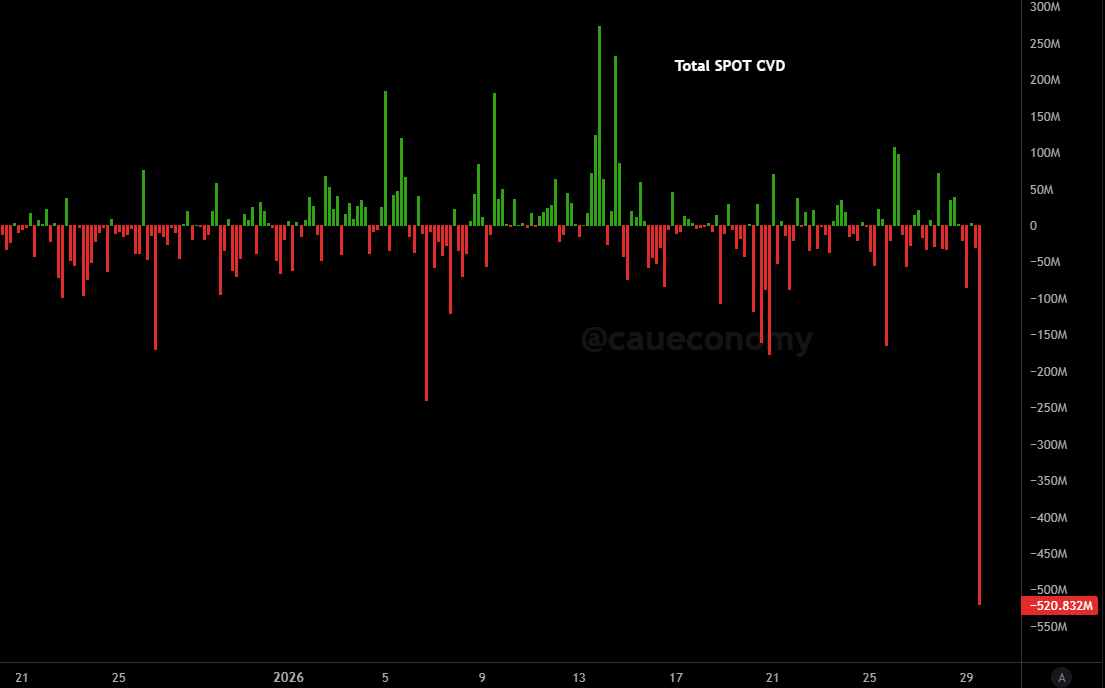
A atual queda no bitcoin registrou o MAIOR VOLUME de venda SPOT desde julho de 2025.
Mais de meio BILHÃO em dominância vendedora agregada entre exchanges em apenas 4 horas.
O que estaria catalizando esse movimento nos mercado? Deixa tua opinião.