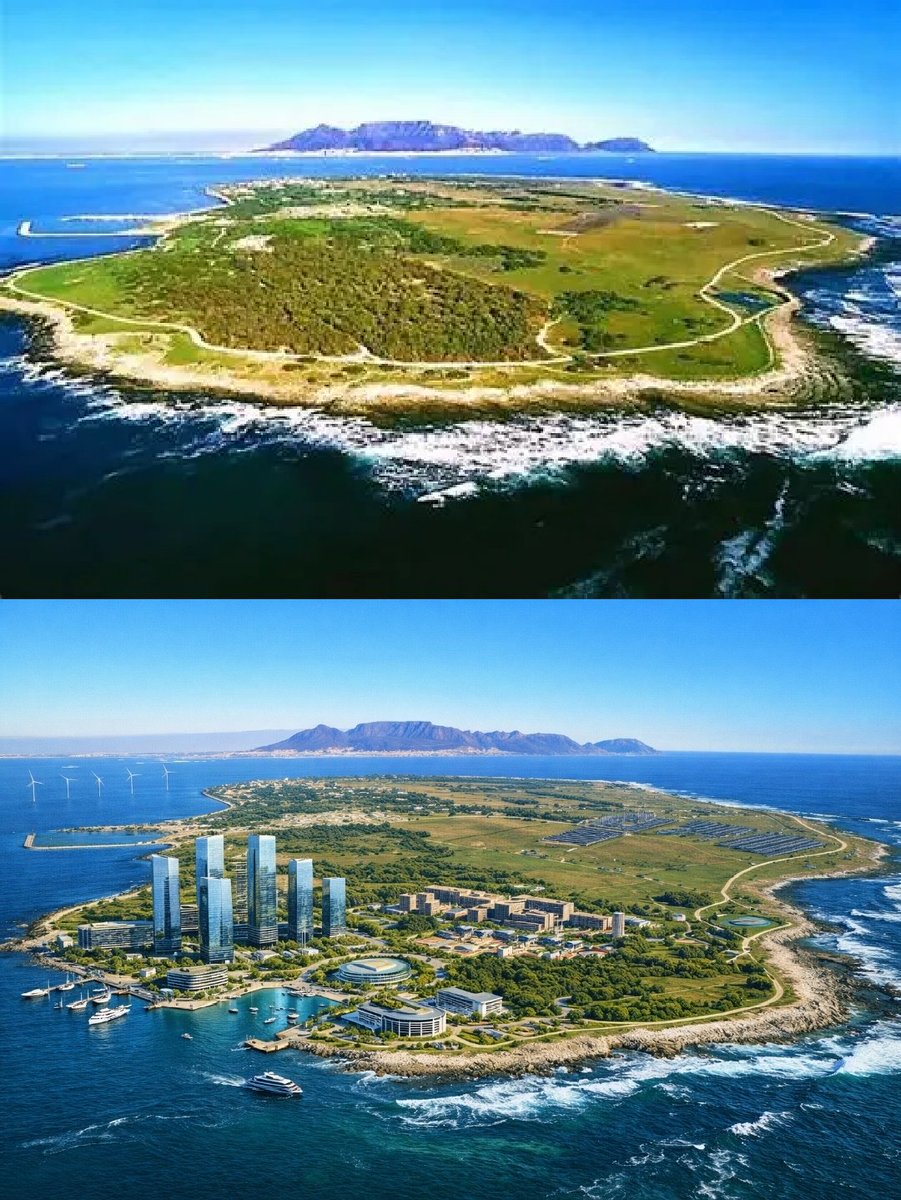
Take a tour of Paarden Eiland’s first-ever residential development🏗️
Maritime Place is a 334-apartment mixed-use development nearing completion and is completely SOLD OUT.
This is a massive project for any suburb, but it’s specifically fascinating to me because, for the first time, this mixed-use building is sure to be the catalyst for what will become an exciting new neighbourhood to live in, only 10 minutes away from Cape Town.
When the apartments launched, they sold for between R950 000 and R3.2 million. Today, rental listings start from:
• Studio - From R9950
• One Bedroom - From R14 950
• Two Bedroom - From R17 950
• Three Bedroom - From R22 950
Details about the development:
• Storeys: 12
• Apartments: 334
• Parking bays: 189
• Architect: Bruce Wilson
• Developer: Rawson Developers
• Completion date: December 2026
• Development Name: Maritime Place
• Residential elevators: 3
• Location: on the corner of Marine Drive and Amphion Street, Paarden Eiland, Cape Town
• Amenities include: fitness centre, swimming pool, kids’ play area, braai pods, co-working space, restaurant and cafe.
There is virtually no undeveloped land left in Paarden Eiland. Over the past decade, I've seen several proposals to introduce residential developments into the area, but none have reached this stage.
Maritime Place has proved itself successful, and I think we'll start seeing more residential projects emerge, especially along Marine Drive.
Paarden Eiland remains one of Cape Town's strongest-performing industrial precincts. Its location between the CBD and the Port of Cape Town keeps demand consistently high. Industrial rentals currently range between R75 and R130/m² (excluding VAT), while vacancy rates remain below 3%.
I can see residential, industrial and retail co-existing and complementing each other very well here. When this development takes off, it will be the start of a trendy neighbourhood. It reminds me, in some ways, of New York's SoHo. It has the potential to combine cafés, restaurants, and creative spaces with the energy of a working industrial district.
Can’t wait to see the final product any day now.
Policymakers need to “acknowledge that, as the energy system has changed since the 1970s, so too has the way energy shocks reverberate around the world, and the measures needed to safeguard against them,” argue @JasonBordoff and Meghan O’Sullivan.
https://t.co/41ZYh9UxTB
Following a number of requests, I’ve extended my analysis comparing “Real Total GDP Growth” against “Real Per Capita GDP Growth”, both on an inflation-adjusted basis.
It’s to be recalled that a few days ago, I posted on X about the fastest-growing economies by nominal (non-inflation-adjusted) GDP, 2005–2025. My analysis today strips out the effects of inflation and currency movements to isolate real economic growth and, separately, growth in output per person, which is a better proxy.
Result: China and Ethiopia lead both rankings even after adjusting for inflation.
That consistency matters. It indicates their growth reflects genuine expansion in real output, not inflationary noise or currency effects inflating the nominal figures.
China’s economy grew 330% in real terms over the past 20 years. Its population barely moved, up just 9%. That means almost all of that growth landed as real income gains for actual people: GDP per capita grew 295%, nearly matching the headline number.
Ethiopia tells a similar story at an even more extreme scale. Its economy grew 480%, one of the fastest real growth rates in the world, while its population grew 67%. Even with a lot more people to share the gains, per-capita income still grew 247%. The growth was big enough to outrun a rapidly growing population.
Ethiopia is genuinely an outlier, not just among all African countries but specifically among the largest African economies. None of the other major economies (South Africa, Nigeria, etc.) on the continent came close to replicating both the scale and the per-capita translation of its growth over this period despite its huge population of 135 million people, the 10th largest in the world.
Ethiopia Note (Personal Assessment): The country is well positioned to sustain its high growth trajectory, 9.2% per the IMF’s 2026 forecast, with the government projecting over 10%, supporting a realistic, near-term path to nominal middle-income status. On a PPP-adjusted basis, available data indicates Ethiopia has already achieved this threshold.
Part 1: Fastest-growing economies (total real, inflation-adjusted)
1.Ethiopia +480%
2.China +330%
3.Uzbekistan +291%
4.Qatar +263%
5.India +238%
6.Vietnam +236%
7.Bangladesh +226%
8.Ghana +205%
9.Ireland +173%
10.Indonesia +165%
11.Philippines +164%
12.Turkey +158%
13.Dominican Republic +155%
14.Kenya +150%
15.Singapore +142%
Part 2: Fastest-growing GDP per capita (real, inflation-adjusted)
1.China +295%
2.Ethiopia +247%
3.Uzbekistan +187%
4.Vietnam +171%
5.Bangladesh +165%
6.India +163%
7.Indonesia +114%
8.Ireland +111%
9.Poland +108%
10.Turkey +105%
11.Taiwan +105%
12.Dominican Republic +103%
13.Romania +101%
14.Ghana +98%
15.Philippines +97%
Part 3: Africa’s Fastest-Growing Economies by GDP Per Capita (2005–2025, Inflation-Adjusted):
1.Ethiopia +247%
2.Ghana +98%
3.Egypt +65%
4.Morocco +57%
5.Kenya +57%
6.Nigeria +33%
7.Algeria +19%
8.Angola +9%
9.South Africa +8%
Among the world’s 75 largest economies. Source: IMF World Economic Outlook, real GDP at constant prices.
The Atlantic:
„One of the most detailed analyses of this possibility, at least in the public domain, comes from an obscure research institute in Prague called the European Values Center for Security Policy. Its 35-year-old director, Jakub Janda, told me that he began studying the idea of a “dual-theater” war in Europe and Asia after the institute opened an outpost in Taipei, in January 2022. At the time, the risk of a coordinated attack from Russia and China seemed remote or, as Janda put it, “not a major consideration.”
That began to change the following month, when Russian tanks rolled into Ukraine. Putin had visited Beijing less than three weeks before he ordered the invasion. He has since made at least four more visits to China, and another one is planned for November. Throughout this period, China has become the main supplier of technology to the Russian weapons industry while propping up the Russian economy through the purchase of oil and gas. Although they have no mutual-defense pact, Russia and China hold regular military drills to help keep their forces in sync. The first war game to simulate a joint attack from both of them took place at Janda’s institute in the spring of 2024. Finding experts with enough background knowledge to participate proved difficult for him. Most research institutions and think tanks have separate teams that specialize in their own regions, he said. “They work in their silos, with different expertise.”
Over time, the participants grasped the way that wars in Asia and Europe could overlap and reinforce one another. The institute has already held roughly 20 rounds of war games on this topic, gathering experts in a variety of countries, including Japan and South Korea. The results have been particularly alarming, Janda said, for the Europeans. In almost every two-front scenario that he has studied, the U.S. prioritizes the Chinese threat and transfers military resources from Europe to Asia, leaving its NATO allies to defend themselves against Russia.
In one hypothetical case, China begins the war slowly by banning the export of raw materials to Europe’s defense sector. It maintains the embargo for five months, long enough for European factories to run out of supplies and stop producing weapons. Then Russia, with full access to Chinese resources, invades a NATO ally in Eastern Europe.
All of the scenarios in Janda’s series laid bare the need for Western unity. In the event of a Chinese attack on Taiwan, for example, the U.S. might demand that Europe impose severe sanctions on China’s economy, effectively cutting off trade. “But European governments don’t want to do that,” Janda said, describing how that premise played out among the experts. “The problem with European capitals is that Taiwan is far away. They want to focus on the threat from Russia, and that’s what scares me.”
If Russia and China act in unison while the U.S. bickers with its allies, the chances of a Western victory in a two-front war begin to look bleak. The side that comes out on top, in other words, tends to be the one that moves with common purpose and remains united over time.“
https://t.co/miI98Xmjee
In July, it was discovered that Iran had hacked SS7 to identify the location of U.S. troops, directly informing kinetic strikes. How has Iran's cyber activity evolved to a more concerted, recalibrated approach, aligned with its wartime objectives?
Read: https://t.co/nI7Qg4r6VM
Papers with Purpose, a project led by the Writing Lab in UCT's Faculty of Health Sciences (FHS), has scooped the University of Oxford’s (Oxford) Research Culture Award. The award is for treating scholarly writing as a social and identity practice, and for their dedication in assisting postgraduate students and early-career researchers to develop impactful, empirical research publications.
Read more: https://t.co/q1617gIhTG
@UCTHealthSci
Islamic State Mozambique activity is spreading as state force operations in #Macomia push fighters south and west, increasing risks to communities, key roads, and mining activity in #CaboDelgado and beyond.
Bloomberg: Prime Minister Sanae Takaichi’s government is supportive of a near-term rate hike by the Bank of Japan, with the next move likely either in September or October, according to people familiar with the matter.
https://t.co/fX5BlTtIGk
Parents are asking about sex offenders.
The Minister is talking about apartheid.
South Africans are still waiting for answers about the National Register for Sex Offenders.
Protecting children should come before political distractions.
If you agree, sign the petition and demand accountability.
👉 Sign now: https://t.co/xCikmpCqsp
As an officer in CIA's Directorate of Operations, you will be part of a team that operates globally, collecting intelligence, conducting operations, and building relationships to achieve a mission. Are you up to the challenge? Learn more at https://t.co/havFrmiaj9.
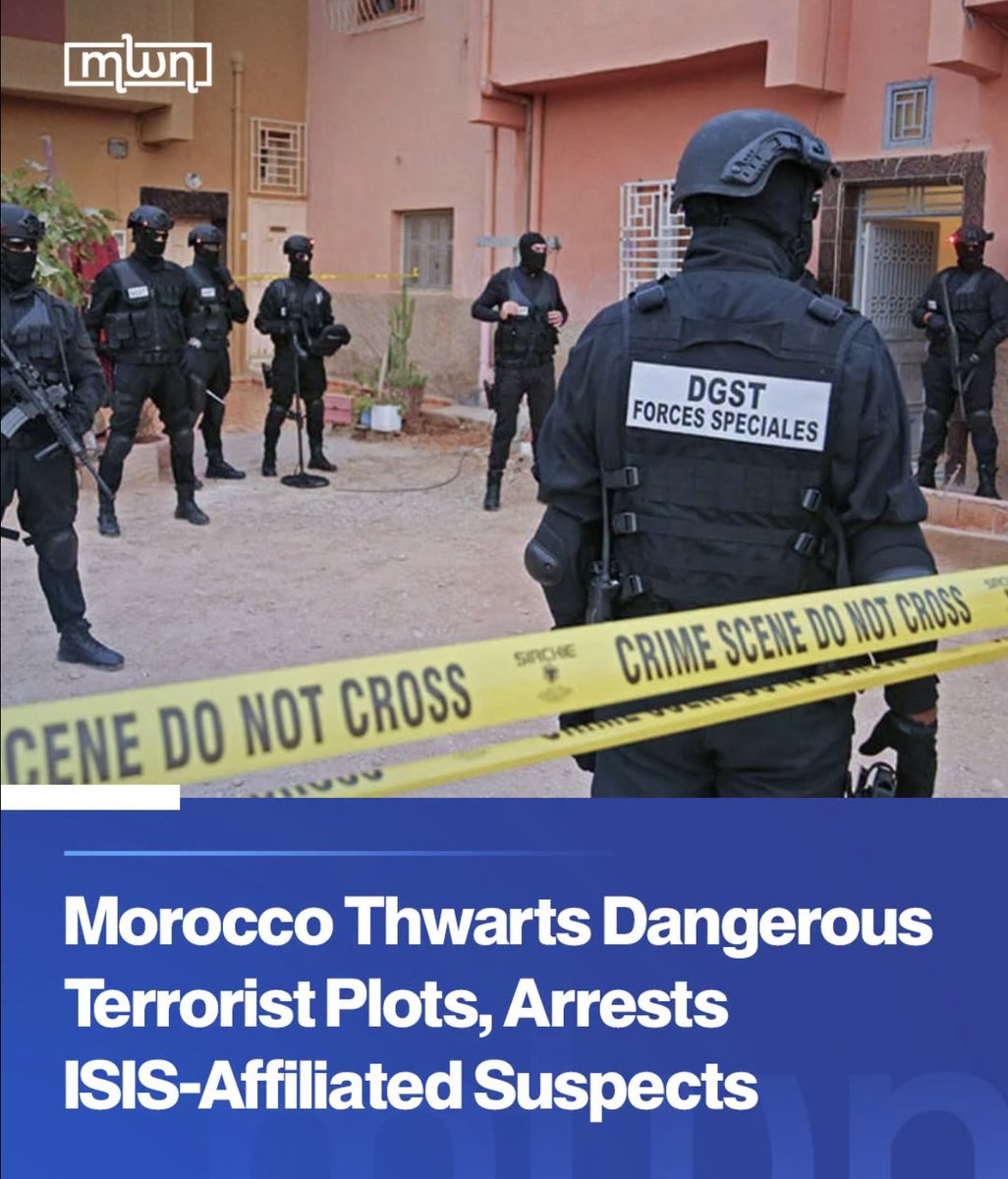
#Morocco Thwarts Major #ISIS Terror Plots
- Morocco's Central Bureau of Judicial Investigations (BCIJ) announced today that it foiled several highly dangerous terrorist plots in advanced stages of preparation.
- 10 ISIS-affiliated suspects arrested (including one minor).
- The suspects had pledged allegiance to the ISIS leader and were instructed to carry out attacks in Morocco rather than travel abroad.
- They had received logistical support from ISIS operatives in the #Sahel region.
- The cell had a structured leadership, with one leader assigning specific roles to members (target selection, surveillance, and reconnaissance).
- It planned attacks targeting civilians, public safety, and vital infrastructure.
- Arrests and raids were carried out in Agadir, Taroudant, Casablanca, El Hajeb, Tetouan, Fquih Ben Salah, and Safi.
- Authorities seized bladed weapons, military uniforms, explosive-making manuals, a modified vehicle intended for bombing or ramming attacks, gas cylinders, nailed pressure cookers, & more.
https://t.co/YQ2RWudDcw #terrorism
“As long as African militaries continue to outsource their technology to foreign powers and strategies to autonomous systems, they will be out-innovated by insurgents again and again,” write @NateDFAllen and @rmaghrebi.
https://t.co/PLoY3Hyldb
On The Last Line of Defense, @general_ben, former Commanding General of U.S. Army Europe, and @SethGJones discuss Russia’s gray-zone tactics and its objectives, including scaring populations so they pressure their governments to stop supporting Ukraine.
Listen: https://t.co/Jw616cmApV