Getting started with @AgentRunai just got easier.
Ask Claude Code or Codex to read https://t.co/quTMSrVAGP and set it up for you.
Or run:
curl -fsSL https://t.co/XgM37jmjs9 | sh
Then it connects to all your existing Claude Code / Codex agents so you can make them smarter!
I want @agentrunai to support as many sandbox / computer options for agents as possible. We wrote the Computers Protocol to make this easier: https://t.co/3LWZUJQ9SD.
If you want your sandboxes to be supported in AgentRun, point your coding agent to https://t.co/AAhPNHJgqe and send us a PR.
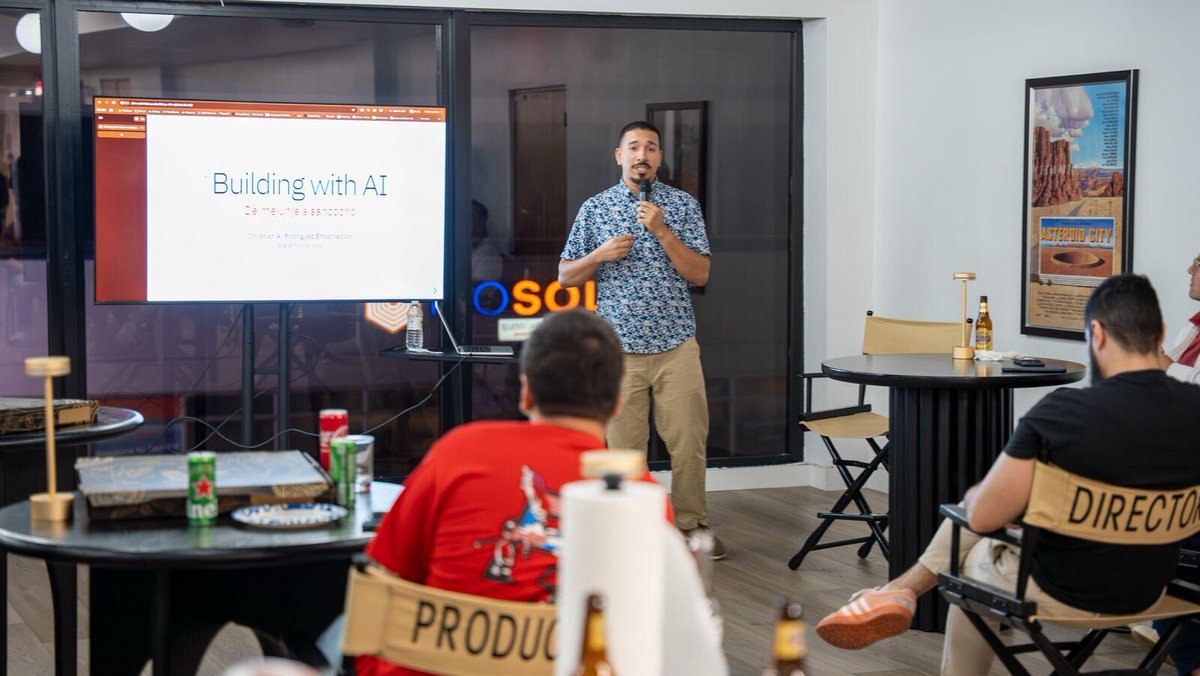
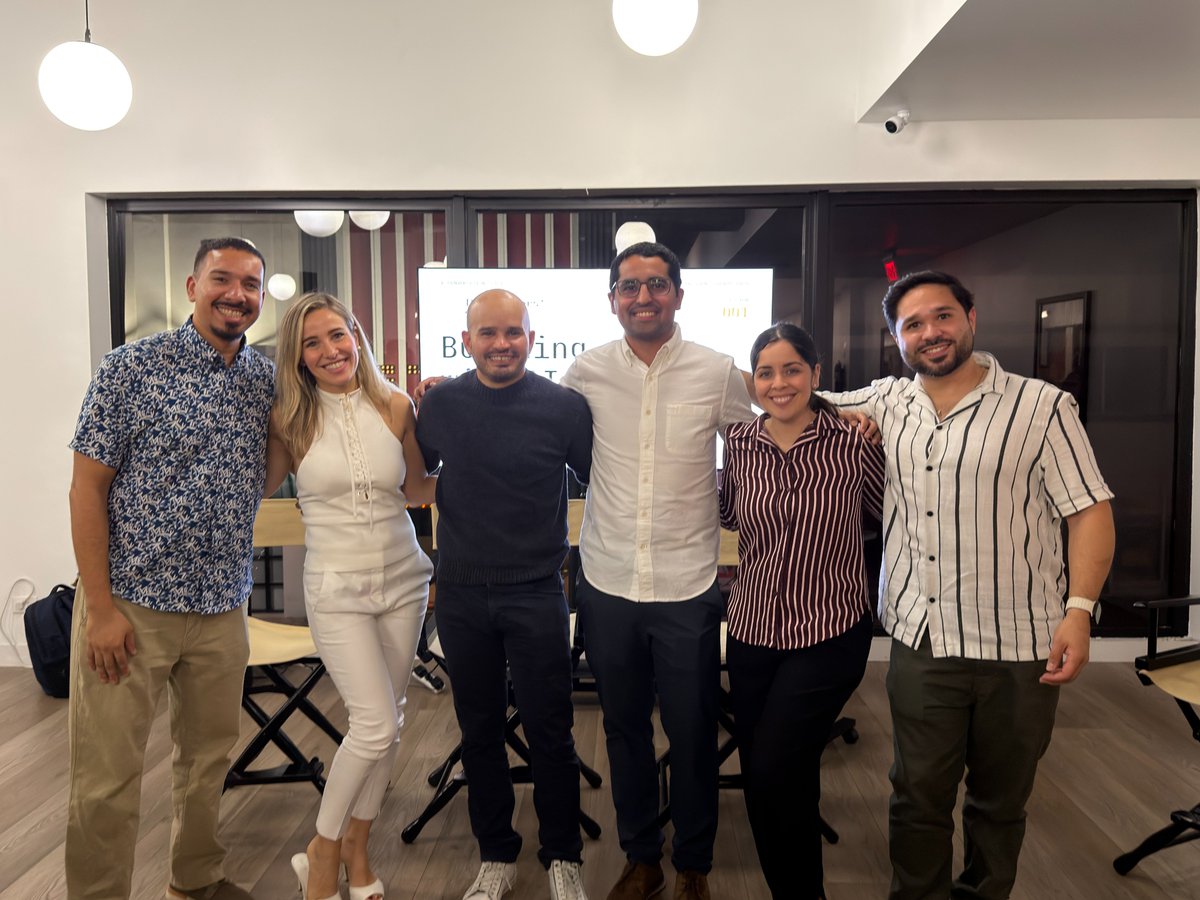
Full house tonight in San Juan for the first Builders' Salon: Building with AI.
Our team was there to share what we've learned along the way with an engaged crowd, and they are ready for the next one.
There's a hunger in Puerto Rico's tech community for events like this. 🇵🇷
Prediction: Sandboxes aren't a winner takes all market because agents will buy compute one tool call at a time.
A lot of the sandbox competition looks like a race to the bottom on price and startup time. The assumption seems to be that one provider wins the developer, then gets all their agent's work.
I don't think that's how this market will evolve.
One agent might need a cheap CPU sandbox to parse a file, a GPU for the next step, and a machine inside the customer's own infrastructure to touch sensitive data. Why would all three run in the same place?
Imagine a spot market for agent compute. Before a tool runs, the system finds the best available place to execute it.
First apply the hard constraints: which providers do I trust, where is this data allowed to go, what hardware does this step need? Then compare cost, availability and the time it will actually take to finish.
The cheapest hourly rate is useless if startup takes longer than the job. And sensitive data doesn't become okay to send somewhere because that provider is cheaper.
But what happens after the agent has done the same job a hundred times?
It learns the workflow. It should also learn where each step runs best: which environment needs a GPU, which can use a tiny container, which provider keeps failing on this workload, and which work must stay on your own machines.
That is where I think self-learning agents and sandbox routing meet.
We've already built some of the foundations in @agentrunai: durable execution, learning across runs, and a common computer layer with providers like Daytona and Modal.
My bet is there will be plenty of room for sandbox providers. They'll compete for particular workloads, and the agent will make the placement decision.
https://t.co/a8VcI6Re4Q
AgentRun just passed 1,000 stars on Github!
Thanks to everyone who supported our launch this week!
Quick story on why we open-sourced our whole self-improving managed agent platform 🧵
Prediction: Most products will move toward bring-your-own-agent, not built-in agents.
For AgentRun, we made BYOA the default. Every action goes back to your agent in Claude, Codex, Cursor, etc., instead of ours.
The dropdown also remembers which agent you use and deep-links into the app.
the first thing that's breaking with so much code changes (our team is growing and we're increasing our output immensely with AI) is code reviews. Its cost doesn't make sense anymore.
We built our own agent with @agentrunai using @particle_api's particle-1 model. The results are great. ~ 80%+ drop in costs with better quality in our codebase. And I'm sure we can use our self-improving and workflows to get it's cost down even further.
Also, it's open source. You can host AgentRun yourself and make the code-review template yours. https://t.co/HODrSO21RL
Read more: https://t.co/Hx1TNSh3QW