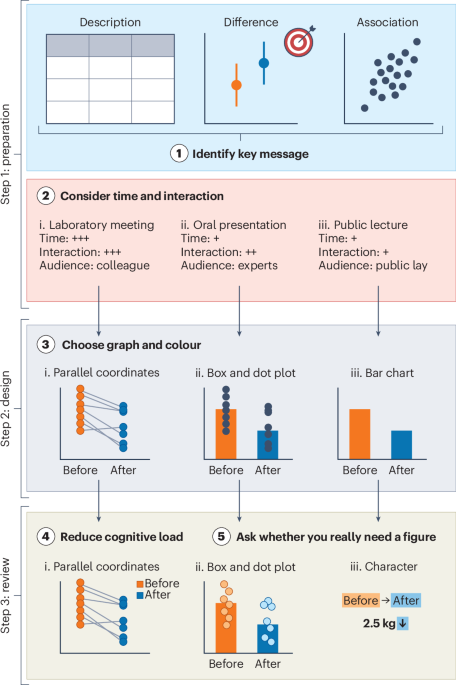
Our review paper titled "A Comprehensive Review of High Throughput Phenotyping and Machine Learning for Plant stress Phenotyping" is out:
https://t.co/XTNQGNVlnp
Thanks to all the authors: @KaranSoyWheat@TSUBioenergy@YuvrajChopra100#machinelearning
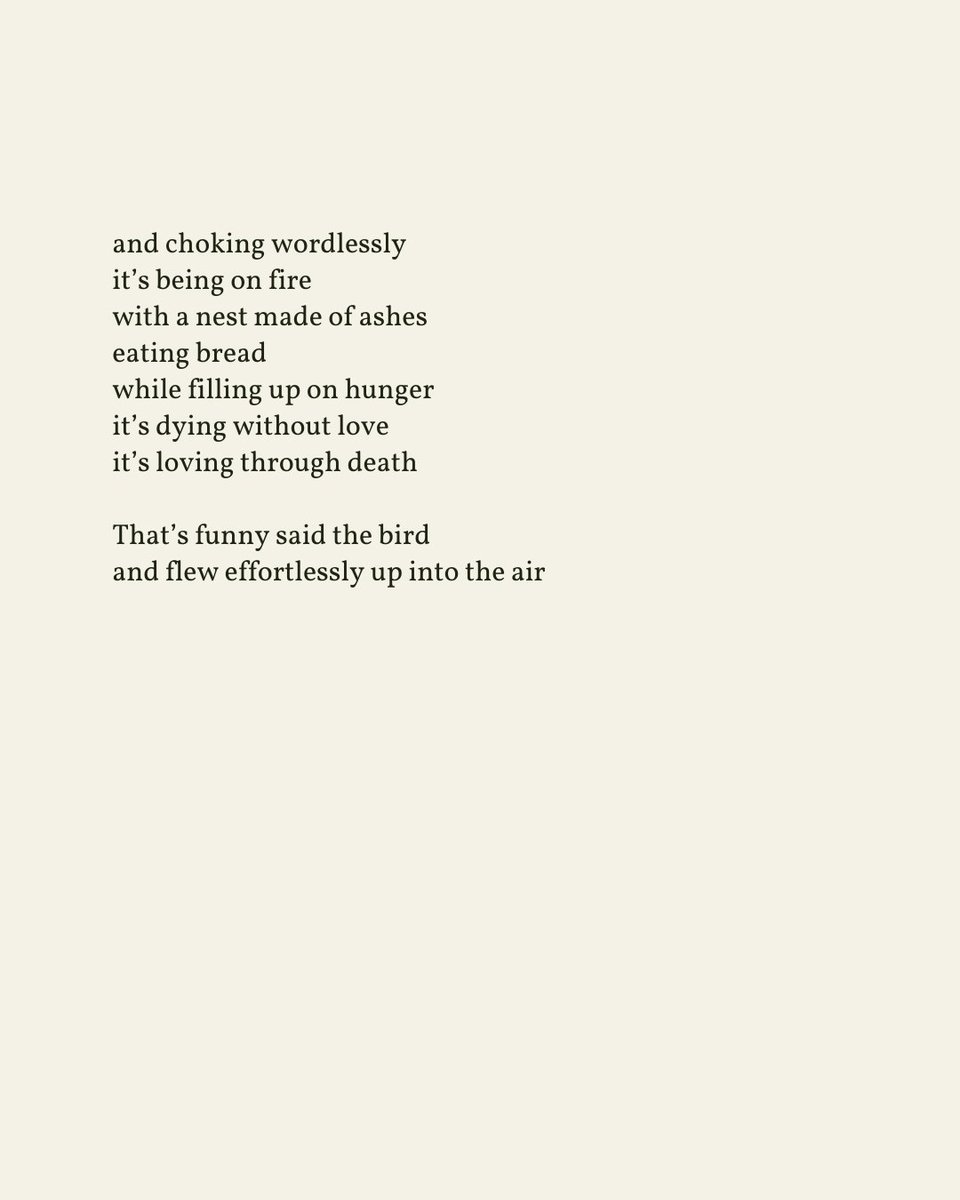
“Even this late the bones of the body shine / and tomorrow’s dust flares into breath.”
— Mark Strand
.
.
.
This poem appeared in https://t.co/1nSrFMpHcd. Shared here with deep gratitude.
Did you hear? The WICCI just put out a new climate assessment for Wisconsin. It’s packed with fresh info and tangible ideas you can use whether you own a home, run a farm, have a business, or help lead your community.
👇📘 Explore the full report #ICYMI
https://t.co/KuM4VLp1Mb
What do you do when you get stuck? You need to pop out into the world of night science, into the world of ideas, where you use abstract thinking. You're going to use every trick you got to find the way forward.
From Nature's new podcast on cultivating creativity in science.. Thank you for featuring Martin and me!
https://t.co/85l9oayLZa
Spotify: https://t.co/ONVRJC1Ti5
Satellites and other remote sensing tools are not only revolutionizing how scientists study ecosystems, they’re also poised to become powerful tools in the fight to protect them.
Read more: https://t.co/HA9WvCHUIj #ScienceMagArchives
Traditional weather forecasting runs on supercomputers that most countries can't afford. NVIDIA just open-sourced an AI stack that replaces them.
The package is called Earth-2.
It covers every stage of weather prediction: processing raw observation data, generating 15-day global forecasts, and producing kilometre-resolution storm predictions. All open. All free. Announced at the American Meteorological Society's annual meeting in January.
Three new models sit at the core:
1. Earth-2 Medium Range (architecture: Atlas) forecasts up to 15 days across 70+ weather variables and outperforms leading open models on standard benchmarks.
2. Earth-2 Nowcasting (architecture: StormScope) generates zero-to-six-hour local storm predictions at kilometre resolution, the first AI model to beat traditional physics-based models on short-term precipitation.
3. Earth-2 Global Data Assimilation (architecture: HealDA) produces atmospheric snapshots in seconds on GPUs instead of hours on supercomputers. Chain the three together and you get the most skilful open, fully AI weather pipeline ever built.
The cost gap is where the story gets concrete. The Israel Meteorological Service is already running Earth-2 CorrDiff in operation and reports a 90% reduction in compute time at 2.5km resolution compared with running classical numerical weather prediction on a CPU cluster. After a recent rainstorm, their AI model trained with CorrDiff was their best-performing operational model for six-hour precipitation verification. They generate high-resolution forecasts up to eight times daily now.
The adoption list reads like a cross-section of the global economy:
• The Weather Company (which operates the Weather Channel),
• Taiwan's Central Weather Administration,
• the U.S. National Weather Service.
• S&P Global Energy,
• JBA Risk Management.
• AXA is using FourCastNet to generate thousands of hypothetical hurricane scenarios for risk modelling.
• GCL, one of China's largest solar producers, runs Earth-2 in production for photovoltaic power prediction.
The timing is pretty important as well. NOAA is facing staff cuts under the current administration. Access to weather data in the U.S. is becoming a live political question.
Meanwhile, the countries hit hardest by flooding, drought and extreme heat tend to be the ones with the least forecasting infrastructure.
This follows a pattern across big tech.
Microsoft built Aurora. Google partnered NeuralGCM with the European Centre for Medium-Range Weather Forecasts to get granular forecasting data to small farms in India.
But NVIDIA's play is different in scope.
They haven't built one model.
They've open-sourced the full pipeline, from raw satellite observations to local storm prediction, and made it run on standard GPU infrastructure.
Physics-based weather models were one of the original justifications for building supercomputers.
For decades, only wealthy nations and large agencies could afford to run them. NVIDIA just made the replacement available to anyone with a GPU and an internet connection.
"Many people will feel stuck in a rut at some point during their Ph.D. My advice is to find another activity outside the lab, so when your research isn’t going well, you’ve got something else to turn to." #ScienceWorkingLife https://t.co/IIr48YhCq2
“We see you, see ourselves and know / That we must take the utmost care / And kindness in all things.”
— Joy Harjo
.
.
.
This poem appeared in In Mad Love and War by Joy Harjo, published by Wesleyan University Press, 1990. Shared here with deep gratitude.
#UWMadison has again been named a “new Ivy” by @Forbes, recognizing the university’s role in preparing and graduating talent for today’s workforce. #OnWisconsin
https://t.co/6HK3CB8mh3
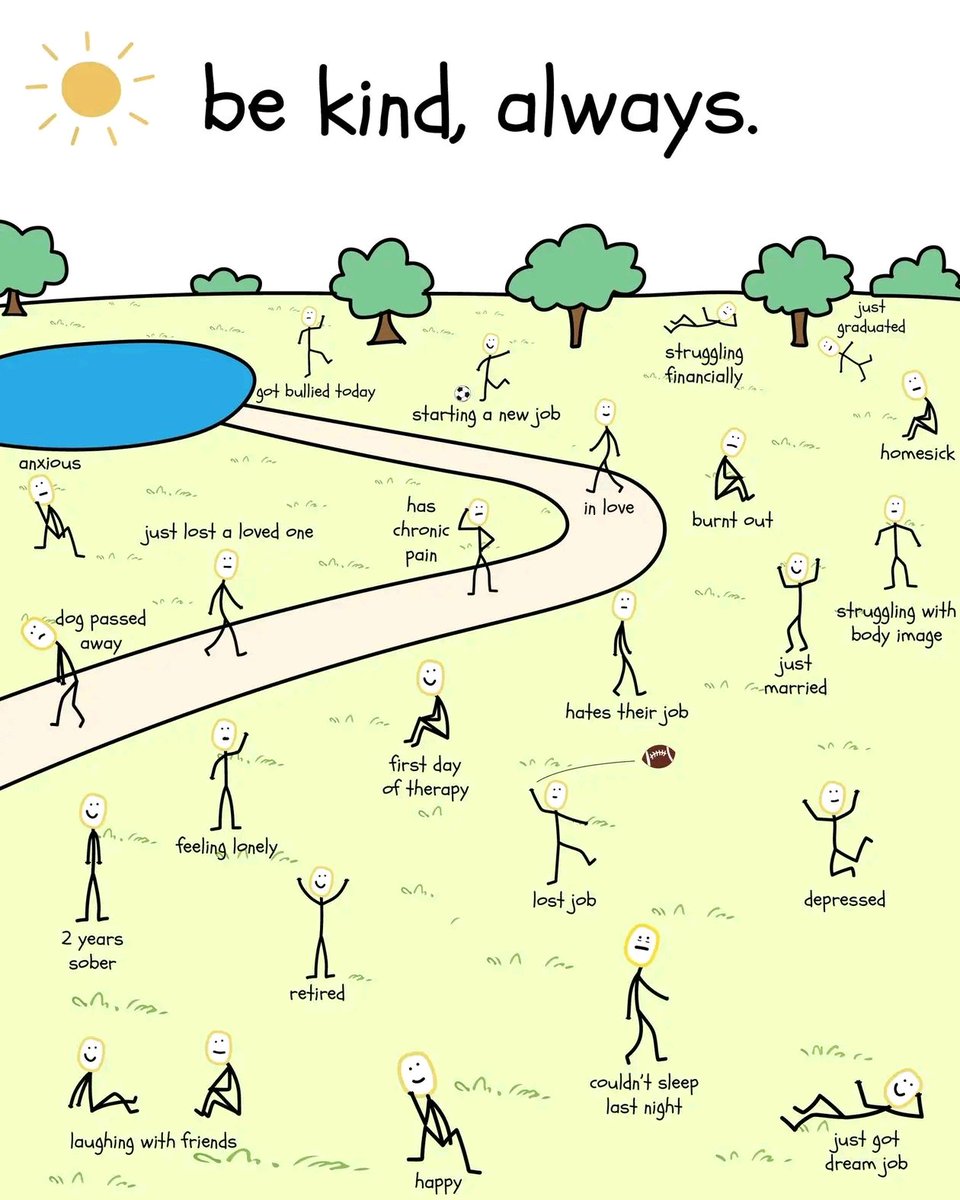
everyone you meet is carrying something you can’t see.
some are healing, some are hurting, some are just trying to get through the day. you only see a small part of their story.
so be kind.
it might mean more than you know. ❤️
Researchers from @UWMadison are advancing nutrient management technologies that help farmers maximize yields while reducing waste, using tools like real-time soil sensors and cost-effective phosphorus recovery from wastewater. https://t.co/GJyXvvO00r
Happy to share our latest study about global patterns of soil microbial nitrogen and phosphorus use efficiency, just published in Nat. Commun.🎉🎉. Thanks for all co-authors' contributions (Decai, @mrillig, @ykuzyakov, @ManuDelBaq, @JosepPenuelas et al.)
https://t.co/BQNVL2h5Ex