CW3E Publication Notice: "Toward Calibrated Ensembles of Neural Weather Model Forecasts" in @theAGU Journal of Advances in Modeling Earth Systems. For a summary of this paper, visit: https://t.co/OuLmGHGLt0
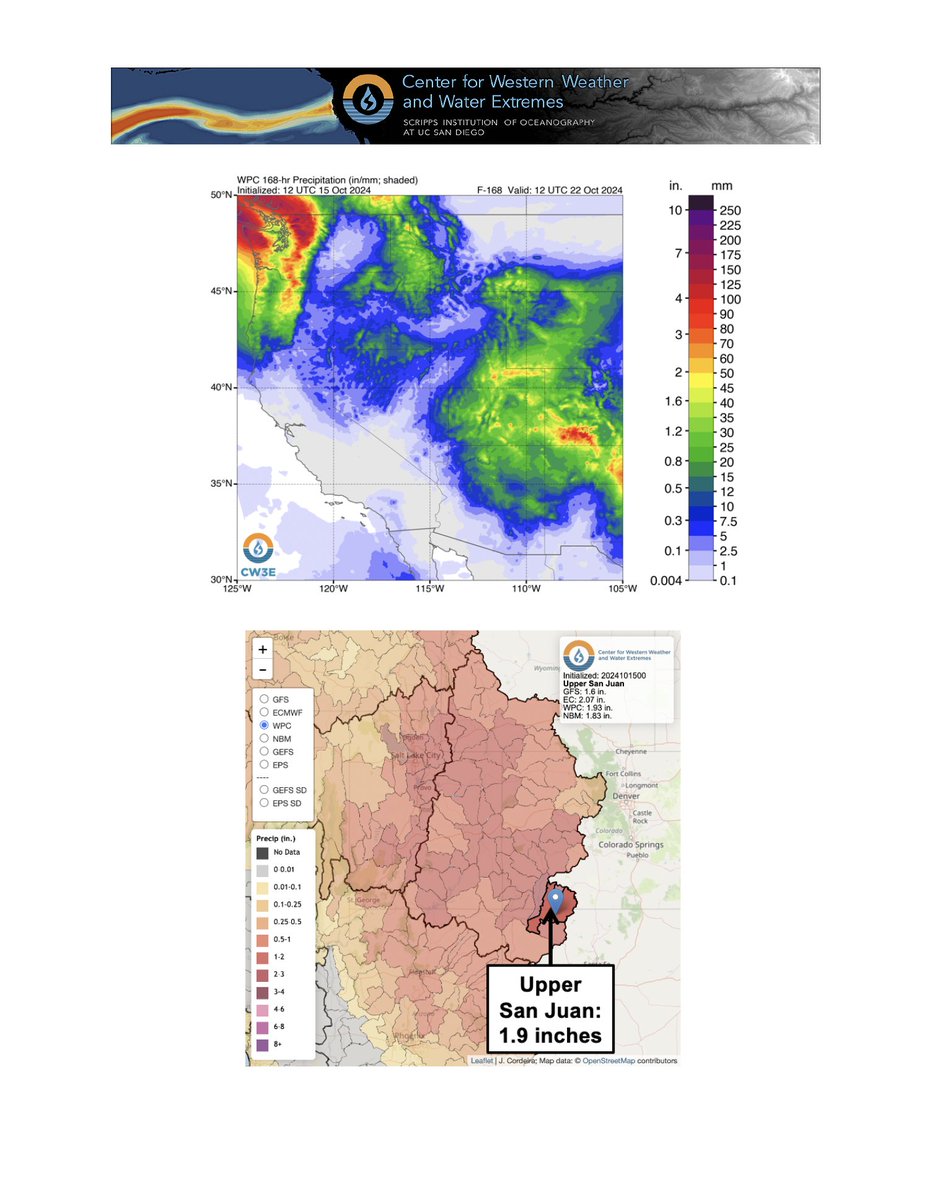
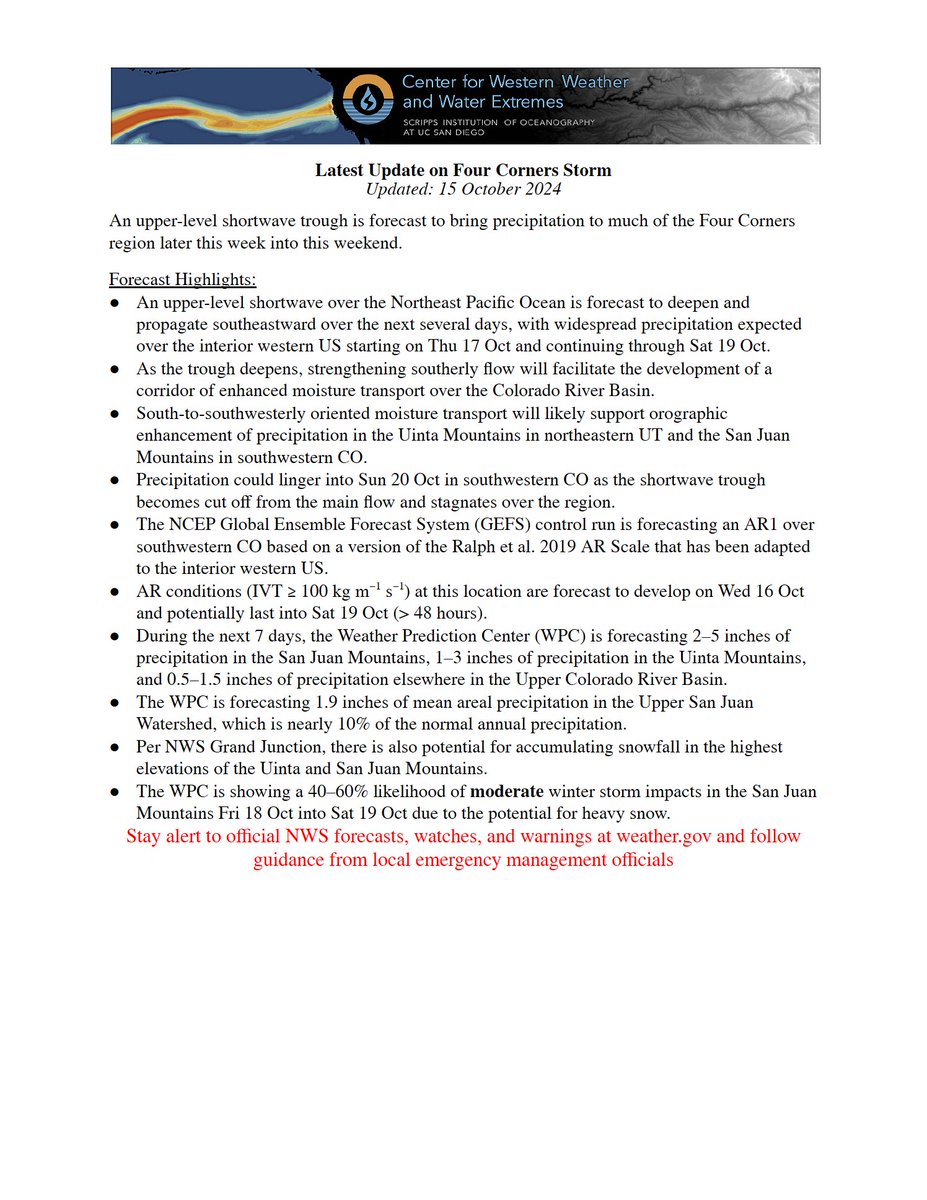
CW3E has issued a quick look for a storm forecast to bring widespread precipitation to the interior western US later this week. The heaviest precipitation is expected in southwestern Colorado.
Fore more information, visit: https://t.co/6tPC1WKRnv.
📣 Exciting opportunity alert! Come join our team at @CW3E_Scripps and dive into innovative AI/ML applications in environmental, ecological, and atmospheric sciences 🌎 Pls DM for more details! #NowHiring
CW3E Machine Learning Post-Doctoral Position: Seeking a researcher with a background in machine learning and related applications for environmental, ecological, and atmospheric sciences. Get the full details on the position here: https://t.co/liaC1FggZT
Multiple #AtmoshpericRivers will be impacting the Pacific Northwest and Northern California over the next 7 days, the first of late Wednesday (November 1) #CAwx#ORwx#WAwx
For more info, visit: https://t.co/jTWha3ksGK
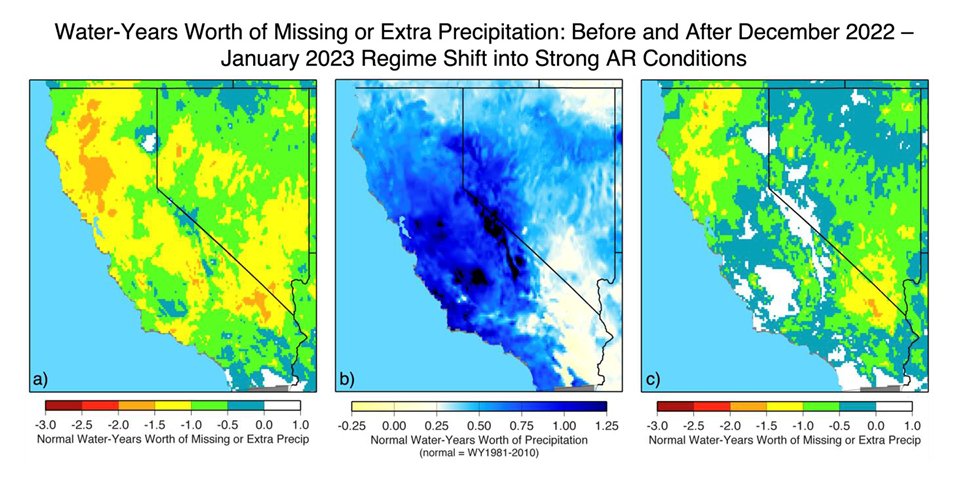
Privileged to be part of this great collaborative effort diagnosing the landfalling atmospheric rivers and associated extreme precipitation in the Western US on S2S timescales during Winter 2022-2023
CW3E Publication Notice: From California’s Extreme Drought to Major Flooding: Evaluating and Synthesizing Experimental Seasonal and Subseasonal Forecasts of Landfalling Atmospheric Rivers and Extreme Precipitation during Winter 2022 – 2023
For more info: https://t.co/K0v5rzxQMj
CW3E research and development on machine learning highlighted as part of a @UCSanDiego -wide effort to leverage AI to inform climate action
@Scripps_Ocean
https://t.co/Eb8F1A4FYE
CW3E research and development on machine learning highlighted as part of a @UCSanDiego -wide effort to leverage AI to inform climate action
@Scripps_Ocean
https://t.co/Eb8F1A4FYE
We have #AtmosphericRivers to thank for all this recent rain! 🌧️ The team from @CW3E_Scripps says we are at 31 atmospheric river events so far this water year (11 weak, 13 moderate, 6 strong, 1 extreme). Here is the map of where and when they all hit. ⬇️
We are now accepting applications for our 2023 summer internship program! All undergraduate students interested in #AtmosphericRivers and weather/climate research are invited to apply, regardless of experience level. Apply by Feb 12.
More details @ https://t.co/l6ky9KfOlm
The precip forecast for the first week of 2023 is a sight to behold.
The water-needy Southwest/CA should get a lot of moisture, w/ parts of CA potentially seeing around 15" of liquid (that's a lot of snow in the Sierras!).
Miss River Basin also looks very wet. @NOAA@NWSWPC
The sulphur dioxide plume from 🌋 #MaunaLoa volcano has reached Western North America according to the latest #CopernicusAtmosphere forecast and will cross the United States and Mexico towards the Atlantic and the Caribbean.
See the forecast: https://t.co/wLRaj1KSyF
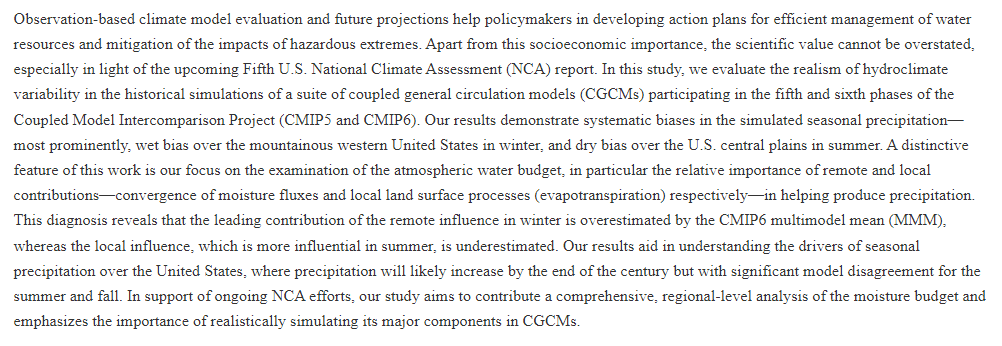
"Representation of Atmospheric Water Budget and Uncertainty Quantification of Future Changes in CMIP6 for the Seven U.S. National Climate Assessment Regions", Journal of Climate 35, 22 (2022): 3635-3658, https://t.co/GKGCqgoH3W #JClimate
1/2
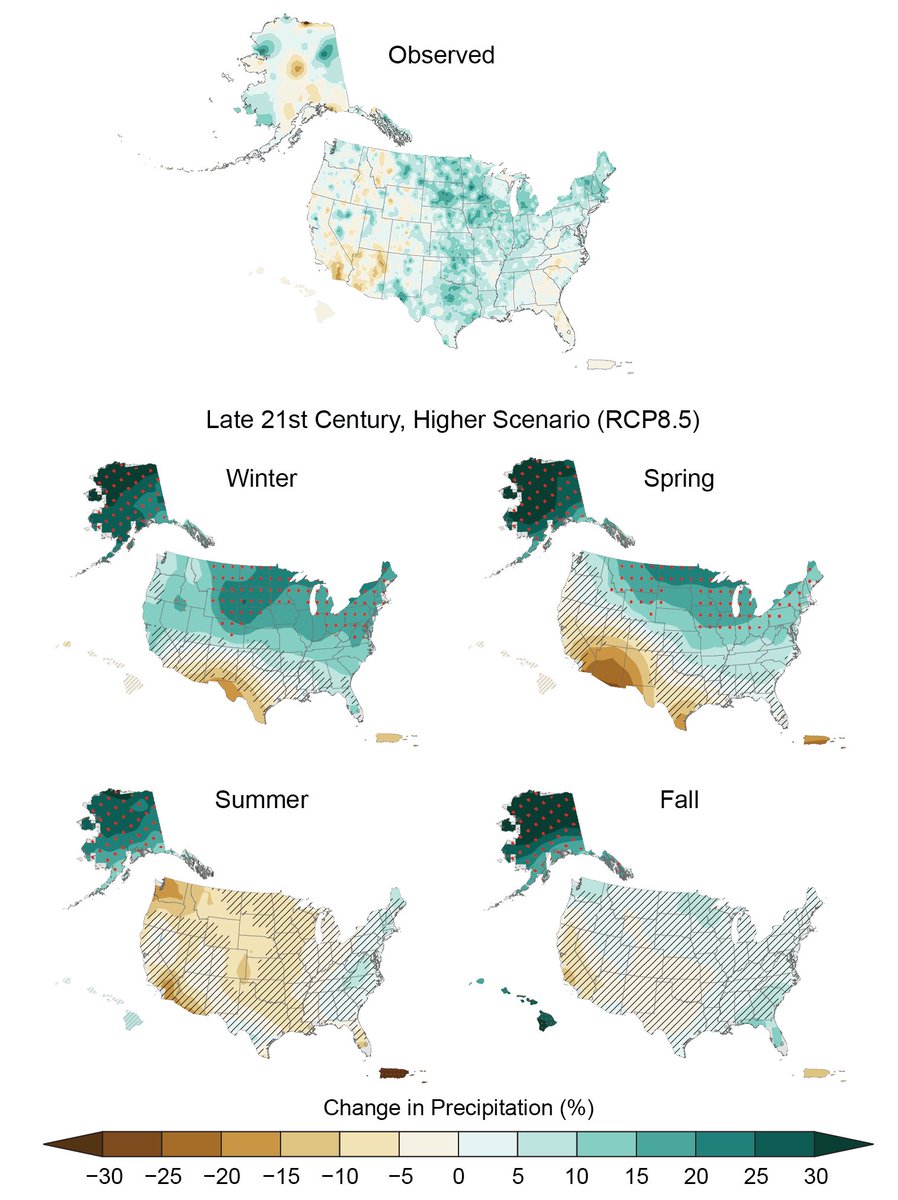
Across much of the U.S., surface #soil moisture is projected to decrease as the #climate warms. This means that, all else being equal, future #droughts in most regions will likely be stronger and potentially last longer. #NCA4 https://t.co/riMz4V8mwx
Continuing a 22-year downward trend, water levels in Lake Mead stand at their lowest since April 1937, when the reservoir was still being filled for the first time. As of July 18, 2022, Lake Mead was filled to just 27 percent of capacity. https://t.co/qwgabmDJOG
@larson_climate How about the CPC Unified precipitation dataset? Available both over the CONUS and the global domain.
https://t.co/Cah5lJfcz8
https://t.co/ysWsbcZItp
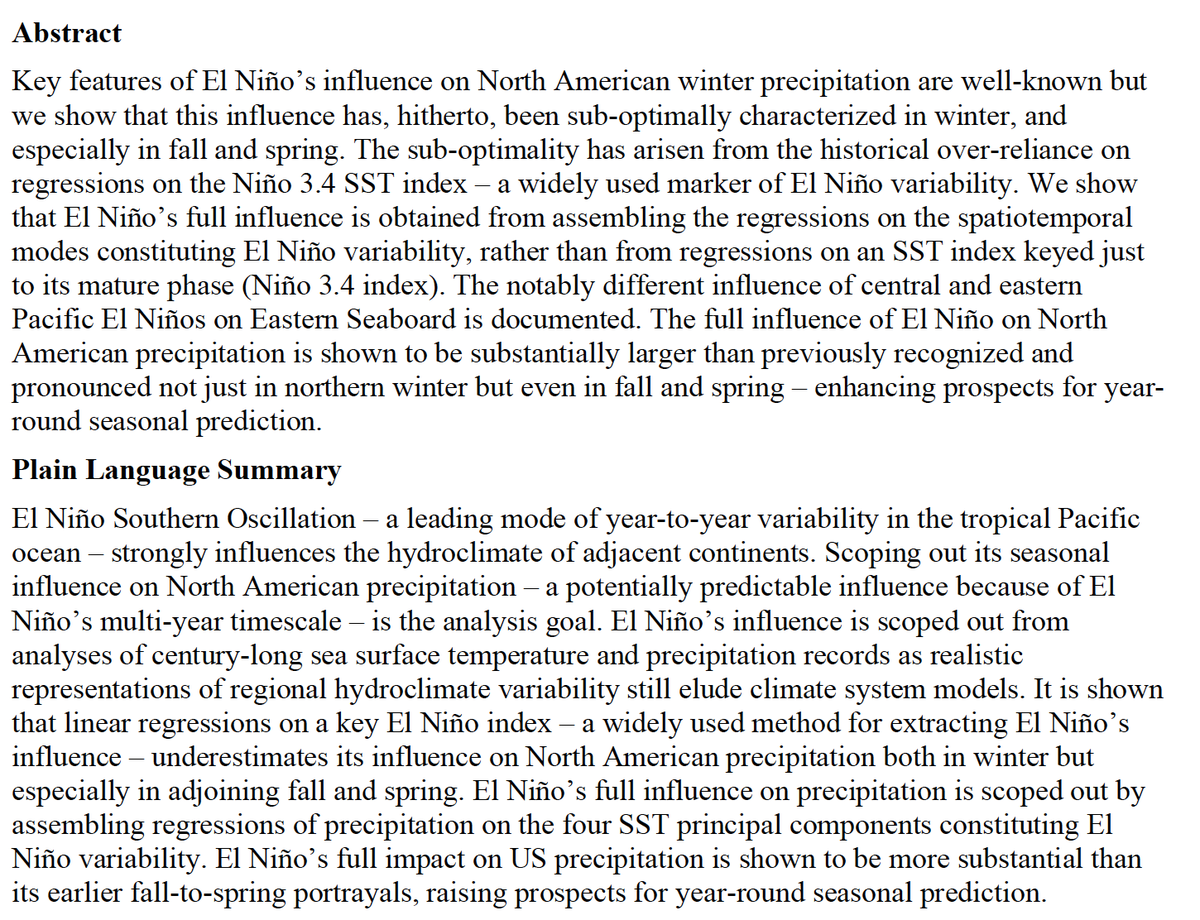
Is the widely used Niño 3.4 SST index efficient in capturing El Niño’s full influence on N. American precipitation in the northern winter and shoulder seasons? In our new GRL @theAGU paper, we seek answers and propose an alternative
https://t.co/SQ0fgZ56oE
w/ @SumantClimate