@KeithWoodsYT@RnaudBertrand 1) East Asia now leads in patents, engineering and papers.
2) Writing, agriculture, metallurgy and paper started outside Europe.
3) While you're downplaying literature and art of other civilizations, Goethe and Nietzsche openly admired poets like Hafiz or Rumi.
@Bloodhower@CommieCarney There's a large body of Arabic Hermetic texts (sadly, many remain untranslated to this day), but I'm pretty sure the treatises translated by Ficino are not among them.
@Bloodhower@CommieCarney We have no Arabic translations of the standard CH (17 treatises) before Ficino.
None of them appear in the Nag Hammadi library either.
However, we have excerpts by Stobaeus (~400 CE).
Also, textual corruption seems to have occurred between 200–400 CE:
https://t.co/BE8CszOyln
"Every simple reality is, by virtue of its unity, all things. It is not deprived of any of these things except by way of imperfections, privations and contingencies."
— Mulla Sadra
"God possesses Nondelimited Being, but no delimitation prevents Him from delimitation. On the contrary, He possesses all delimitations, so He is nondelimited delimitation."
— Ibn Arabi
"If you open your mind to the idea that the Buddha was actually advocating ego development instead of egolessness, you see that there’s nothing lopsided or lacking in his understanding of healthy ego functioning. In fact, he mastered some ego skills that Western psychology has yet to explore, such as how to use right concentration to satisfy the desire for immediate pleasure; how to develop an integrated sense of causality that ultimately makes a sense of self superfluous; how to harness the ego’s drive for lasting happiness so that it leads to a happiness transcending space and time."
👏👏👏
If you think you don’t have metaphysical beliefs, it almost always means your beliefs are so unexamined and dogmatic that you don’t even realise you have them.
This is especially true of secular, humanist materialists who tend towards thinking their secular, humanist materialist views are somehow the default rather than being articles of deep, often unexamined faith.
@KaiBorrmann@RashadAlhindi 1) Ich bezog mich auf das phönizische Alphabet, nicht auf mesopotamische Strichlisten
2) Sind dennoch fundamentale Impulse für die "westliche Zivilisation"
3) Überreste findet man bspw. in Jerf el-Ahmar
@KaiBorrmann@RashadAlhindi Wie wär's mit der Grundlage des griechischen und lateinischen Alphabets? Oder mit den abrahamitischen Religionen? Wo fand nochmal der Übergang von Jägern und Sammlern zu sesshaften Bauern statt?
False dichotomy: either the Gods are anthropomorphic, or They are simply forces. There is subjectivity, even personhood, which is nevertheless profoundly inhuman.
Everyone is so afraid of death,
but the real Sufis just laugh: nothing tyrannizes their hearts.
What strikes the oyster shell doesn’t damage the pearl.
— Rumi
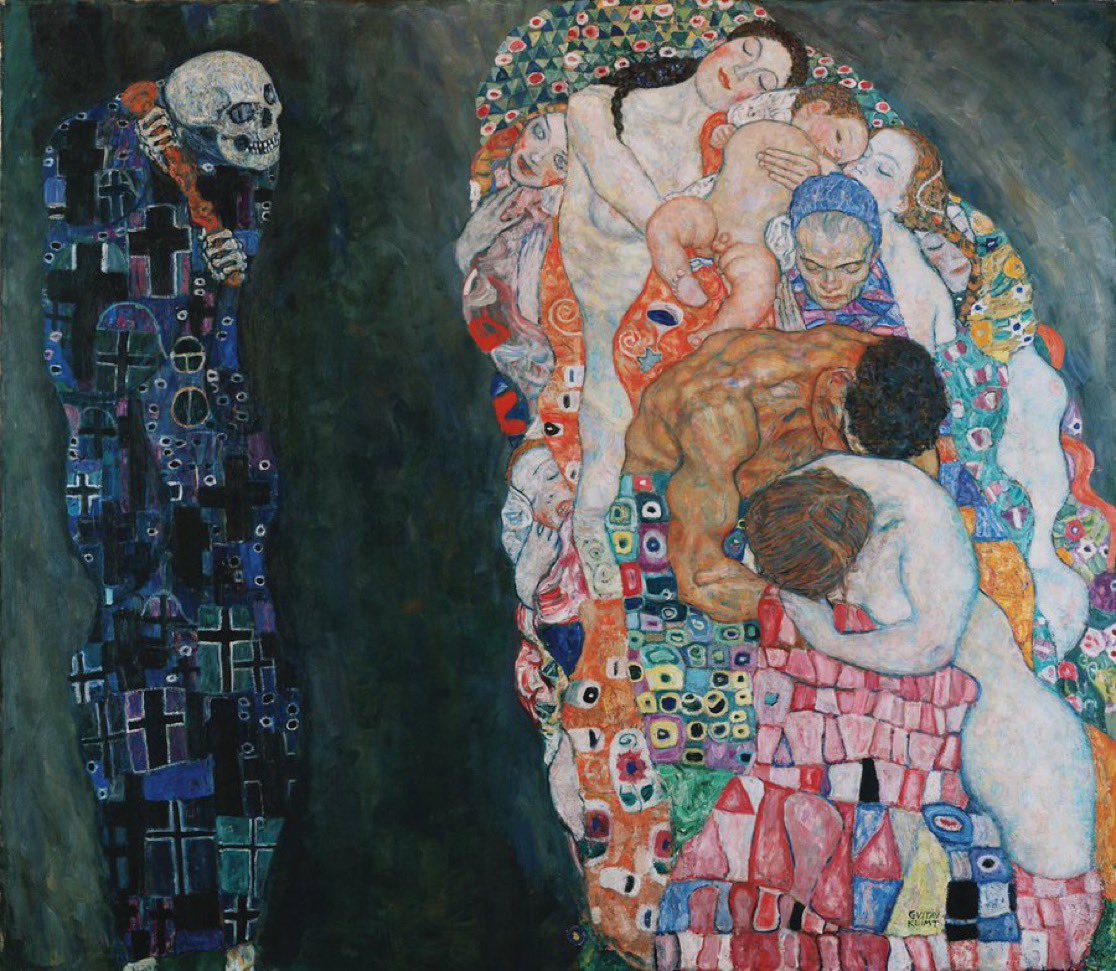
Klimt - Death and Life
@jasminejoziy12 "Bu perde de 1969 yılında Erzincan’ın Tercan ilçesi Quzveren
Köyünde Derviş Hasan tarafından cem ortamında seslendirilmiştir." - Daimi Cengiz
@profhater01 Das Alevîtum ist nachweislich aus verschiedenen Sufi Strömungen entstanden. Auch anatolische Sunniten waren vor dem 16. Jhdt. noch stark vom Sufismus geprägt. Nicht umsonst gibt es gewisse Parallelen zwischen Alevîtum und Mevlevi Orden (Tekke, Sema, Ziyaret, Pirlik, Gülbang,...)
@KaplaniOld @EdemirHuseyin Doğrudan onlar Aleviydi diyemeyiz belki ama Yavuz'a kadar Anadolu'daki insanların yaşam tarzı, Sünnilikten çok Aleviliğe benziyordu diye biliyorum