Joe Rogan says the resurrection of Jesus Christ is more believable than the logic behind the Big Bang theory.
Rogan began asking rhetorical questions about the universe before quoting author Terence McKenna.
"The difference between science and religion is that science only asks you to believe in one miracle - the Big Bang."
"People would be incredulous about the resurrection of Jesus Christ, yet they're convinced that the entire universe was smaller than the head of a pin and then for no reason ... instantaneously became everything."
"I'm sticking with Jesus on that one. Jesus makes more sense."
🔎 New Research Alert for Concussion Rehab Providers!
Psychometric Properties of Vestibular and Ocular Measures Used for Concussion Assessments: A Scoping Review (Barnes et al., 2024)
✅ This review mapped the landscape of clinical tools used to assess vestibular and ocular deficits after concussion.
✅ 52 studies were reviewed — most focusing on balance and VOR (vestibulo-ocular reflex) measures.
✅ Balance Error Scoring System (BESS) is the most studied but shows variable sensitivity and specificity — especially beyond the acute phase.
✅ Community Balance & Mobility Scale (CB&M) and Vestibular Ocular Motor Screening (VOMS) showed the most promise for clinical utility based on diagnostic accuracy and accessibility.
✅ Near Point of Convergence (NPC) testing also demonstrated positive psychometric properties for ocular assessment.
✅ There's a critical need for better psychometric validation and development of clinically feasible vestibular/ocular measures — especially for post-acute and chronic concussion care.
👉 Clinical Takeaways:
• Choose tests like VOMS, CB&M, and NPC that balance evidence, accessibility, and clinical relevance.
• Be cautious relying solely on BESS after the initial 72 hours post-injury.
• Incorporate multiple measures across domains (balance, VOR, ocular motor) for comprehensive concussion assessments.
• Push for more research — current tools still lack strong longitudinal reliability!
#ConcussionCare #VestibularRehab #OcularMotor #ClinicalPractice #RehabProfessionals #VestibularPT #ConcussionManagement https://t.co/qOE59Ksque
🧠 Rehab Providers: Understanding Persistent Post-Concussion Symptoms (PCS) & Fear-Avoidance 🏥
New research by Hecker et al. (2025) sheds light on why some patients with mild traumatic brain injury (mTBI) continue to experience persistent post-concussion symptoms (PCS) beyond expected recovery timelines. Here’s what you need to know:
🔹 Fear-Avoidance Cycle Matters: Patients who develop catastrophizing thoughts (e.g., “I’ll never recover”) and avoidance behaviors (limiting activities due to fear of worsening symptoms) are more likely to experience prolonged symptoms.
🔹 Depression is a Key Predictor: At 3 months post-injury, depressive symptoms strongly correlated with PCS at 6 months—highlighting the need for early mental health screening.
🔹 Not Just a Brain Injury Issue: PCS symptoms (fatigue, dizziness, cognitive fog) are not exclusive to brain injuries. The biopsychosocial model explains why psychological factors play a major role in prolonged recovery.
🔹 Treatment Implications: Addressing catastrophizing and avoidance through exposure-based therapy (e.g., cognitive behavioral therapy) may help break the cycle and promote recovery.
🚨 Takeaway for Clinicians: Early intervention focusing on education, gradual exposure to cognitive and physical activity, and psychological support can prevent prolonged disability.
hashtag#ConcussionRecovery hashtag#RehabScience hashtag#NeuroRehab hashtag#FearAvoidance hashtag#MentalHealth https://t.co/2boBvqprcB
Exciting news from our new West O clinic! Our BOOST treadmill is getting exceptional use, helping patients rehab from lower body fractures and stress fractures. It's been a game-changer for those getting back to running and optimizing their recovery plans. 💪🏃♂️ @boosttreadmills
Increased Musculoskeletal Injury Risk Without Impact on Statistical In-Game Performance Within 90 Days From Concussion Among Professional Basketball Athletes - PubMed https://t.co/2mReg8nifs
🏀 Key Takeaways for Sports Medicine from Recent Concussion Research 🏀
A new study on NBA players post-concussion reveals critical insights for sports medicine professionals and rehabilitation specialists:
🔹 🚨 Increased Injury Risk: Players who suffered a concussion were 11.3 times more likely to sustain a musculoskeletal (MSK) injury within 90 days of returning to play.
🔹 🦵 Lower & Upper Extremity Concerns: The most common MSK injuries post-concussion involved ankles, knees, and legs, likely due to lingering balance and reaction time deficits.
🔹 📉 Performance Stays the Same: Despite the higher injury risk, in-game performance metrics (points, minutes played, shooting efficiency) remained unchanged compared to non-concussed players.
🔹 🩺 Implications for Rehab & RTP: Concussion management in basketball & high-impact sports should integrate neuromuscular control and injury prevention strategies to reduce the risk of secondary injuries.
💡 Bottom Line: Returning to play after a concussion doesn't immediately impact performance, but the risk of further injuries skyrockets. A progressive RTP protocol focusing on postural stability & movement mechanics is essential!
#SportsMedicine #ConcussionRecovery #AthleteHealth #InjuryPrevention #BasketballRehab https://t.co/f5Mwr7e7gJ
Creatine supplementation for traumatic brain injuries 🧠
Mild traumatic brain injuries (mTBI) are concussions that can be common injures in contact sports 💥
Although creatine is widely regarded as a performance-related supplement, this new review outlined how creatine may be able to prevent and treat brain injuries 📚
Here are the key takeaway messages ⬇️
In clinical trials🔬
Patients who supplemented with creatine for 60-days (0.4 g/kg/day), starting within 4-hrs of their TBI exhibited less…
🤕 Headache
😵💫 Dizziness
😮💨 Fatigue
Similar research also showed neuroprotective effects with patients showing…
😵💫 Less amnesia
🏥 Less time in intensive care
🗣️ Improved communication
🧠 Improved cognition
👣 Improved locomotion
Importantly, both above clinical trials showed no deleterious side-effects ✅
Animal-based research has also shown creatine supplementation prior to TBI to reduce damage by up to 50% 🐭
But how does this occur? 🧐
Following a TBI…
📉 Brain creatine levels are reduced
🪫 Random membrane depolarisation causes neuronal firing 👉 reducing ATP stores
🩸 Blood flow to the brain is reduced
Creatine can…
🔋 Help restore membrane potentials and act as an energy source for brain cells
⏰ Delay hypoxia-induced membrane depolarisation and maintain neuronal integrity
🛡️ Prevent impaired protein synthesis and axonal damage protecting against synaptic transmission breakdown which can cause neuronal death
⚡️ Support energy balance after TBI when energy supply and demand are unequal
📉 Reduce cell loss in hippocampus and protect GABAergic function
🧬 Reduce reactive oxygen species by scavenging free radicals
🧯 Prevent cerebral oedema and act as an anti-inflammatory agent
🧠 Restore mitochondrial function, generating energy reserves for healing neuronal tissue
Creatine is a cheap supplement with limited side effects which could offer both preventative and therapeutic benefits in cases of TBI and/or concussion ✅
Hot off the press!!! Published results from our double blind RCT on BFR after an ACL reconstruction. We found BFR no more effective than standard rehabilitation in improving quadriceps strength, morphology, or physiology @MSSEonline. https://t.co/zQOsZtgQ7S
How do you define "true plyometrics"?
Is it all about contact time being <0.250s?
Not at all.
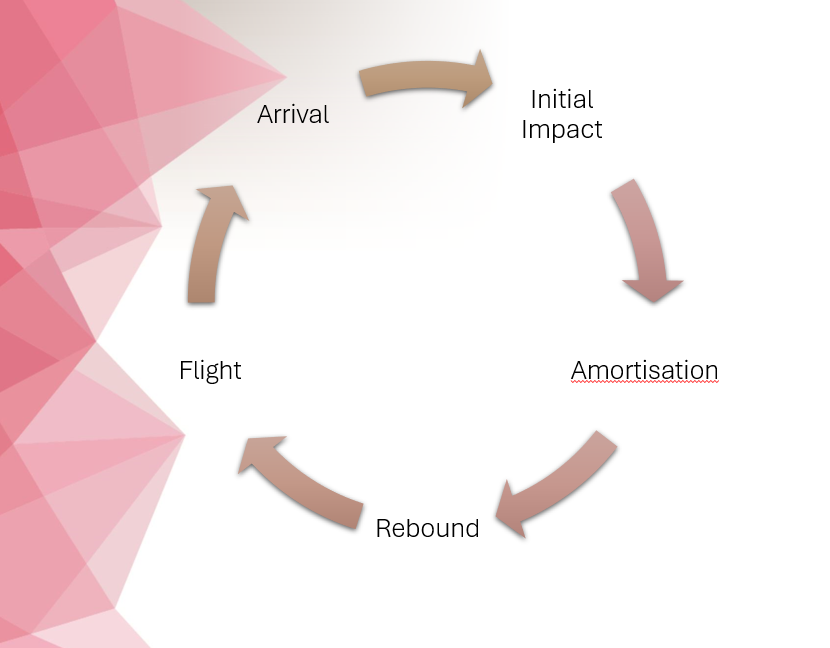
Verkhoshansky describes the CYCLE of TRUE PLYOMETRICS as follows:
Phase 1: “Arrival”
Verkhoshansky terms this the "initial momentum phase". Here the body & limbs are arriving readying for ground contact. While the body is in a relatively relaxed state, it's not a passive action. There is muscular preactivation to ready the body, particularly the lower limbs for forceful ground contact.
Phase 2: "Initial Impact"
Here as the limbs contact the ground, the ground blocks further displacement of the limb & further changes in muscle length. Here, the tendon begins to elongate but muscular contraction hasn't occurred yet.
Phase 3: "Amortisation"
Here, the stretch reflexes kick in, we have eccentric muscle contraction taking place and an fast, very high force isometric contraction is required to transition to the followig concentric contraction.
The coupling time between the eccentric and the subsequent concentric contraction is very short. True plyometrics must have these very short coupling times to harness the full potential of the stretch shortening cycle.
Phase 4: "Rebound"
Here we have the release of the elastic energy & we have contributions from reflexive muscle actions. We also have contribution from concentric muscular contraction… The body is moving back up into the air and it's about to leave the ground.
Phase 5: "Flight"
The athlete has left the ground, they're in the air & they're readying themselves for the next action.
If we are doing “continuous” repeated plyometric activities, then the flight phase naturally transitions into the next arrival phase (or if we're doing single efforts the flight phase naturally evolves into the landing phase to finish the exercise)
This is the underlying cycle of TRUE PLYOMETRICS and we see the maximum benefit of fast stretch shortening cycle utilization when the rates of eccentric loading are high, the coupling time is short and the joint displacements are small.
.
🚨 Our new paper "Joint angle-specific neuromuscular time course of recovery after isometric resistance exercise at shorter and longer muscle lengths" is now *Open Access* 🚨
Do u prescribe 🏋♂️ at diff 💪 lengths?
Here's a short 🧵 on our paper https://t.co/u9vF3fBxPs