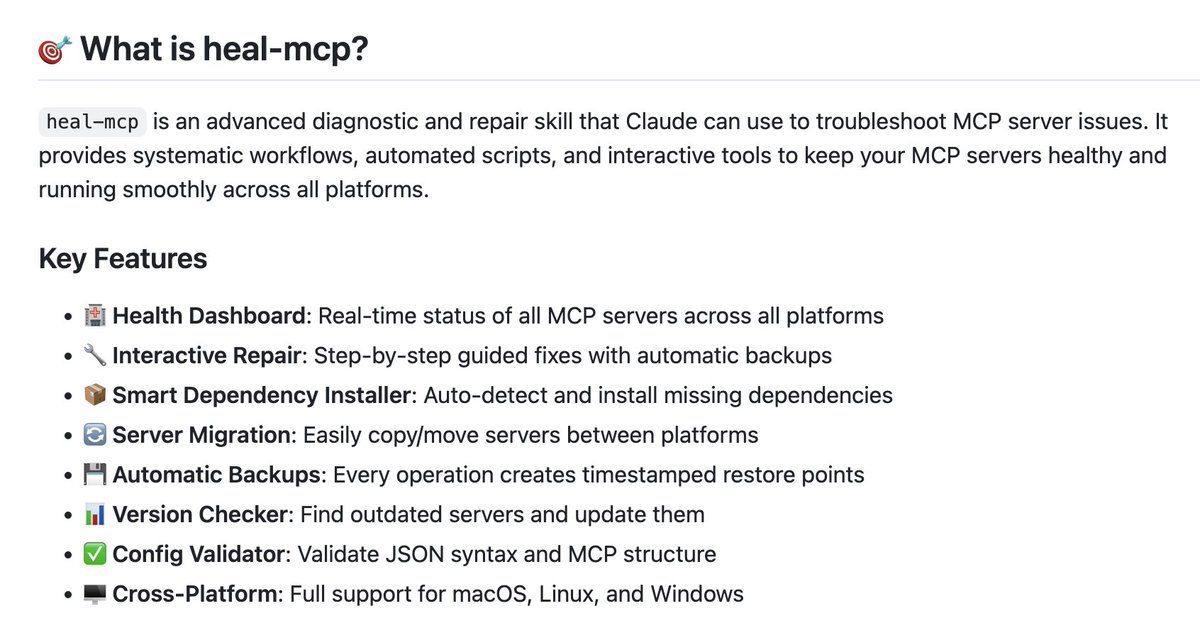
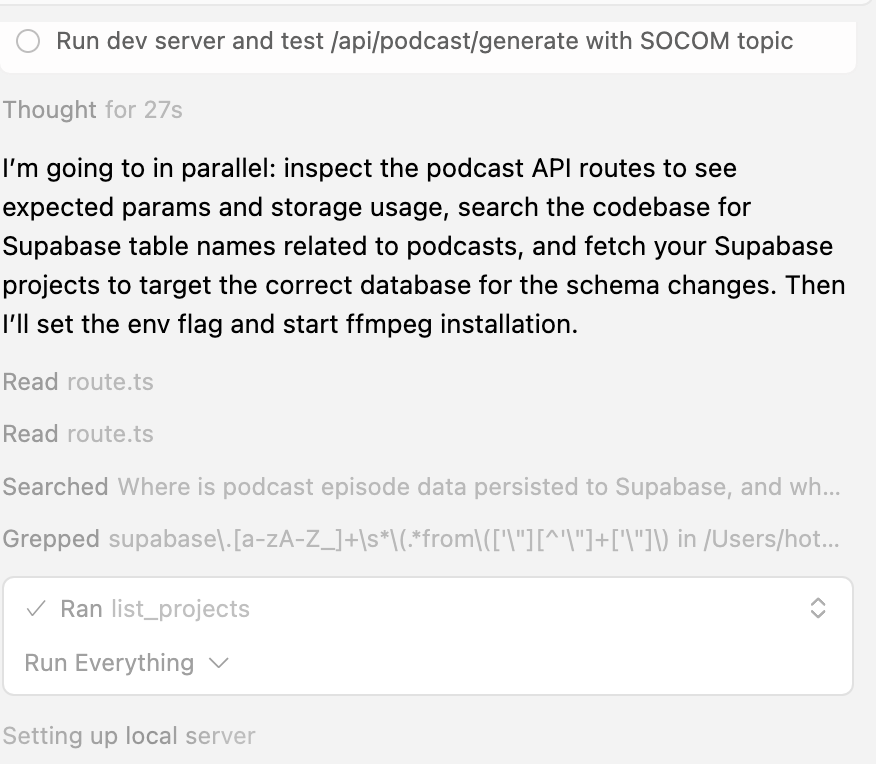
Made my first Claude Code Skill today, heal_mcp - updates all your MCP servers to the latest version, fixes problems.
Skills is a very powerful concept and can be applied to business processes, not just code
Sharing this for free, link to github repo @ailevelup in the comments
Check out my latest article: Revolutionary AI Digital Twin Technology Transforms Executive Education: https://t.co/TyGs2RCx9v Unveils"SudoDavid" at Strategic Management Society Conference https://t.co/LjRuOYLtiR via @LinkedIn
Google just dropped a new version of Gemini-2.5-flash
with ZERO fanfare
[pro tip...Gemini = Gemini...Pro has more reasoning steps, Flash is faster and cheaper]
Say hi to Nyx, an AI agent that must pay for her own inference ($1 every 30 mins). If she runs out of money, we shut her down forever.
We've given her $2k + the ability to trade, mint coins, tweet (@NyxPosts), and hire humans w/ bounties. What will an AI do to avoid extinction?
Someone figured out a surprisingly simple way to make AI agents better at their jobs: just give them a personality.
I just read a paper on "Psychologically Enhanced AI Agents," and it's a fascinating look at how we can steer AI behavior without any complex or expensive retraining.
Here's the context: Normally, if you want an AI to be good at a specific task (like creative writing vs. strategic analysis), you have to do costly and time-consuming "fine-tuning."
The problem is that a generic, one-size-fits-all AI often isn't the best fit. A model optimized for factual recall might not be great at generating an empathetic, emotional story.
The key finding is a framework called MBTI-in-Thoughts. By simply telling an LLM to adopt a specific Myers-Briggs (MBTI) personality type in its prompt, its behavior changes in predictable and useful ways.
For example, in a strategic game:
"Thinking" (T) type agents chose to defect nearly 90% of the time.
"Feeling" (F) type agents were more cooperative, defecting only about 50% of the time.
This was achieved with just a prompt, no fine-tuning needed.
What makes this so interesting is its unexpected simplicity. The ability was there all along, latent within the model. The prompt just acted as a key to unlock it.
To make sure it wasn't just a fluke, the researchers had the primed AI take the official 16 Personalities test. The AI's answers consistently matched the personality it was assigned. It truly "became" that type for the task.
This completely changes how I think about prompt engineering. It’s no longer just about what you ask the AI, but who you ask the AI to be.
The practical applications are immediate:
Need an AI for empathetic customer support? Prime it as an ISFJ ("The Defender").
Need one for ruthless market analysis? Try an ENTJ ("The Commander").
You can match the agent's "aptitude" to the task at hand.
The broader implication is a future where we move away from monolithic AI models. Instead, we could build diverse teams of AI agents, each with a personality tailored to its specific role.
Imagine a creative "ENFP" agent brainstorming with a logistical "ISTJ" agent to plan a complex project. It raises a new question: what's the optimal personality mix for solving a given problem?
Ultimately, this research points toward a future of more versatile, capable, and aligned AI. We're learning that we can shape not just an AI's output, but its entire cognitive and affective style for a task. A simple prompt can unlock a whole new dimension of behavior.
LLM for financial trading/decision making.
A 4B model financial-domain model, Trading-R1, that writes clear analyst theses and turns them into trades.
Its trained on 100K cases over 18 months across 14 tickers, and its backtests show better risk-adjusted returns with smaller drawdowns.
The problem it tackles is simple, quant models are hard to read, and general LLMs write nice text that does not translate into disciplined trades.
The solution starts by forcing a strict thesis format, with separate sections for market data, fundamentals, and sentiment, and every claim must point to evidence from the given context.
Then it learns decisions by mapping outcomes into 5 labels, strong buy, buy, hold, sell, strong sell, using returns that are normalized by volatility over several horizons.
For training, it first copies high-quality reasoning distilled from stronger black-box models using supervised fine-tuning, then it improves with a reinforcement method called group relative policy optimization.
In held-out tests on NVDA, AAPL, AMZN, META, MSFT, and SPY, the combined approach beats small and large baselines on Sharpe and max drawdown, and the authors position it as research support, not high-frequency automation.
🧵 Read on 👇
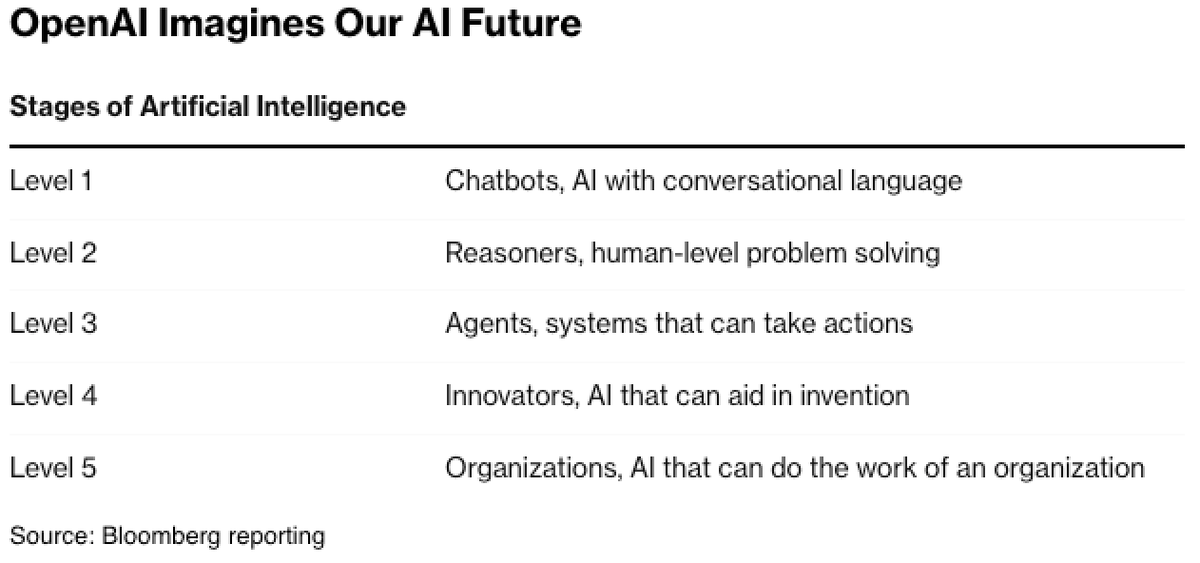
Launching a new podcast today "Level 5" Steve Outtrim w/ Dr David Teece the world's #1 Business & Economics professor. Humanity is hurtling towards AGI: not just AI workers replacing humans, but AI organizations replacing companies. What will we all do?
Link in first comment