The official Sydney Gongodyo Memorial program.
▪️ All activities will be at KPA this Saturday.
▪️ Panel discussion on ‘Mob Action’
▪️ Official Fundraiser.
▪️ Launch of #SydneyIsMe campaign.
▪️ The Walk has been postponed until 5th July 2026 (pending approval and security)
FULL ARTICLE:
SYDNEY GONGODYO'S HEARTLESS MURDER IS HOW THE BRAWN OF KAMPALA'S ‘LUMPEN PROLETARIAT’ IS CRASHING ITS MIDDLE-CLASS BRAINS AND ASPIRATIONS
1/2
Wednesday, he was singing happy birthday to his son.
Friday a mob took him from that same son forever.
This is Sydney Gongodyo.
Rugby Cranes international. Pirates champion. Father.
Remember his name. 🕊️
ABDU NEEDS OUR HELP. 💔
My colleague @abdussekalala is battling a severe autoimmune liver condition and urgently needs a transplant in India.
He needs to raise $50,000 to save his life.
Every contribution counts as no amount is too small.
📲 Kindly send any support to:
0775722124 (Abdu Ssekalala)
Please donate or share. You could help save a life. 🙏
Kindly RETWEET for awareness 🙏
#SaveAbdu #Fundraiser
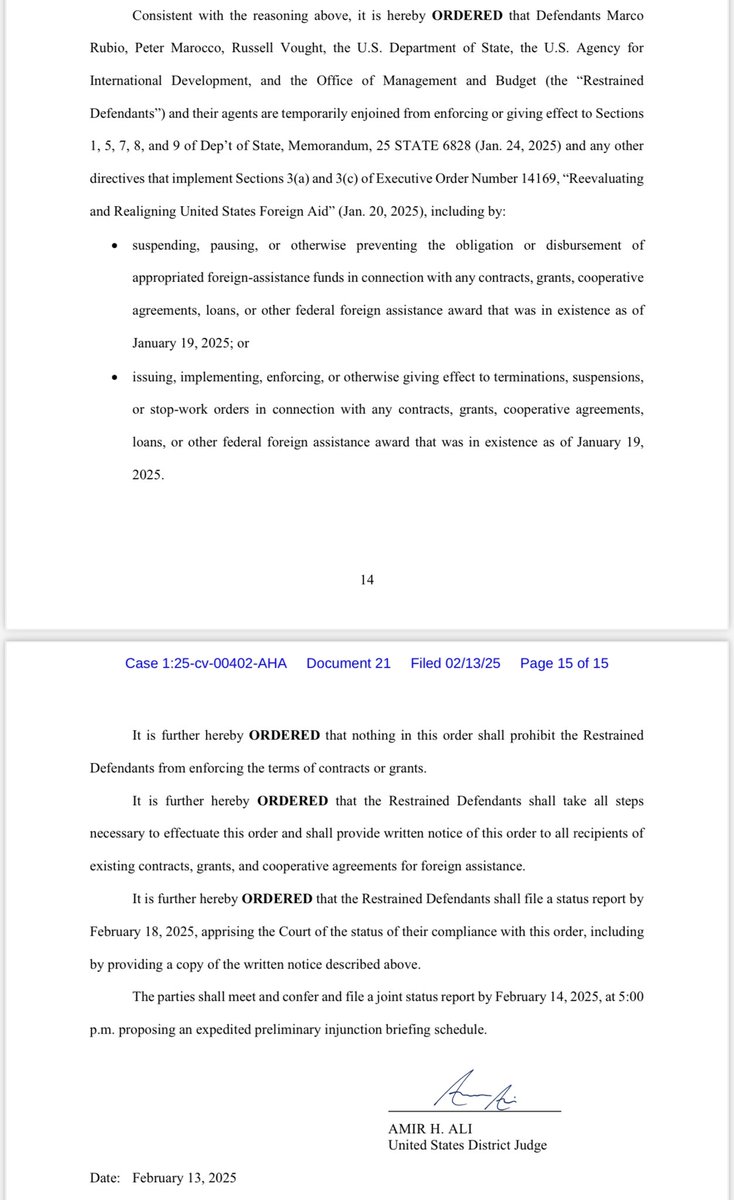
BREAKING: Federal judge pauses Trump’s freeze on foreign aid.
He specifically ordered the flow of money to any contracts, grants or loans that were in existence at the end of the Biden administration to continue. He also halted any efforts to terminate or impose stop-work orders
Empowered to create change!Thanks to @UNODC_EA and @LegaltechL for the essential equipment and support to the justice innovators ,this will continue to inspire many youth to come up with legal solutions that promote acces to justice and rule of law .
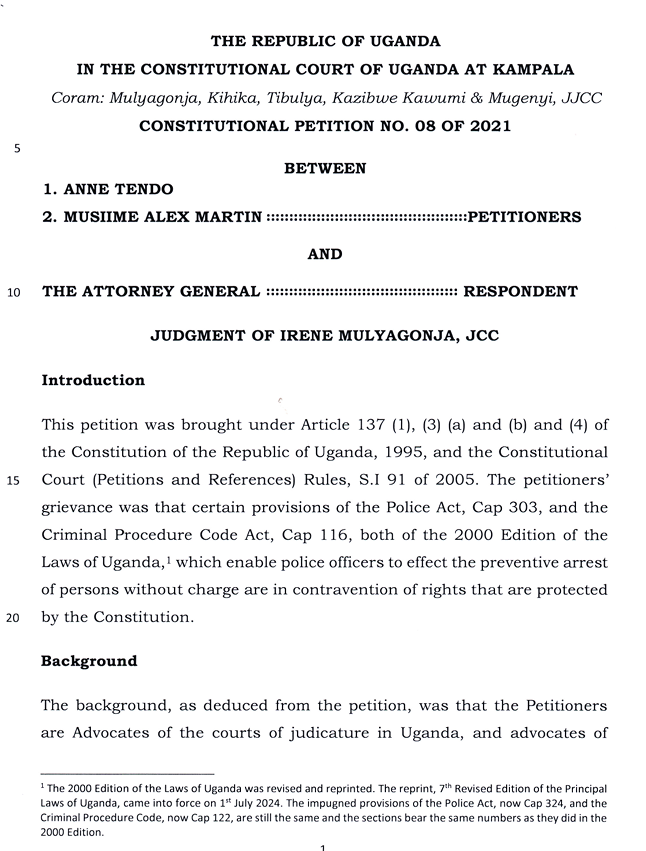
Constitutional Court has held that Sections 24, 26, and 27 of the Criminal Procedure Code Act are not inconsistent with Articles 23(1) and (4), 28(1), and 44(c) of the Constitution of Uganda
The Constitutional Court of Uganda has reaffirmed the cardinal principle of constitutional interpretation that the Constitution must be read as an integral whole, ensuring that no provision destroys another, but rather that all provisions sustain and complement one another. This principle, referred to as the rule of harmony, completeness, and exhaustiveness, extends to the interpretation of statutes.
Background
The Petitioners, advocates and human rights defenders affiliated with the Network of Public Interest Lawyers (NETPIL), challenged provisions of the Police Act and the Criminal Procedure Code Act before the Constitutional Court of Uganda.
Their primary contention was that sections 24, 26, and 27 of the Criminal Procedure Code Act (CPC) and section 24(2) of the Police Act permit preventive arrests and detention without specifying a maximum duration, thereby violating constitutional and international human rights norms.
Key Grounds of the Petition:
The impugned provisions contravene Articles 23 (1) & (4) (right to personal liberty), 28 (1) (right to a fair trial), and 44 (c) of the Constitution by granting police officers wide, ambiguous, and archaic powers of indefinite preventive detention without trial.
The provisions also breach Article 9(1) of the International Covenant on Civil and Political Rights (ICCPR) and Article 6 of the African Charter on Human and Peoples' Rights.
Uganda lacks an elaborate legal framework to guide preventive detention, unlike other jurisdictions that provide time limits for detention and require judicial oversight.
The Petitioners cited arbitrary arrests of millions between 1962 and 1994 as evidence of abuse enabled by these laws.
CENTRAL ISSUE
Whether sections 24, 26, and 27 of the Criminal Procedure Code Act contravene or are inconsistent with Articles 2(1) and (2), 20(2), 23(1) and (4), 28(1), and 44(c) of the Constitution of the Republic of Uganda.
Ruling.
The court emphasized that statutes must also be read harmoniously to ensure coherence. Citing precedent from P.K. Ssemwogerere & Another v. Attorney General and Attorney General of Tanzania v. Rev Christopher Mtikila, the court noted that contradictory statutory provisions should be construed in a way that avoids conflict, preserves the intent of the law, and upholds constitutional supremacy.
The court further examined Sections 24, 26, and 27 of the Criminal Procedure Code Act (CPC), which allow police officers to act to prevent offenses and protect public property. The petitioners challenged these provisions, arguing that they grant ambiguous and discretionary powers, leading to preventive detention without charge or trial, in violation of Articles 23(1) and (4), 28(1), and 44(c) of the Constitution.
Findings
The court found that the powers granted under Section 24 were not ambiguous, as the term cognizable offense is defined under Section 1(b) of the CPC. The court held that the provision aligns with Article 23(1)(c), which permits arrest upon reasonable suspicion that a person is about to commit a criminal offense.
While acknowledging concerns about arrest without a warrant, the court noted that the CPC provides safeguards, such as requiring the arrested person to be brought before a magistrate "without unnecessary delay" and, in any case, within 48 hours, consistent with Article 23(4) of the Constitution.
The court ruled that this provision does not inherently violate constitutional rights, as it does not mandate arrest and detention but allows police officers to take necessary action to prevent harm to public property.
The court adopted the five rules of harmonious interpretation, including avoiding conflict between provisions, ensuring that no provision is rendered ineffective, and interpreting statutes in a manner that upholds the Constitution’s supremacy.
The court referenced the decision in Centre for Health, Human Rights & Development (CEHURD) & Others v Attorney General & Others, Constitutional Petition No. 22 of 2015 (unreported), that Article 8A of the Constitution renders the National Objectives and Directive Principles of State Policy justiciable, obligating the state to uphold principles of national interest and treaty obligations. Objective XXVIII(i)(b) specifically mandates respect for international law and treaty commitments.
Article 9(1) of the ICCPR provides that no one shall be subjected to arbitrary arrest or detention except in accordance with established legal procedures. Similarly, Article 6 of the African Charter on Human and Peoples' Rights (Banjul Charter) prohibits arbitrary arrest and detention, mirroring Article 9 of the ICCPR. These provisions are domesticated under Article 23 of the Constitution, which safeguards personal liberty and sets clear exceptions to this right.
The Court found that the CPC provisions, particularly sections 24, 26, and 27, align with Articles 23(1) and (4), 28(1), and 44(c) of the Constitution. The Constitution adequately domesticated the ICCPR and Banjul Charter principles, ensuring conformity with international standards.
In light of the above analysis, this Court concluded that:
Sections 24, 26, and 27 of the Criminal Procedure Code Act are not inconsistent with Articles 23(1) and (4), 28(1), and 44(c) of the Constitution of Uganda.
These provisions are also not inconsistent with Article 8A and Objective XXVIII of the National Objectives and Directive Principles of State Policy, Article 9(1) of the ICCPR, or Article 6 of the Banjul Charter.
Read full case
https://t.co/iQkyuLwAoV
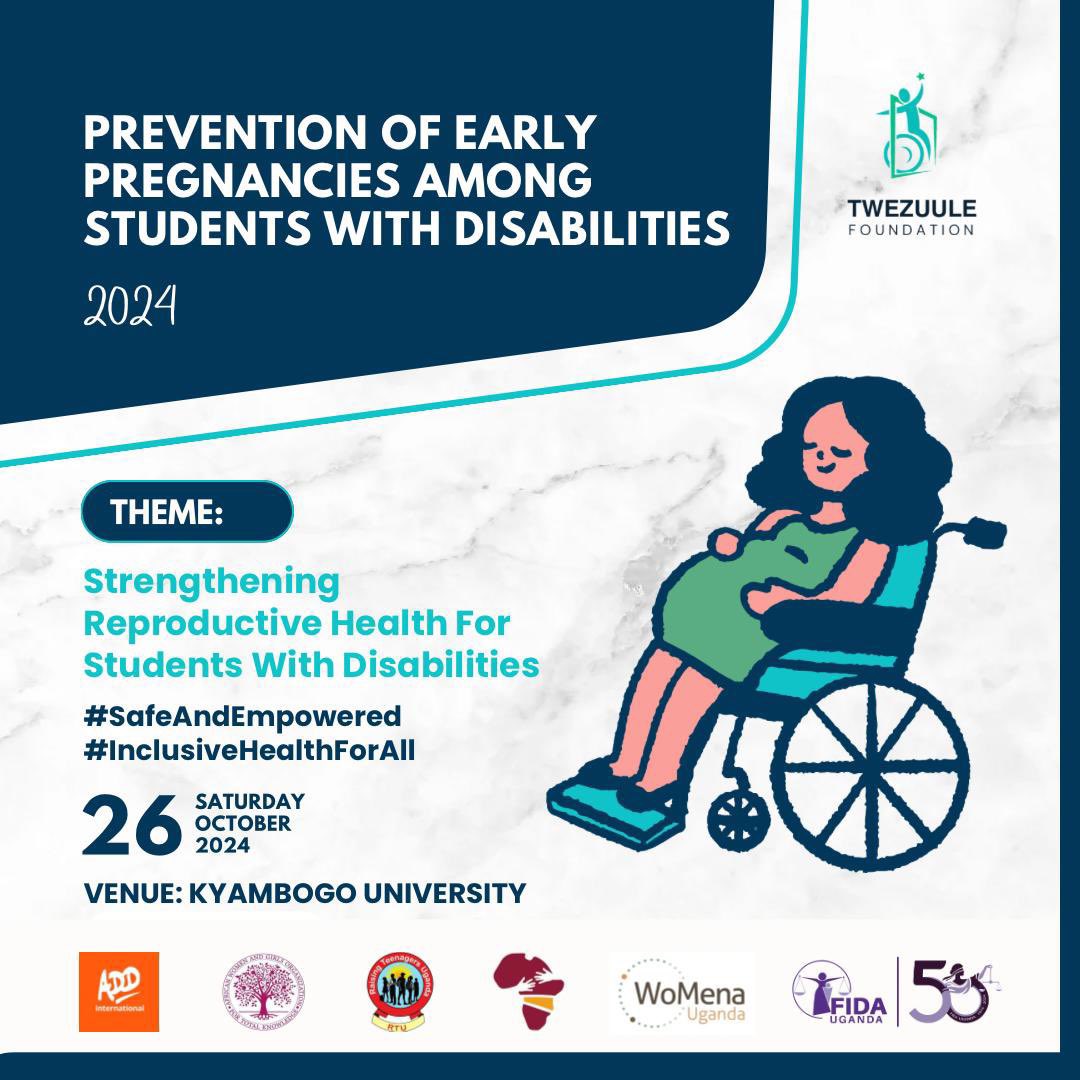
Students with disabilities face unique SRH challenges. By prioritizing inclusion in programs,we can ensure they have equal access to SRHR information & services. @TwezuuleF has organized a dialogue themed strengthening reproductive Health for students with disabilities. BeThere!
Table 4 delivered a great presentation on what the Creative Technology industry needs in terms of IP policy protecting their creations, preserving culture & also going commercial!
#KTASymposium2024
🌟Child Rights Awareness 👧🏾👦🏾📚
Awareness sessions are vital for children as they equip them with knowledge about their rights, responsibilities, and the laws that protect them. These foster a safe environment and help children make informed decisions while understanding the consequences of harmful behaviors.
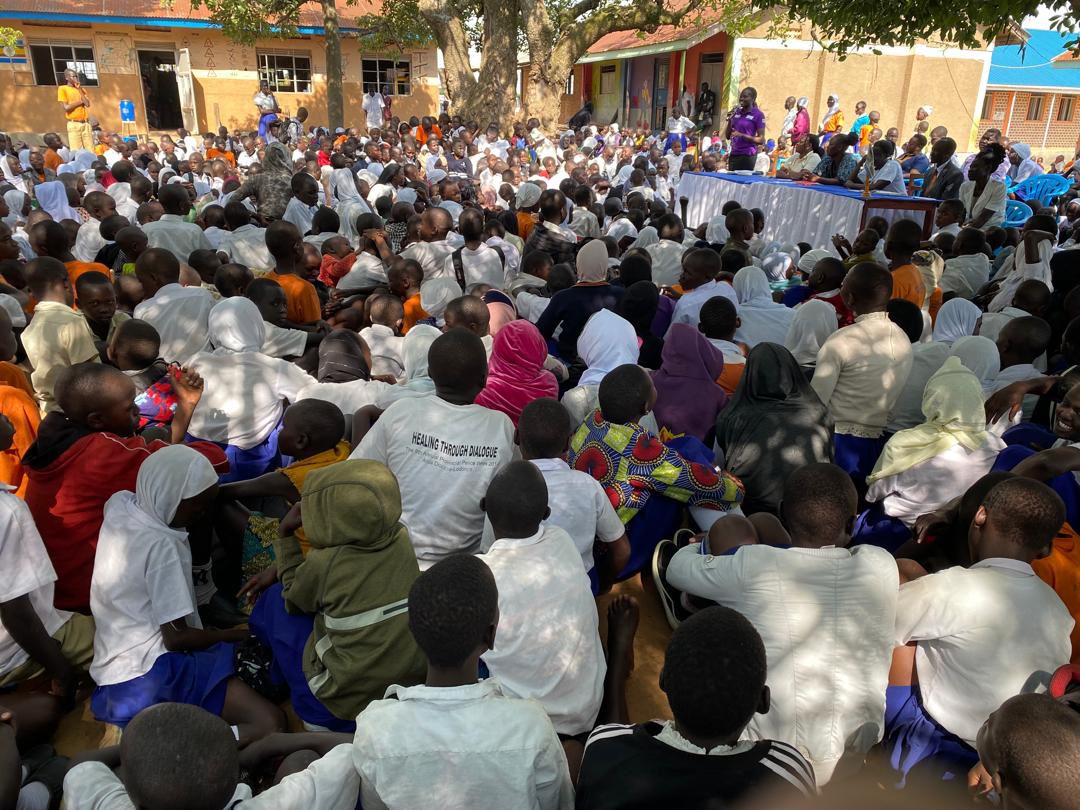
FIDA Uganda, under the RDE and DIGI projects supported by @CivsourceAfrica, @DKinUganda, @NLinUganda, @IrlEmbUganda, @SwedeninUG, partnered with the Arua City Child Wellbeing Committee to hold an impactful awareness session at Arua Primary School. The session targeted the entire school community, including 80 children with special needs, primarily those with speech and hearing impairments.
The event featured the Senior Education Officer responsible for children with special needs and addressed important topics such as child rights, criminal responsibility, teenage pregnancies, child marriage, school dropout rates, drug abuse, SGBV, traffic safety, and more. The session also provided career guidance, focusing on the importance of education and hygiene for personal development.
With a total student population of 2,017, this initiative ensured that every child, regardless of ability, understood how to report incidents of abuse, especially with the support of a sign language interpreter at the school. These awareness sessions are critical in shaping responsible, empowered future leaders. 🌍✨
#FIDAAt50 #50YearsOfProgress
FAMILY LAW⚖️: High Court Reaffirms The Scope of Desertion in Marriage, Clarifies Matrimonial Property Rights 🏡 and Custody of Minor Children 👶
The High Court has reaffirmed that desertion is not defined by mere physical separation but by a withdrawal from the responsibilities and obligations of marriage.
The court emphasized that desertion involves failure to uphold the mutual responsibilities of marriage, regardless of physical location.
Referencing the decision in Kayhul v Kayhul (Divorce Cause No. 133 of 2016) [2020] UGHCFD 7, where the court ruled that desertion may occur even when the spouses continue to live under the same roof if one spouse has intentionally withdrawn from the marital relationship for two years or more.
In this case, the Petitioner established that she had been living separately from the Respondent since 2020 and had been denied conjugal rights since 2019. During the court's locus visit to their residence in Mawanga, Munyonyo, it became evident that while the couple resided in the same home, the relationship had effectively deteriorated. The court concluded that the ground of desertion had been sufficiently proven.
Clarity on Matrimonial Property Rights.
The court reinforced what constitutes matrimonial property by revisiting the case of Charman v Charman (No 4) ([2007] EWCA Civ 503; [2007] 1 FLR 1246), where matrimonial property was defined as any property acquired during the marriage, excluding external donations.
However, as reiterated in Julius Rwabinumi v Hope Bahimbisomwe (S.C. Civil Appeal No. 10 of 2009), Court took cognizant of the fact that Ugandan law does not automatically require equal division of property upon divorce. The contribution of each spouse—whether direct (financial) or indirect (domestic services)—is evaluated to determine the appropriate distribution of property.
In Kagga v Kagga (High Court Divorce Cause No. 11 of 2005), the court acknowledged that both direct and indirect contributions to the acquisition of property are equally significant, regardless of whether one spouse was the primary financial provider. This principle was upheld in Ambayo v Aserua (Civil Appeal No. 100 of 2015) [2022] UGCA 271, where the court noted that spousal contributions can be challenging to quantify but must be assessed on a case-by-case basis.
In the current case, the Petitioner provided evidence that she played a pivotal role in identifying and contributing to the acquisition and development of their matrimonial home in Mawanga, Munyonyo.
Her contributions were corroborated by witness testimony, and the court found that, despite the property being registered in the Respondent’s name, it was indeed matrimonial property. The Petitioner was entitled to an equal share of ownership.
Custody of the Minor Children
The Court reiterated that the welfare of the children is paramount in custody decisions, as enshrined in Article 31(4) of the Ugandan Constitution (1995) and Section 3 of the Children Act, Cap. 62. In Kagimu v Kagimu (2001-2005) 3 HCB 100, the court emphasized that custody decisions must focus on the child's best interests, not the parents' rights.
In this case, both parties sought custody of their four minor children. The Petitioner argued that the children had primarily resided with her and were well cared for, while the Respondent accused her of being an irresponsible mother, although without substantive evidence.
Citing Otto Methodius Pacific v Edyline Sabrina Pacific (Civil Appeal No. 88 of 2013), the Court endorsed joint custody, ensuring that both parents remain actively involved in the children’s lives. This arrangement promotes stability and continuity, allowing the children to benefit from the care and guidance of both parents despite their ongoing marital disputes.
Read more
https://t.co/CZHfE1H65T











![Lawpointuganda's tweet photo. FAMILY LAW⚖️: High Court Reaffirms The Scope of Desertion in Marriage, Clarifies Matrimonial Property Rights 🏡 and Custody of Minor Children 👶
The High Court has reaffirmed that desertion is not defined by mere physical separation but by a withdrawal from the responsibilities and obligations of marriage.
The court emphasized that desertion involves failure to uphold the mutual responsibilities of marriage, regardless of physical location.
Referencing the decision in Kayhul v Kayhul (Divorce Cause No. 133 of 2016) [2020] UGHCFD 7, where the court ruled that desertion may occur even when the spouses continue to live under the same roof if one spouse has intentionally withdrawn from the marital relationship for two years or more.
In this case, the Petitioner established that she had been living separately from the Respondent since 2020 and had been denied conjugal rights since 2019. During the court's locus visit to their residence in Mawanga, Munyonyo, it became evident that while the couple resided in the same home, the relationship had effectively deteriorated. The court concluded that the ground of desertion had been sufficiently proven.
Clarity on Matrimonial Property Rights.
The court reinforced what constitutes matrimonial property by revisiting the case of Charman v Charman (No 4) ([2007] EWCA Civ 503; [2007] 1 FLR 1246), where matrimonial property was defined as any property acquired during the marriage, excluding external donations.
However, as reiterated in Julius Rwabinumi v Hope Bahimbisomwe (S.C. Civil Appeal No. 10 of 2009), Court took cognizant of the fact that Ugandan law does not automatically require equal division of property upon divorce. The contribution of each spouse—whether direct (financial) or indirect (domestic services)—is evaluated to determine the appropriate distribution of property.
In Kagga v Kagga (High Court Divorce Cause No. 11 of 2005), the court acknowledged that both direct and indirect contributions to the acquisition of property are equally significant, regardless of whether one spouse was the primary financial provider. This principle was upheld in Ambayo v Aserua (Civil Appeal No. 100 of 2015) [2022] UGCA 271, where the court noted that spousal contributions can be challenging to quantify but must be assessed on a case-by-case basis.
In the current case, the Petitioner provided evidence that she played a pivotal role in identifying and contributing to the acquisition and development of their matrimonial home in Mawanga, Munyonyo.
Her contributions were corroborated by witness testimony, and the court found that, despite the property being registered in the Respondent’s name, it was indeed matrimonial property. The Petitioner was entitled to an equal share of ownership.
Custody of the Minor Children
The Court reiterated that the welfare of the children is paramount in custody decisions, as enshrined in Article 31(4) of the Ugandan Constitution (1995) and Section 3 of the Children Act, Cap. 62. In Kagimu v Kagimu (2001-2005) 3 HCB 100, the court emphasized that custody decisions must focus on the child's best interests, not the parents' rights.
In this case, both parties sought custody of their four minor children. The Petitioner argued that the children had primarily resided with her and were well cared for, while the Respondent accused her of being an irresponsible mother, although without substantive evidence.
Citing Otto Methodius Pacific v Edyline Sabrina Pacific (Civil Appeal No. 88 of 2013), the Court endorsed joint custody, ensuring that both parents remain actively involved in the children’s lives. This arrangement promotes stability and continuity, allowing the children to benefit from the care and guidance of both parents despite their ongoing marital disputes.
Read more
https://t.co/CZHfE1H65T](https://pbs.twimg.com/media/GZJEV8AXsAAFAup.png)


