At Airbus, we’re for what’s next. Join us as we work to fuel progress in space and, in doing so, create a better future for earth and all humankind. #NextSpace
ILA Berlin airshow seen from space 🛰️
Our Pléiades Neo satellite caught a glimpse of #ILA26 where @Airbus aircraft ✈️ and helicopters 🚁 are on display.
Can you spot them? 🔎
Live from ILA Berlin - Airbus awarded contract for Copernicus Sentinel-1 NG radar instruments.
The next-generation radars represent a significant leap in Earth observation capability generating essential data for the global fight against climate change, providing millimetre-level accuracy to monitor sea-level rise, glacier movements, and land deformation.
Learn more: https://t.co/yrVO8kOVH4
@esa@esa_eo@CopernicusEU@Thales_Alenia_S
Just happened at #ILA26: Airbus Defence and Space has signed an agreement to collaborate on a satellite-based Earth observation and Intelligence, Surveillance, and Reconnaissance (ISR) solution with Rohde & Schwarz, constellr, Orbint and High Performance Space Structure Systems (HPS).
Led by Airbus as prime contractor and system integrator, the consortium brings together five complementary German specialists to address growing governmental demand for sovereign, end-to-end space-based surveillance capabilities. 🇩🇪 🤝
Learn more:
https://t.co/byQeh1mxi7
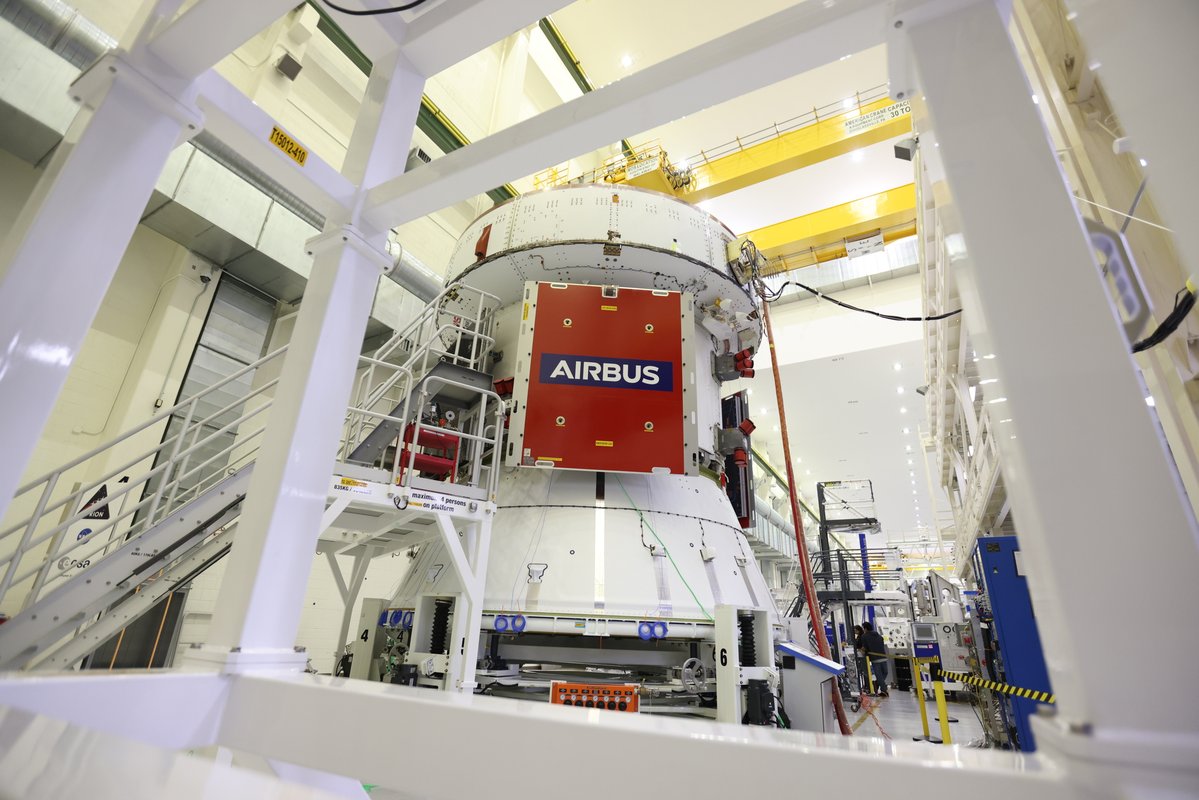
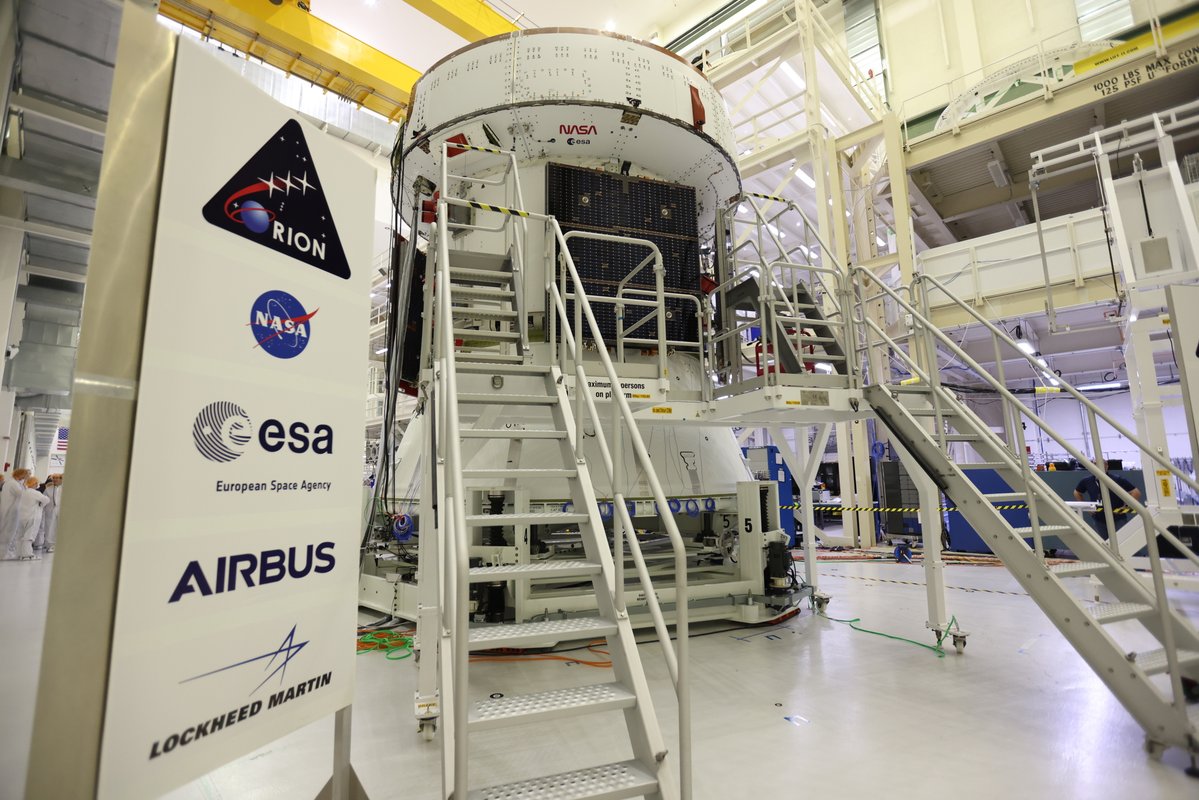
🌕 Our third European Service Module's journey so far, from Europe to Florida… now ready to power humankind's next great journey 🚀.
📢 Tune in at 17:30 CEST 🔗https://t.co/Br3I1jeZw8
Our astronaut Luca Parmitano is assigned as pilot of NASA’s #ArtemisIII mission.
With Europe powering Orion with the European Service Module, this mission will test the critical operations preparing for humankind's return to the Moon.
A strong step forward for ESA–NASA partnership.
🔗https://t.co/MJpn0ftcpr
📸 NASA
Shaping the Future of Space Connectivity 🚀
As global data demands skyrocket, traditional radio frequencies face critical capacity limits. Airbus is leading Europe’s optical communications revolution to bridge this gap.
We are building the infrastructure for next-generation, ultra-high-capacity, and secure space networks. Innovations like our TELEO GEO to Ground laser communication system, the UltraAir demo, and our pioneering work on optical links with the LaserPort Optical Ground Station make this possible.
Laser communication is no longer a technology of the future, it is happening now! 🛰️📡🔒
Our #TeamAirbus will be on the ground at @ESA's #ScyLight2026 Conference to discuss how we are transforming secure data transmission across the space domain.
Learn more:
➡️ ScyLight Event: https://t.co/2VdvfCojlP
➡️ Airbus and partners demonstrate very high speed optical link between Earth and Space: https://t.co/PsKRUMmDGH
➡️ Quantum communication for dummies: https://t.co/A7yezNaffI
One month after the Artemis II crew returned to Earth, splashing back down in the Pacific Ocean, let’s throwback to this iconic mission marking the return of humanity to the Moon.
We still have goosebumps looking back at what humankind achieved together.🤩
What's your takeaway from this mission?
#ArtemisII
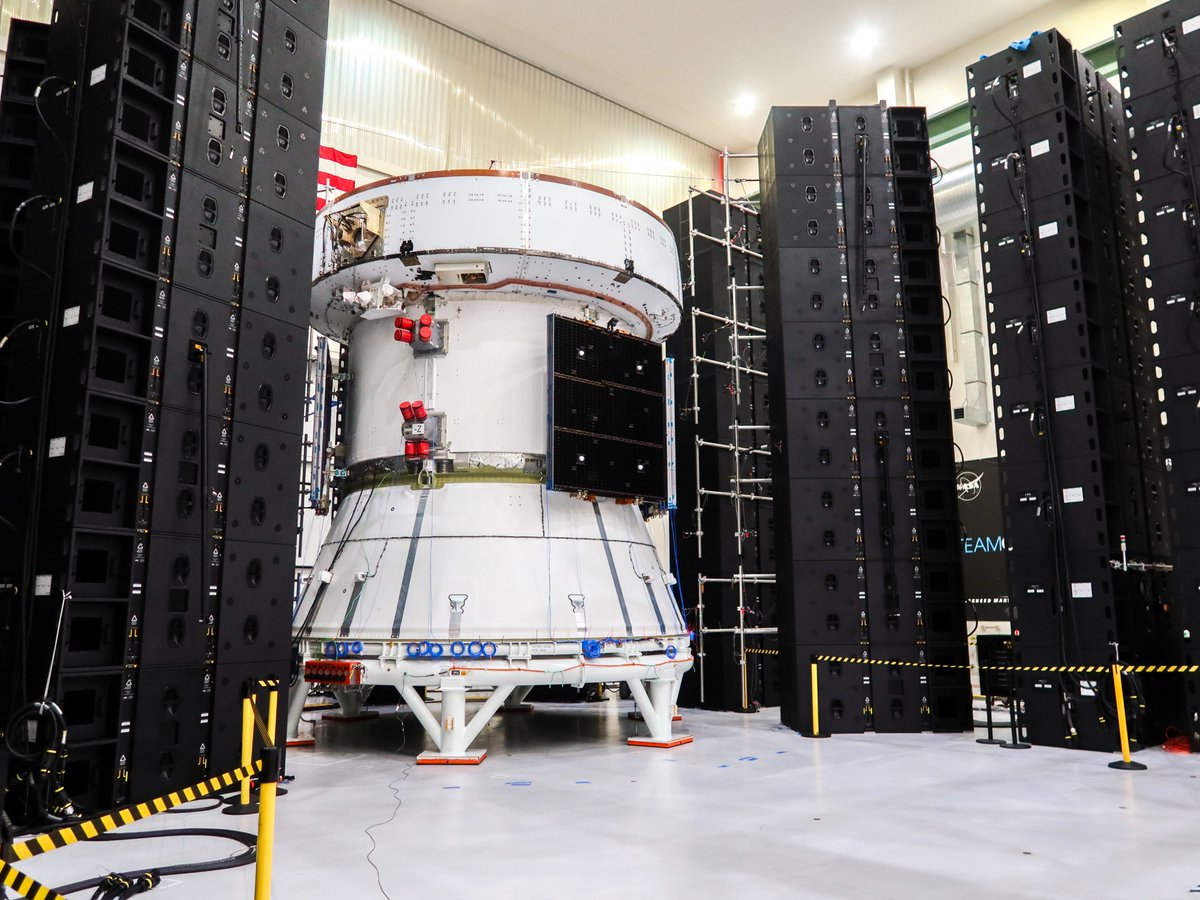
Artemis III gets its wings! ✅The four solar arrays have just been attached to the third European Service Module (ESM), the Airbus-built part of the Orion spacecraft. With its four solar wings, the ESM will power Orion during its journey through space.
What’s next? The acoustic test, which measures the spacecraft's noise levels to ensure it is safe for the astronaut crew.
This latest step is all part of the third Orion spacecraft getting ready for its launch to test docking manoeuvres in low-Earth orbit in 2027. 🚀
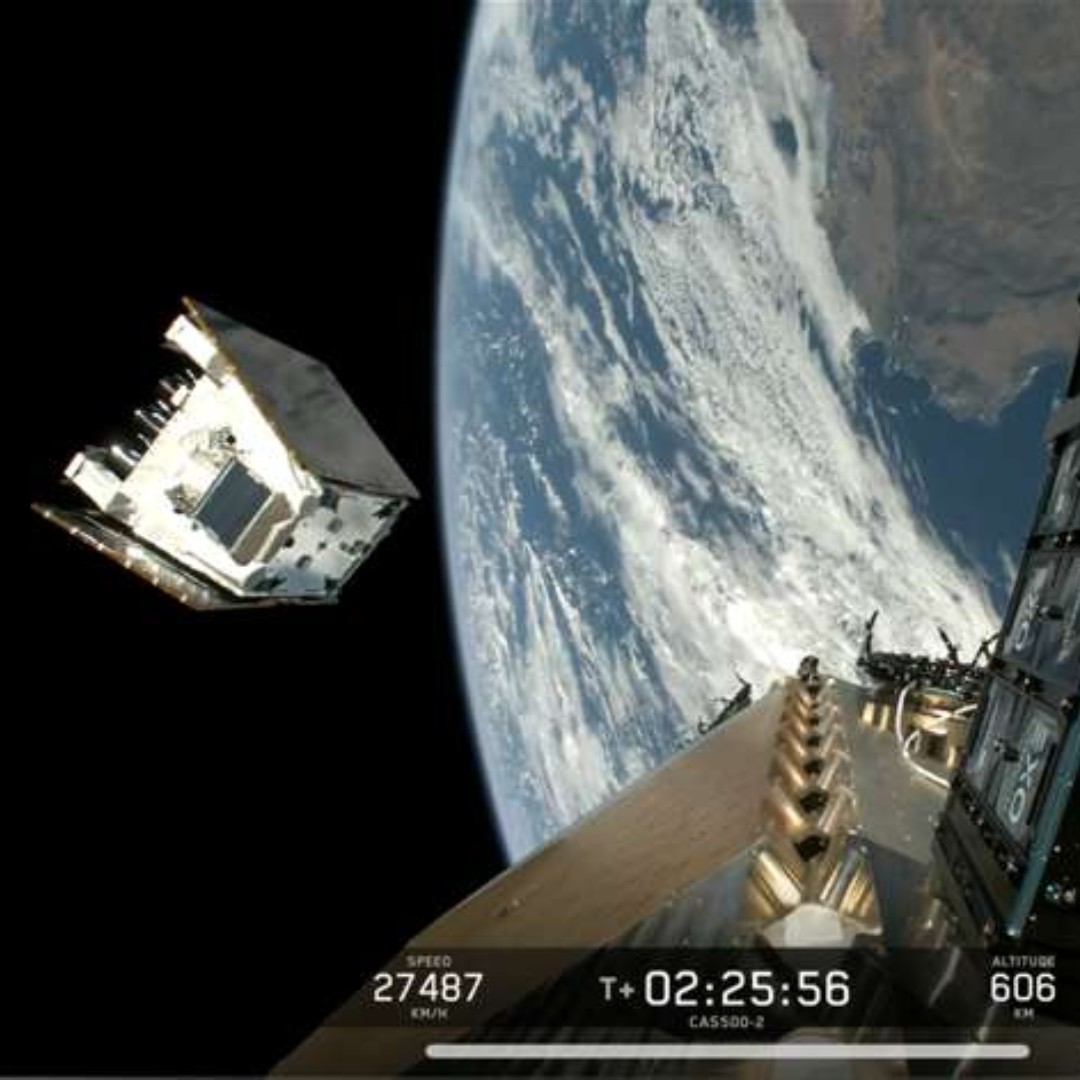
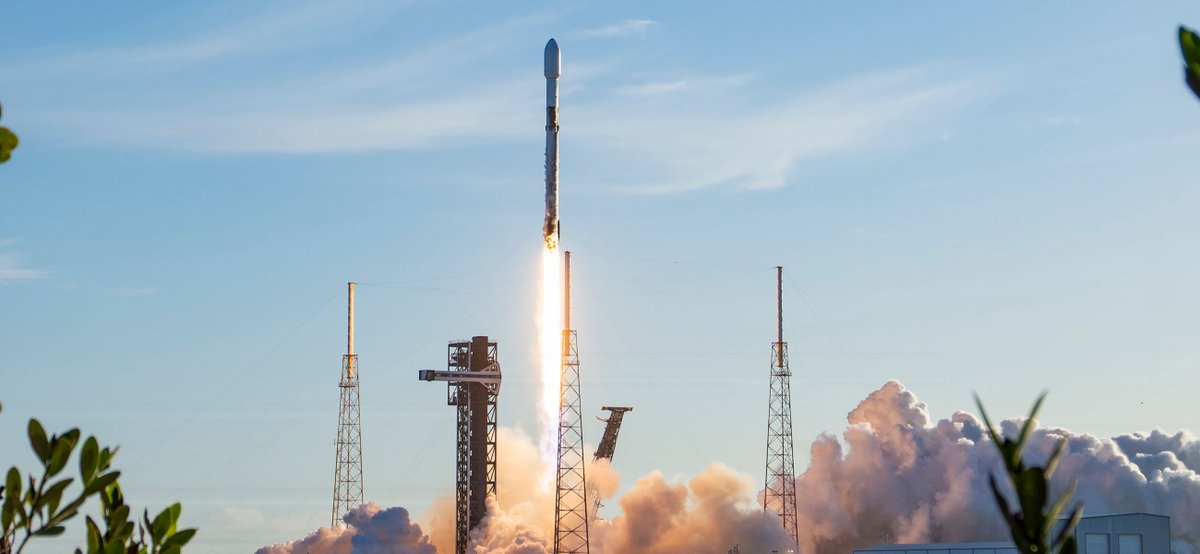
Airbus technology just reached space with the successful launch of six new @LoftOrbital satellites now in orbit, based on our versatile small sat platform.
These Earth observation satellites for the EarthDaily constellation, provide daily measurements of planetary change on a global scale.🌍
Once again, Airbus is providing unique #NextSpace solutions to deliver space that matters for Earth.
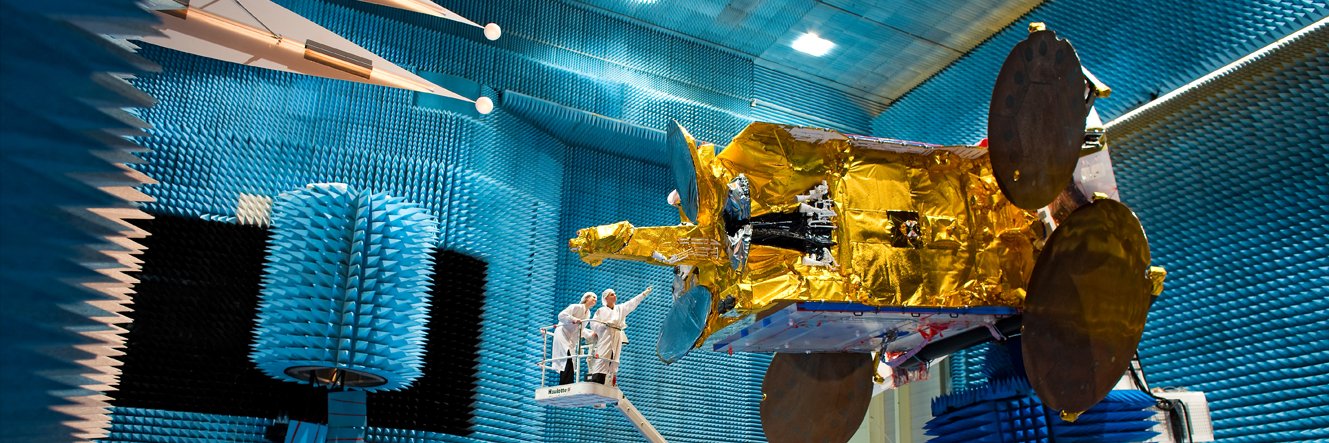
22 years ago we designed a new satellite platform the Eurostar 3000, our best seller for over a decade with 54 satellites still in orbit and operating for 18 customers. The usual life time is 15 years…
The first of these satellites has now being deorbited, having served our customer @EutelsatGroup.
Imagine a car built for 250,000 km that just kept cruising until 350,000 km without a single breakdown. That's the level of #TeamAirbus reliability we're talking about.
While this satellite starts its well-earned retirement in 'graveyard orbit', its legacy lives on in the dozens of Eurostar 3000 siblings still powering your data, TV, and connectivity across the globe today. 🌍📡
22 years of service. More than 2 billion kilometres travelled. One incredible record.
The next generation European navigation system 🛰️ is taking shape at Airbus!
Europe's Galileo🇪🇺 will be the world's most accurate positioning system with:
➡️ Top-notch security
➡️ Even greater accuracy
➡️ Faster signal acquisition
➡️ Improved search & rescue
Learn more: https://t.co/P5KCurOLEL
For many people around the world, coffee is a part of daily life. ☕ However, if left unchecked, the cultivation of this stimulant can have devastating consequences for the forests around the equator and requires close monitoring. Airbus has joined an initiative of large coffee producers, which, with our help, is using satellite imagery and AI analysis to create the world’s first publicly accessible map of coffee cultivation.
The Coffee Canopy Partnership brings together world’s main coffee traders. By sharing geospatial data, Canopy provides them with the information they need to prevent deforestation – thereby also boosting farmers’ resilience through better support.
Learn more about Canopy here: https://t.co/sKwDPZAHau
#EarthDay #EarthObservation #PleiadesNeo #Sustainability #Starling
Seeing double!
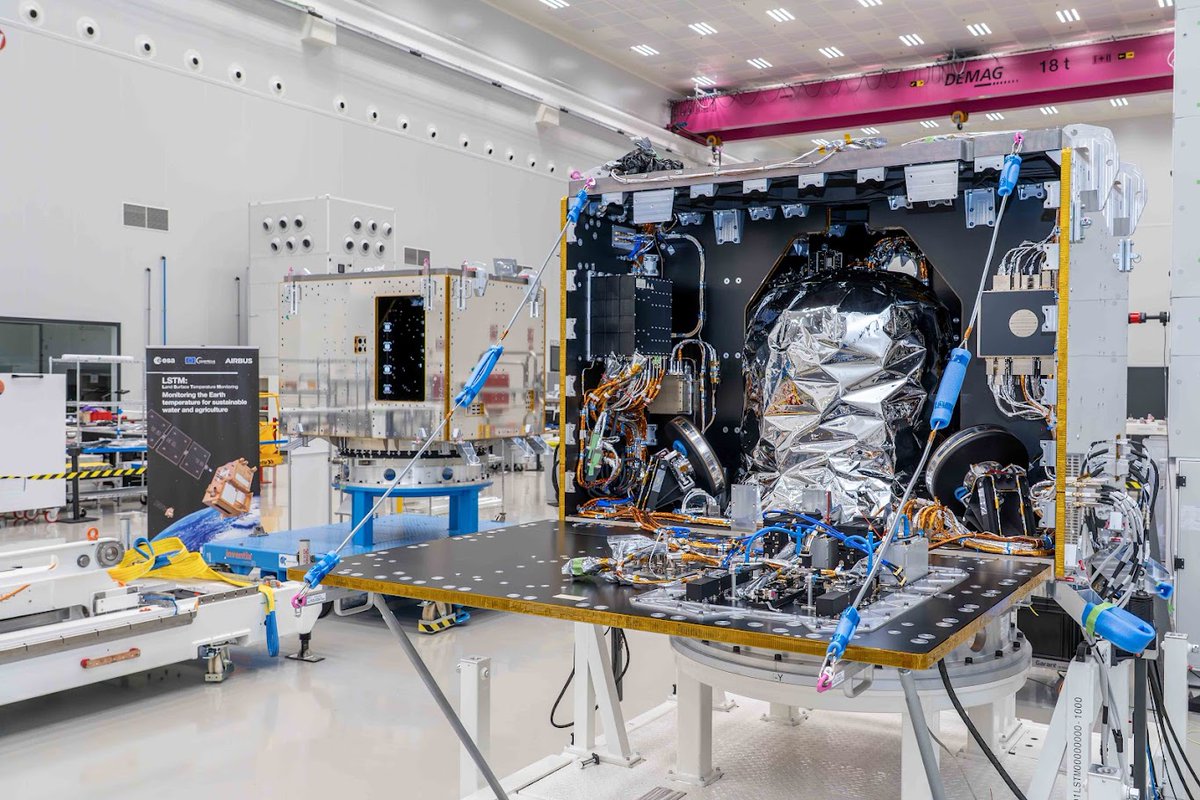
There are now two Land Surface Temperature Monitoring (LSTM) satellites in our cleanroom in Getafe 🇪🇸! While the first satellite’s platform is nearly complete and undergoing tests, our teams are starting to work on its twin.
The satellites’ mission is to monitor the Earth's surface temperature by providing both high-resolution thermal infrared images and field temperature data at a 50-metre scale.
LSTM is part of the Copernicus Expansion missions developed by the European Space Agency @esa on behalf of the European Commission @EU_Commission.
Airbus is leading a consortium of 81 companies from 21 countries to deliver these climate monitoring satellites.
Launch is planned at the end of this decade.
Airbus Defence and Space, Thales Alenia Space, and RADMOR, today announced the signing of an industrial cooperation agreement to develop a geostationary defence telecommunications satellite dedicated to the Polish Ministry of Defence.
As part of the ‘Readiness 2030’ plan initiated by the European Commission in 2025, this
new geostationary satellite will offer secure communications for the Polish armed forces,
ensuring a very high level of robustness and resilience. With the return of high-intensity
conflicts in a more contested space environment, this end-to-end system will be cyber-
secured across ground and space segments, resistant to threats, thereby contributing to
the strengthening of Poland’s national space sovereignty.
To the full press release: https://t.co/p2AIOsJ31I
A new passenger on its way to the International Space Station! 🚀
The ClimCam payload, a climate monitoring camera, has been successfully launched Cape Canaveral in Florida.
This deployment marks a key achievement for the joint initiative between the United Nations Office for Outer Space Affairs (@UNOOSA) and Airbus, who granted a free one-year mission aboard the ISS to support the @UN’s Sustainable Development Goals.
The very heart of ClimCam is international cooperation.The joint project between Uganda, Egypt, and Kenya was designed to monitor the impacts of climate change in Eastern Africa. For 12 months, the mission will focus on collecting and sharing information and images from space to guide climate mitigation efforts on the ground, boost the agricultural sector, and help build a more sustainable future.🌱
The next step: integration on Bartolomeo, the Airbus payload platform aboard the ISS.
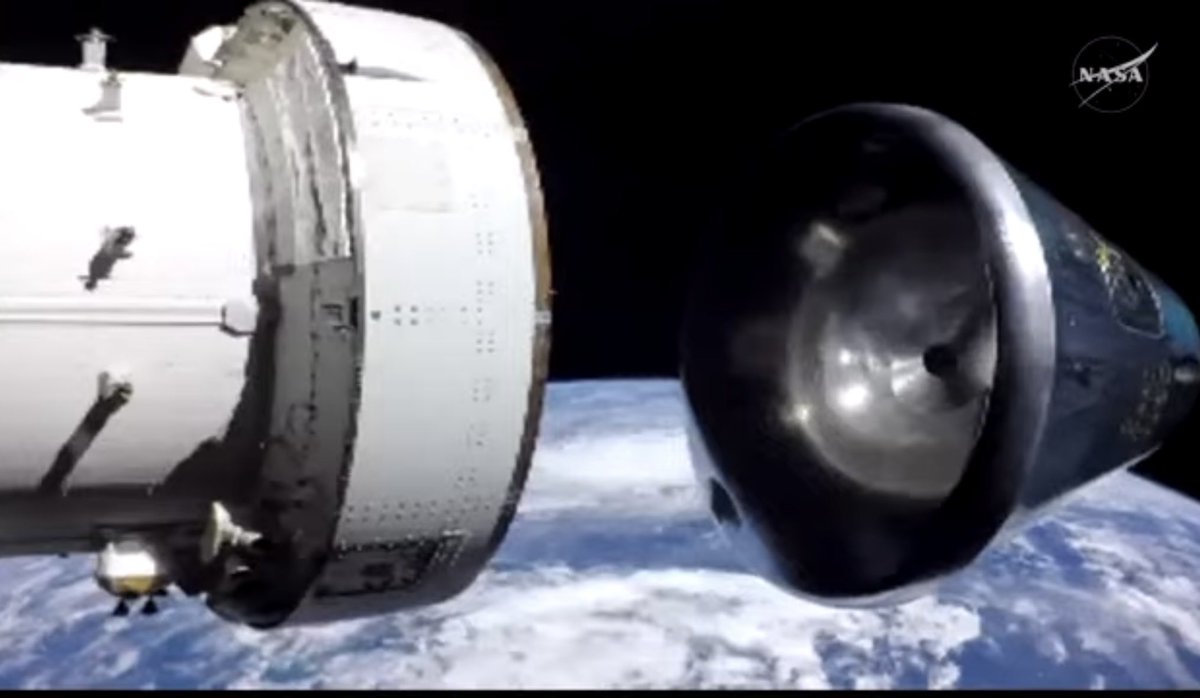
🛰️ Our European Service Module has successfully separated from Orion's crew module!
🚀 After propelling the spacecraft over 1 million km in deep space, it will now burn up in Earth's atmosphere, as the astronauts continue their journey home 🌍
🎉 #Artemis II update: Integrity is back on Earth! At 01:07 BST/02:07 CEST, Orion and its crew splashed down safely in the Pacific Ocean.
🚀 Our European Service Module propelled Orion over 1 million km through deep space, before burning up in Earth's atmosphere, its job complete 🔥
https://t.co/yZ3XNBHBPt
The third return burn for the Artemis II mission occurred at 2:53pm ET (1853 UTC), refining Orion’s path for atmospheric entry and splashdown. During the maneuver, the spacecraft made precise adjustments to stay on its targeted course home.
"We just wanted to give a huge shoutout to that ESA Airbus team, to our friends in the Netherlands and Germany, and at the Glenn Research Center. This vehicle powered us and it propelled us from the Earth to the Moon and back with extreme precision, and we are excited to be a part of your team." -Artemis II Commander Reid Wiseman (@astro_reid)