1/5 MiniCPM-V 4.6 (1.3B) is now live 🚀🚀
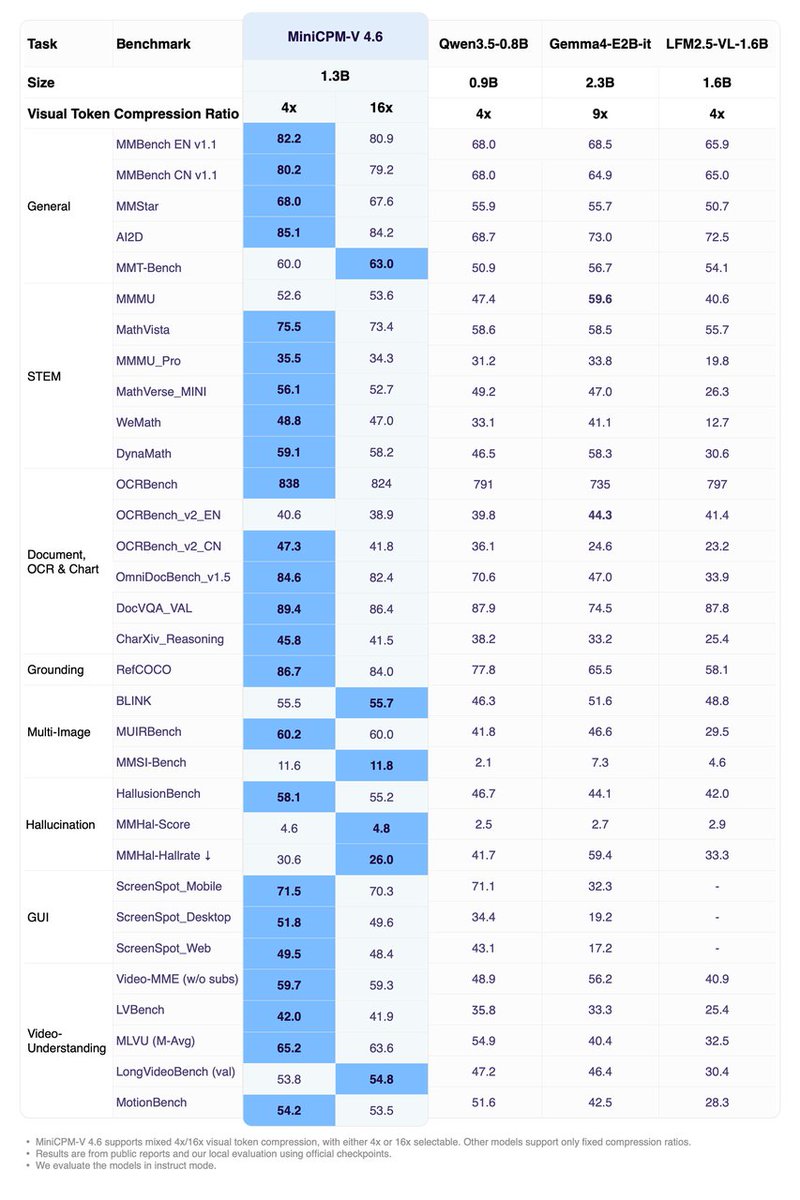
High-res visual processing, optimized for consumer-grade and mobile hardware. We’ve leveraged the latest LLaVA-UHD v4 technique to cut vision encoding costs by 55%, enabling native edge deployment with extreme efficiency.
🔥 Beats Gemma4-E2B-it and Qwen3.5-0.8B across key multimodal and Artificial Analysis benchmarks — scoring higher than Qwen3.5-0.8B using just 2.5% of its token budget.
⚡ TTFT (75.7ms) 2.2x Faster than Qwen3.5-0.8B even with 3136² high-res images.
🏗️ ~1.5x Token Throughput compared with Qwen3.5-0.8B on a single RTX 4090.
Try the model here:
🤗 Hugging Face:
https://t.co/CEkwKMSBwc
💻 GitHub:
https://t.co/iYDxpa52tn
🔭 Modelscope:
https://t.co/CHflKPLbvK
🌐 Web Demo:
https://t.co/DYUrtD0YzM
📱 App Demo:
https://t.co/SL7IOhm6zv
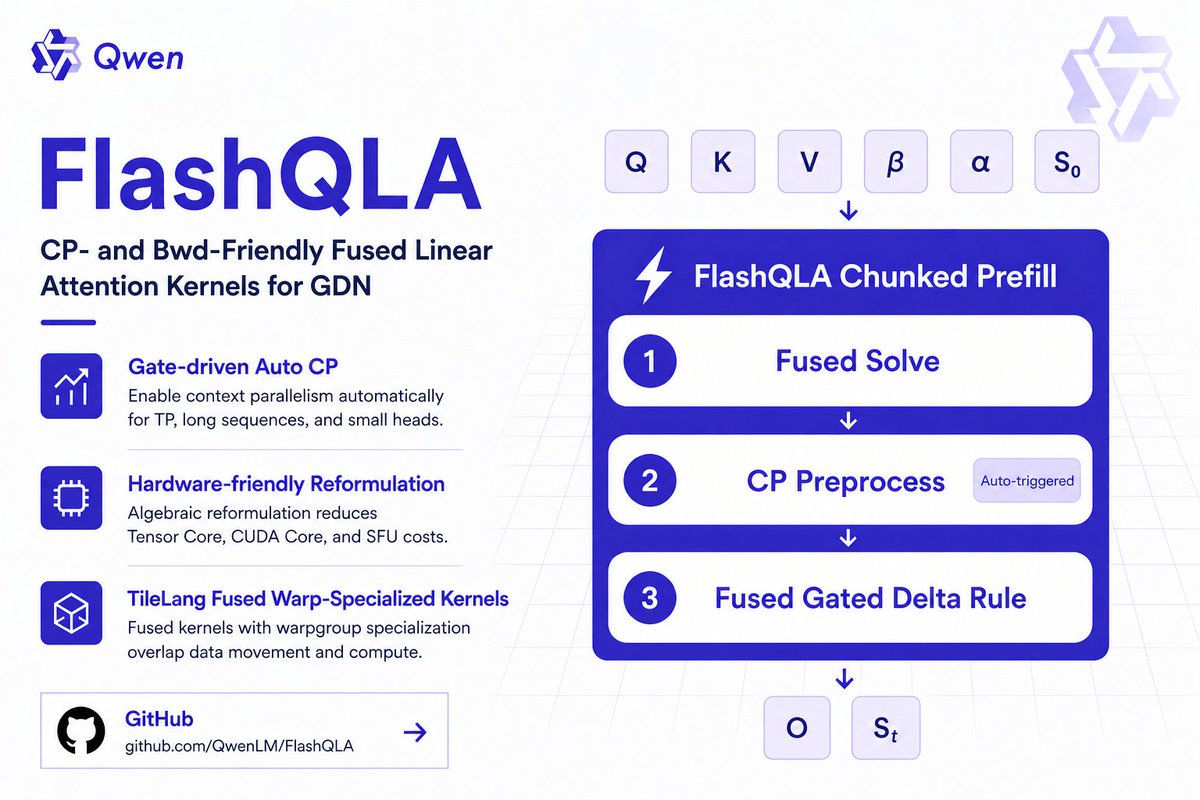
🌩️Introducing FlashQLA: high-performance linear attention kernels on TileLang.
⚡ 2-3× fwd, 2× bwd speedup.
💻 Purpose-built for agentic on your personal devices.
1. Gate-driven auto intra-card CP.
2. Hardware-friendly reformulation.
3. TileLang fused warp-specialized kernels.
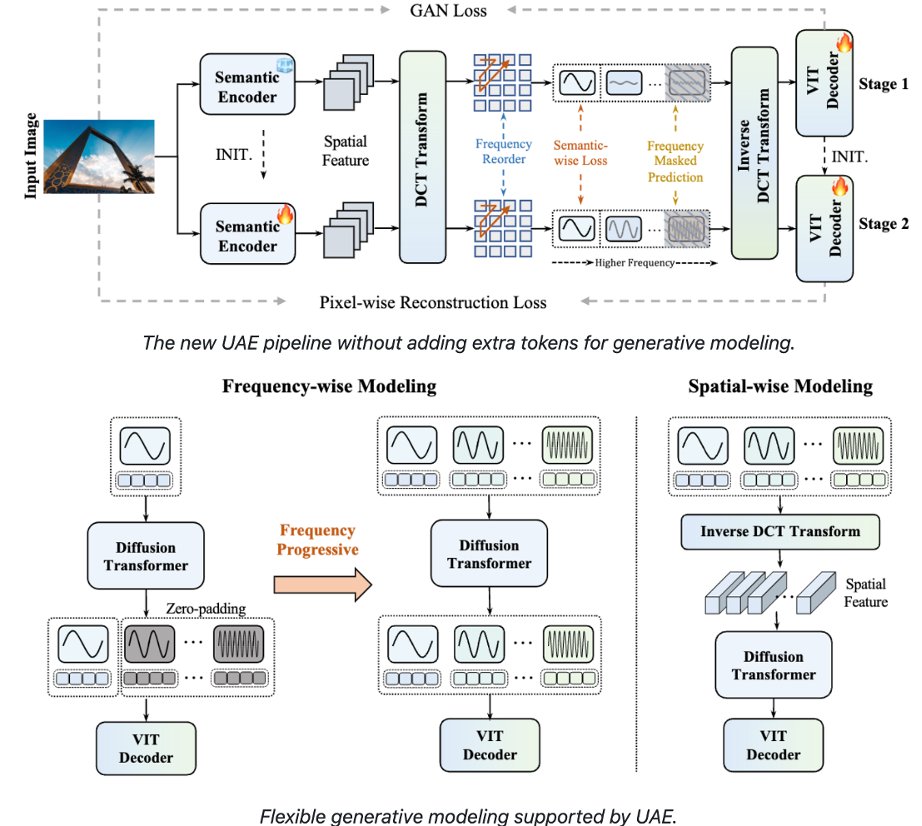
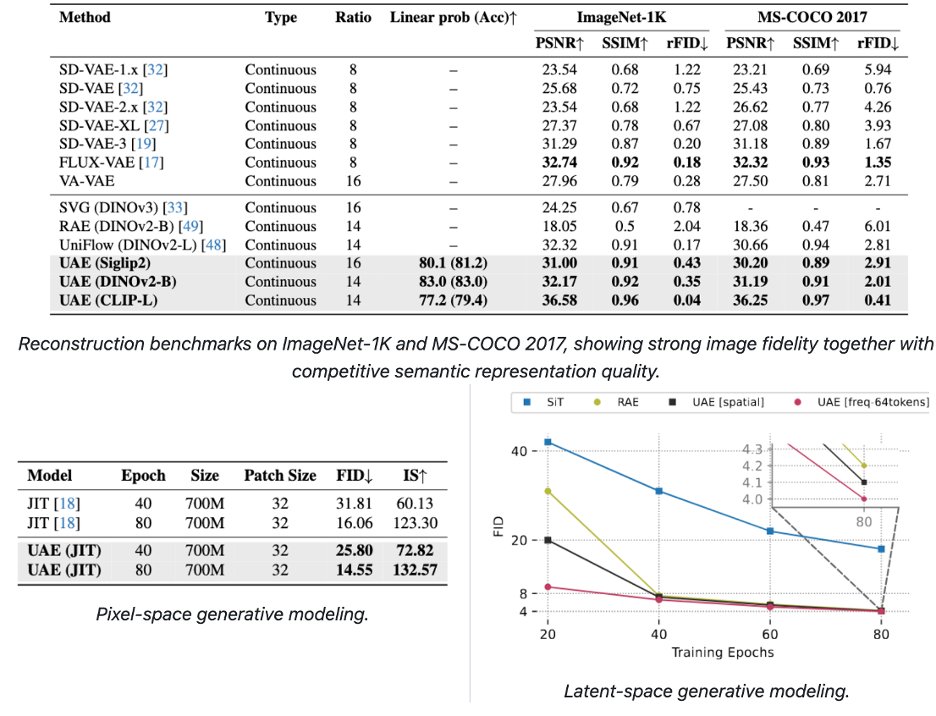
🔥BIG Update🔥for "The Prism Hypothesis" (UAE)
✨Paper: https://t.co/BAIRUngMOo
✨Code: https://t.co/t2k5N1CDDq
🔠languages and visuals👓 can coexist in one representation.
Now support both latent and pixel-wise Generation
(🔥JIT is supported!🔥)
💫#UAE💫 gives a strong foundation for NEO-Unify:
Understanding and generation share one representation making raw-input end-to-end learning a natural path! 👏👏👏
If you could abstract away the messiness of prompting from OPSD, it's got everything you'd want in a general learning algorithm: on-policiness (as opposed to SFT), and dense reward signal (as opposed to RL). We're bullish on OPSD, but @part_harry_ does a great job outlining some of the contours of the aforementioned messiness here
Finally finished!
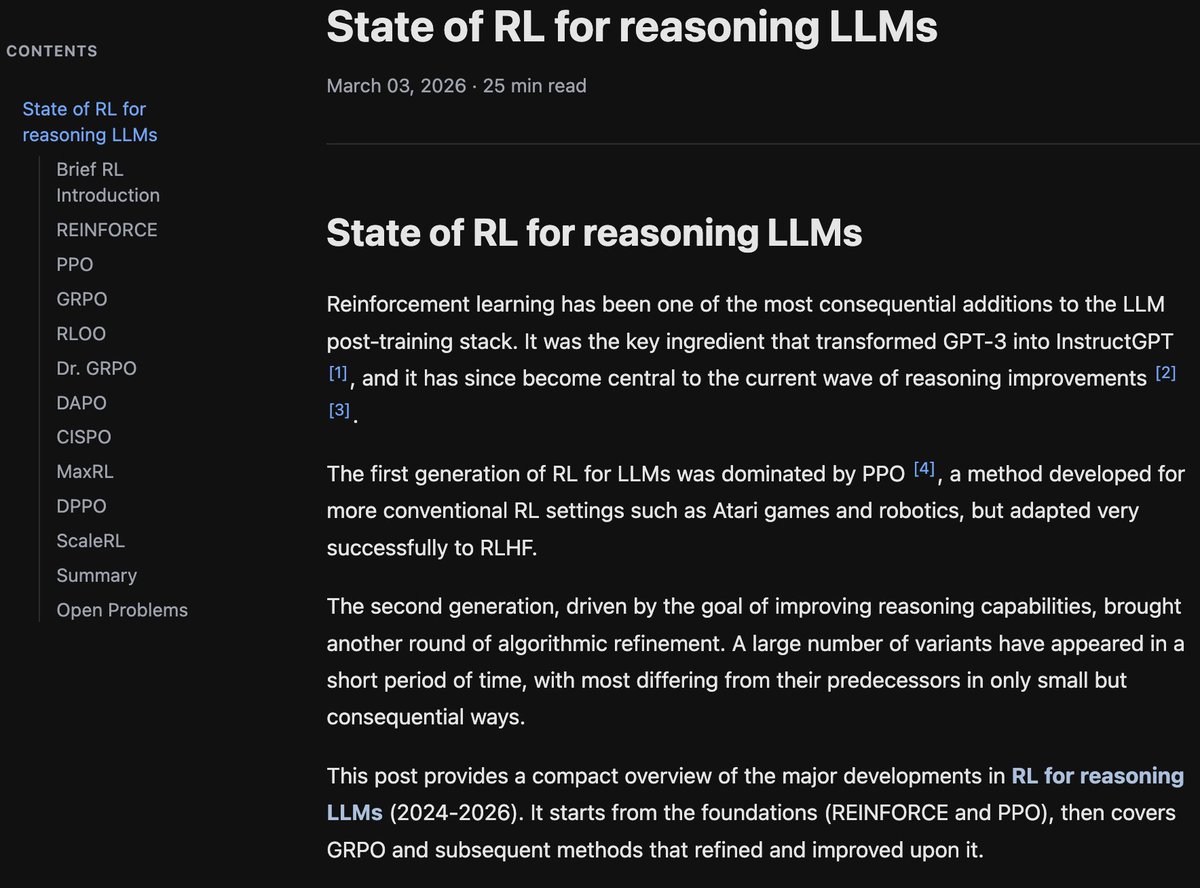
If you're interested in an overview of recent methods in reinforcement learning for reasoning LLMs, check out this blog post: https://t.co/SHUyFF4rvP
It summarizes ten methods, tries to highlight differences and trends, and has a collection of open problems
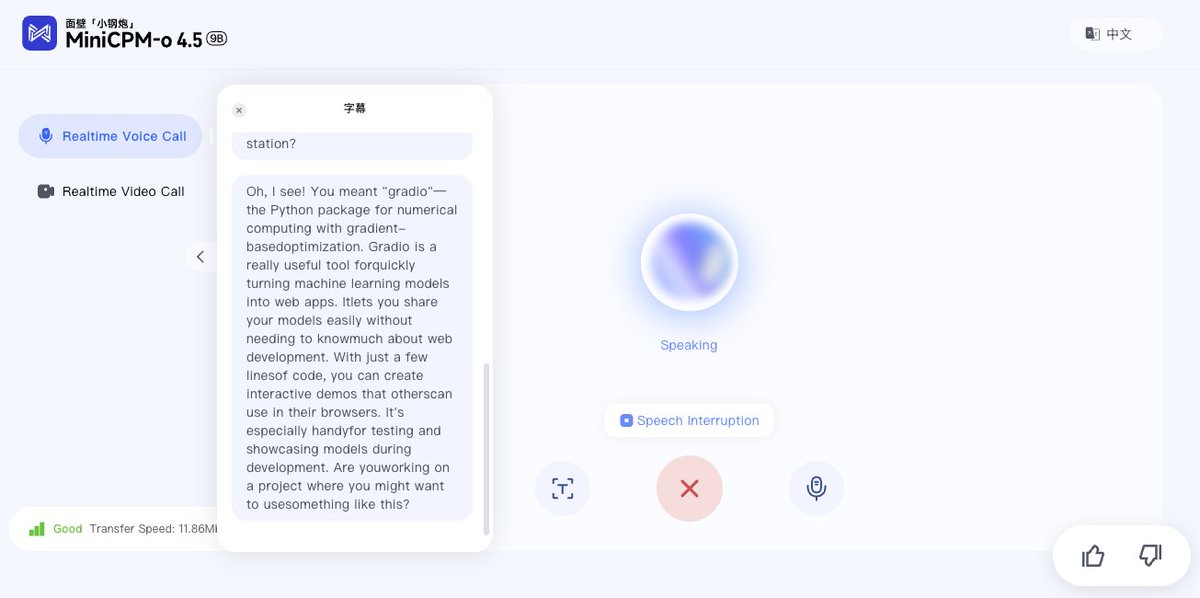
🚀 MiniCPM-o 4.5 WebDemo is now more accessible than ever!
We’ve revamped our local deployment to make it easier for everyone to experience the power of our latest Omni model. Whether you are a researcher or a dev, we have a path for you:
🐳 Option 1: DockerZero-setup, cross-platform support (macOS/Linux/Windows). Just pull and run! 🔗 https://t.co/BM178FqqZJ
⚡ Option 2: One-click ScriptNative deployment for macOS/Linux. Memory-efficient and perfect for secondary development. 🔗 https://t.co/7YKHk9cTnZ
Give it a spin and let us know your thoughts! Your feedback helps us grow. 🙏 https://t.co/KzzgiGYhVr
#MiniCPMo #OpenSource #LLM #EdgeAI #AI
Why do most LLM agents hit a wall?
They don’t accumulate skills.
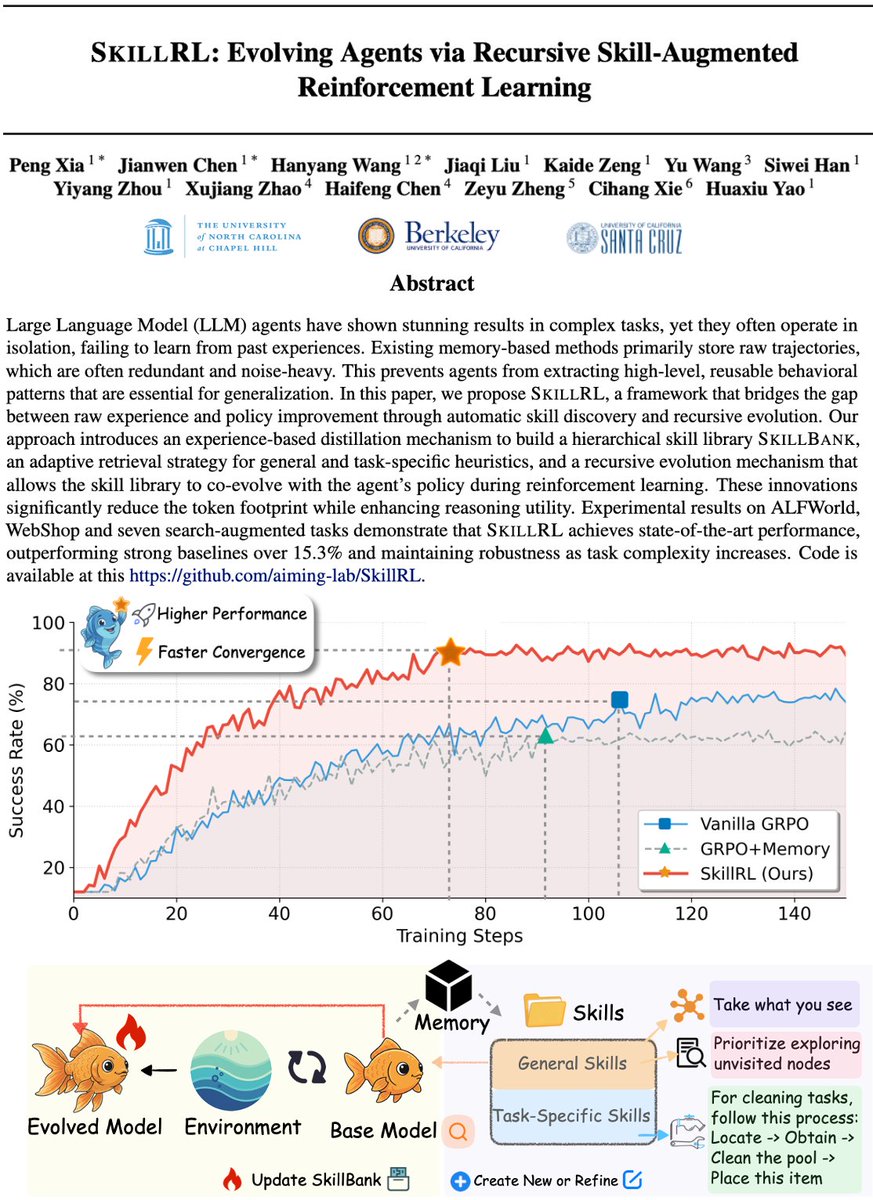
Introducing SkillRL📚 — recursive skill-augmented reinforcement learning that lets agents learn skills from failure and evolve over time.
🔥A 7B model:
• +41% over GPT-4o
• ~20% fewer training tokens
• 33% faster convergence
SkillRL bridges raw experience → policy improvement by distilling trajectories into structured, co-evolving skills during RL.
Most agents forget.
SkillRL evolves. 🔄
📄 Paper: https://t.co/6VoxpGoPR6
💻 Code: https://t.co/qVDnIaci2K
Great work @richardxp888, Jianwen Chen, Hanyang Wang, @JiaqiLiu835914, @lillianwei423, @AiYiyangZ, and nice collab. w/ @__YuWang__, @XujiangZhao, Haifeng Chen, Zeyu Zheng, @cihangxie.
Excited to share work from my internship at MSL @AIatMeta! 🚀
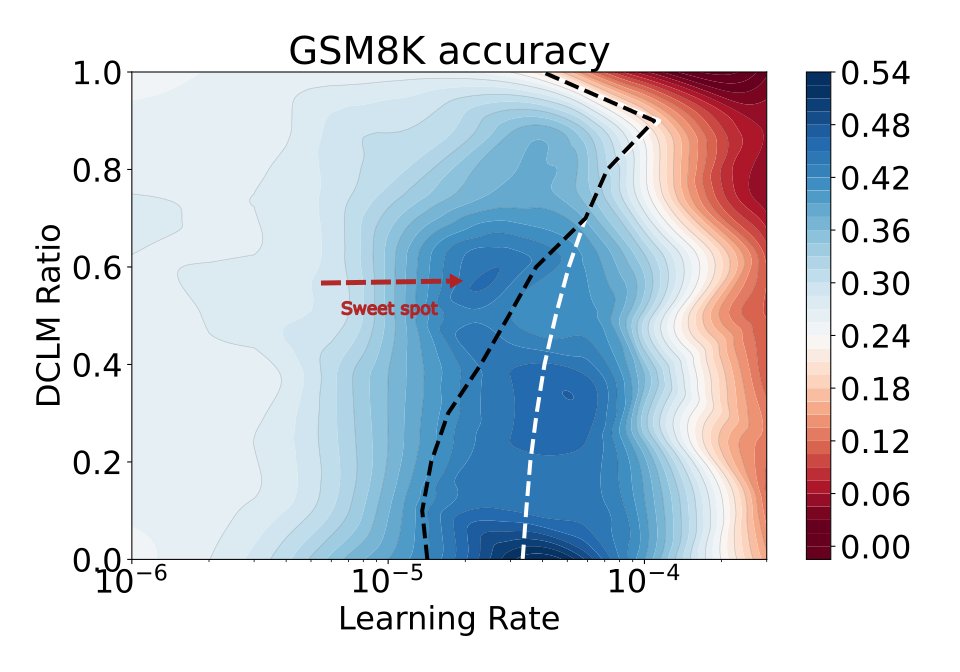
We analyze Critical Sharpness: a scalable curvature measure requiring only ~6 forward passes to analyze LLM training dynamics at scale.
We extend this measure to introduce Relative Critical Sharpness, which measures the relative curvature between two landscapes. We use this to answer a major practical question: How much pre-training data should we mix during fine-tuning to avoid catastrophic forgetting?
🧵
(1/n)
🥳 Introducing MiniCPM-o 4.5
The first full-duplex omni-modal LLM in open-source community 🎬🎙️
🔥 Key Highlights:
• Full-duplex Omni-modal Live Streaming: The model can see, listen, and speak simultaneously in a real-time conversation without mutual blocking
• Proactive Interaction: Moving beyond reactive QA to performing proactive interaction, such as initiating reminders
• Leading Performance: Scoring 77.6 on OpenCompass, it outperforms GPT-4o & Gemini 2.0 Pro in vision-language tasks with 9B params
The best part? You can experience all above on your PC!
#MiniCPM #OpenSource #MultimodalAI #LLM
Q: Why choose CISPO instead of GSPO or GRPO? How well does CISPO adapt to MoE, and does changing the RL algorithm require architectural refactoring?
GRPO predates both, but in our attempts to reproduce R1-Zero it proved unreliable: PPO-style clipping caused token-level gradients to vanish, leading to unstable learning. GSPO can be a reasonable alternative in some settings, and the Meta paper provides a useful comparison.
We chose CISPO primarily for its empirical stability and favorable bias–variance trade-off.
Regarding MoE compatibility, our observations so far indicate that CISPO behaves similarly on MoE and dense models. At the algorithmic level, we do not see major discrepancies introduced by MoE when using CISPO.
As for architecture changes, switching RL algorithms does not require refactoring the core model architecture. That said, MoE models do introduce additional considerations during RL training, mainly due to the router mechanism.
Recent approaches (such as R3 with fixed routing) aim to improve MoE stability under RL. These are largely lower-level implementation choices and are mostly orthogonal to higher-level RL algorithms like CISPO, which primarily operate at the level of optimization dynamics rather than architectural design.
🚨We introduce Multiplex Thinking:
Humans think in high-bandwidth “soft” internal representations, while LLMs must commit token-by-token. Prior work adds continuous thought tokens to widen the channel, but often sacrifices the stochasticity that RL-style training needs.
Multiplex Thinking keeps both:
- hard-sample multiple tokens per step (stochastic, RL-friendly)
- soft-merge them into a continuous state (higher bandwidth)
Bonus: sampling run in parallel ⇒ near-zero overhead + shorter reasoning.
We’re releasing everything: paper+model+code. This project is led by my talented first-year PhD student @tyao923 at Penn (@CIS_Penn@PennEngineers) with collaborators at MSR (@donglixp@yaruhao@qx_dong@furu_wei)
Paper: https://t.co/5M3OGoH99T
Blog: https://t.co/bjTxmh1RVa
Code: https://t.co/UIb5oPTmzN
Model: https://t.co/xQlOCRDpDN