Este post resume, en términos propios del paganismo nórdico, la visión general sobre el libre albedrío y el "destino" en las religiones nativas europeas.
If you suggested the concept of "Free will" to our Pagan ancestors as possible, desirous or good, they would have laughed at you.
The concept of human agency, the idea that humans have absolute, unconditioned free will is anathema to Paganism (and everything we know about psychology), and is rather a necessary component of Christian concepts of sin and Gods judgement.
Christianity uses the spectre of divine judgement and punishment to achieve compliance to moral virtue "Do the right thing or God will judge you". Presuming a just God, this creates the requirement that the person has the ability to choose the right thing in all circumstances. Thus the concept of "Free will" becomes born out of necessity.
Obviously this raises some questions; Does a gangpressed child soldier have the "free will" to not murder or steal? Does someone who has spent their entire life being brainwashed into a cult have the free will to reject its teachings? Can a person choose a path that they don't even know exists? Christianity resolves the tension in this question without actually solving the problem with the concept of "divine forgiveness". The jungle savage is forgiven for his Pagan ways as he has never been exposed to "the good news". The question gets put aside with "God will sort it out in the end".
But "Divine forgiveness" provides a loophole; "If my sins are forgiven through ignorance or by accepting Jesus, that means I don't have to adhere to Gods law at all!" And to this, the Christian also has answers.
Paganism, by contrast avoids all of this entirely with the simple observation that people do not have free will, but are rather constrained by fairly self evident factors. The child slave/soldier does what he must to survive, and has little or no ability to act according to will. The person born into a line of degenerate criminals cannot become king.
Humans are inherently constrained by their ORLOG; the "starting layers/conditions" of a persons life, including the deeds of their past ancestors but also family, health, social standing, era, culture. These factors shape the parameters of ones decision making ability. We know this intuitively. There is no "Blank slate" This is why "they can't be assimilated". We are even seeing now, for example, that violent acts create a *genetic* propensity for violent acts, which is past on. In psychology we have phrases like "Socio-economic-status"
We believe in Wyrd; "The tapestry of existence", the idea that one is constrained by fate. This isn't determinism but it says that we do not choose freely in a vacuum but are constrained by past choices and their consequences. The sagas echo this over and over again, as their characters are forced by circumstance into situations where all available options have dire consequences.
We believe in luck; Not in the modern sense of random chance, but in the sense the good in your life increases the probability that more good things will come into your life, that you will make good decisions, and prosperity becomes inevitable We believe in the obverse; one born to bad reputation, an unprosperous life, who acts dishonorably is gradually doomed into circumstances where only negative outcomes are possible. "The damned" one might call it, but by their own circumstances and choices, rather than some external moral force.
In the liberal (philosophically speaking), Christian concept of the world, man is born a free individual who chooses of his own free will to enter into "the social contract". To the Pagan this is self-evident nonsense. The individual is born into a web of frith (relationships), if they are lucky(see above) those relationships are good and those frithbonds are in tact. They are born into the immediate constraints on their will that is maintaining HONOR and WORTH (how one is seen and valued in their society). Their individuality is immediately muted by and tied to the fate of their "clan", kin, etc.
This is so much so that in early concepts of court justice, accounts were settled between groups, not individuals. If I killed someone from another clan and was found at fault, it fell on my clan to pay compensation, not me individually. Alternately the "Debt" created could be settled by that clan killing some other person in my clan.
Unfettered individuality is so anathema to the worldview that being outcast (banished) was second only to being executed. To the Pagan, "Free will" was not only inconceivable, it was undesired in that all decisions must be made in the context of what increases the honor, worth and Haminga of the clan and kin, and likewise their ability to exercise "will" is constrained by them.
If you suggested the concept of "Free will" to our Pagan ancestors as either desirous or good, they would have laughed at you.
From Emperor Julian in "Against the Galileans":
“...you emulate the rages and the bitterness of the Jews, overturning temples and altars, and you slaughtered not only those of us who remained true to the teachings of their fathers, but also men who were as much astray as yourselves, heretics, because they did not wail over the corpse in the same fashion as yourselves. But these are rather your own doings; for nowhere did either Jesus or Paul hand down to you such commands.”
@ictinus_x I get your point and I agree, but it is not appropriation. First, it is statue of Neptune, not Poseidon. Second, Greek and Latin classical culture is absolutely a part of my country's (Spain) heritage. Thirth, to speak about "cultural appropriation" in the Mediterranean is absurd
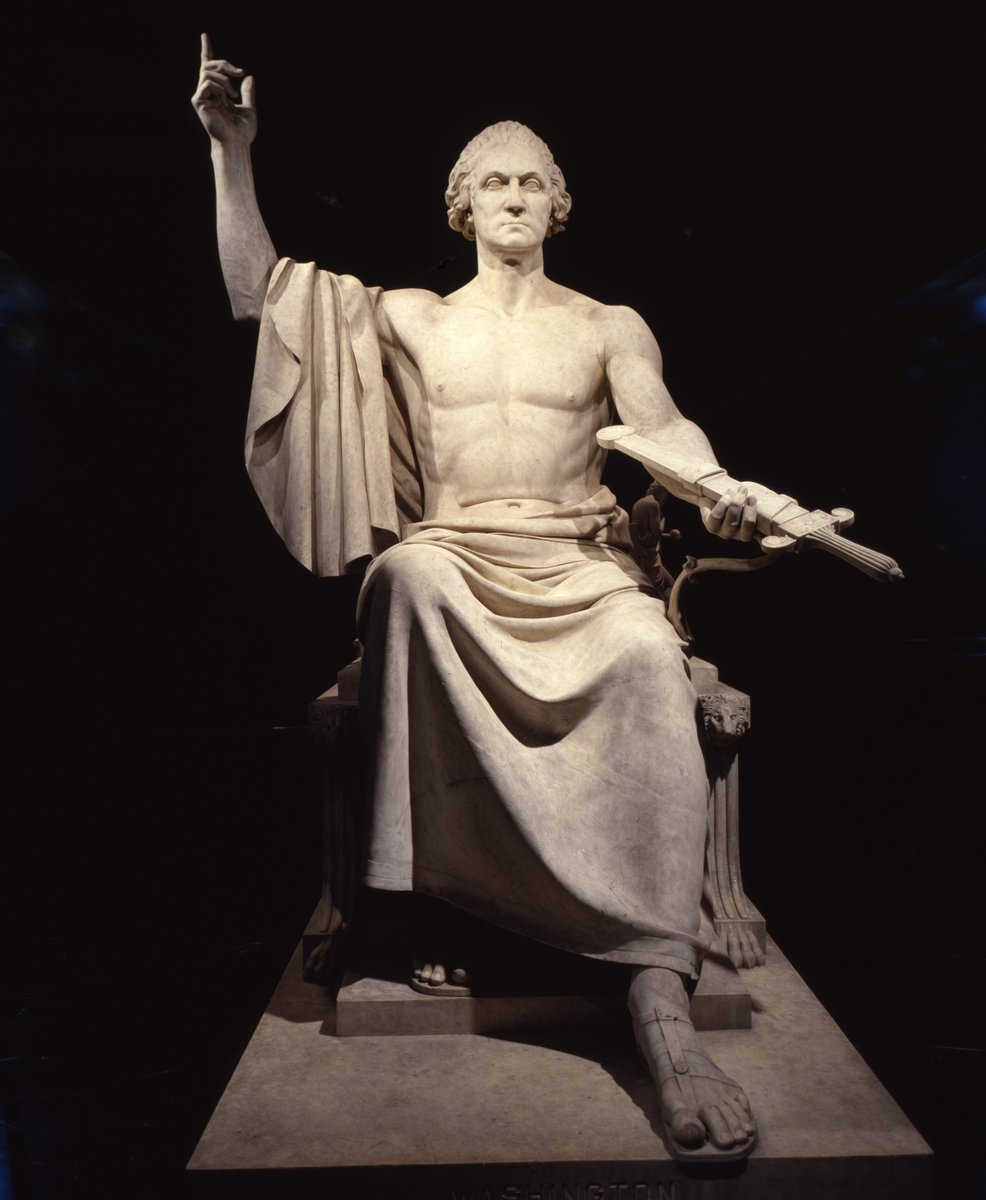
call me a larper, but i yearn for an american paganism: hero-worship of washington, a state cult of lady columbia, a laurentian cernunnos for our vast wilderness, a hermes of the frontier, patron of explorers...
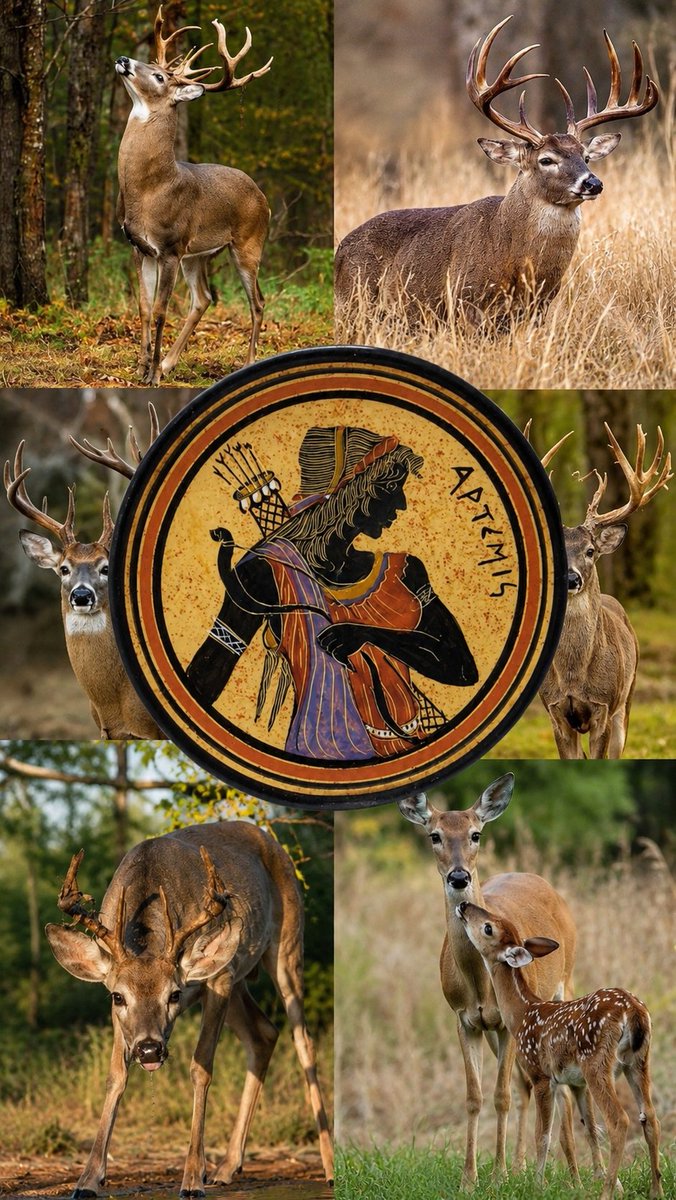
El cuidado de lo elemental y humano es un juego, pero el juego más noble y bello (καλλίστας παιδιὰς). Desdeñarlo, en pos de un escapismo, no solo es ignorar lo menos fundamental, sino ignorar el Fundamento que lo contiene.
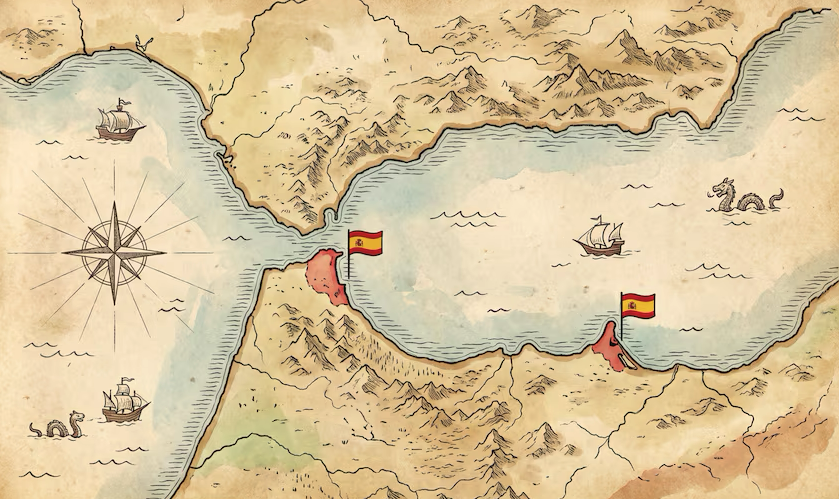
Melilla es española desde 1497 y Ceuta desde 1668, cuando pasó de Portugal a la Corona. Melilla, cuando la tomó Castilla, estaba en ruinas y sin control efectivo de nadie: los wattasíes de Fez y los zayyaníes de Tlemecén se la disputaban sin ocuparla. No se arrebató a ningún Estado, se ocupó un vacío. La dinastía alauí, la que reina hoy, no llega al poder hasta los años 1660: casi dos siglos después.
Pero el título español no depende de esa fecha, y ahí está su fuerza. Depende de cinco siglos de posesión continua, pacífica y efectiva, con una población que tiene ciudadanía española, vota en elecciones españolas y está representada en el Congreso. Eso es prescripción adquisitiva, la forma más sólida de soberanía que reconoce el derecho internacional.
Marruecos no reclama por herencia dinástica, no puede, sino por contigüidad geográfica y marco descolonizador. Y ahí el argumento se le complica: Ceuta y Melilla nunca fueron colonias, son territorio metropolitano con las mismas instituciones que Cádiz o Málaga, y sus habitantes no han pedido nunca cambiar de bandera. La descolonización se decide por autodeterminación, no por proximidad en el mapa.
Cinco siglos y una ciudadanía que se afirma cada vez que hay urnas. Eso no lo mueve un argumento de contigüidad.
"But that from the beginning God cared only for the Jews and that He chose them out as his portion, has been clearly asserted not only by Moses and Jesus but by Paul as well; though in Paul’s case this is strange. For according to circumstances he keeps changing his views about God, as the polypus changes its colours to match the rocks, and now he insists that the Jews alone are God’s portion, and then again, when he is trying to persuade the Hellenes to take sides with him, he says: “Do not think that he is the God of Jews only, but also of Gentiles: yea of Gentiles also.”
Therefore it is fair to ask of Paul why God, if he was not the God of the Jews only but also of the Gentiles, sent the blessed gift of prophecy to the Jews in abundance and gave them Moses and the oil of anointing, and the prophets and the law and the incredible and monstrous elements in their myths? For you hear them crying aloud: “Man did eat angels’ food.”
And finally God sent unto them Jesus also, but unto us no prophet, no oil of anointing, no teacher, no herald to announce his love for man which should one day, though late, reach even unto us also. Nay he even looked on for myriads, or if you prefer, for thousands of years, while men in extreme ignorance served idols, as you call them, from where the sun rises to where he sets, yes and from North to South, save only that little tribe which less than two thousand years before had settled in one part of Palestine.
For if he is the God of all of us alike, and the creator of all, why did he neglect us?"
-Emperor Julian the Philospher, "Against the Galileans"
Según la ley de Zeus el huésped debía respetar la casa del anfitrión y no abusar de ella. Quien rompía ese vínculo sagrado ofendía a Zeus, protector de la hospitalidad.
"Our fathers established images and altars as symbols of the presence of the Gods, not that we may regard such things as Gods, but that we may worship the Gods through them"
- Julian the Faithful, Letter to a priest
"Al que sigue a lo divino le está reservada una vida clandestina. Pero no si declara pertenecer a alguna confesión. En ese caso se le concede respeto. Las confesiones son como partidos, temibles porque pueden contar con un suplemento de de abnegación por parte de sus seguidores"
"From the numerous references to Zeus in his work, it is clear that Plato shared many of the same basic beliefs about him as did his contemporaries in what might be termed the enlightened mainstream of Hellenic piety.
En Valle del Tiétar faltan bomberos y voluntarios, accesos limitados. Hay escasez de: Mascarillas, Baterías de móvil, Agua embotellada, Comida enlatada, Pienso de animales, Aceite para mezcla motosierra, Gasolina para motosierra, Motosierras, Desbrozadoras