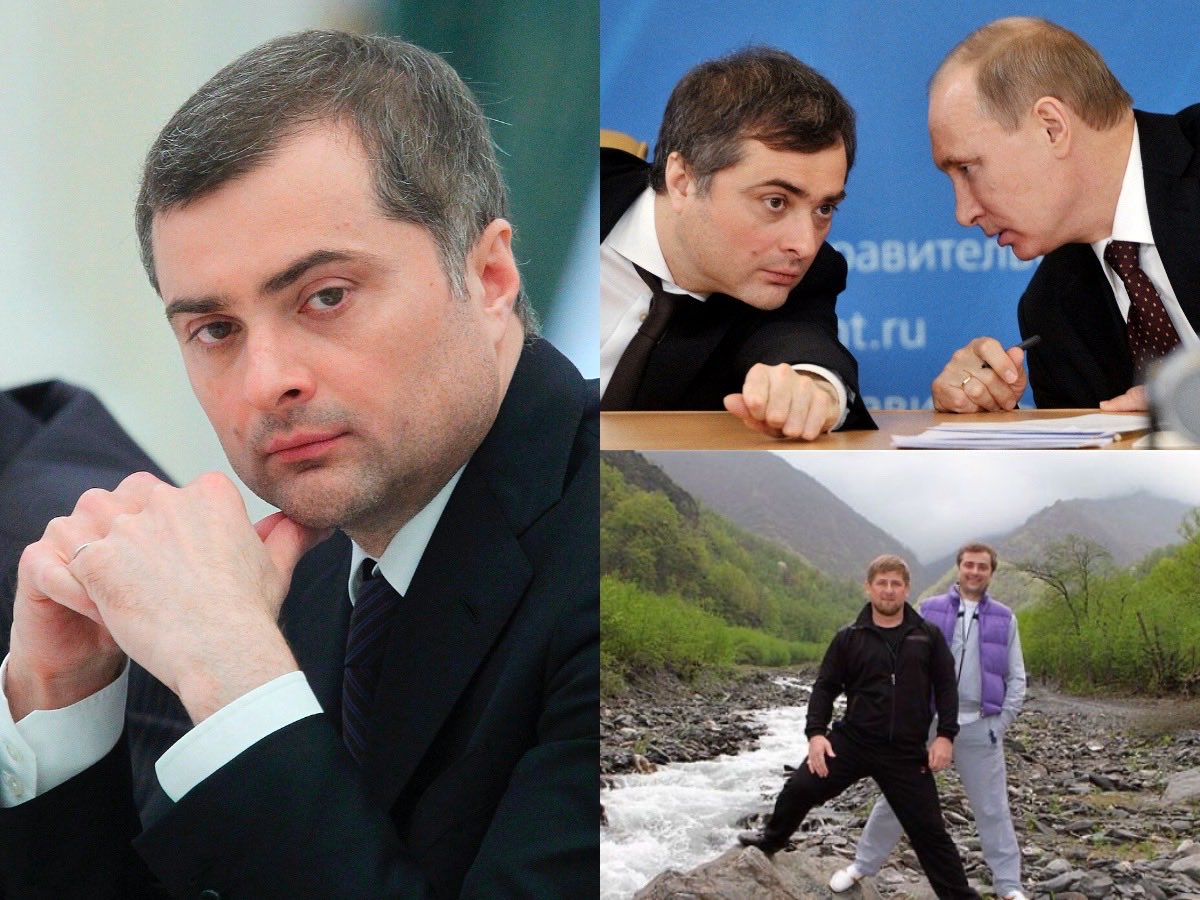
You cannot understand the rot of modern politics without studying Vladislav Surkov, the dark political strategist who engineered Putinism.
He is a profoundly dangerous figure who mastered the art of weaponized illusion, creating a blueprint of deception that has been copied by many, including Donald Trump.
Many know about Surkov’s existence because of The Wizard of the Kremlin, but both the book and the movie have faced intense blowback for humanizing Putin and Surkov too much. The truth is much uglier.
Surkov built the infrastructure of modern Russian authoritarianism through managed democracy, a toxic system where the Kremlin secretly funds and controls almost every political faction, from violent skinheads to liberal human rights organizations, ensuring the population remains divided, confused, and powerless.
His philosophy is entirely built on turning an act into reality. Everything is an act, and while most people realize everything is an act, they choose to play along with the spectacle.
As the chief engineer of the 2014 invasion of Ukraine, Surkov manufactured the entire Donbas separatist movement out of nothing. He deployed paid crowds, fake protests, and crisis actors to stage a civil war, while sending real Russian soldiers to masquerade as local separatists, firing real bullets. This manufactured theater laid the groundwork for the current catastrophic war, an act of aggression that was completely unprovoked, and chosen by Russia.
Donald Trump has mirrored this dangerous methodology, adopting the fake-it-till-you-make-it strategy, utilizing paid crowds, and spreading absolute cynicism. We saw it in Greenland. Trump uses these Surkovian tactics to erase objective truth, gaslight voters, and resort to brute force or raw intimidation the moment his fabrications start to fall apart.
Surkov's horrific legacy continues to poison global discourse. He must be widely studied and exposed so the public understands that chaos is rarely accidental. It is actually a post-modern warfare strategy designed to make us submissive to dictators
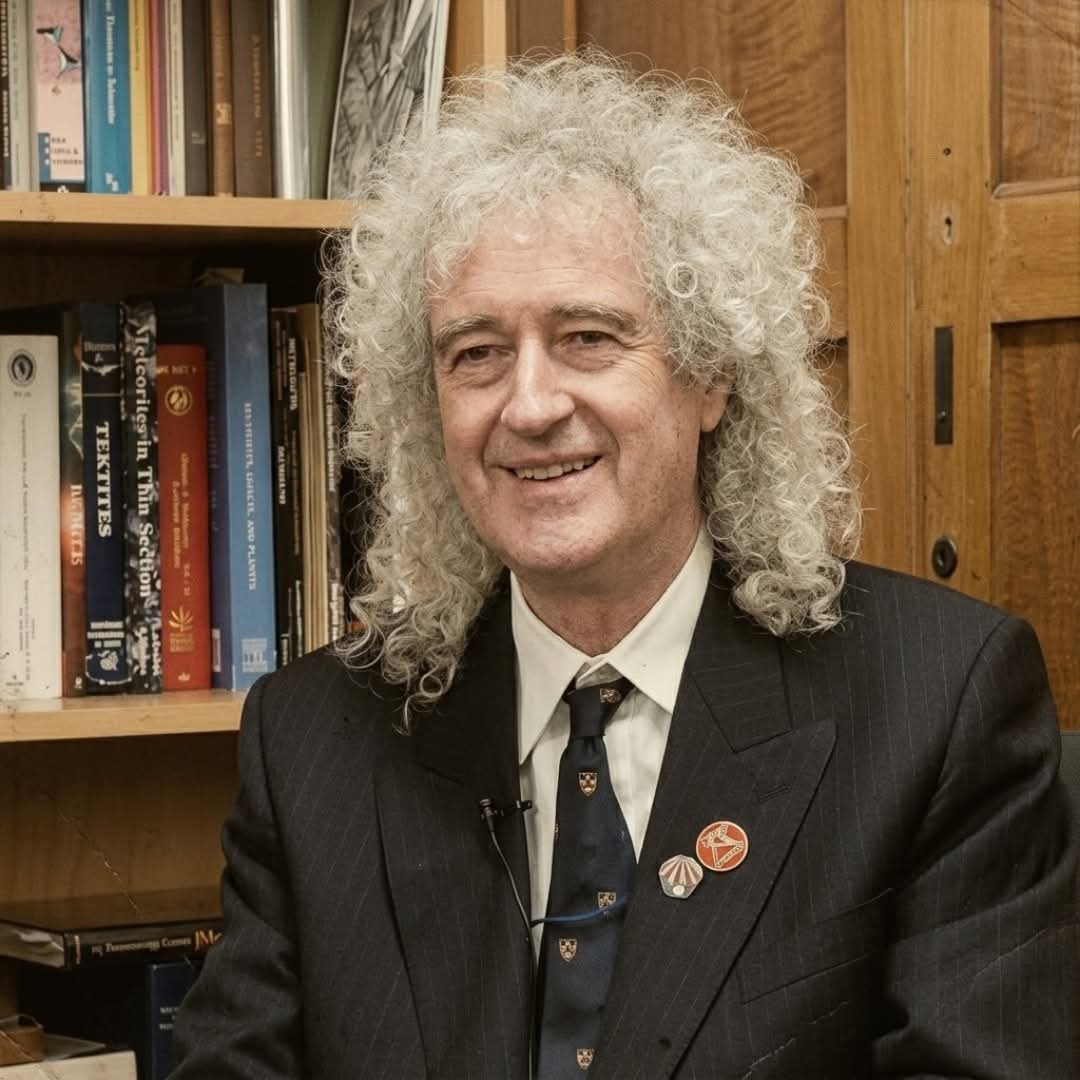
Brian May's PhD thesis sat in the loft of his Surrey home for 33 years. In 2006 — he put everything in his life on hold for a full year, went back to Imperial College, and finished it. His professor said he had a mountain to climb reviewing 30 years of scientific work. Brian May climbed it anyway. The most extraordinary act of academic commitment in rock history.
In 1970 — Brian May began a PhD in astrophysics at Imperial College London.
He supplemented his grant with income from part-time teaching and playing in bands with Roger Taylor. Soon they were joined by Freddie Mercury and John Deacon. Queen was formed.
For four years — Brian tried to do both.
His doctoral thesis on interplanetary dust was taking shape. But the grant was running out. And music was beginning to take over his life.
In 1974 — before leaving — he co-authored two research papers based on his work at the Teide Observatory in Tenerife, Spain.
Then he made a decision.
He abandoned his thesis — or more exactly, as he put it himself — he put it on the back burner. And the rest is history.
The 48,000-word thesis — Radial Velocities in the Zodiacal Dust Cloud — was stored in the loft of his home in Surrey.
It stayed there for 33 years.
Then in 2006 — something changed.
Brian told Time magazine — "Suddenly my subject became very in-demand again. I started talking about astronomy again to people who said — 'Why don't you still do it?' I put everything — and I mean everything — on hold for a year. And they put me in a little office in Imperial College and I got down to it."
His professor was honest about what awaited him.
Professor Rowan-Robinson said — "Brian brought along print outs of what he had written in 1974. It was then that I realised Brian was going to have a mountain to climb — reviewing 30 years of work."
Brian May climbed it.
He re-registered for his PhD in 2006. Less than a year later — he submitted it successfully.
In 2007 — Brian Harold May was awarded his PhD in astrophysics from Imperial College London.
Thirty-three years after he first abandoned it.
For a band called Queen.
He sacrificed his academic career to play rock and roll.
Then sacrificed a year of his rock career to finish what he had started.
Some people simply cannot leave things undone.
Model Collapse, théorisation de l’appauvrissement des modèles d’IA dont la part de données d’entraînement issues de l’IA ( et non naturelles) augmentent. ⤵️
A telescope ranch in Texas lets people store high-end telescope setups under dark skies, where the roofs roll back at night and owners can remotely control their equipment from anywhere in the world to avoid light pollution.
The rise of remote astronomy has reshaped amateur astrophotography, allowing enthusiasts to capture deep-space images without ever leaving home. Facilities like these are typically placed in exceptionally dark regions—often Bortle Class 1 or 2 skies—where the Milky Way can cast faint shadows and the night sky reveals thousands more stars than are visible from suburban environments.
Many telescope ranches now offer infrastructure such as high-speed internet, automated weather systems, backup power, and robotic mounts capable of tracking celestial objects with extreme precision for hours at a time. Users can remotely schedule imaging sessions and collect data on distant galaxies, nebulae, and star clusters while located hundreds or even thousands of miles away.
A fully equipped astrophotography setup can easily surpass $20,000 once telescopes, cameras, mounts, filters, and observatory access are included. For dedicated imagers, operating under consistently dark skies often produces far superior results compared to using identical equipment in light-polluted cities.
Today, more than 80% of the global population lives under light-polluted skies, and roughly a third can no longer see the Milky Way from where they live.
A French engineer who lives quietly in Paris has spent 30 years writing software that the entire internet now runs on without knowing his name.
He wrote the code that streams every YouTube video, every Netflix show, every TikTok clip. He wrote the code that runs the virtual servers underneath AWS, Google Cloud, and Microsoft Azure. He calculated more digits of pi than anyone in history. He has no Twitter. He has no marketing. He just keeps shipping.
His name is Fabrice Bellard.
Here is the story, because almost nobody outside the systems programming world knows what one man has built.
Fabrice was born in 1972 in Grenoble, France. He studied at École Polytechnique, the top French engineering school. He never went to Silicon Valley. He never built a startup empire. He just wrote code.
In 2000 he started a project called FFmpeg, an open-source multimedia framework for encoding, decoding, and streaming video. He was 28. The project did one thing nobody else had done well. It handled every video and audio format that existed, in one library, on every operating system. He led it himself for years.
Today FFmpeg is the invisible engine of the internet. YouTube uses it. Netflix uses it. VLC uses it. Chrome and Firefox use parts of it. Every Android phone, every iPhone, every smart TV, every video editing tool you have ever touched runs FFmpeg somewhere underneath. If you have watched a video on a screen in the last 20 years, Fabrice's code processed it.
He was not done.
In 2003 he started QEMU, a machine emulator and virtualizer. He wrote it solo until version 0.7.1 in 2005. QEMU lets you run any operating system on any other operating system. It became the foundation of modern virtualization. KVM, the Linux kernel hypervisor, runs on top of QEMU. Every major cloud provider, AWS, Google Cloud, Microsoft Azure, IBM Cloud, runs virtual machines on infrastructure built around it. The Quick Emulator is the most cited piece of cloud infrastructure code on Earth.
He kept going.
In 2001 he won the International Obfuscated C Code Contest with a small C compiler that grew into TCC, the Tiny C Compiler. TCC can compile and boot a Linux kernel from source in under 15 seconds. In 2004 he calculated the most digits of pi ever computed at the time, using a personal desktop computer and an algorithm he derived himself called Bellard's formula. In 2011 he wrote a complete PC emulator in pure JavaScript that runs Linux in your browser, a project called JSLinux that engineers still cannot believe is real.
In 2019 he released QuickJS, a small but complete JavaScript engine that fits where V8 cannot. In 2021 he released NNCP, a neural network based lossless data compressor that immediately took the lead on the Large Text Compression Benchmark.
Then he turned his attention to large language models. He built TextSynth Server, a web server with a REST API for running LLMs locally. He released ts_zip and ts_sms, compression utilities that use language models to compress text and short messages at ratios traditional algorithms cannot reach. He released TSAC, a very low bitrate audio compression system. In December 2025 he released Micro QuickJS, a new JavaScript engine for microcontrollers, separate from QuickJS, designed for environments with almost no memory.
Fabrice co-founded a telecom company called Amarisoft in 2012, where he serves as CTO. Amarisoft builds 4G and 5G base station software used by carriers and labs around the world. He has been running it for over a decade while continuing to ship personal projects from his own home page at bellard dot org
He has no Twitter. He has no Instagram. He gives almost no interviews. His personal website is a flat list of projects with no styling, no fonts, no marketing copy. Just titles and links.
A quiet French engineer who never moved to Silicon Valley wrote the code that quietly runs the internet.
He is still shipping.
Développer et moderniser le Campus @Mines_Paris, c’est investir dans l’avenir de @SophiaAntip0lis .
Depuis l’origine, notre technopole s’est construite sur une conviction portée par Pierre Laffitte : le rapprochement entre l’enseignement supérieur, la recherche et l’entreprise est un formidable moteur de développement. C’est cette vision qui continue aujourd’hui de faire la force et l’attractivité de notre territoire.
À l’horizon 2029, la transformation du Campus Mines Paris-PSL marquera une nouvelle étape de cette ambition. La @CASAOfficiel accompagne pleinement ce projet qui permettra d’accueillir davantage d’étudiants, de développer de nouvelles formations d’excellence et de renforcer les capacités de recherche et d’innovation au service des grands défis de demain.
Après la réussite du pôle Alpha, le renouvellement du Campus Pierre Laffitte constitue un investissement majeur pour l’avenir de Sophia Antipolis. Il contribuera à renforcer durablement le rayonnement scientifique, économique et universitaire de notre territoire, en France comme à l’international.
#SophiaAntipolis #Innovation #EnseignementSupérieur #MinesParisPSL #Recherche #CASA
Après lecture attentive de la longue liste de toutes les priorités prioritaires de la politique pénale, j'ai enfin trouvé les infractions non prioritaires. Ce sont les faits de corruption d'élus, de prise illégale d'intérêt ou de détournement de fonds publics. Ouf.
🔴 Énorme DINGUERIE encore des États-Unis...
L'arbitre somalien Omar Artan 🇸🇴 s'est vu refuser son entrée aux États-Unis, alors qu'il est sensé officier pendant la Coupe du Monde ! 🙄
Malgré l'aide appuyée de l'ambassade somalienne de Nairobi, qui lui a fourni un PASSEPORT DIPLOMATIQUE, M. Artan a dû faire demi tour à son arrivée aux USA.
On parle d'une personne qui a été élue MEILLEUR ARBITRE AFRICAIN EN 2025 ! 🤦♂️
(@Romain_Molina)
Ethanol for cars is made from crops growing on subsidized fertilizer. The subsidy was for growing crops for food security. But now, tens of thousands of crores of subsidy will be subsumed into manufacturing ethanol. Don't tell me no one told you that before ...
Mon dieu mais quel cafard il faut être pour coller une amende à un gamin parce qu’il t’a fait remarquer que ton uniforme ne te permettait pas de passer devant tout le monde à la boulangerie
Malgré la douleur, ce militaire dans l'âme, qui a accroché son béret rouge sur son lit et qui a affiché les paroles de la Marseillaise à l'entrée de sa chambre, donne une incroyable leçon de courage, mais 14 ans plus tard, Loïc Liber n'a toujours pas été décoré de la Légion d'honneur.
Il est tétraplégique et respire à l'aide d'un respirateur.
Non, cher Figaro, le faible coefficient de marée, 21 aujourd’hui (record du siècle), ne signifie pas une marée très basse, ni un littoral largement découvert. Cela signifie simplement que la différence entre marée haute et marée basse, le marnage, est réduit : 2 m.
1/
Samedi matin, on a reçu ce texto et cette vidéo ⤵️
« Ça faisait longtemps que j’y pensais à en parler mais je me sentais pas légitime. Et puis jeudi soir j’ai eu une insomnie à 4h du matin et j’ai voulu raconter cette histoire. »
Le sms est signé de Gwenaël, joueur de foot amateur de la Chapelle Neuve dans le Morbihan, club vainqueur de notre Grand Prix du @DayVrai 2019
#freegleizes
Je reçois un mail de ma mutuelle @avec_alan. Augmentation des tarifs de 11,9%, dans le plus grand des calmes.
Il feraient mieux de dépenser un peu moins d'argent à vouloir gamifier leurs services plutôt que d'augmenter nos tarifs.
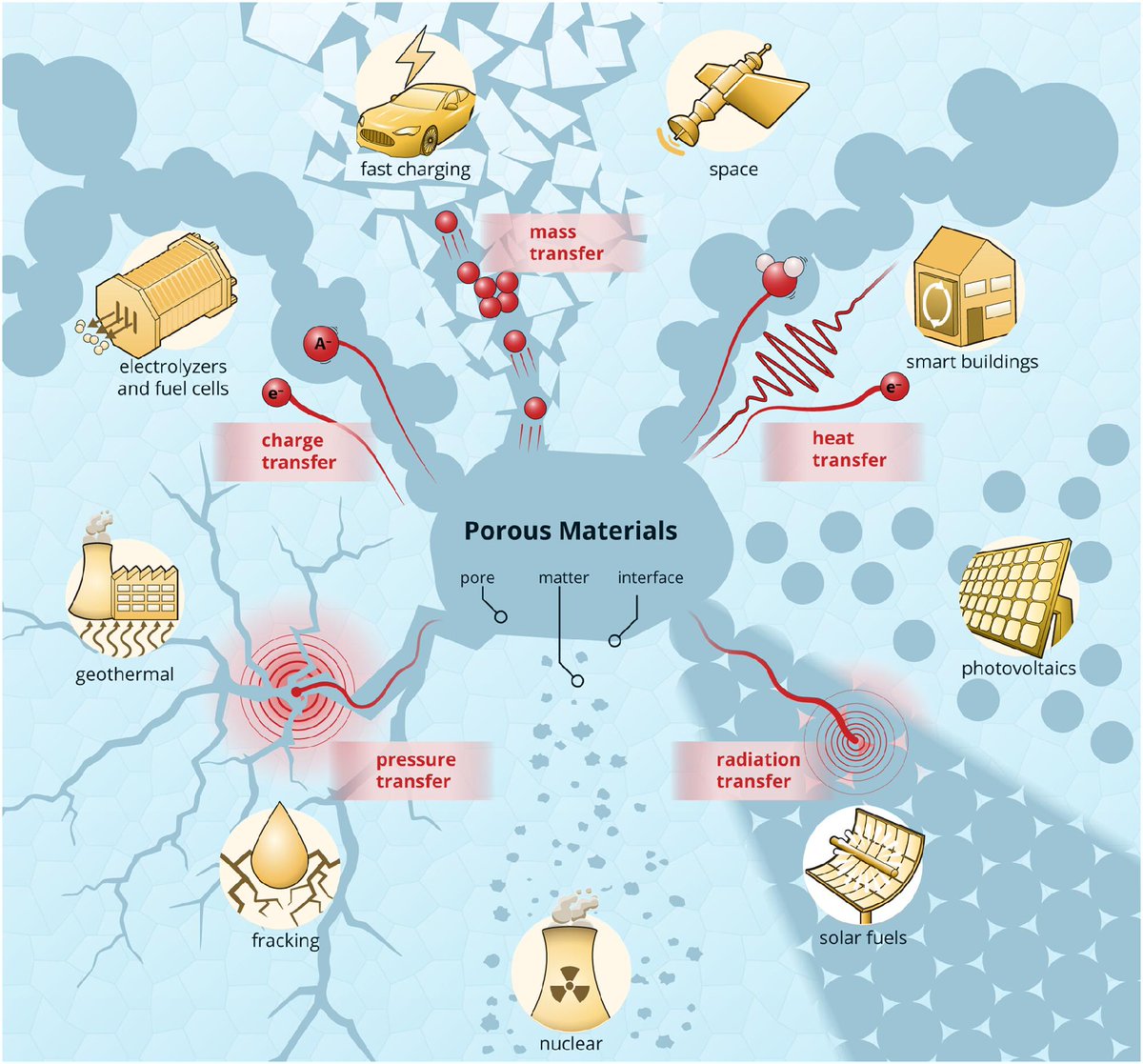
In a new #ScienceReview, researchers highlight recent advances in the design, characterization, modeling, and fundamental understanding of porosity that have enabled breakthroughs across the landscape of energy technologies. https://t.co/ps3nXEedPL
Il était peut-être temps au bout de 6 ans.
Rassurez-vous, @paroles_la continuera sa route.
Mais ceux qui le souhaitent peuvent désormais me retrouver sur ce compte personnel : @JCNotin
Je promets de ne m'y exprimer que sur les sujets que je connais vraiment.
Donc rarement...