i'm (finally) building a company from scratch!
i spent 18 years at Google and was lucky enough to work on several busineses. i led the teams building early versions of @googledocs, turned @googlevoice into a telecom biz and grew it to 100s of M of ARR, and worked to integrate @fitbit while building the foundation for personalized health coaching. I had the most fun building from zero, so i want to take you all along for this new ride.
some things i'll share:
• what bigco instincts to unlearn when you're independent/smaller (especially in the AI era)
• our experience w/ AI tools and how they are changing the way we ship + products we use
• my $0.02 on where products & software are headed
• what it’s like being a dad and a founder (or something like “occasional dad content”)
follow for the early stage journey - and reach out if you're a founder/builder/enthusiast!
i know everyone on X-land has been saying this, but it still feels crazy that for the first time in my live as a product builder, engineering velocity is not a bottleneck
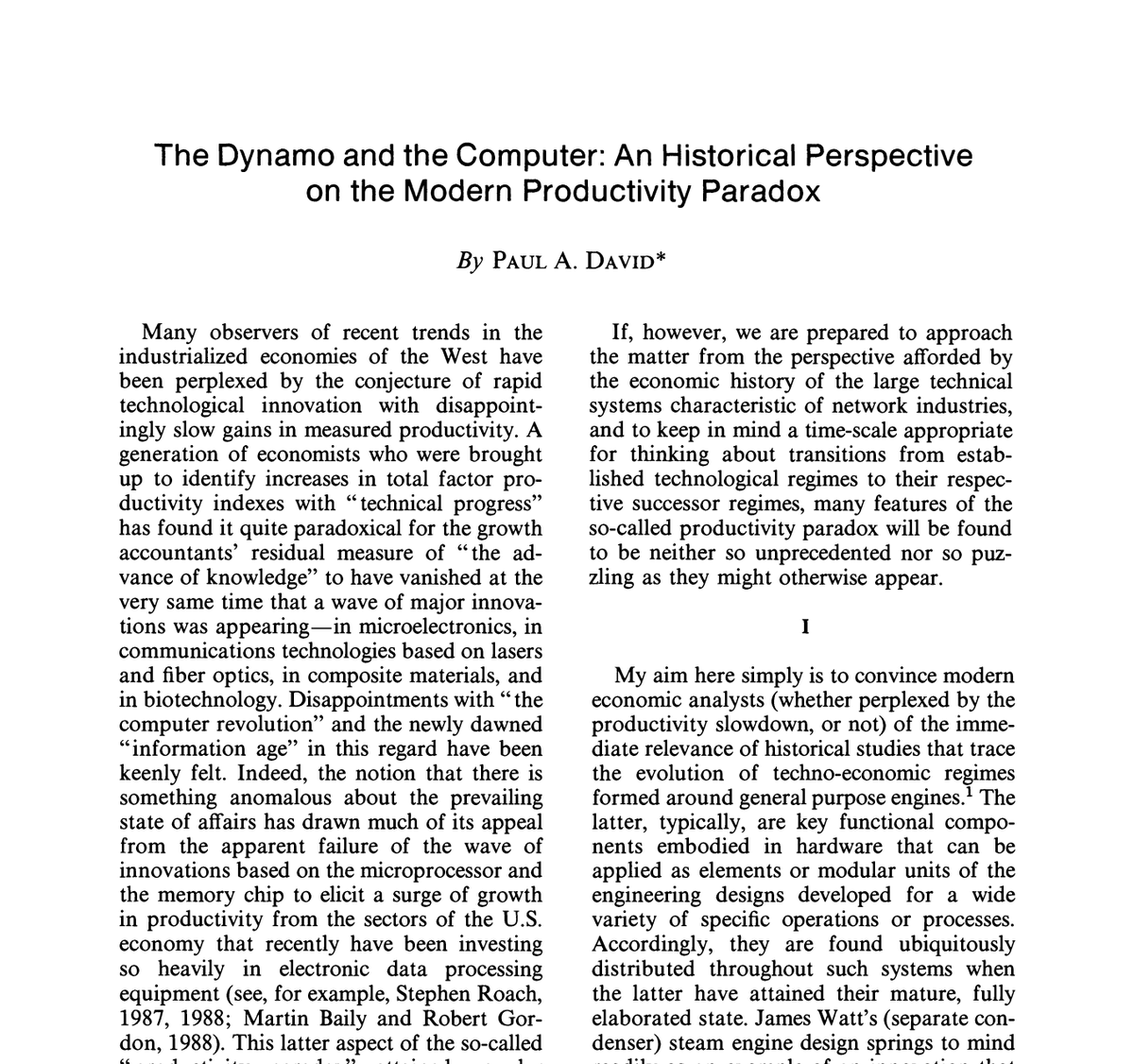
If you've adopted AI at your company but haven't seen any tangible results, read this 1990 article: "The Dynamo and the Computer" by Paul David.
When electricity first arrived, factories that "adopted" it barely got faster. They just swapped the steam engine for an electric one and ran everything else exactly as before: same machine layout, same workflow, same management. Electricity in, no real gains out.
The most common mistake with any new technology is to drop it into the old organization and then declare the transformation done.
The real leap came decades later, when each machine got its own small motor. Suddenly machines no longer had to be lined up around one central drive shaft. They could be rearranged around the actual flow of work.
The productivity gains didn't come from electricity. They came from REDESIGNING THE ENTIRE FACTORY around it.
AI is the same. Bolting it onto your existing process gets you a faster steam engine. The payoff comes when you redesign the work itself.
(link to paper in comments)
i find the way codex unified interface for chats/code sessions much more usable than claude's split into chat/code/co-work when you are toggling b/w multiple streams of work
also would love if remote control was always just on by default (i know there is a setting); i do find rc sessions break frequently and i have to re-remote control
are these on your radar @bcherny?
Thanks for hosting this @toddsaunders, great event!
Agree - 60% of the US population lives in the suburbs (3/4 of the 260M who live in areas classified as urban!), which is where a lot of work happens in the real world.
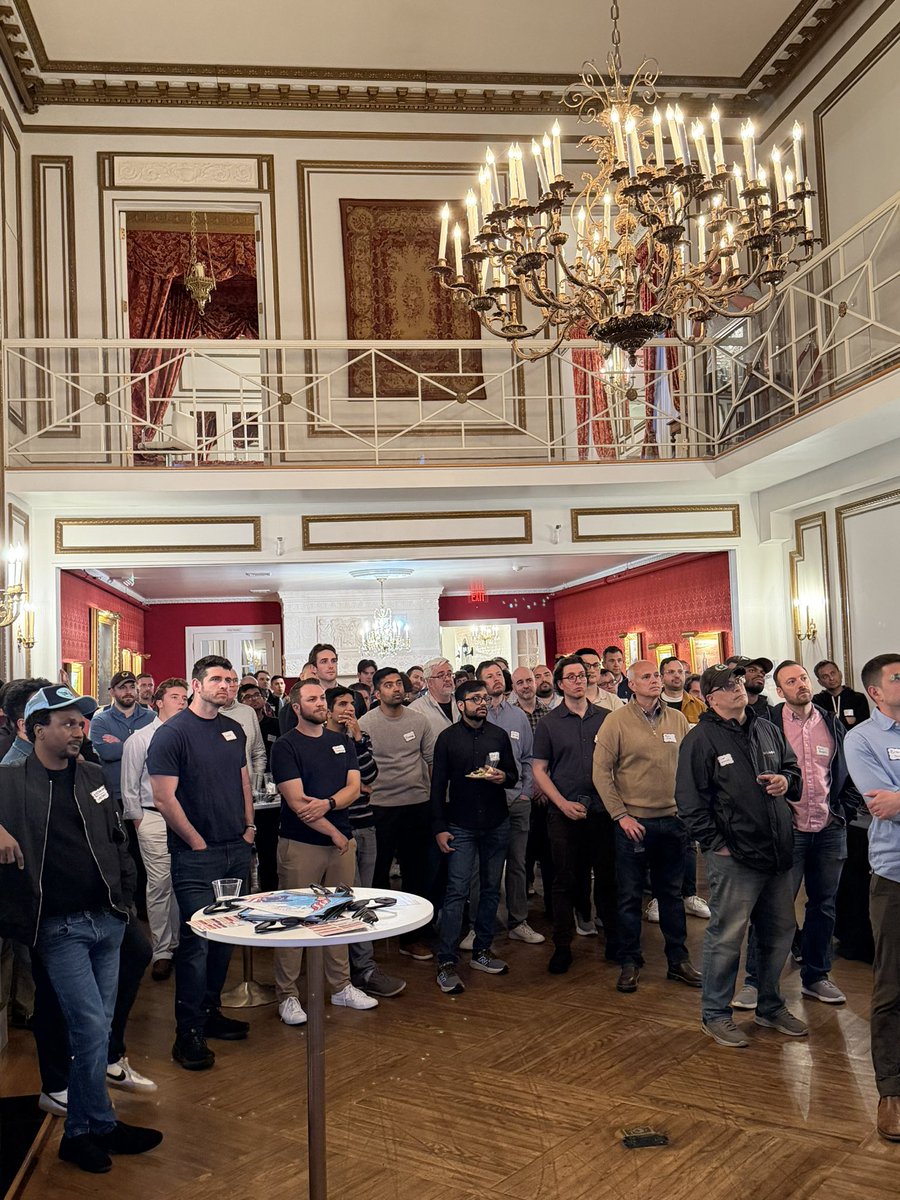
We organized a 125 person meetup in the suburbs of NJ.
What we didn’t tell the attendees was that 30% of the folks were in the trades.
What came of it was magic.
You had people from places like Figma, Google, Digital Ocean, Anthropic, OpenAI, Google and Meta mixed with owners of hvac, landscaping, poop scoop, plumbing and Christmas light companies.
By the end of the night the conversations all looked the same.
The AI builders wanted to know how real businesses actually run.
The operators wanted to know how AI actually works.
This is further proof that the future of vertical software isn’t getting built in San Francisco coffee shops.
It’s getting built in rooms like this one.
And hopefully in Westfield NJ.
psa: if you have a smart home device w/ an mcp server, you can have claude/codex help you run or improve your setup.
for example, i had claude fix my @rachioco sprinkler setup:
@garrytan@bscholl I hated the UI for https://t.co/ARl5vZJDwi, so I wrapped it in a map, along with a where aircraft are at https://t.co/JEPXWW2JS1.
Looking forward to trying this!
US GRID UNDER PRESSURE: AI DEMAND FORCES REDESIGN
The US power grid overseen by PJM Interconnection (serving 67M people across 13 states) is no longer fit for purpose amid surging electricity demand from data centers, according to CEO David Mills.
In a letter to stakeholders, Mills warned the system cannot both secure enough power and protect households from rising costs under its current design. “The current situation is not tenable,” he wrote, pointing to deeper structural flaws reflected in rising prices, tight reserve margins, and weak investment signals.
The grid is facing multiple strains: potential electricity shortages as early as next year, and uncertainty linked to major utilities such as American Electric Power. Meanwhile, electricity bills have climbed sharply across the region—up 51% in Maryland and 41% in Illinois over five years.
Mills said the region has “years, not decades” to act, and emphasized the need for credible, stable market rules to restore confidence among utilities, investors, and consumers.
everytime i see one of our agents in production do something unexpected, the fact that gemini on a google home device can't reliably turn off the lights in the room that it *knows* it's in gives me comfort
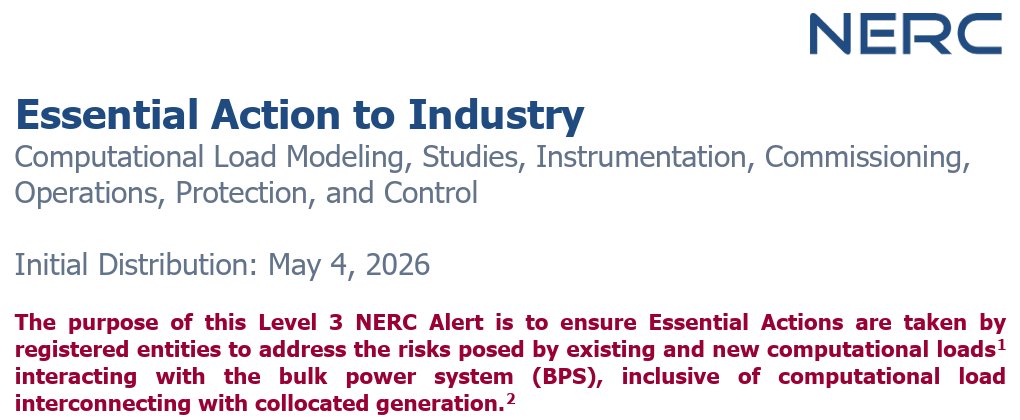
The U.S. grid's security and reliability monitor NERC has issued a 🚨Level 3 Alert🚨, its highest level, urging immediate action to protect the grid from data centers.
Level 3 Alerts are very rare.
It underscores the unprecedented threat posed by data centers.
Software engineering is solved, and folks at many companies are writing 0 code by hand
at the same time, @PolestarCars, with 1500+ employees and 200k cars on the road can’t make digital key work their mobile app…almost 100% of the time app is background killed by the OS when you attempt to put the car in gear
(the contrast makes you also realize how polished the @Tesla experience is)
@anothercohen i worked on workspace for a bunch of years (we use it now too). chat has got good webhook/api support for agents which i assume you'll want - we use it for that. it's more annoying than slack to configure, but it's solid and it works.
the only thing you might want is external support for people w/o google accounts for customers. i think they are adding that.
8/ things to explore next:
1. Opening up ERP + Ops tools to hundrds of employees
2. AI accelerated internal engineering (w/ internal context)
3. Agentic automation
Scale, without scaling headcount.
if you are building in the real world, the advantage AI can give is is even more unfair; you can literally just focus on the hardest stuff.
1/ 2 weeks ago i flew to Rwanda to visit my friend @atilev, who runs @AmpersandEnergy - the first ev company in africa.
most people in tech talk about building for underserved markets. Alp is one of the few actually doing it
7/ Three reasons @AmpersandEnergy is well positioned for AI
1. Technical leadership - @atilev (Pres/CTO) is already thinking seriously about it
2. Real AI value comes from tailored solutions, not off-the-shelf SaaS
3. Adoption means culture change - equipping your best people to move fast