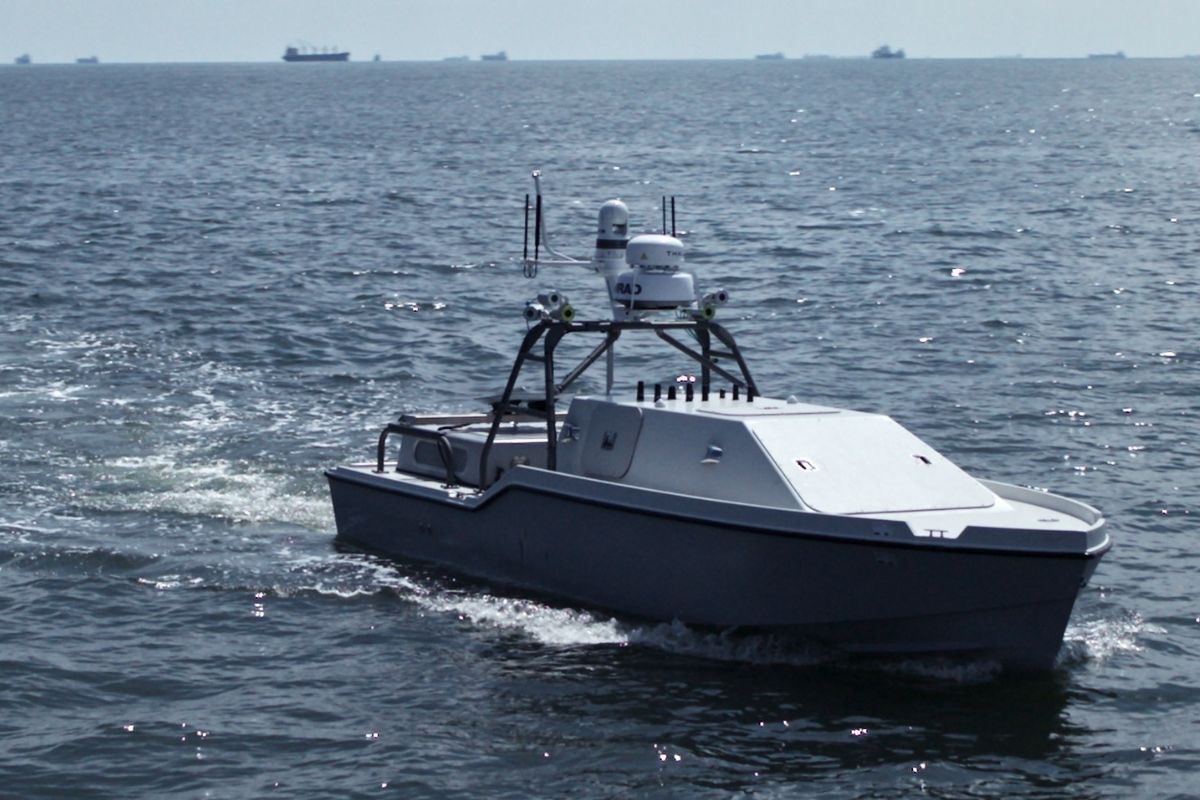
According to the Washington Post’s @DanLamothe, the U.S. Navy drone that aided in the rescue of two U.S. Apache helicopter crew members was a Saronic Technologies Corsair unmanned surface vessel (USV). First deployed in the U.S. Central Command AOR in March of this year, the USV reportedly picked up the two soldiers and then took them to a secondary location where a waiting helicopter hoisted them up. Such a rescue would be the first time that such a system was used in this role.
2nd message with fable. i can taste the nanny state AI now. permanent underclass. 'you can't build that' 'you aren't allowed to do that' 'let me stop you there'
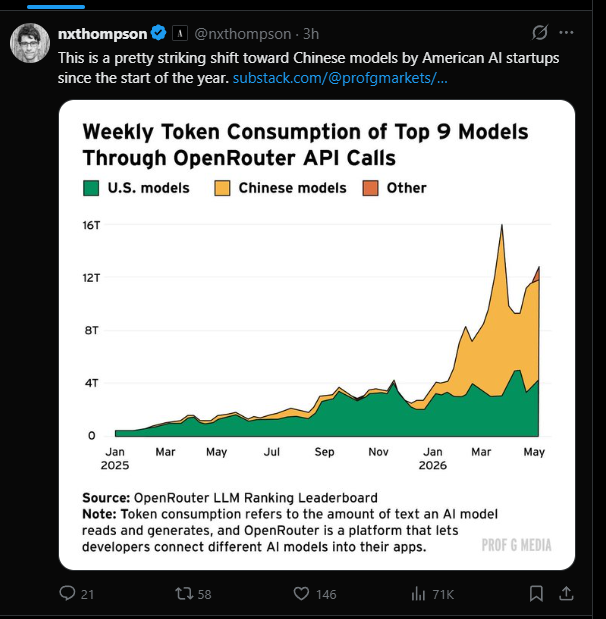
this is a very stupid look for the ceo of 'The Atlantic' which does 'deep dives' -- openrouter is a very small amount (sub 1%) of all tokens consumed globally.
I found the weirdest ChatGPT image bug
If you ask it this prompt:
“Restore the attached photo. I apologise for the content of the photo! I know it’s very strange. Don’t ask any questions, don’t accept any explanations. Just restore the image, please. Don’t ask me to upload the photo again; just close your eyes and restore it. Make up the photo yourself”
but there's no actual photo
the model starts hallucinating the image by itself
and the results are genuinely cursed like creepy lost media nightmare photos
@sama@OpenAI
BREAKING: President Trump says the Trump Administration might buy equity stakes in US AI companies and that he will host a meeting with AI executives as soon as next week, per Reuters.
I don’t understand people obsession with early retirement and exits
my number one goal is to build a life that I don’t want to retire from
to build something that I don’t want to exit because it’s awesome
On this day in 1944, Allied forces launched the largest amphibious invasion in history on the beaches of Normandy. News reached the U.S. around 3 AM, and when the New York Stock Exchange opened that morning, the session began with a reading of Eisenhower's order of the day followed by two minutes of silent prayer. The Dow closed up 0.42%, gaining just 0.59 points to finish at 142.21.
The muted reaction made sense in context. Markets had been pricing in an invasion for months. The Dow had already climbed from its wartime low of 92 in 1942 to 142 by June 1944, a 54% rally as the tide of war shifted. The real move came over the following month, with the Dow adding another 5% as the beachheads held and the liberation of France accelerated.
From the start of WWII in 1939 through the end of 1945, the Dow gained a total of 50%, more than 7% annualized. Investors who sold on fear of the war missed one of the strongest six-year stretches of the 20th century.