🚨 ESTO LO CAMBIA TODO
Acaban de darle memoria infinita a Claude, Codex y Cursor
gratis y open source
se llama memanto y ya tiene +1.900 estrellas en GitHub
→ guarda el contexto de tus sesiones
→ lo clasifica con ia en 13 tipos de memoria
→ recupera lo relevante en menos de 90ms
→ funciona con claude code, cursor, codex y 20+ agentes más
sin bases de datos vectoriales. sin configuración compleja. sin volver a explicarle el proyecto cada vez que abres sesión
un comando y listo. pip install memanto
tu agente simplemente lo recuerda todo
os dejo el repo abajo.
Stop renting a chatbot and calling it your company’s brain.
Utopia is the first open-source enterprise world model I’ve seen that actually treats knowledge like a system, not a vibe.
It's a Self-hosted, open source and built around the one question every other knowledge base ignores: when.
Every fact in it carries a start date and an end date. Nothing gets overwritten. When something changes, the correction closes the old version and opens a new one. The history stays intact.
So the graph isn't a snapshot anymore. It's a recording you can rewind.
You drag a timeline on the screen and watch the whole thing redraw itself to show what was true on that date. Who owned what. What the policy said before it changed. All of it, replayable.
And every fact points back to the exact sentence it came from. Nothing gets in without a receipt.
Here's the part that got me.
The whole thing is one binary and one Postgres database. That's it. No Elasticsearch, no separate vector service and no message queue. Most RAG stacks are six services duct-taped together. This is two. It even runs fully offline on an air-gapped network with any model you want.
https://t.co/YIRsEAK9OD
Love this article!
".NET 8, Aspire, & Aspir8: Deploy Microservices Into Dev Environments Effortlessly with CLI — No Dockerfiles or YAML Needed! Plus, a Little Yarp"
https://t.co/163ZQ1U4AQ
#dotnet#aspire#cloudnative#docker#kubernetes
¡Utilidad super interesante para programadores!
Se llama scc y te dice de un proyecto:
✓ La complejidad del código
✓ Qué lenguajes y tecnologías usa
✓ Archivos, líneas y comentarios de cada uno
Te da los resultados en una tabla ↓
5 books I keep going back to frequently:
1. Clean Architecture (Martin)
2. Building Microservices (Newman)
3. Unit Testing (Khorikov)
4. Domain Driven Design (Evans)
5. Head First Design Patterns (Freeman & Robson)
The Outbox pattern is a game changer. 📦
Here's everything you need to know.
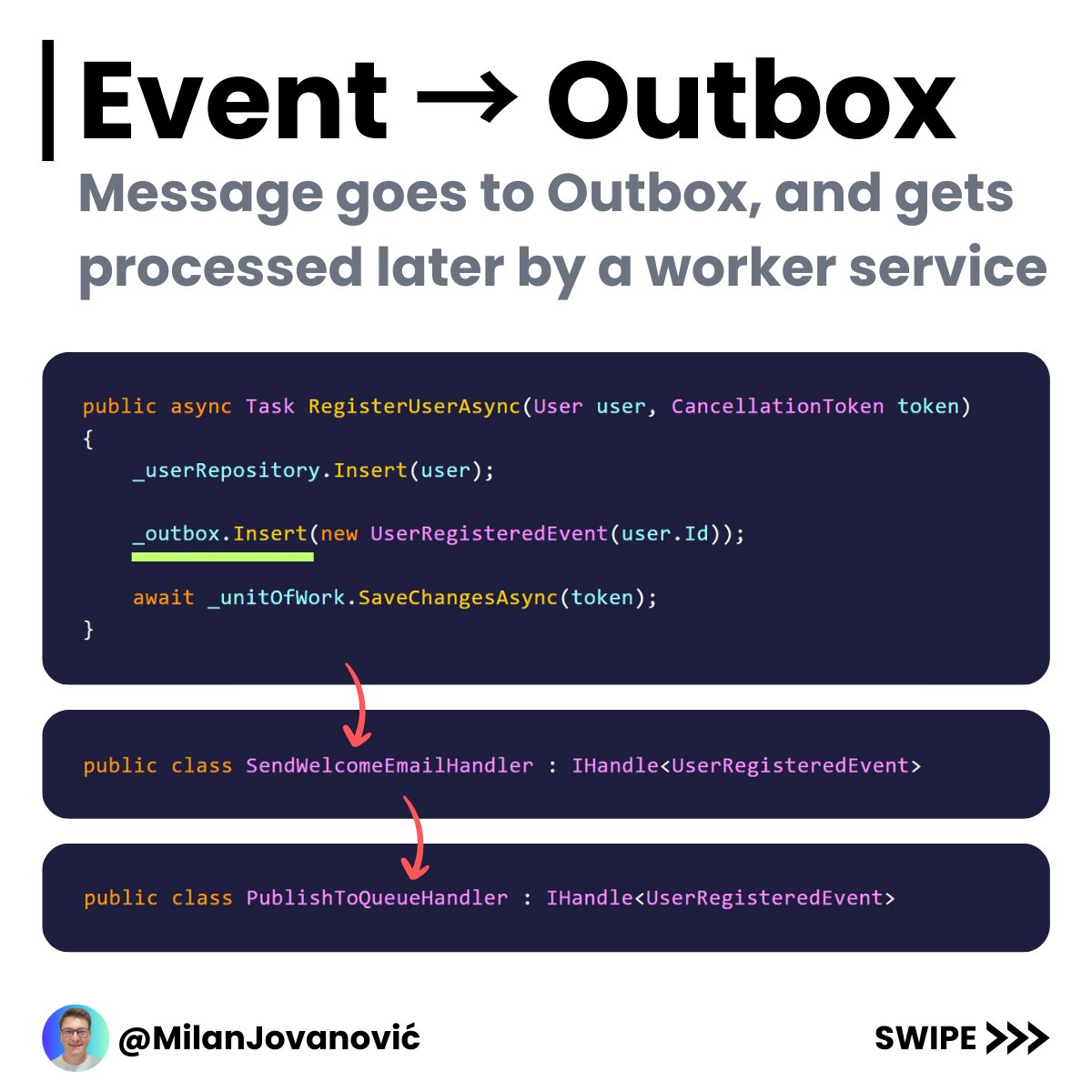
The Outbox pattern is a technique for reliable messaging in a microservices system.
Here's the gist of the Outbox pattern:
- You don't publish events to a queue
- Instead, you store them in the database
- A worker service polls the database for new messages
- The worker service publishes each message asynchronously
Why would you want to do this?
One thing is for sure with microservices - things will break.
A downstream service could be down.
The network isn't available.
If your operations are coupled at runtime, then the whole operation fails.
This also means your operation isn't atomic (transactional).
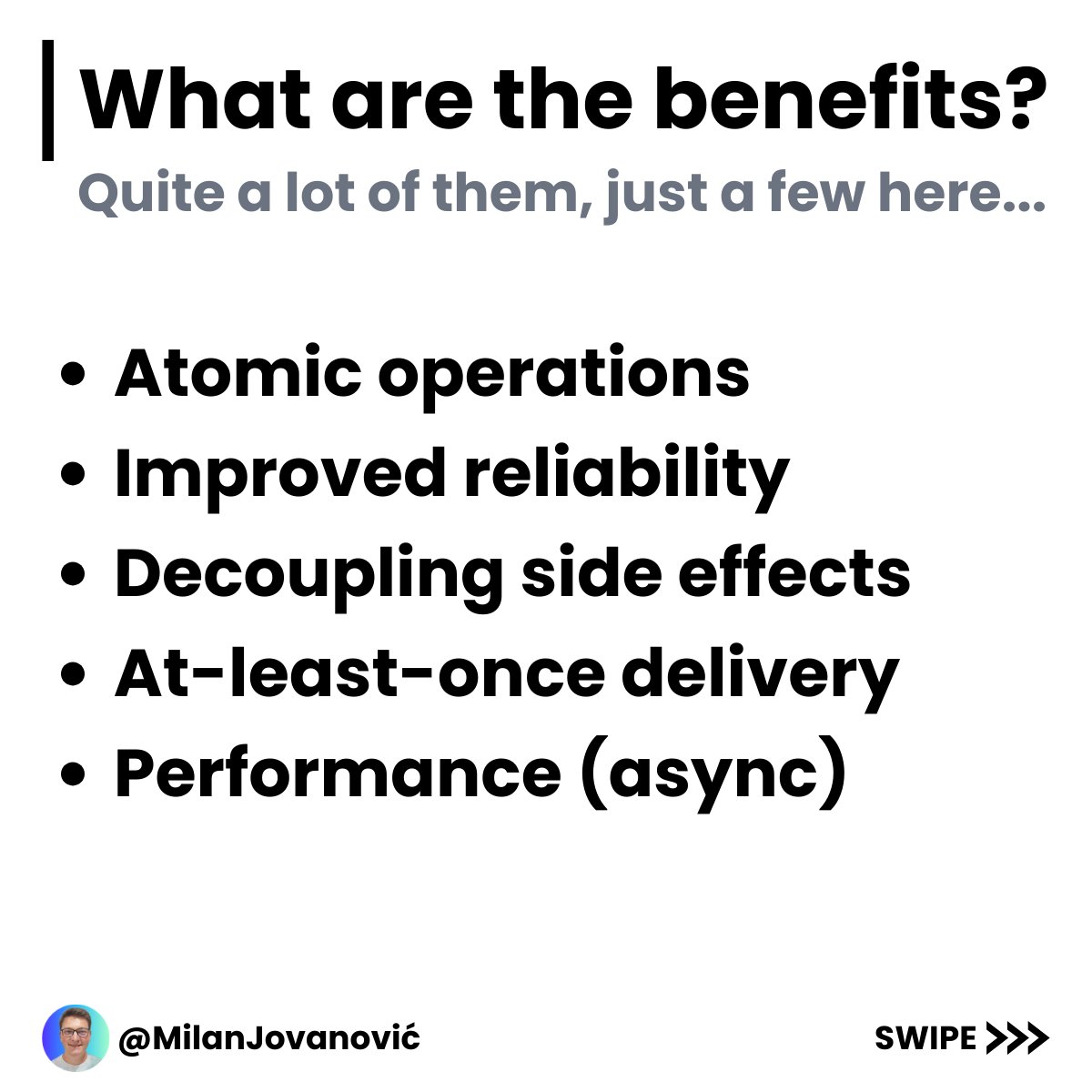
The Outbox pattern helps you decouple your operation from its side effects.
You know your transaction is atomic if you work with an SQL database.
You can persist the messages to the Outbox table in a single transaction.
And then, a background worker will process the messages later.
Unfortunately, this comes at the cost of eventual consistency.
Processing a message can fail, so you will need to retry it.
On the consumer end, you still need to handle duplicates in case of retries.
This messaging semantic is called "at-least-once" delivery.
A few more benefits are improved reliability and performance.
P.S. If you liked this, consider joining The .NET Weekly - my newsletter with 28,000+ engineers that teaches you how to improve at .NET and software architecture.
Subscribe here → https://t.co/dCEi48iXpl
Did you use the Outbox pattern before?
El corredor que guía a la atleta invidente me recordó lo que hace el Espíritu Santo conmigo todo el tiempo, ir a mi lado hacia la meta. (También vive dentro de mi...)
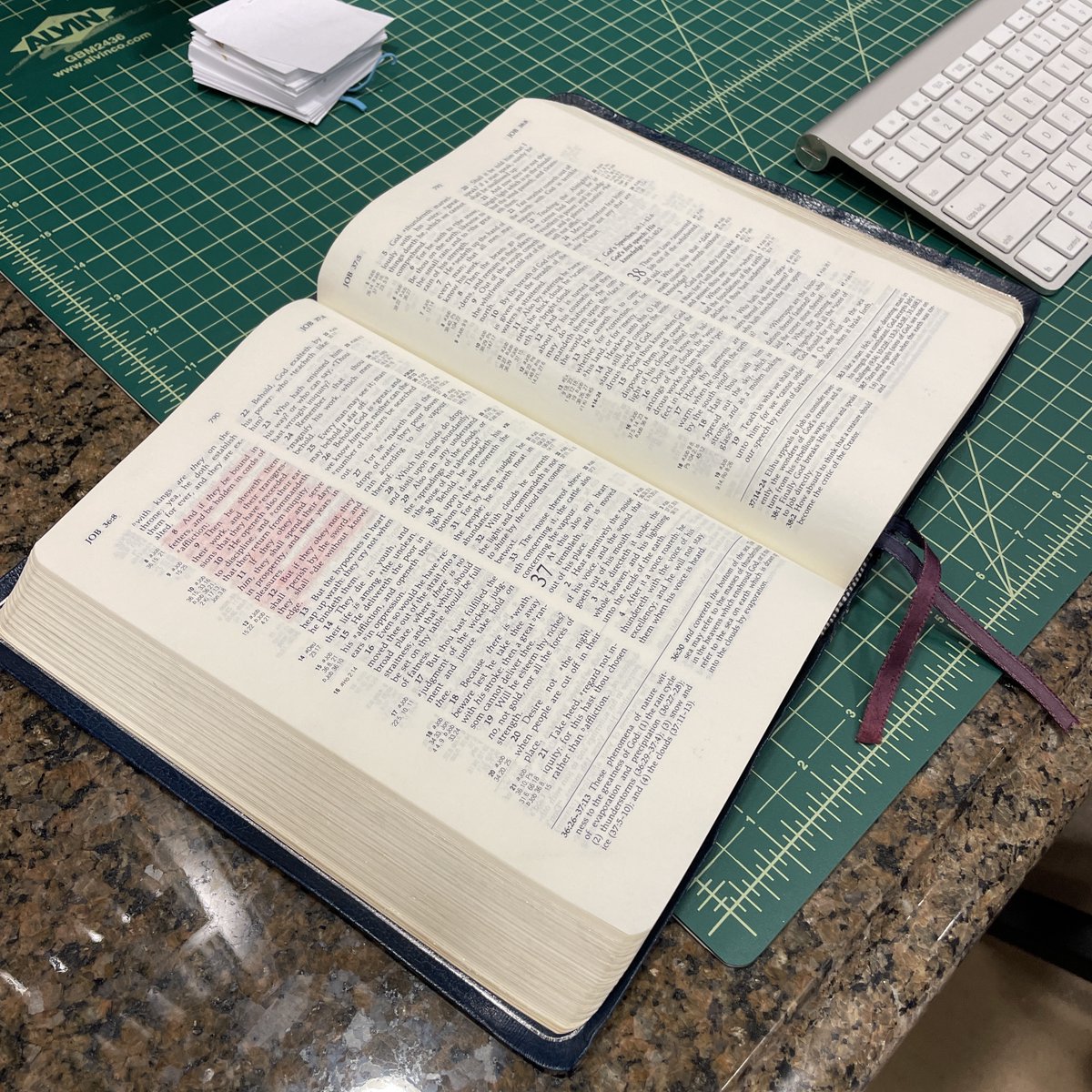
El Dr. Stanley dejó abierta su Biblia en Job 36, con los versículos 8-12 resaltados. El versículo 11 dice: "Si oyeren, y le sirvieren, acabarán sus días en bienestar, y sus años en dicha". El Dr. Stanley escuchó, sirvió y fue abundantemente bendecido. Ahora es nuestro turno.
Microsoft Kiota, our code generator for REST HTTP APIs described by OpenAPI, is now available on Visual Studio Code.
Try out the extension: https://t.co/W3yQ0jY2hS
#Microsoft365Dev#MicrosoftKiota#VisualStudio