The western Canadian province of Alberta on Tuesday declared an early start to wildfire season as a result of an unusually dry and mild winter, allowing the government to put more money and resources into tackling blazes. https://t.co/wZWmhckSsy https://t.co/wZWmhckSsy
@KHayhoe No worries, thank you again. I have some ideas on how to operationalise climate modeling for decision support systems that could build upon the STAR-ESDM methodology. It would be great to have your input
@KHayhoe Thank you, I am up to speed in the field and actively build upon it. As a start up we are siloed at the moment but contribute to academia through publications and open source where we can. Thanks again for the link
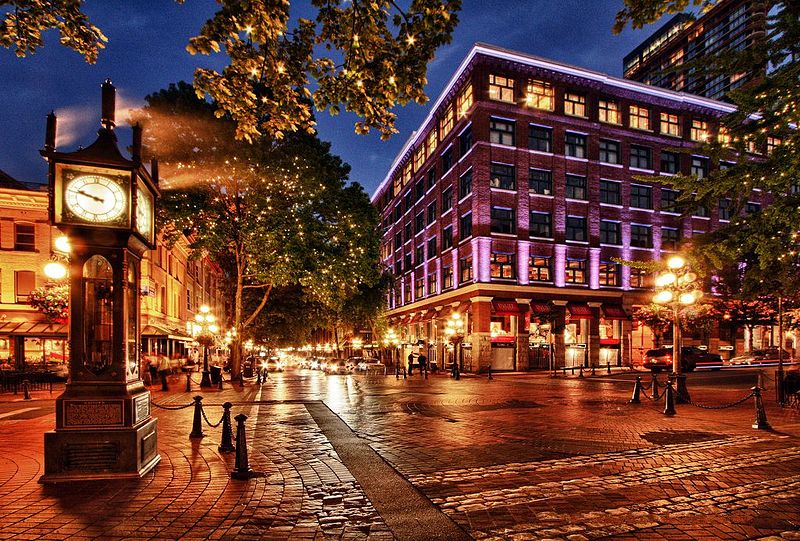
Within Vancouver, there is a place called Gastown.
Why does it have that name, and what is the story behind its famous steam clock?
Let's dive into the history of Gastown, Vancouver's oldest neighbourhood!
Long before there was a Gastown, the local Indigenous Peoples used the area as a portage route between Burrard Inlet and False Creek. At high tide, they could paddle between the two bodies of water.
They called the area Lekleki, meaning "grove of beautiful trees".
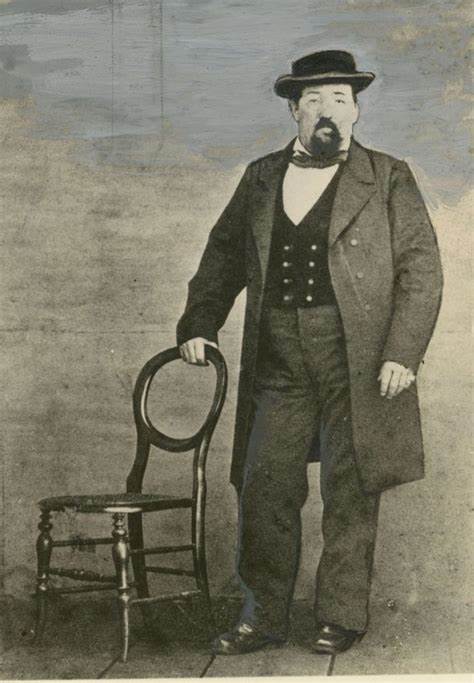
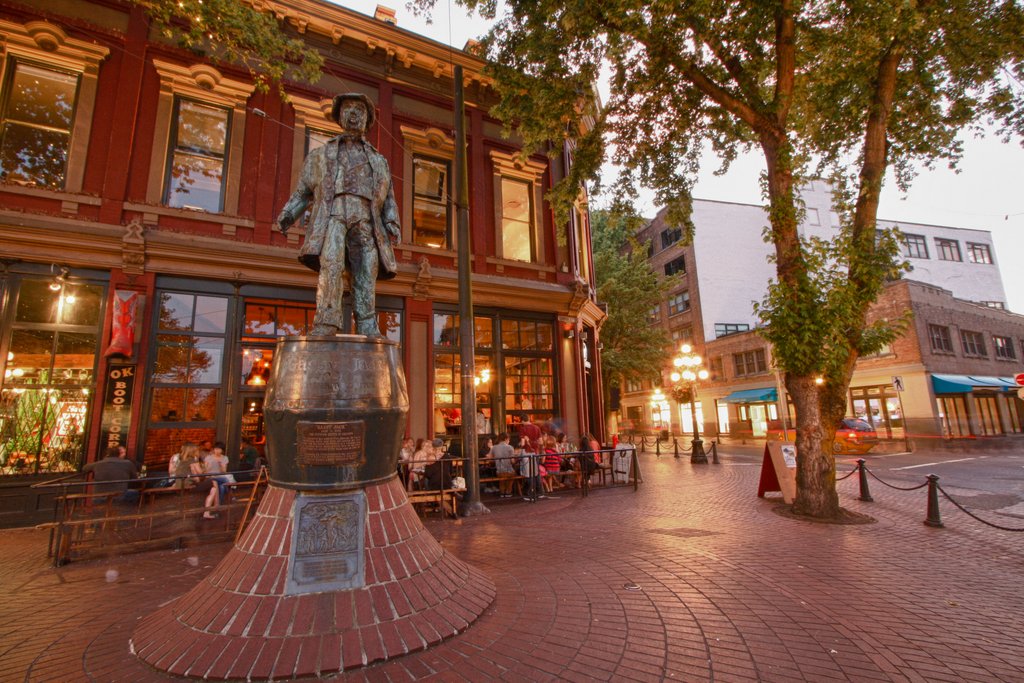
Gastown was named for "Gassy" Jack Deighton, a Yorkshire seaman and barkeep who came to the area in 1867.
He ran the Globe Saloon in New Westminster and realized that his customers walked five hours in some cases to get a drink as they could not drink on mill property.
After leaving an American in charge of his saloon while he was out of town, he came back to find it was bankrupted by a July 4 celebration.
So, he loaded a canoe with a barrel of whiskey, two hens, his dog and supplies. With $6 in his pcoket, he and his family went to Burrard Inlet.
According to legend, in exchange for building him a saloon, he offered mill workers whiskey. That first saloon was a 12x24 foot shack but it was up and running within 24 hours.
He was well-known for talking at length, which was called "gassing".
As a result, the area around his saloon became known as Gassy's Town. That later became, Gastown.
When the Hastings Mill sawmill and seaport were built, Gastown quickly grew to become the centre of trade for the area. It also developed a reputation for being a rough and tough place as off-work loggers and fishermen came in to blow off some steam.
Of the 10 buildings in Gastown in 1875, four were saloons.
On March 1, 1870, to give the area a more respectable name, Gastown became Granville. Everyone who lived in the area still called it Gastown though.
With some rough characters in the area, that also meant a jail was needed. The first jail was built around the 1880s, and was a two-cell building made of logs.
For decades, Gastown was referred to as skid-row. This phrase may have come from the practice of sending greased logs down the streets to the mill for processing.
In the 1960s, the Gastown area was scheduled for demolition to build a freeway. A campaign was led by the business community, property owners and political protesters to save the area. It was around this time that the name Gastown came back into popular use.
The revitalization and gentrification of Gastown began in large part thanks to Henk F. Vanderhorst, a Dutch immigrant who opened the Exposition Gallery on Water Street.
The most famous aspect of Gastown is the steam-powered clock. This was built in 1977 to cover a steam grate as a way to harness the steam and prevent people from sleeping on the spot in cold weather.
Today, it is a major tourist attraction.
Its cobblestone streets are also quite new, built following efforts to save the area from demolition.
In 2009, Gastown became a National Historic Site of Canada.
If you enjoy my Canadian history posts, please consider a donation to Canadian History Ehx at https://t.co/u12Dmz8vKv
Sources:
https://t.co/xrqlPdchWO
https://t.co/PsSw8xzG3S
https://t.co/XHDO2JNSqH
https://t.co/J1wbjL7aHj
https://t.co/en1q40eWwO
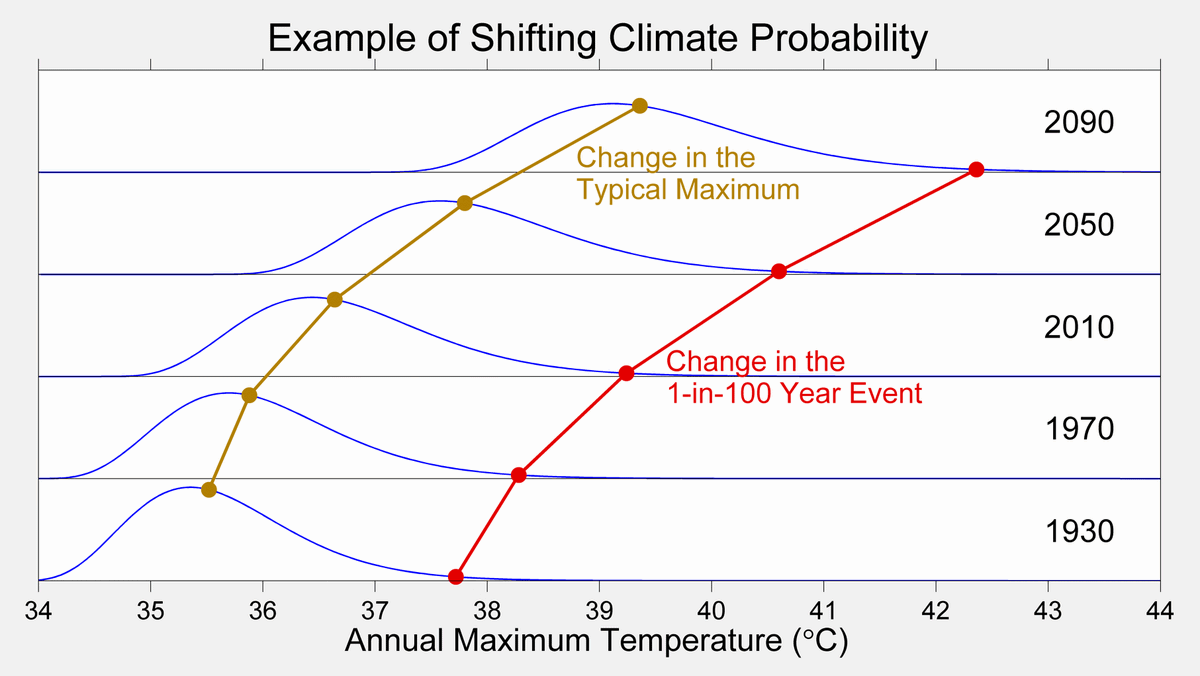
Climate sets the distribution of possible outcomes, while weather samples from that probability distribution.
For example, here is a schematic distribution of shifts in local annual maximum temperature, showing both shifts in the median and in the possible extremes.