In 1980, Julian Simon and Paul Ehrlich made a famous bet on resource scarcity. Ehrlich, believing in resource depletion due to population growth, chose five metals (copper, chromium, nickel, tin, tungsten). Simon, optimistic about human innovation, wagered their prices would fall. By 1990, inflation-adjusted prices dropped, and Simon won $576.07. This bet highlighted debates on economics, environmentalism, and population, showcasing Simon's view that human ingenuity could outpace resource demands.
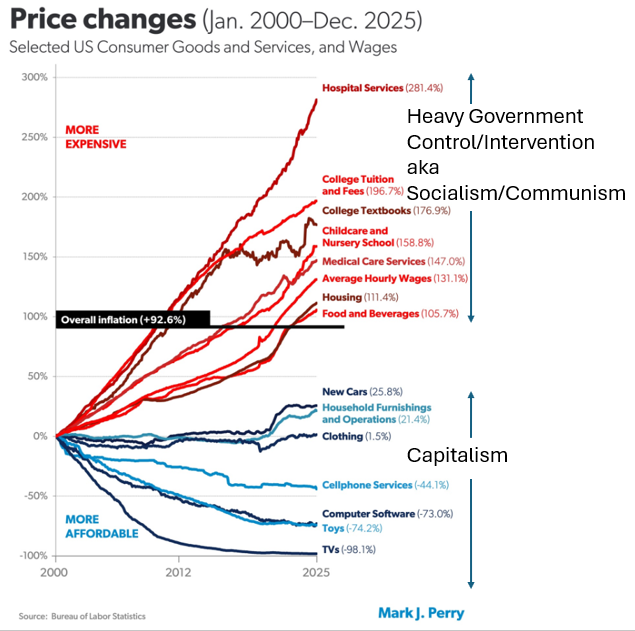
@ProjectLibertar In a pure capitalist economy, economies of scale naturally create large corporations that deliver higher-quality products at lower prices.
My understanding of Time is fundamentally the measure of change. It is relative to both space and motion and exists only where something changes.The rate at which change is processed is affected by motion and gravity — much like a computer that takes more time to render the same animation when it is moving very fast or operating under stronger gravitational pull. The animation (reality) is the same, but the rendering speed (time) differs.