Honored to receive the SCAI "30 in Their 30s" award and be part of such an inspiring group. Grateful to @SCAI for a great Scientific Sessions—learned a lot and loved connecting with colleagues. See you in Montreal next year!
#SCAI2025#30InTheir30s#InterventionalCardiology
🎉 Congratulations to this year's 30 in Their 30s awardees! We’re excited to watch these rising stars shape the future of #InterventionalCardiology ➡️ https://t.co/8zprKlSZ5h #SCAI2025
An incredible number of trials published simultaneously in the NEJM: I honestly can’t quite wrap my head around what is happening. Congratulations to everyone involved. It was difficult to choose only five trials, but these are the ones I selected for the interventional cardiology highlights. #ESCCongress
SINGLE-AF trial: In patients with atrial fibrillation and intermediate stroke risk, DOAC therapy lowered the risk of net adverse clinical events (stroke, systemic embolism, major bleeding, or CV death) compared to no anticoagulation at 24 months. View slides here: https://t.co/b36rhC1emf
The 5th Universal Definition of MI is out. Thankfully, no more type 1, 2, 4a, 4b, 5 MI. Simpler and more clinically relevant.
Here is my summary on the document:
1. Primary MI. Wider than the old type 1. Atherothrombosis, SCAD, embolism, vasospasm. Stent thrombosis, restenosis, or graft failure past 30 days is now primary, not procedural.
2. Secondary MI. Supply-demand mismatch from another illness. Much stricter now. Demand ischemia plus a troponin bump is not enough. You need obstructive CAD or a new wall motion abnormality.
3. Procedure-related MI. Any cardiac procedure, within 30 days instead of 48 hours. However, we need an angiographic evidence or a new RWMA. Both if it happens during the case itself or the procedure was for an acute MI. Troponin supports the diagnosis but doesn’t make it (>5x URL at 6h for PCI, >35x at 24h for surgery).
4. Type 3 MI is gone. If someone dies, classify by the clinical setting or post-mortem findings.
5. Troponin cutoffs are sex-specific. For high sensitivity troponin, the female upper limit is about half the male.
6. MINOCA is now myocardial injury, not infarction. Non-obstructive means under 50% stenosis. It’s a working diagnosis, since most of these patients turn out to have myocarditis or Takotsubo cardiomyopathy.
7. Silent MI has criteria now. Pathological Q waves aren’t enough. Confirm with imaging, ideally CMR with LGE, new RWMA
8. Shouldn’t say typical and atypical pain; rather chest discomfort. Rather, say “chest discomfort.”
9. A whole section on structural. Bottom line, troponin rise after TAVR by itself is no longer an MI. You need the angio finding or new RWMA.
@mirvatalasnag
The 10 trials I am most looking forward to at the ESC Hot Lines next week (in no particular order):
LIBREXIA-ACS, where milvexian could end up like apixaban in APPRAISE-2, perhaps with less bleeding. Rivaroxaban did not exactly have an easy story after ATLAS ACS 2 either, despite the positive results. Although we know the trial was stopped for futility, the data remain important in the rollercoaster of FXI inhibitor trials.
EPIDAURUS, because I will be the Discussant in Hot Line 3. It compares ticagrelor or prasugrel with clopidogrel in patients with atrial fibrillation and acute coronary syndrome. So I know everything about it, but I am not telling you.
SWITCH-SWEDEHEART, because if this trial is positive for prasugrel, this might finally be the moment when I call back all my patients on ticagrelor and switch them one by one. If not, we can say we have been joking all along and that ISAR-REACT 5 was just an episode.
PREMIUM, because after NEOMINDSET and STOPDAPT-3, a third negative trial for an aspirin-free strategy (meaning P2Y12 inhibitor monotherapy from the outset) would probably put this rather radical idea to rest, making it indefensible.
ISOLEDS, comparing OCT- versus IVUS-guided PCI in distal left main disease. After OPTIMAL and IVUS-CHIP, which we are still recovering from, we really need something that leaves angiography out of the comparison.
TAVI-PCI, because I don’t know about you, but after NOTION-3 and PRO-TAVI, I am still somewhat confused.
POPular-ACE, one of my favourites because it addresses a simple question with a potentially clear answer that we could implement in the cath lab the very next day: do we actually need protamine after TAVI or not?
AIR-STEMI, continuing the elemental saga of the Ferrara group (the same investigators behind FIRE) this time using angio-derived FFR to identify non-culprit lesions in STEMI. There is some confusion here too, given that FLOWER-MI was negative while FRAME-AMI was positive.
A-CLOSE, evaluating chronic clopidogrel monotherapy and continuing the story started by HOST-EXAM and SMART-CHOICE 3 against aspirin, while resembling OPT-BIRISK in its comparison with DAPT.
PRAGUE-26, which deserves a special mention because I really like the idea of tackling a complicated problem with an extremely simple and inexpensive approach. The results could surprise us and tell us that the solution has been sitting right there all along: alteplase directly instilled into the pulmonary arteries—a strategy we practically never use, and perhaps we are wrong not to.
Ready for the MIACC 38th Annual Conference? Join colleagues from across the state for two days of education and networking.🏨 The discounted room block at Grand Traverse Resort & Spa is available through August 23.
Learn more, register, and book your stay: https://t.co/P0K2GedSLR
A back table illustration of the technique published by @PCRonline to remove a stuck perclose footplate in the vessel!
Simple and I believe can get us out of trouble!
https://t.co/UOG0sfoOT4
#CardioX peeps, comments welcome
Great collaboration with our outstanding residents @UMHealthSparrow & @UmhsparrowMSUIM led to 4 case reports and 1 meta-analysis presentations at #ACC26 in New Orleans this year @ACCinTouch@MichiganACC
Excited to keep working and mentoring the next generation of 💚🩺
Introducing the percutaneous aorto-coronary bypass graft. The VECTOR procedure revascularizes the left main coronary artery using retrograde and antegrade steps: a retrograde wire exits the left main (distal graft), an electrosurgical wire exits the aortic root (proximal graft), a guidewire rail is created, and a stent graft is delivered from the aorta to the left main. What could possibly go wrong?
https://t.co/iNUNbHdGiT
A challenging TEER case for degenerative MR.
Severe MR successfully reduced to mild–moderate with a mean gradient of 3 mmHg using 2 PASCAL ACE devices placed at A1–P1 and A2–P2.
Excellent hemodynamic results V waves down from 50 to 30 mmHg. @UMHealthSparrow@EdwardsLifesci
Excited to share our new @EMJCardiology paper—Editor’s Pick!
We introduce the PLOTO concept, a simplified & practical approach to #PCI in bifurcation lesions. See below 👇
Grateful to my co-authors @AlmKassier@am_elshafie & @GiorgioMedranda.
🔗 https://t.co/Dk0p4xMO8B
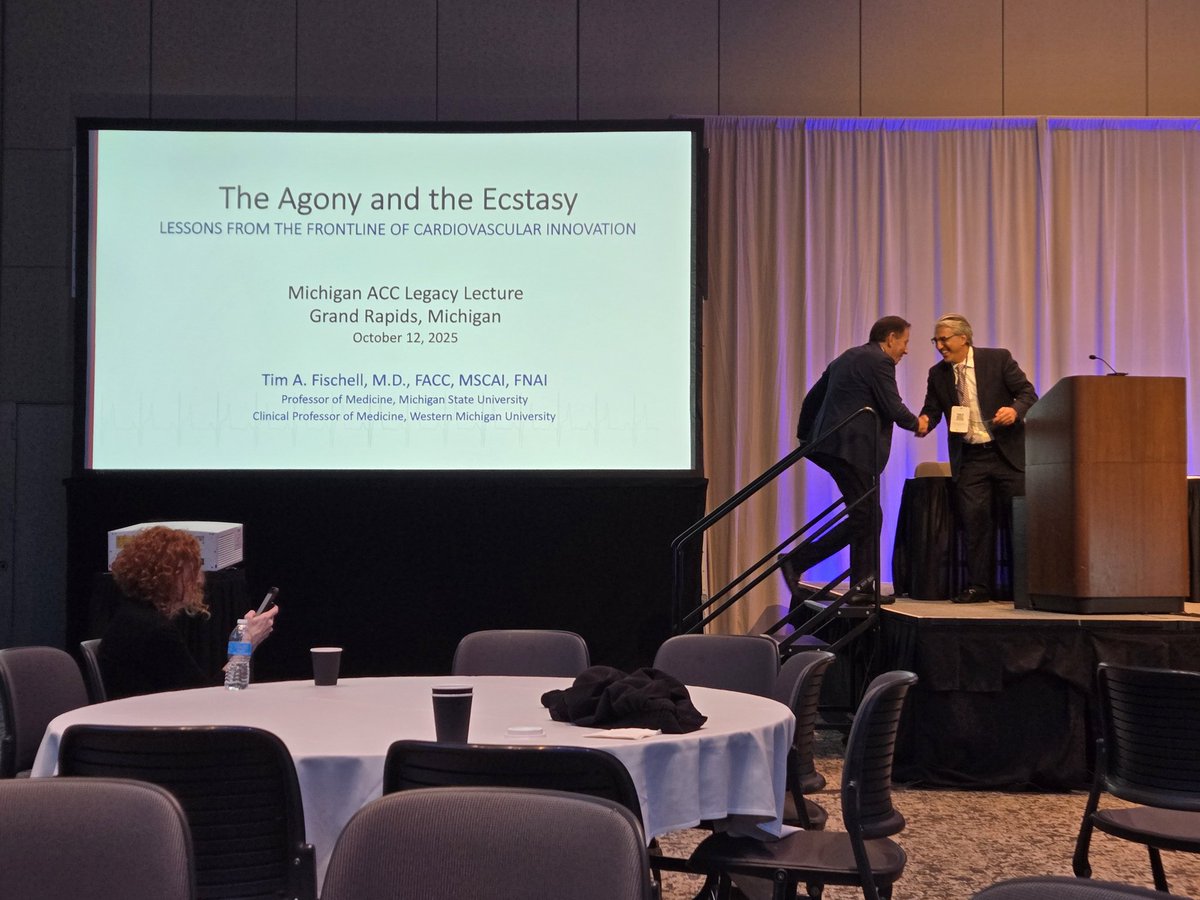
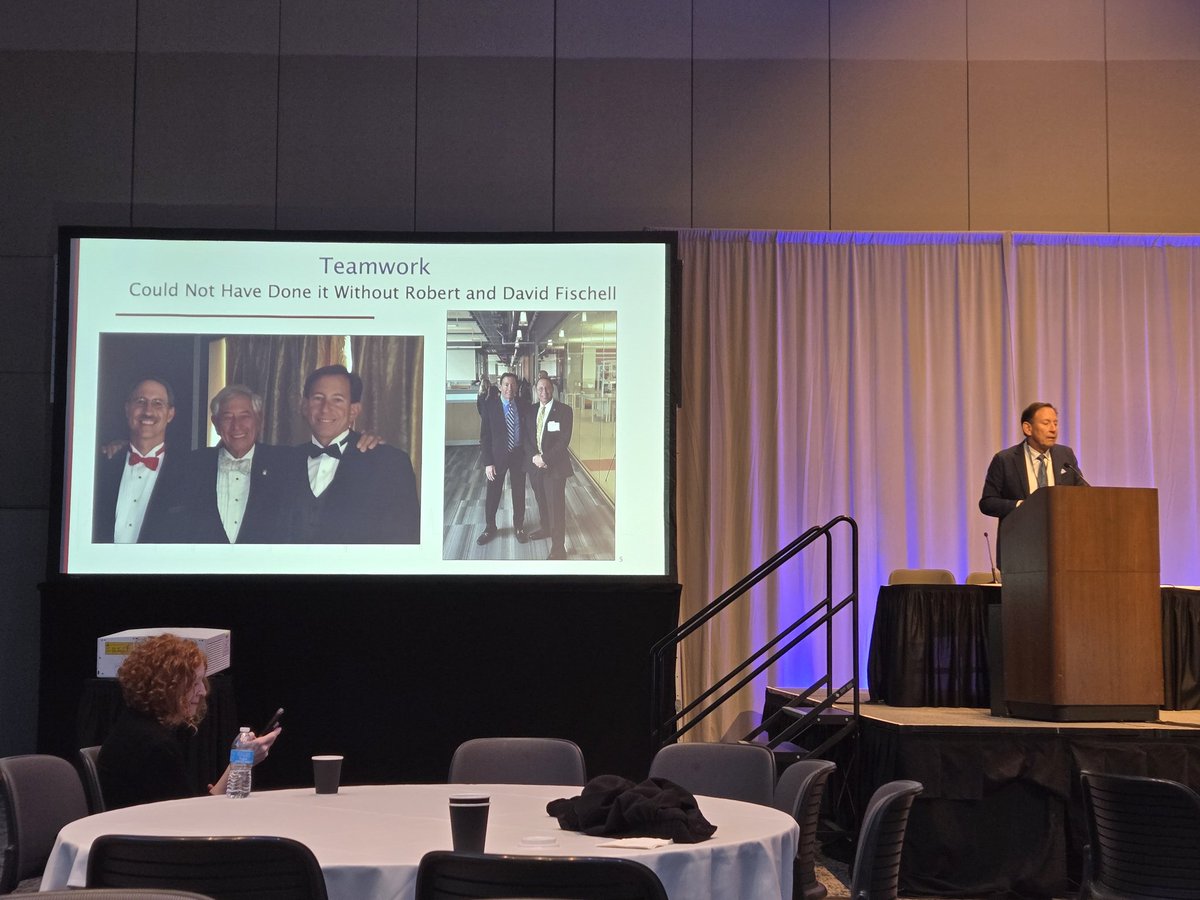
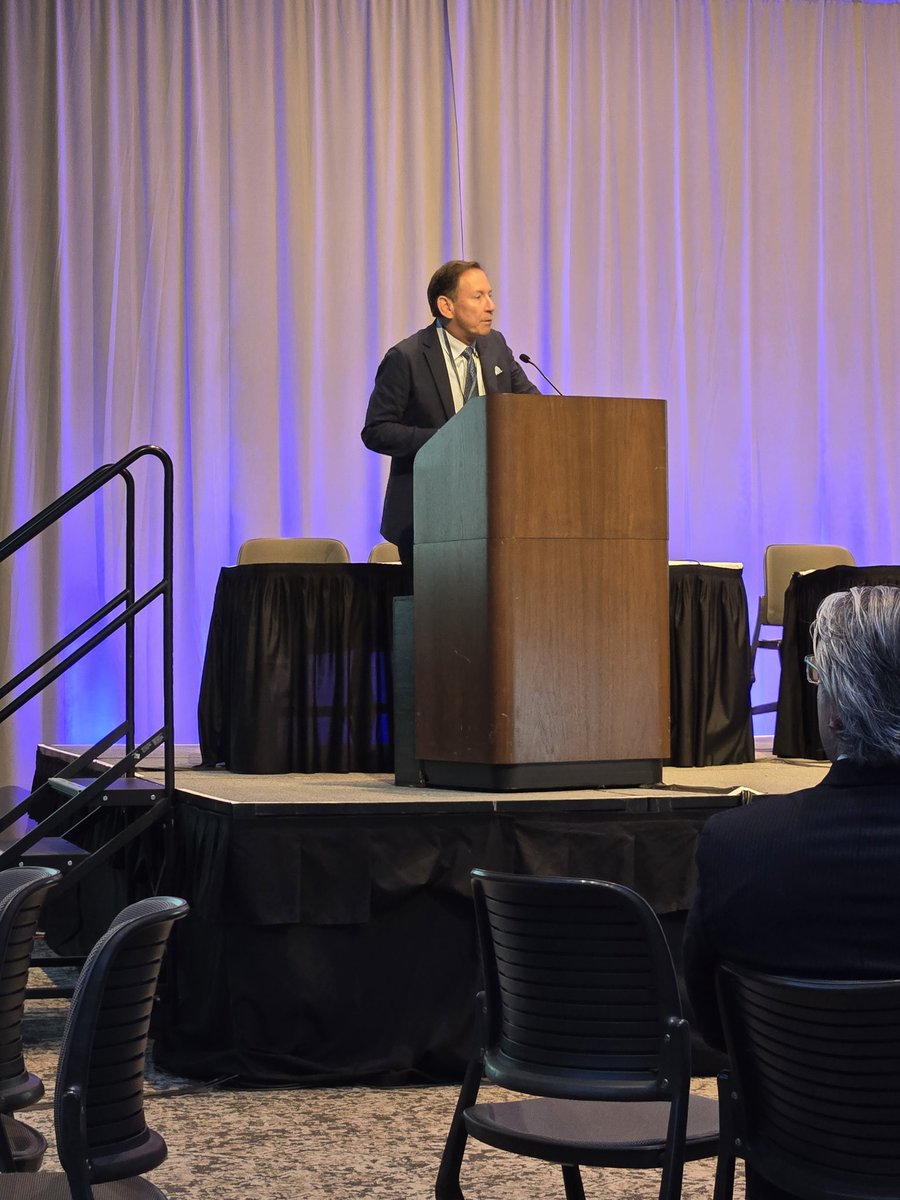
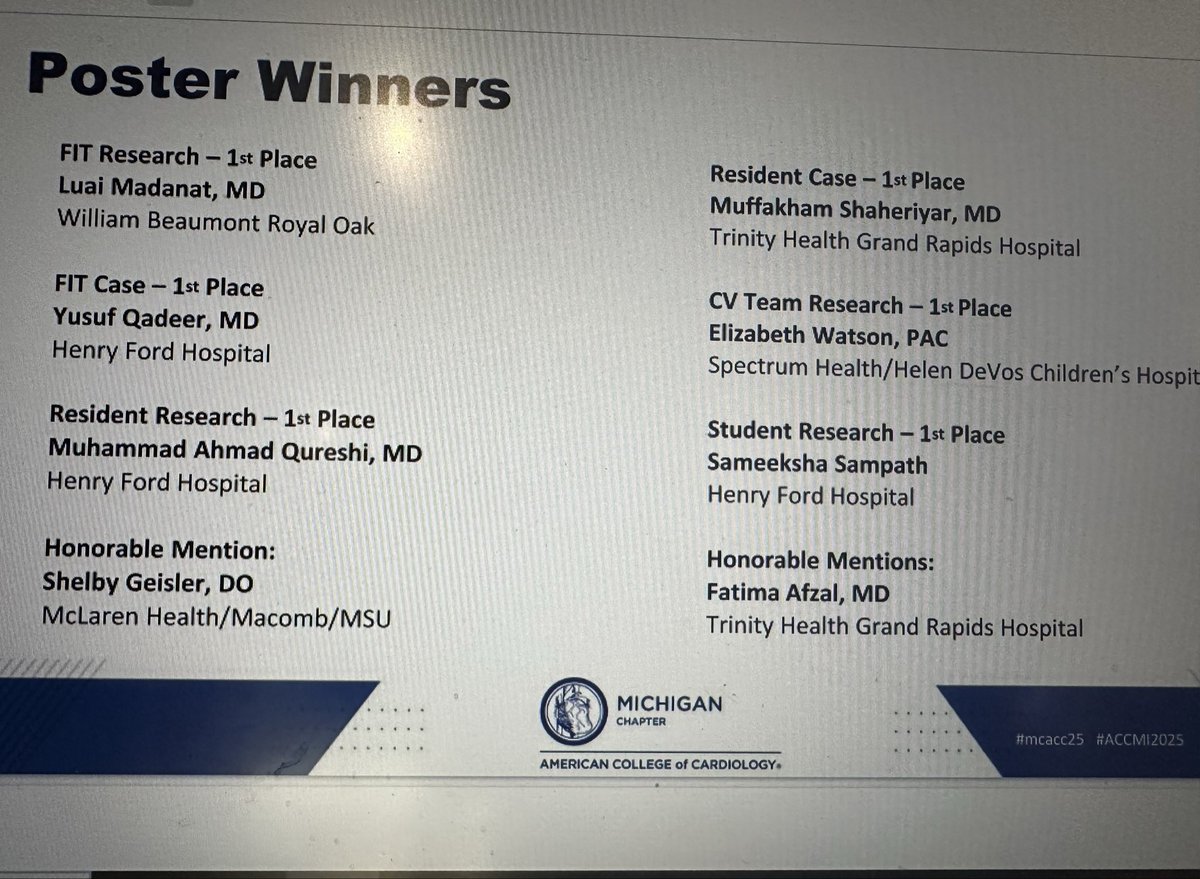
Congratulations to @NagibChalfoun, @drsjdan, and Dr. Celeste Williams for organizing an exceptional @MichiganACC 37th Annual Conference! A special highlight was the inspiring legacy lecture by @TimAFischellMD
Outstanding imaging by @Philips Verisight 3D ICE; LAA thrombus ruled out using contrast enhancing agents (optison) prior to transseptal puncture. LAAC completed safely with Watchman @BSCCardiology guided entirely by @Philips 3D ICE