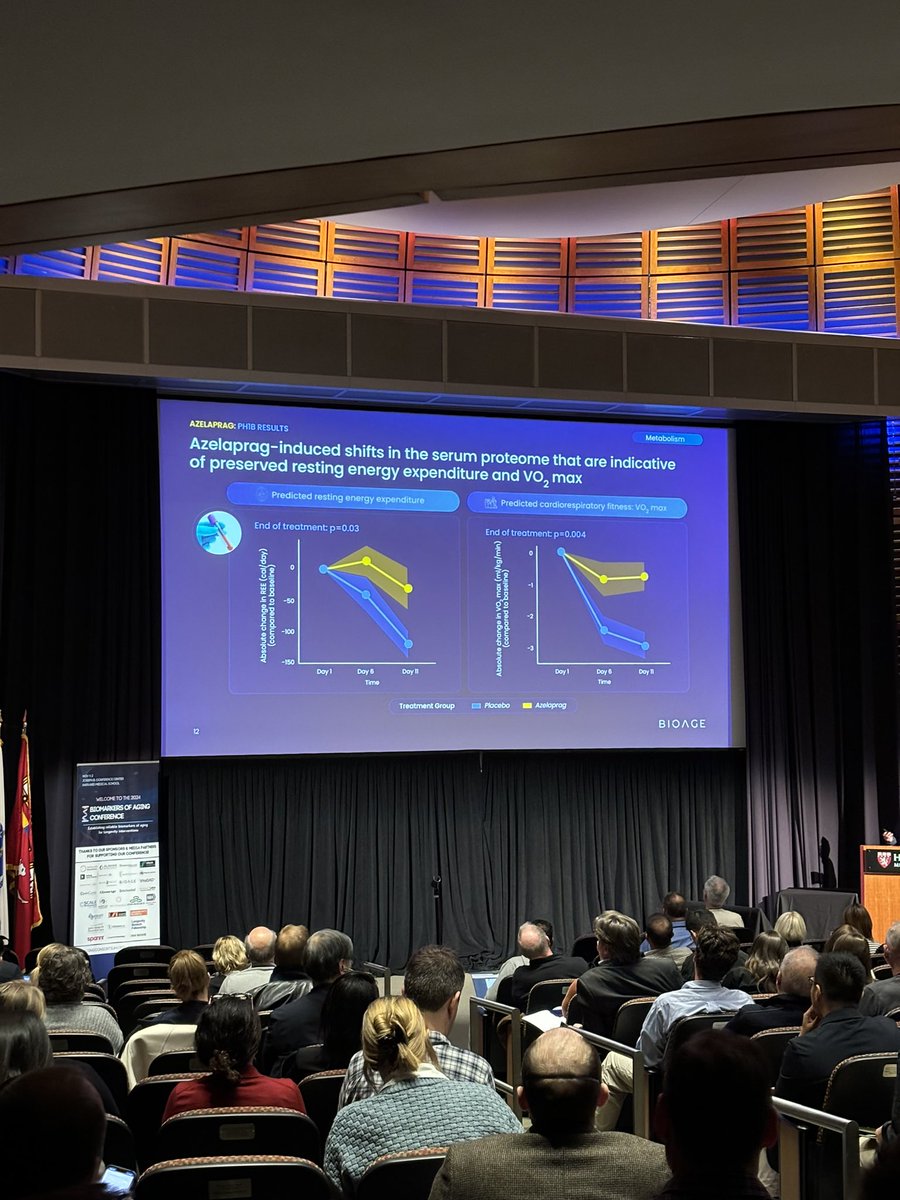
It’s great to see the longevity-focused biotech @bioagelabs already utilizing specific aging biomarkers as potential predictive and prognostic indicators of their therapeutic’s success.
The causal role of epigenetic clocks remains hotly debated. Longitudinal human studies will be key. An Italian cohort shows that annual increases in epigenetic age predict declining health. Actually, both annual increase and baseline epigenetic age are independent predictors of mortality strengthening the case for a causal link. #Epigenetics #Aging #Mortality Perry Kuo, Luigi Ferrucci 2024 Longitudinal changes in epigenetic clocks predict survival in the InCHIANTI cohort https://t.co/psdUpBjCpv @agingbiomarkers
🧬Maximum mammalian lifespan is inversely related to rate of change in methylation at specific DNA regions (bivalent regulatory regions): ROC= 1/maximum lifespan. Several beautiful equations link age-related methylation changes to maximum lifespan. Methylation data bring a dream of many physicists to life: mathematical modeling in aging biology. We previously found only a weak overlap between methylation changes associated with maximum lifespan and those linked to chronological age because species lifespan is genetically fixed and doesn’t vary with age. The final part of our trilogy on mammalian lifespan addresses this counterintuitive result. It took five years to publish because we found that studies linking the rate of change in aging biomarkers to lifespan are inherently biased. Strong negative correlation between the rate of change and lifespan can occur even without any signal! We developed a framework to highlight this bias and collected data from 348 mammalian species.
Zhe Fei (2024) Fundamental equations linking methylation dynamics to maximum lifespan in mammals. https://t.co/6hZhZ5Kgtc
@agingbiomarkers #Aging #Methylation #Lifespan #EpigeneticClocks
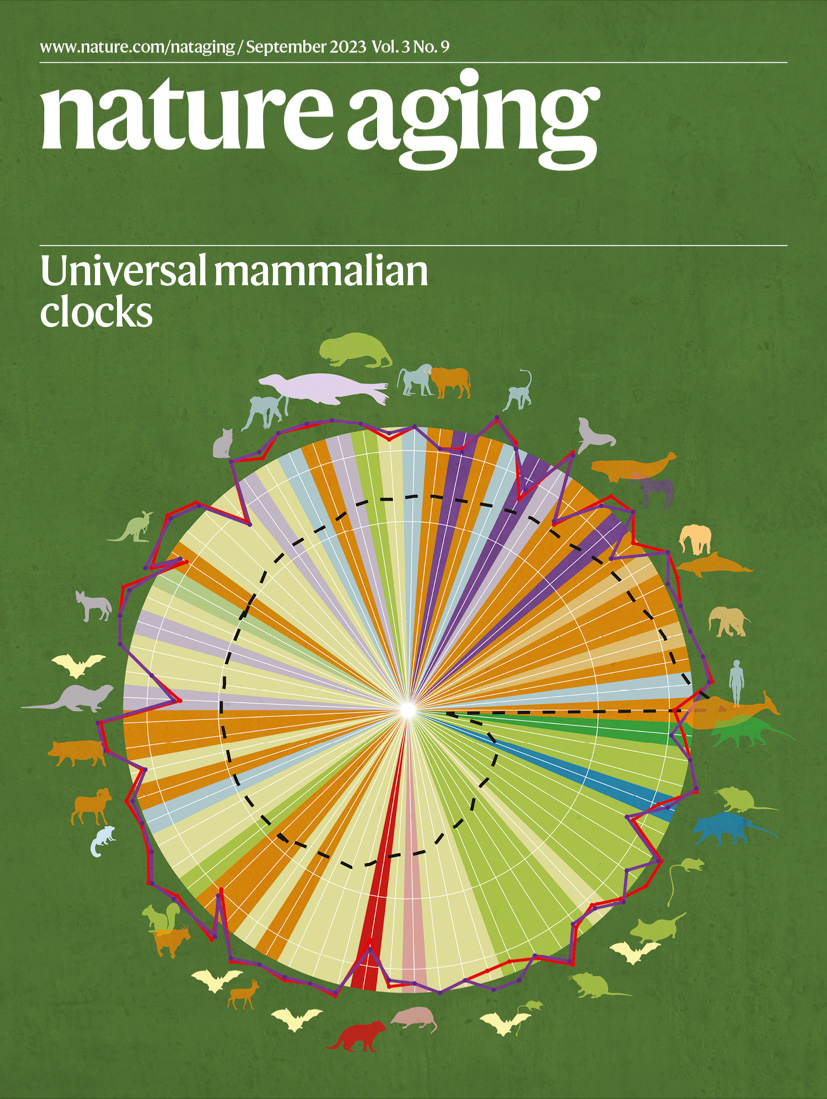
🗞️Our September issue is out! Read about #mitophagy and #urolithinA, how #lysosome tubulation mediates starvation-induced longevity, #platelet factors in #cognition and much more. 🎨 Image courtesy of Ake Lu and Steve Horvath. https://t.co/309iChf7b7
Perspective on the @prof_horvath et al finding of pan-mammalian epigenetic clocks.
Some of my thoughts:
"These results provide ground-breaking evidence that, at least some, aspects of aging are deterministic and linked to developmental processes."
https://t.co/cOE1FWZuul
Online now! Universal DNA methylation age across species. Study identifies and characterizes evolutionarily conserved cytosine #methylation states related to #age across mammals and establishes pan-mammalian #epigenetic clocks @akelu38@prof_horvath https://t.co/AFT51Zo5nG
📢Research pinpoints and describes evolutionarily shared cytosine methylation patterns linked to age in mammals, establishing universal epigenetic clocks for the entire mammalian realm. #DNAmethylation#aging#longevity@akelu38@prof_horvath@NatureAging
https://t.co/2px3qC8r1g
Excited to share our collaborative work (spearheaded by talented Ake Lu) that was just published Nature Aging. Steve explains the significance in his below post:
Pan-mammalian epigenetic clocks are highly accurate across species, from mice to whales! 🐭🐋These clocks predict mortality risk, hinting at their value in preclinical studies. Epigenetic aging processes are evolutionarily conserved across mammals, intertwining aging and development. #Evolution #EpigeneticClocks #AgingResearch
https://t.co/nhPPVHU4Ru
Main challenge in AI-driven research on rejuvenation strategies? Quality data! 🧬 The Mammalian Methylation Consortium has just released precise DNA methylation data from 15K tissues across 348 mammal species. Now, with a laptop & innovative thinking, anyone can dive into this open-source goldmine. Let's democratize science! 🚀#OpenScience #Longevity #AI
https://t.co/lFTeGZuhB9
Epigenetic Age Acceleration in Surviving versus Deceased COVID-19 Patients with Acute Respiratory Distress Syndrome following Hospitalization https://t.co/dIY2kwVUyO
Chronic stress accelerates aging, but how? A new study shows stress triggers increased cellular energy consumption or "hypermetabolism." This could pave the way for a new class of treatments targeting stress at the cellular level. https://t.co/2A6m6OaZ2E
@MitoPsychoBio
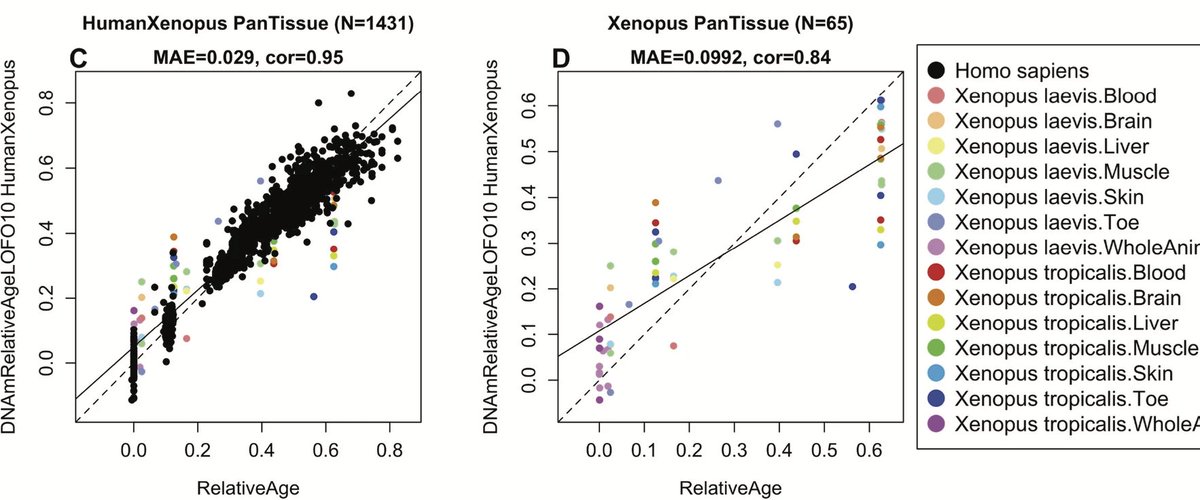
Epigenetic clocks transcend to amphibians, showcasing that DNA methylation lends itself for measuring age in clawed frogs and humans alike. Another triumph of the mammalian methylation array. #Epigeneticclocks#comparativebiology#aging
https://t.co/1IyVqKqMXH
🔬 Promising step towards cognitive rejuvenation in aging rats! 🧠 By using gene therapy, Rudy Goya introduced the Yamanaka genes into old rat brains via a viral vector. 📈 Significant improvement in learning performance, a trend towards a decrease in epigenetic age in the hippocampus. 🐀👵➡️👩🎓 #Neuroscience #OSKM #Rejuvenation #EpigeneticClock
https://t.co/OHlh6EQv5c
If you haven't seen it, a new version of GrimAge is now out! It works even better in both blood and saliva samples and adds two new epigenetic risk factors important for metabolic and cardiovascular health. https://t.co/Ci2ytuYk2D
@KoplevS Hi Simon, I just noticed this great paper and have been looking at the web. I tried to find some eQTL association. But the table does not show the test allele. How to tell which allele corresponding to the beta?
Epigenetic age is increased by stress but can be restored. Several clocks including universal pan-mammalian clock show that young blood/parabiosis affects epigenetic age. #Epigeneticclock#Parabiosis#StressRecovery#aging https://t.co/xTWNIo75d7
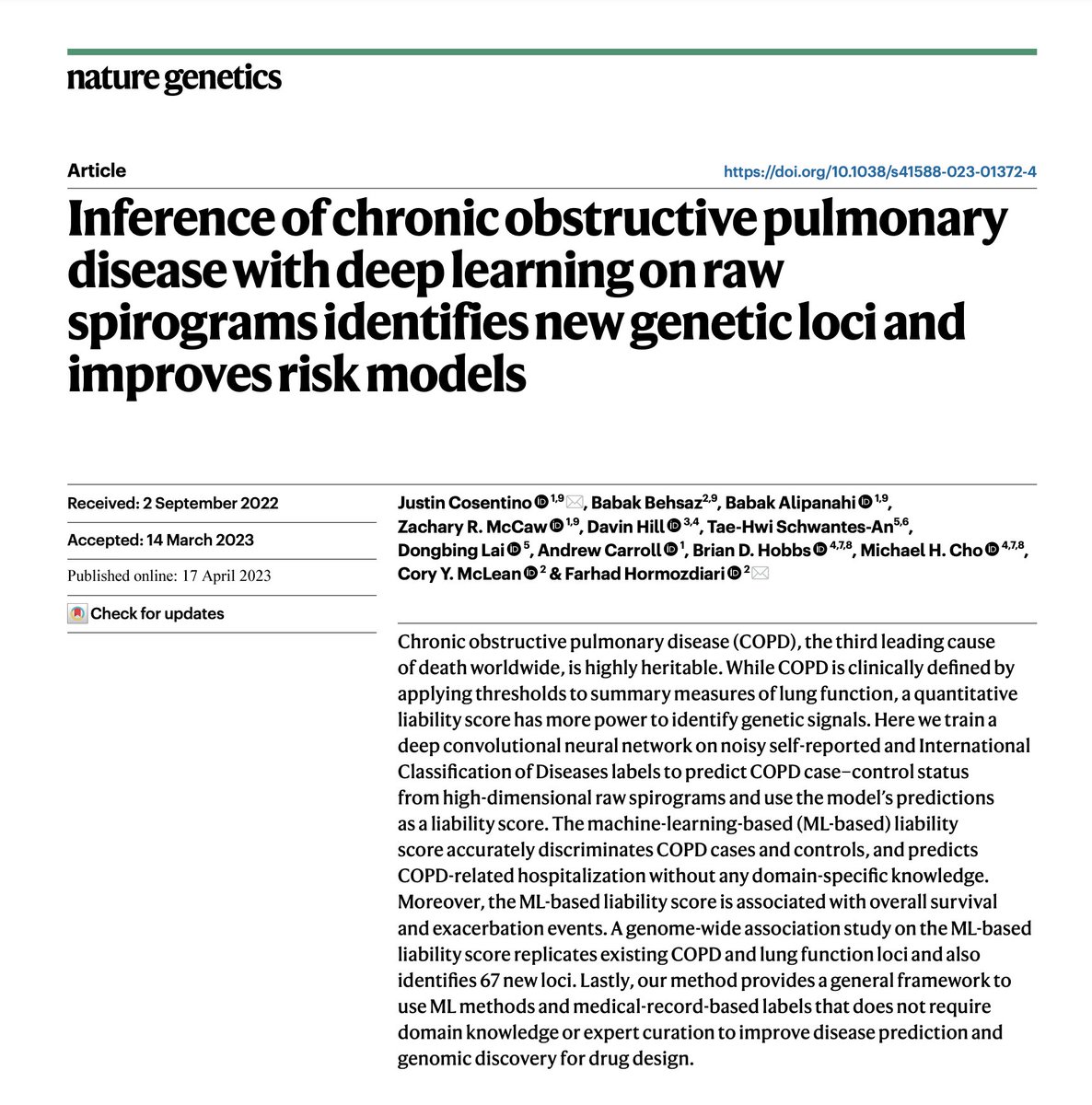
Our recent @GoogleHealth AI Genomics work showing that deep learning approaches identify new genetic loci and improve risk models for chronic obstructive pulmonary disease (COPD) was published today in @NatureGenet !
Paper: https://t.co/hj5ndPlO4p
Code: https://t.co/EtrxMtEVro