I haven’t lived here in awhile, but I see no other way to answer the hundreds of texts/DMs asking me if the world is, indeed, ending.
In the span of six days, we’ve experienced;
11/12 — Microsoft outage
11/13 — Nationwide FAA ground stop
11/16 — Major US banking disruptions
11/17 — NSA’s classified internal network goes down
We need far more analysis of why so much is breaking at once. I don’t want to get out over my skis here, and what I am hearing does not contradict the messaging that most of this is the result of screwy updates.
But stepping back, the dots are starting to form a collective picture. We are seeing:
• An explosion in severe and critical vulnerabilities, with AI accelerating discovery to 3X the number of vulnerabilities discovered in the same period last year. This is collectively being referred to as “vulnageddon” or “the vulnpocalypse.”
• Mean time to exploit those vulnerabilities has collapsed to NEGATIVE SEVEN DAYS. AI allows attackers to find/exploit vulns far faster than software makers have time to fix them.
• Powerful AI-enabled offensive tools like ARTEX have been thrown into the hands of every third tier nation state, cybercriminal and digital arsonist, which logically creates havoc.
• This creates enormous pressure to compress patching windows and accelerate software updates, increasing the likelihood these fixes break things in unexpected, cascading ways.
• Pressure to just “AI everything” means we are rolling out automated AI tooling on top of brittle infrastructure that can’t support it.
My generation grew up in an extraordinary period of technological stability. We worked our way up the software stack, abstracting away layer after layer, until we lost a fundamental understanding of how the underlying systems actually work.
We were told to “move fast and break things.” VCS told us to celebrate the idea that “software would eat the world.” Now we’re telling ourselves we can simply “roll out AI” across everything, as though nothing underneath will buckle.
We never stopped to ask: SHOULD WE?
Should we be digitizing every last nook and cranny of our companies, infrastructure, healthcare, homes, cars, bodies, lives? Especially when the complexity, interdependence, and fragility we were introducing overwhelmed our ability to understand/secure/maintain the systems we built?
Nobody every asked: What if, in the name of progress, we were creating the ripest attack surface in human history?
We are now entirely dependent on software systems that almost nobody understands end to end, that increasingly few people can repair, and that attackers can now probe at machine speed. We are hearing that incident response firms, the 911 for breach victims, are backlogged six months. Even those paid on retainer lack the bandwidth to triage every incident. The cavalry is disappearing.
We are entering a period of unprecedented technological instability.
“Software Beirut” is an incredibly apt analogy. We are in for a period of cascading failures, whether triggered by attackers, bad updates, or our own accumulated complexity.
This, I’m sorry to say, is just the opening chapter.
There is much to celebrate this week, but I want to call specific attention to historic gains Democratic women made in representation:
- For the first time in history, over 100 Democratic women will serve in the U.S. House.
- At least 16 Democratic women will serve in the Senate.
- At least 14 Democratic women will serve as governors, a record high.
- A record of 2,600 Democratic women running for seats in state legislatures helped flip 12 majorities and break 11 supermajorities.
- Four states elected their first woman governor: Georgia, Minnesota, Ohio, and Tennessee.
- @KeishaBottoms will be the first Black woman to serve as a governor.
- @DebHaalandNM will be the first Native American woman to serve as a governor.
- @GinaHinojosaTX will be the first Latina to serve as governor of Texas.
- @peggyflanagan will be the first Native American woman to serve in the Senate.
I am beyond excited to see these extraordinary people and public servants tackle accountability, affordability, and our other challenges to make life better for everyone in this country.
Congratulations to everyone who ran: win or lose, fighting for what's right is always worth it.
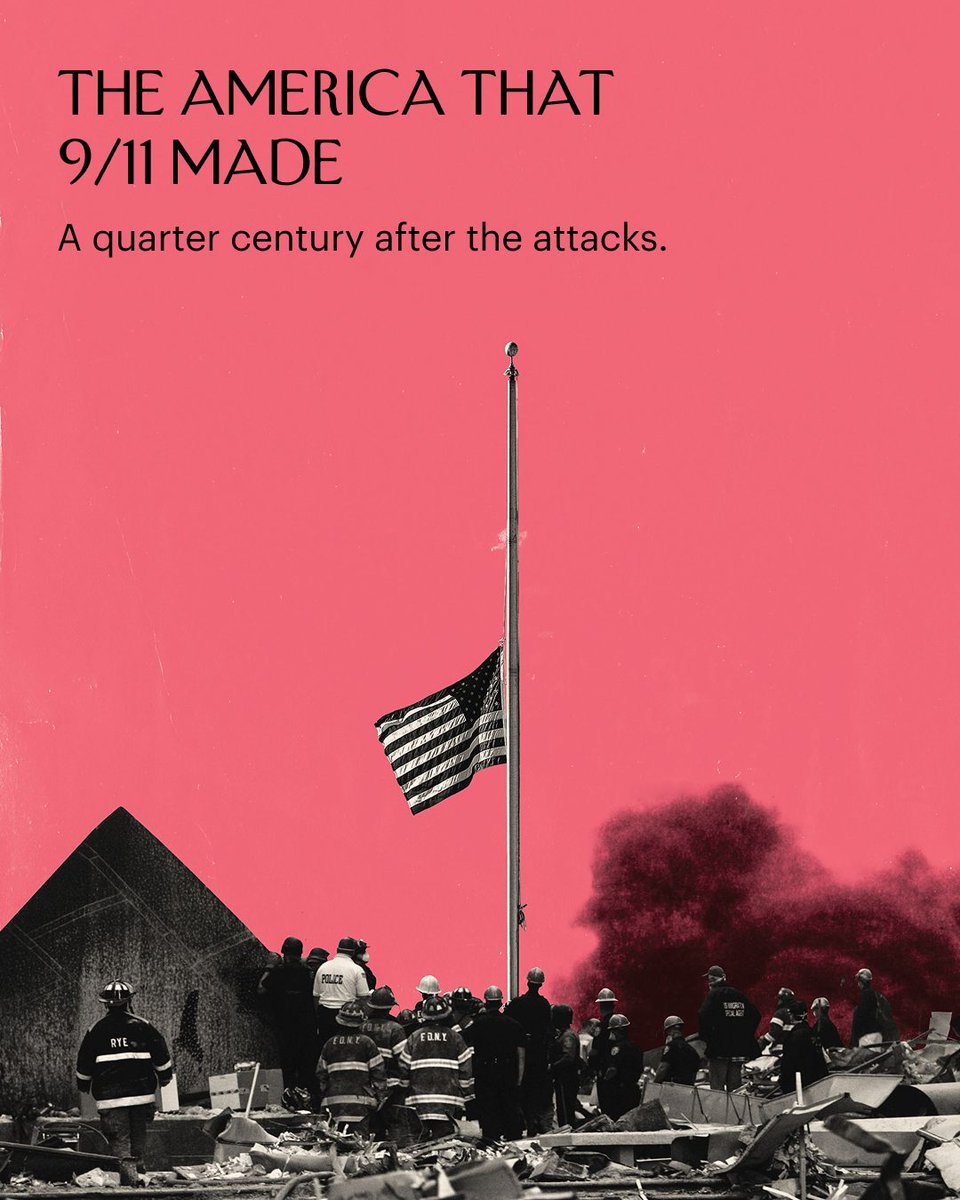
When the attacks on September 11, 2001, began, Jill Lepore was lecturing at Boston University. The class: The Emerging United States. That morning, she was talking about Andrew Jackson and the penny press when cellphones began going off. “Goddammit, I’d thought. No phones in class,” Lepore recalls. “Then someone gasped, and someone shrieked, and someone called out that he’d received a text from his sister in New York, and the towers, oh my God, oh my God, the towers, thousands of people, Jesus no, oh my God. That couldn’t be true. Could it?”
Lepore ended class early that day, when the skies in Boston were still blue and her very young sons were still in day care. “The day’s events are measured in minutes, a ticking clock; the grief in years, a beating heart,” she writes. As America prepares to remember the 25th anniversary of the attacks, their aftermath lingers. Lepore considers the resultant grief, wars, and political furies following 9/11, and how they continue to shape American life: https://t.co/F0YP1iLayW
"Keep me away from the wisdom which does not cry, the philosophy which does not laugh, and the greatness which does not bow before children. I wash my hands of those who imagine chattering to be knowledge, silence to be ignorance, and affection to be art."
— Khalil Gibran
@Alexie_Ai Any tips for doing this in an Outlook browser? The "category:promotions older_than:6m" search worked in my Gmail but not for my hotmail, which really needs pruning