Little late to the party, but I’m incredibly humbled and grateful to be joining the pulmonary critical care fellowship program @KeckMedUSC in LA next year! Alhamdulillah for everything 🙏🏽🙏🏽🙏🏽
@LeivaOrly I’ve thought of lots of potential solutions. One is to require interns to do lines under supervision in a clinically-protected environment (e.g- a procedure rotation where ALL you do is find pts needing lines), so they develop confidence to be first-call for lines when on MICU.
@LeivaOrly While the opportunity has generally there, many residents don’t take it, which creates inexperienced junior fellows who need to quickly catch up to speed in the first several months of fellowship, which creates a fellow-first culture, which perpetuates the cycle more
Here’s another pulmonary physiology question that *everyone* who gives O2 to patients ought to know:
What is the primary mechanism by which supplemental oxygen can increase PaCO2 in someone with severe COPD?
1/
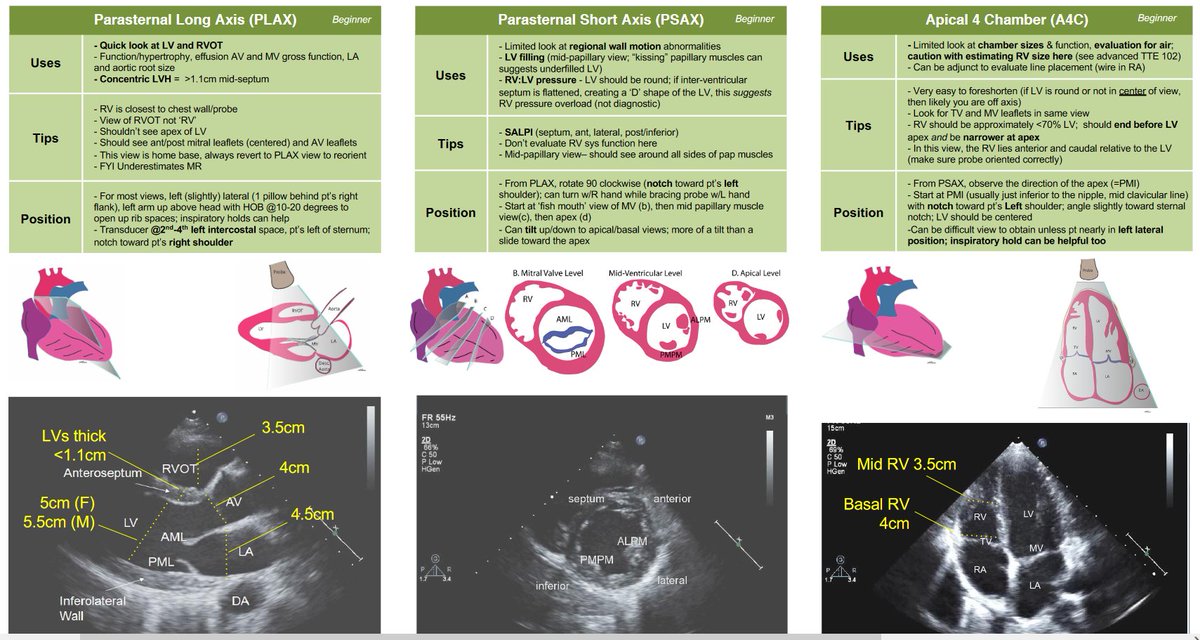
Learn how to use cardiac #POCUS to estimate stroke volume and cardiac output - my latest screencast for @ubcimpocus. If you manage acutely unwell patients, this is an invaluable skill!
https://t.co/0uVMq6Qznv
https://t.co/X1dZWlDE2L
🚨Code Blue🚨 = patient in cardiac arrest. You've got your ACLS algorithms ready to go.
But…what if that patient is PREGNANT? 😳
I’ll leave ACLS pearls to my Medicine and EM colleagues. They all still apply! Here are a few notable things about running a maternal code.
THINK LIKE AN EPIDEMIOLOGIST: why are COVID deaths *still* not going up 3 weeks after case counts started increasing? There are many possible explanations, but one I haven’t seen mentioned is the impact of widespread testing on *early detection*.
A #tweetorial on LEAD TIME BIAS.
1/
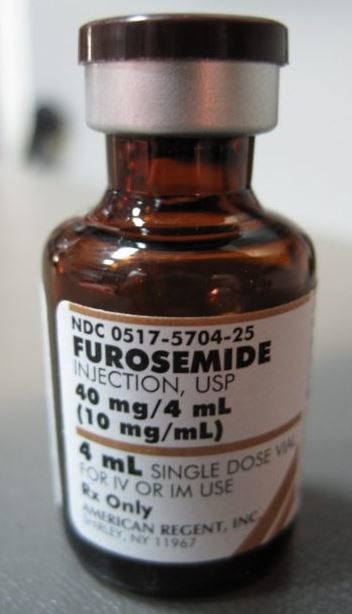
Why can furosemide improve dyspnea/pulmonary edema from acute congestive heart failure within minutes of administration?
The answer does not involve diuresis.
#medtwitter#tweetorial