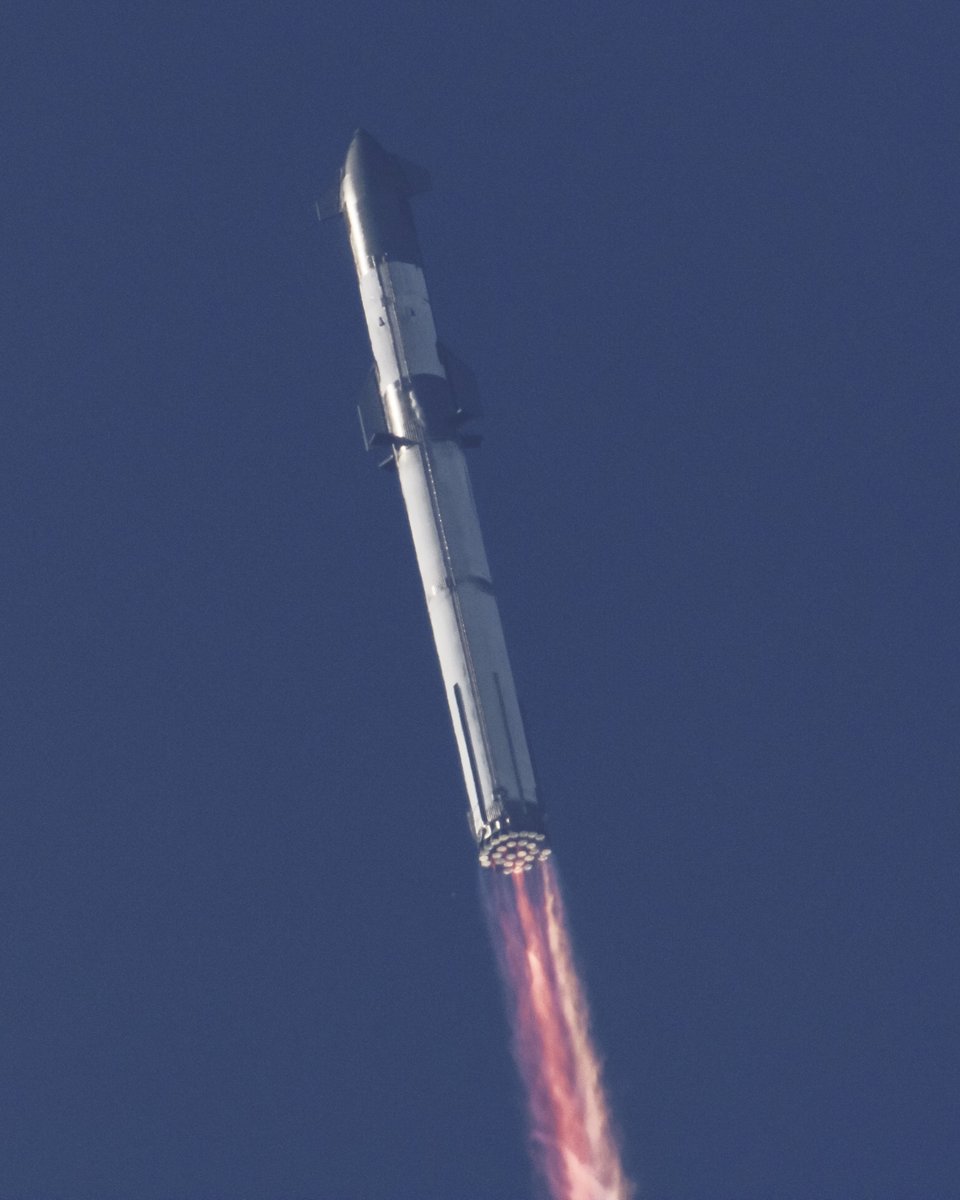
@SpaceX’s Starship is an awe-inspiring feat of engineering, boasting unprecedented size and mass as the largest object ever to soar through the skies under its own power. Its sheer magnitude is truly astonishing, setting a new benchmark in spaceflight capabilities.
Really enjoyed chatting with @michael_nielsen about how we recognize scientific progress.
It's especially relevant for closing the RL verification loop for scientific discovery.
But it's also a surprisingly mysterious and elusive question when you look at the history of human science.
We approach this question stories like Einstein (who claimed that he hadn't even heard of the famous Michelson-Morley experiment, which is supposed to have motivated special relativity, until after he had come up with the theory), Darwin (why did it take till 1859 to lay out an idea whose essence every farmer since antiquity must have observed?), Prout (how do you recognize that isotopes exist if you cannot chemically separate them?), and many others.
The verification loop on scientific ideas is often extremely long and weirdly hostile. Ancient Athenians dismissed Aristarchus's heliocentrism in the 3rd century BC because it would imply that the stars should shift in the sky as the Earth orbits the sun. The first successful measurement of stellar parallax was in 1838. That's a 2,000-year verification loop.
But clearly human science is able to make progress faster than raw experimental falsification/verification would imply, and in cases where experiments are very ambiguous. How?
Michael has some very deep and provocative hypotheses about the nature of progress. One I found especially thought-provoking is that aliens will likely have a VERY different science + tech stack than us. Which contradicts the common sense picture of a linear tech tree that I was assuming. And has some interesting implications about how future civilizations might trade and cooperate with each other.
So many other interesting ideas. Hope you enjoy this as much as I did.
0:00:00 – How scientific progress outpaces its verification loops
0:17:51 – Newton was the last of the magicians
0:23:26 – Why wasn’t natural selection obvious much earlier?
0:29:52 – Could gradient descent have discovered general relativity?
0:50:54 – Why aliens will have a different tech stack than us
1:15:26 – Are there infinitely many deep scientific principles left to discover?
1:26:25 – What drew Michael to quantum computing so early?
1:35:29 – Does science need a new way to assign credit?
1:43:57 – Prolificness versus depth
1:49:17 – What it takes to actually internalize what you learn
Look up Dwarkesh Podcast on YouTube, Apple Podcasts, or Spotify.
Renaissance history is so much wilder and weirder than you would have expected. Very fun chatting w @Ada_Palmer about it.
Some especially fascinating things I learned from the conversation and her excellent book, Inventing the Renaissance:
Not only did Gutenberg go bankrupt in the 1450s (after inventing the printing press), but so did the bank that foreclosed on him, and so did his apprentices. This is because paper was still very expensive, and so you had to make this big upfront CAPEX decision to print a batch of 300 copies of a book - say the Bible. But he's in a small landlocked German town where only priests are allowed to read the Bible - so he sells maybe 7 copies. It’s only when this technology ends up in Venice, where you can hand 10 copies to each of 30 ship captains going to 30 different cities, that it starts taking off.
Speaking of which, the printing revolution wasn’t just one single discrete event, just as the computer revolution has been this whole century of going from mainframes -> personal computers -> phones -> social media, each with different and accelerating social impact. Books came first, but they’re slow to print, and made in small batches. The real revolution is pamphlets - much faster, much harder to censor. Pamphlet runners are how you can have Luther's 95 Theses go from Wittenberg to London in 17 days.
So much other wild stuff from this episode. For example, did you know that the largest and best-funded experimental laboratory in 17th century Europe was very likely the Roman one run by inquisitors? Ada jokes that the Inquisition accidentally invented peer review. The focus of the Inquisition is really misunderstood - it was obsessed with catching dangerous new heretics like Lutherans and Calvinists - it only executed one person for doing science.
And this leads Ada to make an observation that I think is really wise: the authorities and censors are always worried about the exact wrong things given 20/20 hindsight. When Inquisition raids an underground bookshop during the French Enlightenment, they don’t mind the Rousseau, Voltaire, and Encyclopédie, but they lose their minds about some Jansenist treatises about the technical nature of the Trinity.
More broadly, a lesson for me from this episode is that it’s just really hard to shape history in the specific way that you want to impact things. One of the most famous medieval scholars is this guy Petrarch. He survives the Black Death in the 1340s, watches his friends die to plague and bandits, and says: our leaders are selfish and terrible, we need to raise them on the Roman classics so they'll act like Cicero. So Europe pours money into finding ancient manuscripts, building libraries, and educating princes on classical virtues. Those princes grow up and fight bigger, nastier wars than ever before with new deadlier technology. And this, combined with greater urbanization and endemic plague, results in European life expectancy decreasing from 35 in the medieval period to 18 during the Renaissance (the period which we in retrospect think of as a golden age but which many people living through it thought of as the continuation of the dark ages that had persisted since the fall of Rome).
Anyways, the libraries Petrarch inspires stick around, the printing press makes them accessible to everyone, and 200 years later a generation of medical students is reading Lucretius and asking "what if there are atoms and that's how diseases work?" which eventually leads to germ theory, vaccines, and a cure for the Black Death (Ada has longer more involved explanation of how cosplaying the Romans results through a series of many steps to the scientific revolution). Petrarch wanted to produce philosopher-kings that shared his values. Instead he created a world that doesn't share his values at all but can cure the disease that destroyed his.
So much other interesting stuff in the full episode - hope you enjoy!
Timestamps:
0:00:00 - How cosplaying Ancient Rome led to the Renaissance
0:28:49 - How Florence's weird republic worked
0:38:13 - How the Medicis took over Florence
0:58:12 - Why it was so hard for Gutenberg to make any money off the printing press
1:17:34 - Why the industrial revolution didn't happen in Italy
1:23:02 - The slow diffusion of paper through Europe
1:41:21 - The Inquisition accidentally invented peer review
Look up Dwarkesh Podcast on Apple Podcasts, Spotify, YouTube, etc.
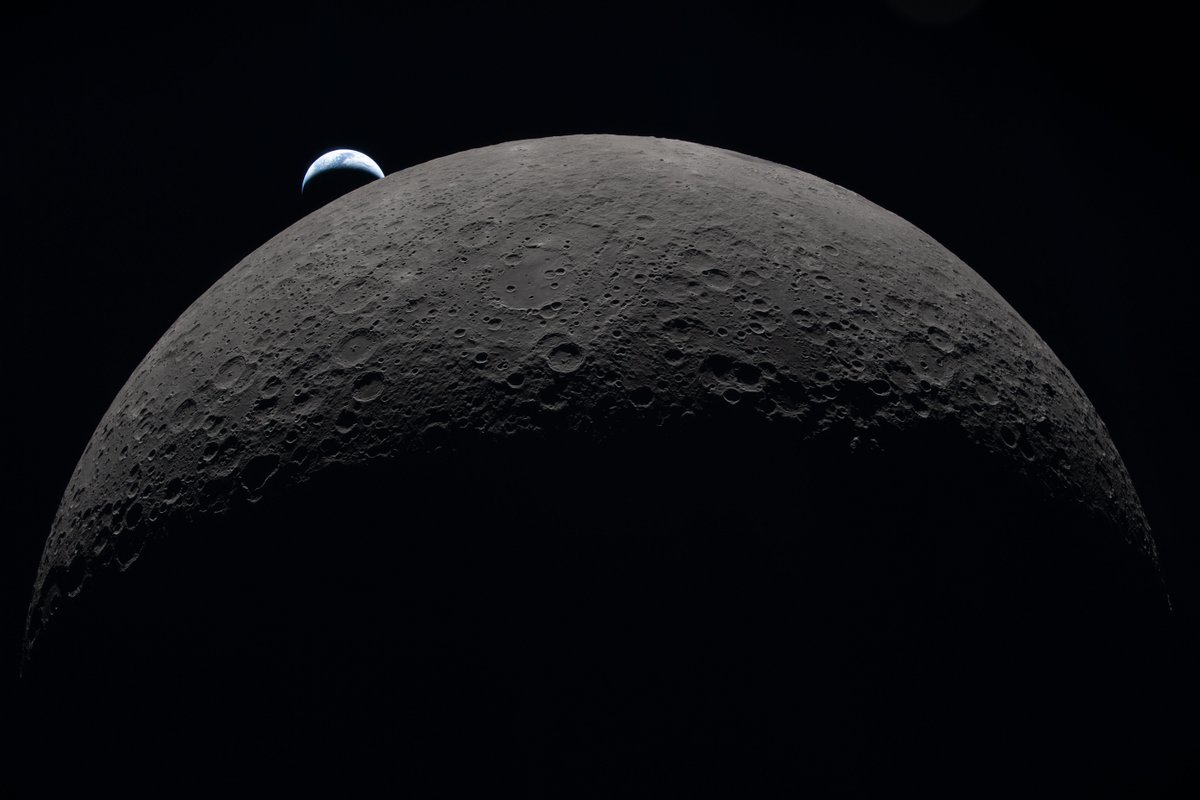
Hello, Moon. It’s great to be back.
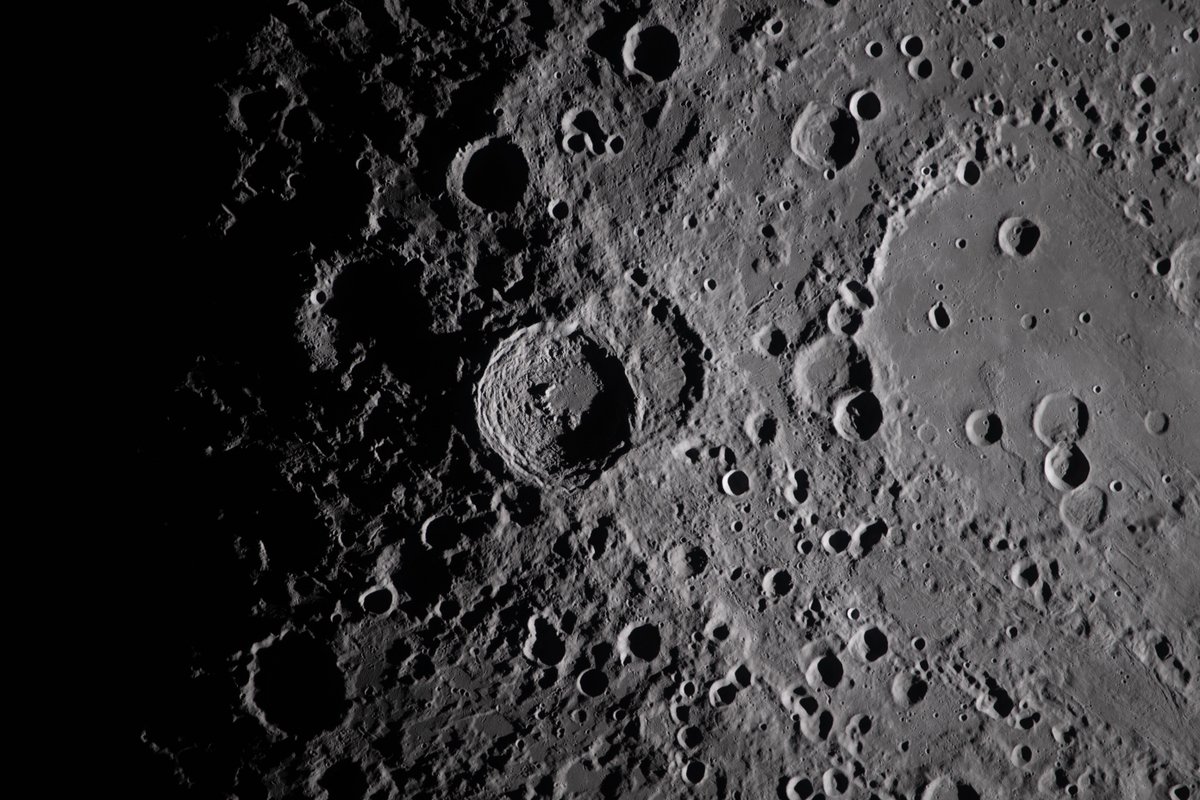
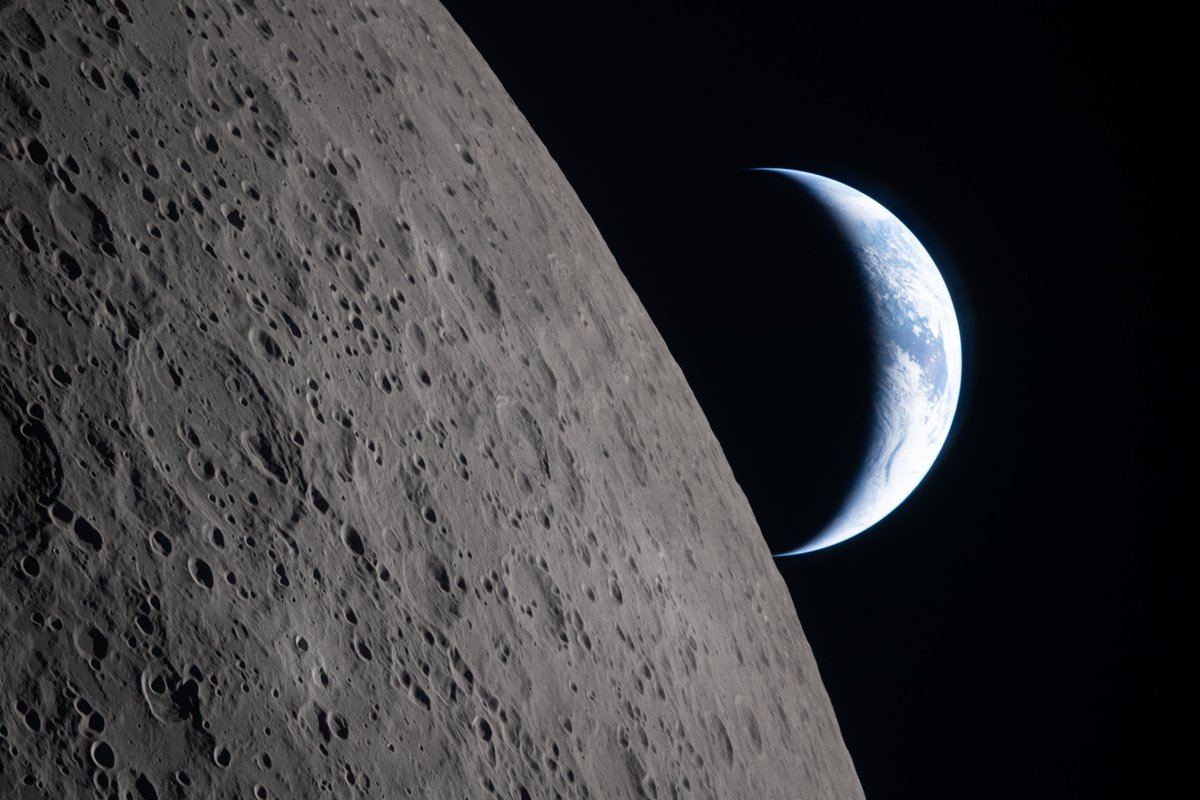
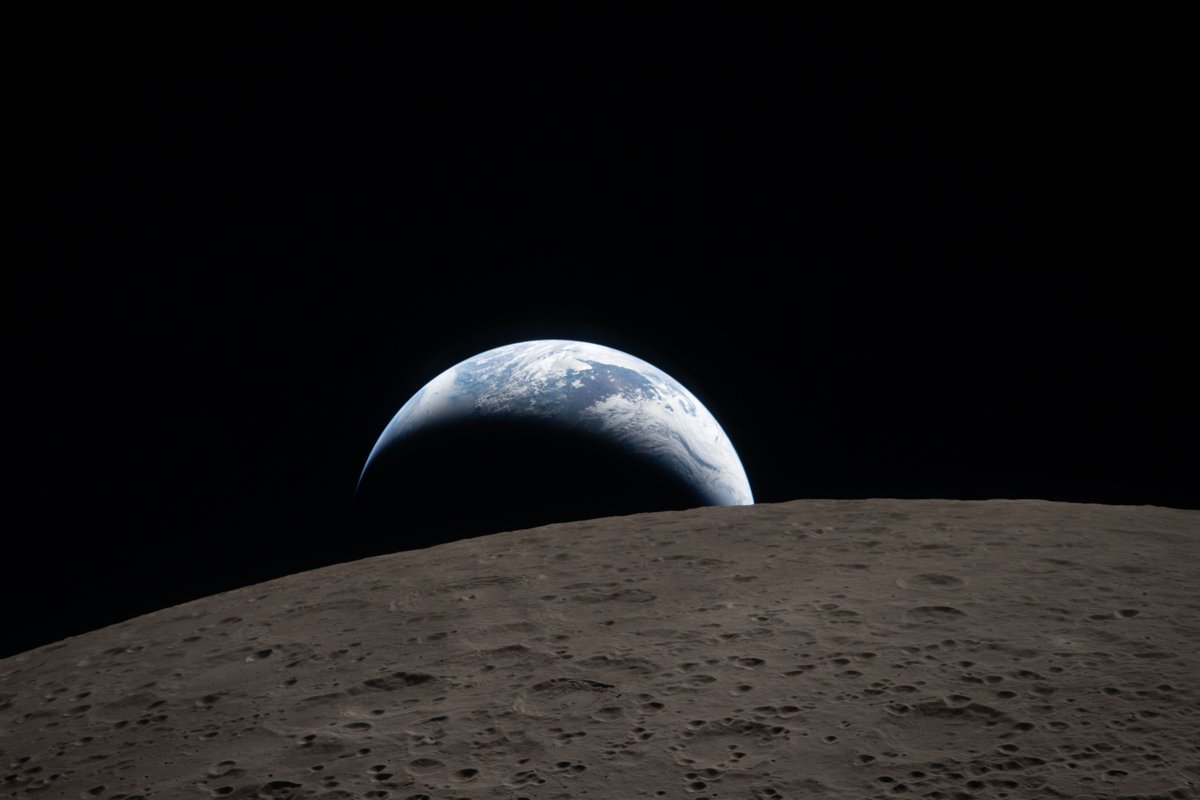
Here’s a taste of what the Artemis II astronauts photographed during their flight around the Moon. Check out more photos from the mission: https://t.co/rzM1P0QbOl
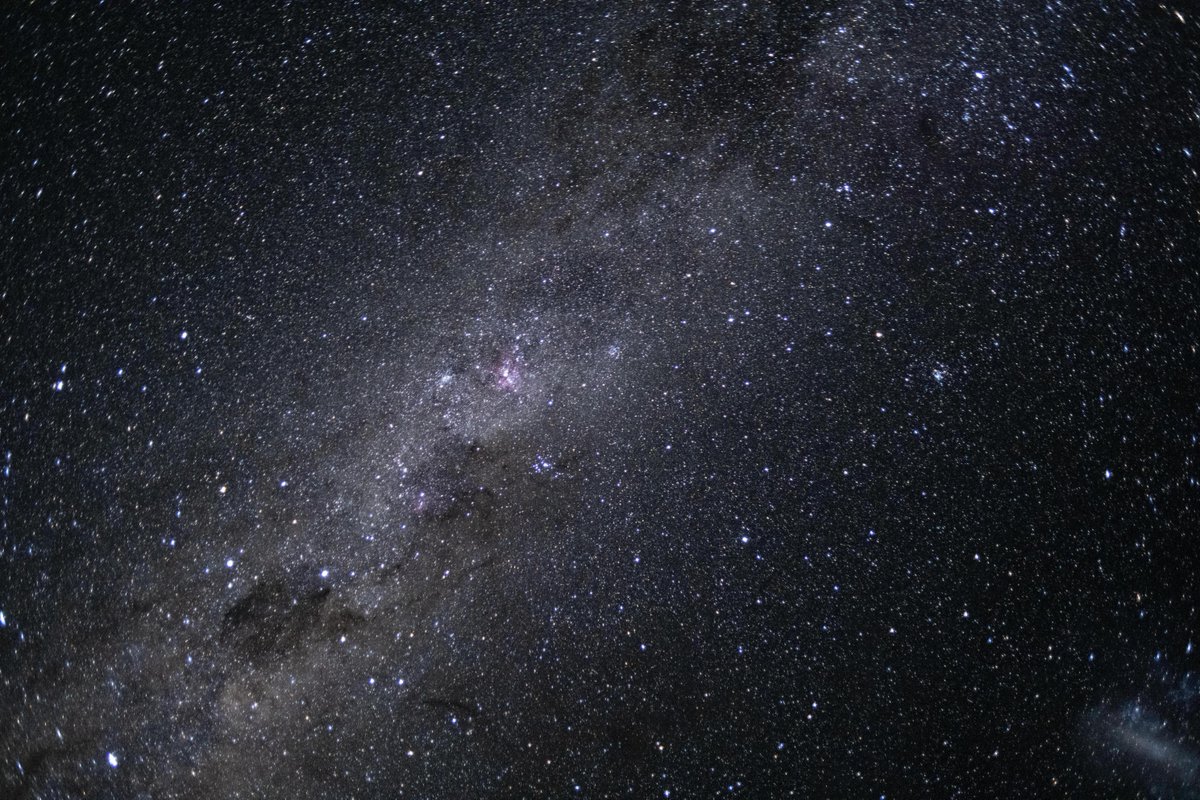
Sky full of stars.
Following a successful lunar flyby, the Artemis II astronauts captured this breathtaking photo of our galaxy, the Milky Way, on April 7, 2026.
We see our home planet as a whole, lit up in spectacular blues and browns. A green aurora even lights up the atmosphere. That's us, together, watching as our astronauts make their journey to the Moon.
Good morning, world! 🌎
We have spectacular new high-resolution images of our home planet, all of us looking back through the Orion capsule window at our Artemis II astronauts as they continue their journey to the Moon.
We see our home planet as a whole, lit up in spectacular blues and browns. A green aurora even lights up the atmosphere. That's us, together, watching as our astronauts make their journey to the Moon.
Liftoff.
The Artemis II mission launched from @NASAKennedy at 6:35pm ET (2235 UTC), propelling four astronauts on a journey around the Moon.
Artemis II will pave the way for future Moon landings, as well as the next giant leap — astronauts on Mars.
We're going around the Moon. Come watch with us. Artemis II's four-astronaut crew is lifting off from @NASAKennedy on an approximately 10-day mission that will bring us closer to living on the Moon and Mars. The launch window opens at 6:24pm ET (2224 UTC). https://t.co/X27QJejNDt
Our Artemis II crew will be going around the Moon, but they'll always find their way back home 🌎
During this complex journey, the four astronauts will travel ~685,000 miles on a trajectory around the Moon and back to Earth.
See their daily agenda: https://t.co/172PVtri2Z
LIVE: @NASAAdmin and agency leaders are sharing updates on our implementation of the National Space Policy and our preparations to return to the surface of the Moon by 2028. https://t.co/A28HKqedDD