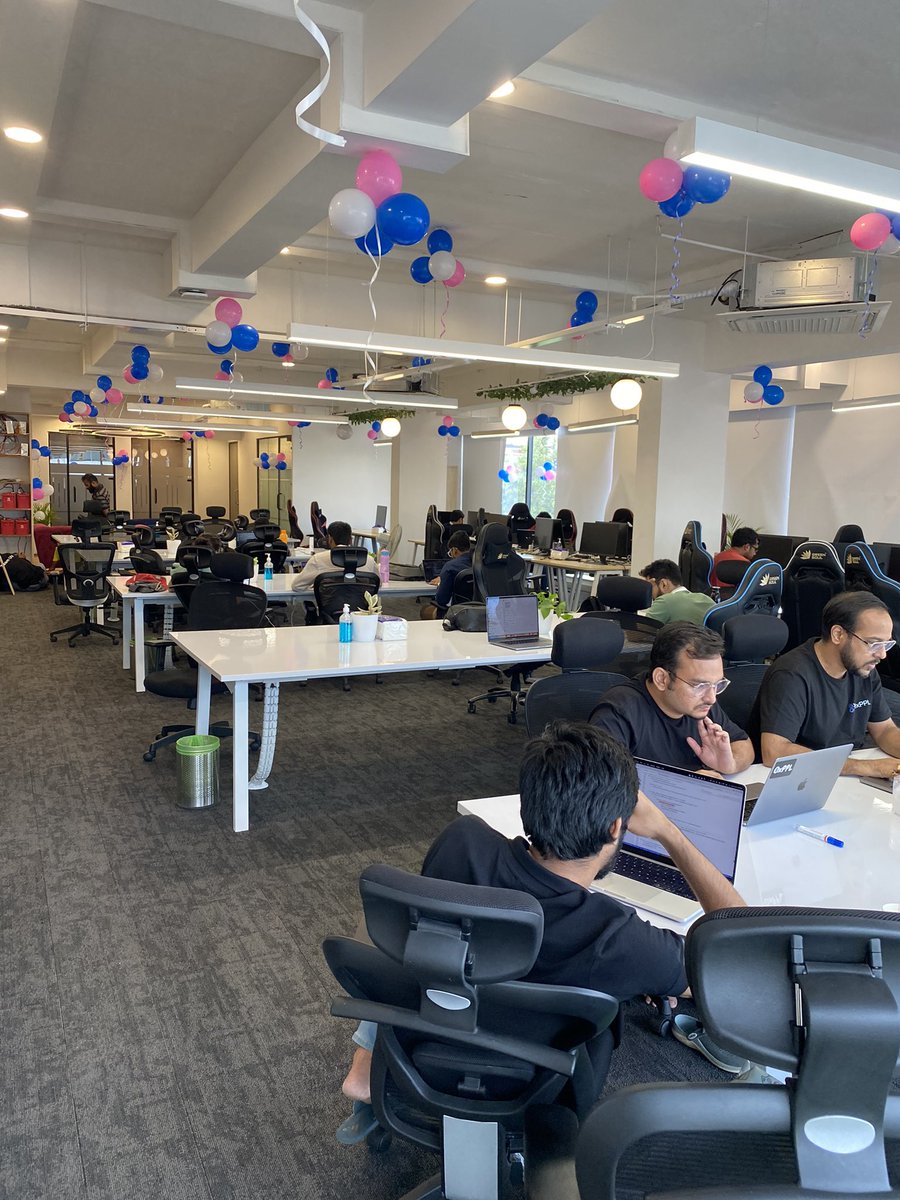
Nova from @peopleboxai is a human-like AI that makes sourcing calls, screens resumes, conducts two-way video interviews, and runs live coding rounds in a single automated workflow.
https://t.co/0z8WkpN7qX
The story of technology is the story of humanity. Without it, we’re just clever apes.
We’ve already beaten most of the natural ways to die. Hunger, cold, infection — all dramatically reduced. The biggest problem for almost everyone on Earth today is not survival. If you fail, you still get food, clothes, entertainment. We live in surplus.
So in some sense, the only real “job” left for humans is to invent new things. Only one person has to discover fire, or write a search algorithm, or figure out how to reach orbit — and the whole species gets the upgrade. Everyone else copies. The benefits compound forever.
Yet almost no one actually invents. Most people never do anything truly net-new. They feel the prospect of failure the way our ancestors felt a lion in the tall grass. The threat isn’t physical death anymore; it’s loss of status. Embarrassment. Being seen to try and fall short.
Worse, that same fear infects the inventor class. Instead of chasing what’s true and strange, they chase what’s cool, consensus-approved, “fundable.” They build incremental, competitive products — not original ones.
Genuine inventors are vanishingly rare. But they are the only source of real change. They tend to cluster: founders who actually respect each other’s ideas, painters who first paint for other painters. They live in a different world. For them, there is no other way to be alive.
All GDP growth ultimately comes from this tiny group. They create the positive-sum part of the human game, and they get to keep a sliver of what they generate. That’s where new wealth comes from — and it’s the only thing the human tribe truly longs for, even if most people don’t know it yet.
I’m excited to launch today: 0xPPL 2.0 - something I’ve poured a lot of my life energy into. It’s a crypto superapp for all things onchain.
I previously co-founded https://t.co/6A5C7eWaTs (worth $10B+), a B2B SaaS superapp. 0xPPL is backed by top angels including, @balajis@alliancedao@peakxvpartners@anagramxyz@wagmi_vc@Decentralisedco@Joel_john@toly@rajgokal@sreeramkannan@akshaybd@sandeepnailwal@Hassan_NY@suji_yan@aniket_jindal08
Web3 is the future of the internet and the trends on these are strong, measured by growth in number of users, revenues, chains or apps. The biggest problem in crypto today is fragmentation. That the users' funds get dispersed and stuck inside these apps across diff chains. The user has to navigate so many diff websites, such as bridges and swap pages to be able to manage his funds and it’s easy to lose track of.
0xPPL is here to solve that.
We index all the blockchains and locate your assets not only inside of the chain, but also inside of smart contracts. We are a full fledged wallet where you can see and manage these funds in one place. No more thinking about gas per chain - we run a gas tank for you. To allow you to withdraw/unstake your funds from within a smart contract, we use LLMs to generate AI adaptors - thankfully crypto is open-source and easy to simulate – LLMs are getting great at interacting with these open back-ends.
Crypto is a very fast moving space and most teams here build something quick and see if it sticks. We deliberately take the opposite approach - to lay out deep engineering on the longer term future vs trying to catch the next narrative. The fragmentation of chains and apps is only going to explode. A universal front-end is both very useful and also for the first time possible due to the intersection of LLM code generation and open crypto backend rails.
0xPPL is a wallet, a portfolio tracker, a bridge, an app store, a community and so much more.
@paraschopra Most of them never know if this is going to be their last days. Even the dear ones hope they come back recovered home, not pass away in hospital. Speaking from the other perspective who signed DNR.
We split our monolith into microservices. It was a mistake.
Before:
- One Rails app
- 200k lines of code
- Deploy time: 8 minutes
- 5 person team
After the split:
- 8 microservices
- Separate databases
- Message queues everywhere
- Service mesh for communication
What actually happened:
- Deploy complexity increased 10x
- Debugging across services became a nightmare
- Data consistency issues appeared
- Team spent more time on infrastructure than features
- No performance improvement
The real problem was not the monolith. It was poor database queries and missing indexes.
We eventually:
- Merged 5 services back into the monolith
- Kept 3 truly independent services
- Fixed the actual performance issues
- Simplified our deployment pipeline
Microservices are not a silver bullet. Sometimes your monolith just needs optimization, not dismantling.
If you’re in Bangalore for Diwali, best place to be is… home. Don’t go anywhere. Don’t go to Hosur to buy crackers.
Left at 8 to pick up dad from Hosur. After 1.5 hrs, reached Chandapura. Google said 1 hr more. Took a U-turn.
2.5 hours for 30km 🤦♂️
I am working on a product for recruiters to screen candidates' resumes against the JD. This should save time and simplify hiring for a fraction of the cost.
Would love to connect with folks who have built something similar in the same or other domain to bounce off some ideas.