Te chocan, llega tránsito, aparece una grúa, se lleva tu coche y días después descubres que una empresa privada lo tiene retenido. Para recuperarlo te exigen pagar. Pero nadie te explica con qué orden, con qué fundamento, ni bajo qué autoridad.
Un Juzgado de Distrito dijo algo enorme: esa grúa no puede esconderse detrás del uniforme de “empresa privada” si actuó como brazo operativo del Estado. Si el arrastre y depósito del vehículo nacen de tránsito o seguridad pública, no hay contrato libre: hay poder público. Y donde hay poder público, debe haber legalidad, fundamento, motivación y control constitucional.
La lección es de gran calado: el Estado no puede privatizar el abuso. Si una mano privada te quita o retiene un bien usando fuerza pública, el amparo puede alcanzarla. Porque la Constitución no sólo controla a la autoridad visible; también debe controlar a quienes ejercen autoridad desde la sombra.
Aquí te dejo el link para que consultes la sentencia que generó este caso: https://t.co/hsW59BdWJw
Keir Starmer pronto dejará de ser Primer Ministro, pero su gobierno ha seguido al australiano limitando el uso de redes sociales para menores de 16 años, una política que quizá adoptará también México. @mauiibarra en @LaRazon_mx analiza el caso británico:
https://t.co/4uJHPJRPC9
Agradecemos a la @AMPPI_AC, a su presidente @JalifeCaballero, la donación de la Placa Conmemorativa por los #90AñosDelTFJA.
Para las Magistradas y los Magistrados, el personal jurisdiccional y administrativo de este órgano colegiado, el reconocimiento representa una nueva oportunidad para refrendar nuestro compromiso con la ciudadanía y su derecho de acceso a la #JusticiaAdministrativa.
¡Muchas gracias!
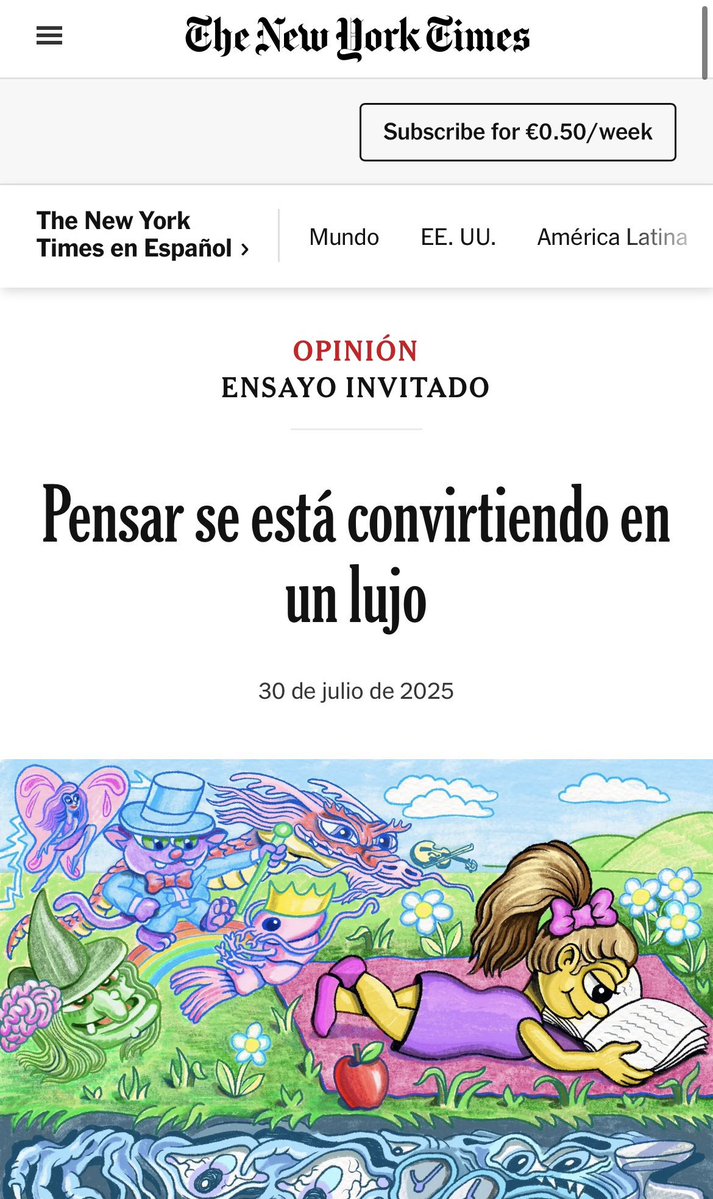
El auge de una cultura postalfabetizada —pantallas, vídeos cortos, textos fragmentados— no solo está erosionando la concentración y la lectura profunda. Está empezando a generar una nueva forma de desigualdad cognitiva. The New York Times
Como con la comida ultraprocesada, leer bien exige recursos, tiempo y entorno. La “lectura experta” reconfigura el cerebro y sostiene ciencia, democracia y pensamiento crítico. Si se convierte en un lujo, las consecuencias serán sociales y políticas https://t.co/YJaCTIzHn0
Suelo cerrar clase recomendando 📚. Leer con profundidad sigue siendo clave para ampliar la comprensión, profundizar conocimientos y fortalecer el pensamiento crítico
Aquí los que recomendé en el Diplomado en Marketing Político Electoral @DiplomadosITAM
Espero generen 💡
👏🏻 ✍️
Steve Jobs gave a 15-minute speech at Stanford in 2005 that still changes lives today:
"Today I want to tell you three stories from my life. That's it. No big deal. Just three stories."
Story 1: Connecting the dots
"I dropped out of Reed College after the first 6 months. I couldn't see the value in it. I had no idea what I wanted to do with my life, and here I was spending all of the money my parents had saved their entire life. So I decided to drop out and trust that it would all work out. It was pretty scary at the time, but looking back, it was one of the best decisions I ever made."
Steve shares what happened next:
"Because I had dropped out, I decided to take a calligraphy class. I learned about serif and sans-serif typefaces, about varying the space between letter combinations, about what makes great typography great. None of this had even a hope of any practical application in my life. But ten years later, when we were designing the first Macintosh, it all came back to me. It was the first computer with beautiful typography."
He reflects:
"You can't connect the dots looking forward. You can only connect them looking backwards. So you have to trust that the dots will somehow connect in your future. You have to trust in something: your gut, destiny, life, karma, whatever. Believing that the dots will connect down the road will give you the confidence to follow your heart, even when it leads you off the well-worn path."
Story 2: Love and loss
"At 30, I got fired from Apple, the company I started. What had been the focus of my entire adult life was gone. It was devastating. I was a very public failure, and I even thought about running away from the valley."
Steve explains what saved him:
"But something slowly began to dawn on me, I still loved what I did. The turn of events at Apple had not changed that one bit. I had been rejected, but I was still in love. And so I decided to start over."
He shares what came next:
"Getting fired from Apple was the best thing that could have ever happened to me. The heaviness of being successful was replaced by the lightness of being a beginner again. During the next five years, I started NeXT, started Pixar, and fell in love with an amazing woman who would become my wife. I'm pretty sure none of this would have happened if I hadn't been fired from Apple."
His advice:
"Your work is going to fill a large part of your life. The only way to be truly satisfied is to do what you believe is great work. And the only way to do great work is to love what you do. If you haven't found it yet, keep looking. Don't settle."
Story 3: Death
"When I was 17, I read a quote: 'If you live each day as if it was your last, someday you'll most certainly be right.' Since then, for the past 33 years, I have looked in the mirror every morning and asked myself: 'If today were the last day of my life, would I want to do what I am about to do today?' And whenever the answer has been 'No' for too many days in a row, I know I need to change something."
Steve shares why death is such a powerful tool:
"Remembering that I'll be dead soon is the most important tool I've ever encountered to help me make the big choices in life. Almost everything, all external expectations, all pride, all fear of embarrassment or failure, these things just fall away in the face of death, leaving only what is truly important. You are already naked. There is no reason not to follow your heart."
He concludes:
"Your time is limited, so don't waste it living someone else's life. Don't be trapped by dogma, which is living with the results of other people's thinking. Don't let the noise of others' opinions drown out your own inner voice. And most important, have the courage to follow your heart and intuition. They somehow already know what you truly want to become. Everything else is secondary."
His final words:
"Stay Hungry. Stay Foolish."
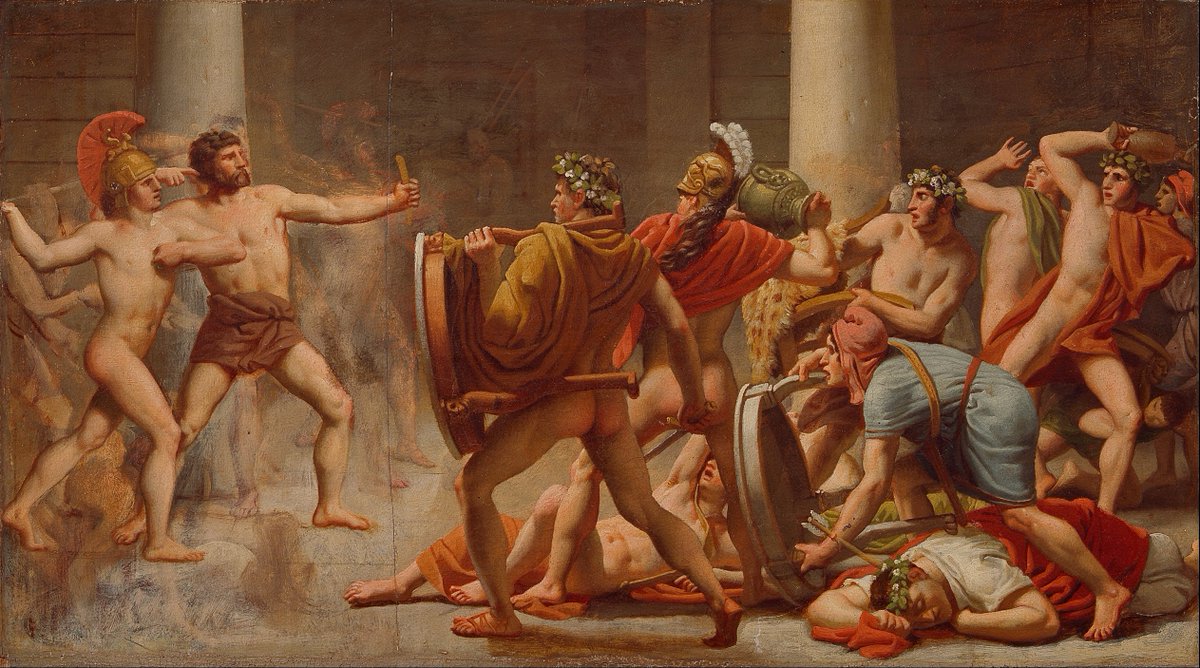
A powerful scene in the Odyssey happens when Odysseus finally returns to Ithaca after twenty years of war and wandering.
You would expect the story to end with celebration, with the hero coming home, the family reunited, and order restored.
Homer does something far stranger.
Odysseus arrives disguised as a beggar, because Athena warns him that the palace has been taken over by more than a hundred suitors who have been living there for years, eating his food, drinking his wine, and pressuring his wife Penelope to marry one of them.
They believe Odysseus is dead and in their minds the kingdom is already theirs.
So the king of Ithaca walks through his own halls dressed in rags while the men stealing his house sit comfortably at his tables. They mock him, throw scraps at him, and one of them even strikes him, and Odysseus takes it. That is the remarkable part, because the same man who blinded the Cyclops and survived twenty years of disasters now stands quietly while strangers insult him in his own home. Homer tells us his heart burns inside his chest and that he wants to attack them immediately, yet he restrains himself and waits.
Instead of striking, Odysseus studies the room carefully. He counts the men, watches their habits, and quietly observes which servants remain loyal and which have betrayed him. The hero of the Odyssey does something most people cannot do, which is delay revenge until the moment is right.
Eventually Penelope announces a contest and brings out Odysseus’ great bow, declaring that she will marry the man who can string it and shoot an arrow through twelve axe heads lined up in a row. One by one the suitors try and fail, because none of them can even bend the bow. Then the beggar asks for a turn. The suitors laugh at first, but the bow is eventually handed to him.
Odysseus takes it in his hands and strings it effortlessly. Homer says the sound of the bowstring tightening rings through the hall like the note of a swallow. Then he places an arrow on the string and sends it cleanly through all twelve axe heads.
In that moment the beggar disappears. Odysseus turns the bow toward the suitors and reveals who he is.
What follows is one of the most brutal scenes in Greek literature. The doors are sealed and the suitors realize too late that they are trapped inside the hall. Odysseus, his son Telemachus, and two loyal servants begin killing them one by one. There is no escape, no mercy, and no negotiation. The men who spent years consuming another man’s house die inside it.
It is a violent ending, but Homer wants you to understand something important. The real danger to Odysseus was never just the monsters and storms on the long journey home. It was the possibility that someone else might take his place while he was gone. When Odysseus finally returns, he reminds everyone in Ithaca of a simple truth: a man’s home is not truly his unless he is willing to fight for it.
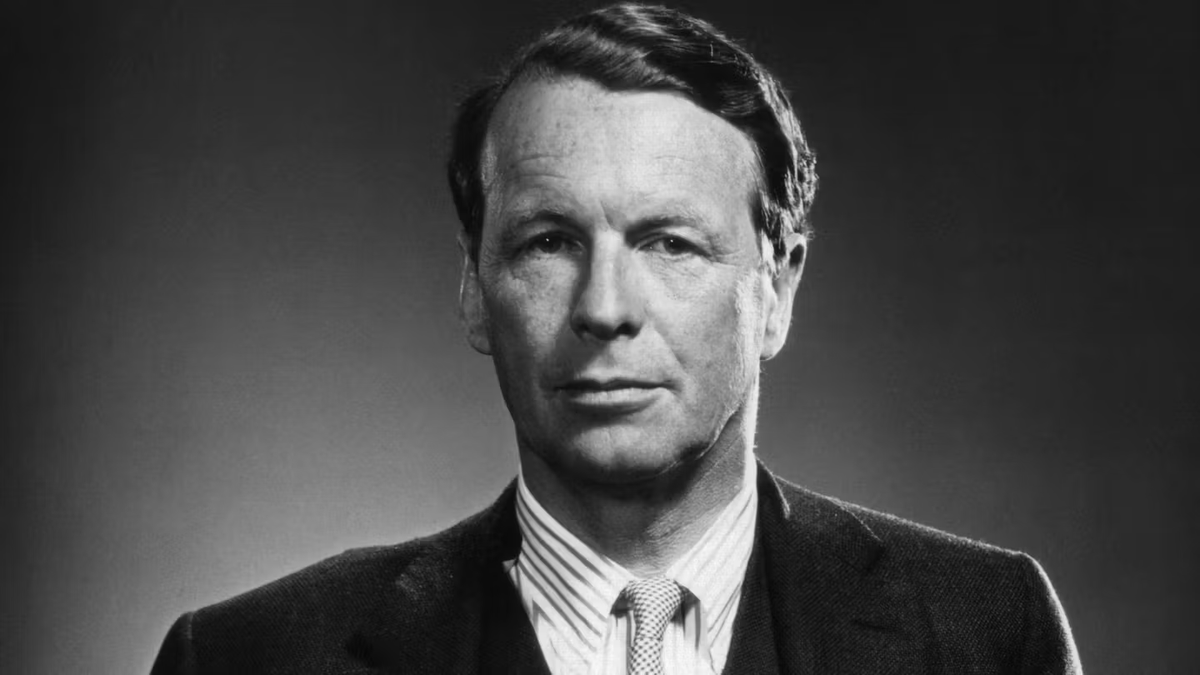
24 lessons from David Ogilvy:
1. Search all the parks in all your cities; you'll find no statues of committees.
2. The best ideas come as jokes. Make your thinking as funny as possible.
3. You are advertising to a moving parade, not a standing army.
4. Do not address your readers as though they were gathered together in a stadium. When people read your copy, they are alone.
5. Remember you are a human being writing to another human being. Neither of you is an institution
6. Tell your prospective client your weakness before they notice them. This will make you more credible when you boast about your strong points.
7. Avoiding excess in all things is a recipe for dullness and mediocrity.
8. A good advertisement is one which sells the product without drawing attention to itself.
9. There is no need for advertisements to look like advertisements. If you make them look like editorial pages, you will attract about 50% more readers
10. Big ideas come from the unconscious. This is true in art, in science, and in advertising. But your unconscious has to be well-informed, or your idea will be irrelevant
11. People who think well, write well
12. The most important word in the vocabulary of advertising is 'test'.
13. On average, five times as many people read the headline as read the body copy.
14. When you have written your headline, you have spent eighty cents out of your dollar.
15. Tell the truth, but make the truth fascinating
16. Advertising is only evil when it advertises evil things.
17. Advertising people who ignore research are as dangerous as generals who ignore decodes of enemy signals.
18. Raise your sights. Blaze new trails. Compete with the immortals.
19. I am a lousy copywriter, but I am a good editor. So I go to work editing my own draft.
20. If you're trying to persuade people to buy something, use the language in which they think.
21. Insist that due dates are kept even if it means working all night. Hard work never killed a man. People die of boredom
22. If you are lucky enough to write a good advertisement, repeat it until it stops selling.
23. At the start of your career in advertising, what you learn is more important than what you earn.
24. When Fortune published an article about me and titled it: 'Is David Ogilvy a Genius?', "I asked my lawyer to sue the editor for the question mark.”
🇲🇽 Agustín Carstens acaba de retirarse como Director General del Banco de Pagos Internacionales (BIS) - literalmente el "banco de los bancos centrales" - después de transformar las finanzas mundiales durante 8 años. En Estados Unidos, Europa y Asia estudian sus estrategias sobre política monetaria y lo consideran uno de los economistas más influyentes del siglo XXI.
Este mexicano de 67 años fue el primer líder de una economía emergente en dirigir el BIS. Universidad de Chicago, doctorado en economía, asesor del FMI, salvador de México durante la crisis financiera de 2008 (le llamaban "San Agustín" por salvar $5 mil millones al país), gobernador del Banco de México, y candidato a dirigir el FMI compitiendo contra Christine Lagarde.
Los premios internacionales no paran:
- Premio Rey de España en Economía 2022
- Lifetime Achievement Award 2025
- Mejor Gobernador de Banco Central del Mundo 2012
- Reconocido por crear el Innovation Hub del BIS que revolucionó las monedas digitales
Pero aquí está lo irónico: cuando estuvo en México como Secretario de Hacienda y Gobernador del Banxico (2006-2017), muchos mexicanos ni sabían quién era. Mientras tanto, en universidades de Harvard, Chicago, Oxford y el MIT analizan sus papers. Banqueros centrales de 60 países lo consultan. La Reserva Federal de Estados Unidos estudia sus modelos económicos.
Mientras el mexicano promedio lee hilos conspiranoicos sobre cómo los Rockefeller controlan el mundo, el estadounidense promedio lee hilos académicos sobre cómo Agustín Carstens transformó el sistema financiero global. Estudiantes de economía en Europa hacen tesis sobre sus políticas monetarias.
Mexicano con trayectoria y prestigio bien ganado‼️
Vía… Dinero&Negocios
En 1957 el Premio Nobel de Literatura le fue otorgado a Albert Camus.
Días después de recibir el premio, Camus decidió escribir una emotiva carta de agradecimiento a Louis Germain, su maestro de primaria.
Germain no sólo le había ayudado a ingresar a la escuela secundaria, también le ayudó a convencer a su despótica abuela que le dejase seguir sus estudios, en lugar de entrar de aprendiz de algún comerciante local.
París, 19 de noviembre de 1957
Querido señor Germain:
Esperé a que se apagara un poco el ruido de todos estos días antes de hablarle de todo corazón. He recibido un honor demasiado grande, que no he buscado ni pedido. Pero cuando supe la noticia, pensé primero en mi madre y después en usted. Sin usted, sin la mano afectuosa que tendió al niño pobre que era yo, sin su enseñanza no hubiese sucedido nada de esto. No es que dé demasiada importancia a un honor de este tipo. Pero ofrece por lo menos la oportunidad de decirle lo que usted ha sido y sigue siendo para mí, y de corroborarle que sus esfuerzos, su trabajo y el corazón generoso que usted puso en ello continúan siempre vivos en uno de sus pequeños escolares, que, pese a los años, no ha dejado de ser un alumno agradecido. Un abrazo con todas mis fuerzas,
Albert Camus
Recomendable análisis de
@mauiibarra en @LaRazon_mx, las decisiones del Senado (Poder Legislativo) en torno a las prórrogas de los nombramientos de magistrad@s del Tribunal Electoral federal (Poder Judicial) legitimidad de procesos electorales ⚖️🧑⚖️ 🕊️
la ciudadanía espera que los juzgadores sean íntegros. La aceptación de prórrogas en sus nombramientos muestra que ése no es el caso de seis magistrados y exmagistrados de la Sala Superior https://t.co/EuLeu7nacq