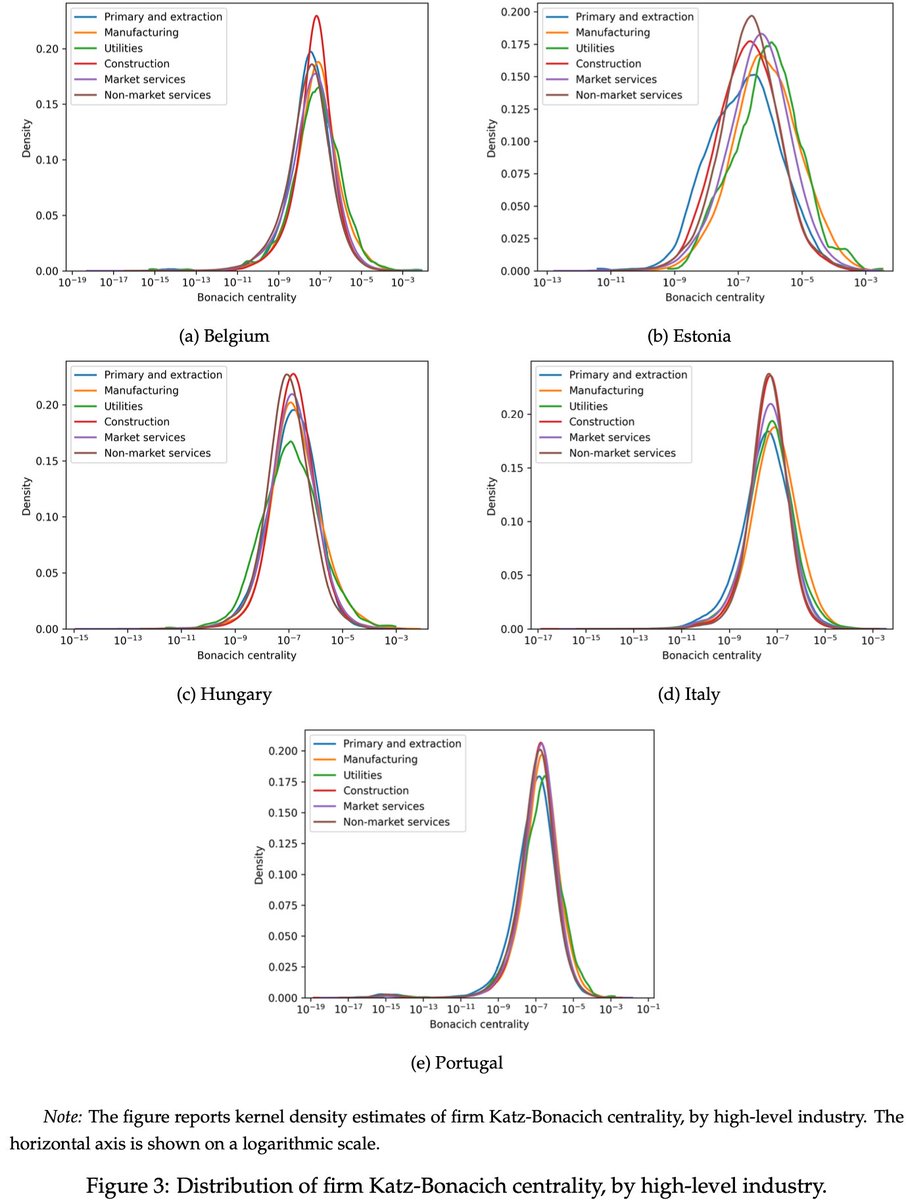
What do production networks look like at the firm-to-firm level?
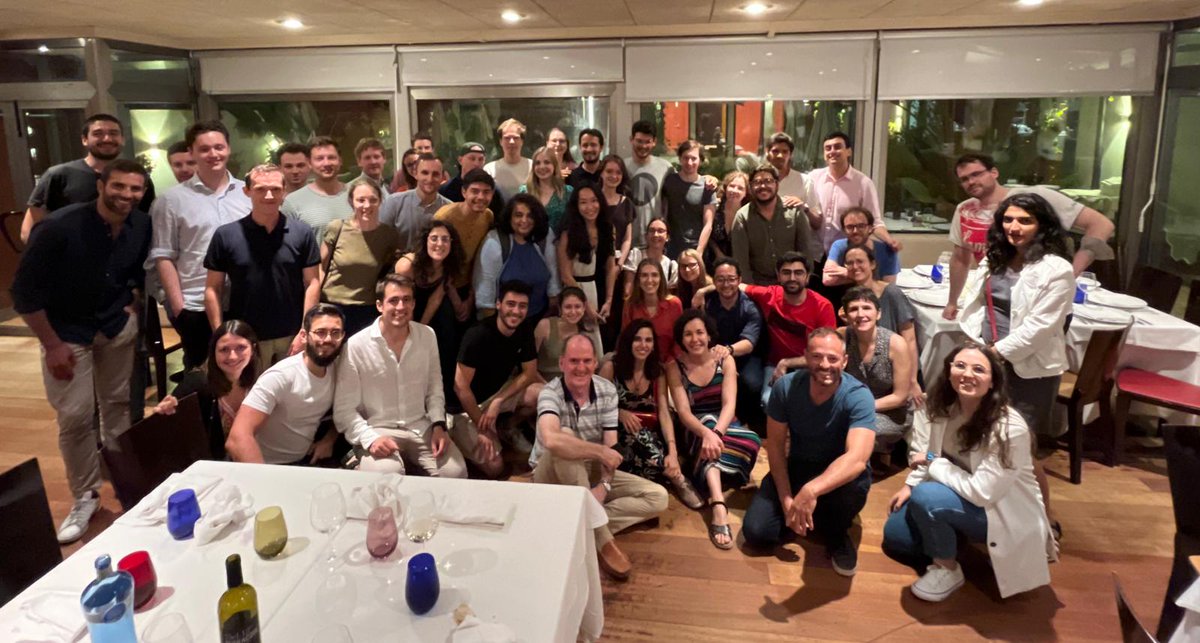
In a new paper I coordinated within the ECB's ChaMP network, we build harmonised firm-to-firm networks for 5 EU countries from administrative VAT data: 3M firms, 100M+ supplier-customer relationships. 🧵
I have just posted my survey paper “Deep Learning for Solving Economic Models” on my webpage:
https://t.co/VntBsPcBLS
In one or two weeks, it will also circulate as a working paper at the NBER and CEPR. Still, I wanted to let people know already, since I am quite happy with the outcome, largely thanks to some fantastic early feedback I got.
As I have often argued, the ongoing revolution in deep learning is transforming how we solve dynamic equilibrium economic models. At its core, solving a model amounts to approximating unknown target functions (such as the value function of agents, a decision rule, or a best response function). Deep learning frequently does a fantastic job at that task.
In the paper, I emphasize that this success is not “magic,” but rather the direct consequence of deep learning’s ability to discover better representations of the relevant variables of a model (for example, the state variables). The layers of a neural network transform the input variables into informationally efficient representations that can be more easily approximated. Tom Sargent loves to say that finding the state is an art. Deep learning tries to automatize that art as much as possible.
This is why, in many cases, we can now solve high-dimensional problems that were computationally infeasible only a few years ago.
Furthermore, the structure of deep networks designed for solving these models, largely linear apart from the non-linearity encapsulated in the activation function, permits massive parallelization.
The survey paper is designed to start from the ground up. My intended audience is a first-year graduate student with only a very basic knowledge of solution methods, or even a motivated senior undergraduate.
I would very much appreciate feedback. Can you follow the arguments throughout? Are there steps that remain unclear? I have taught courses based on this material at Penn, the Bank of Spain, Cambridge, the ECB, Harvard, Johns Hopkins, Northwestern, Oxford, Princeton, UC Santa Barbara, and Stanford, but I am always looking for fresh eyes to suggest improvements.
All the slide decks, with links to the code, are available here:
https://t.co/aIOVy4gbFM
under “Machine Learning for Economists.”
Eventually, I may use this survey paper and the slide decks as the kernel for something longer, but first, I need to clear my desk of too many ongoing projects.
We’ve written a review on *New Industrial Policy* for the Oxford Research Encyclopedia.
We offer a unified framework for analyzing IP effects and survey evidence from both ex post event studies and ex ante model-based evaluations of IP.
🧵thread on key takeaways (link below)
Before blaming Ursula von der Leyen and the European Commission, realize that the larger the group that must collectively take a tough decision, the less likely the decision will be taken. Europe is composed of 27 very different countries. It is its strength, but it is also its weakness when faced with imminent danger, from the East or from the West.
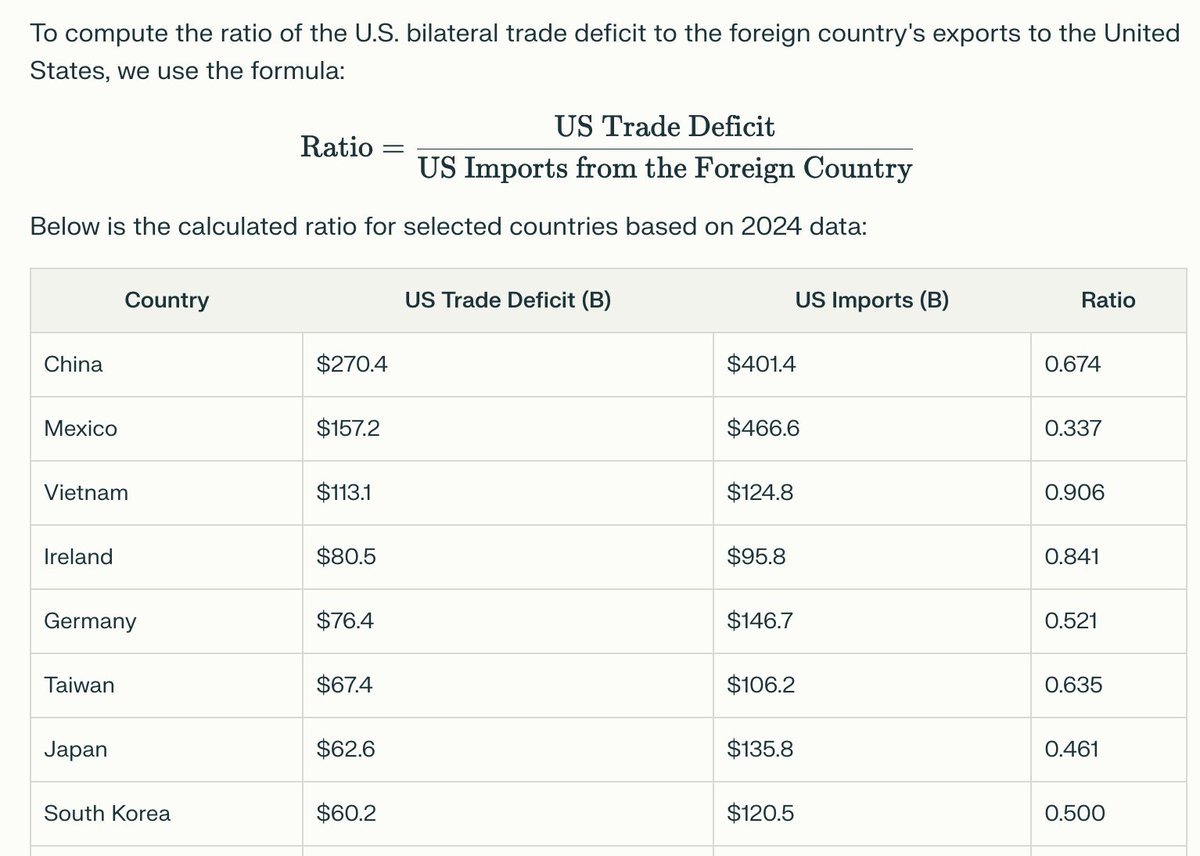
The Trump tariff formula is the bilateral trade deficit divided by US imports from the foreign country.
https://t.co/Bm1VuLZp4Q
Via https://t.co/a1OMM9R5EZ
USTR: "The elasticity of import prices with respect to tariffs, φ, is 0.25. The recent experience with U.S. tariffs on China has demonstrated that tariff passthrough to retail prices was low (Cavallo et al, 2021)."
Cavallo et al: φ is 0.945.
https://t.co/rIZfsgcZMu
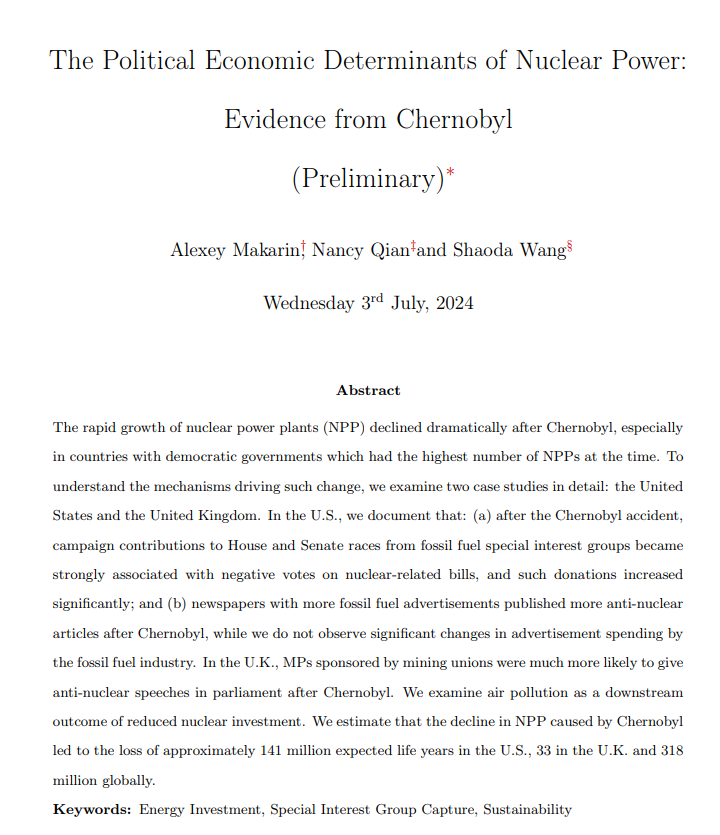
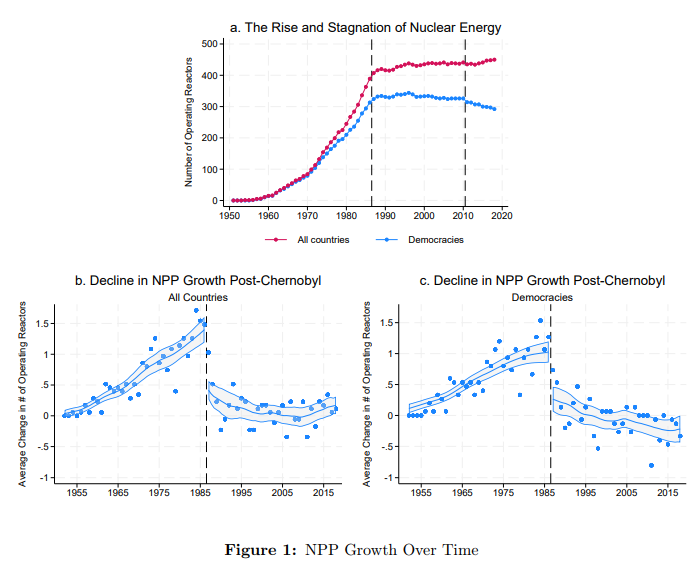
"We estimate that the decline in Nuclear power Plants caused by Chernobyl led to the loss of approximately 141 million expected life years in the U.S., 33 in the U.K. and 318 million globally". https://t.co/vr8Z4XU9Vy
Looking forward to present our work on deglobalization and protectionist policies at the European Commission tomorrow! https://t.co/aSZ8L07MVE @EuropeanCommiss@albepal
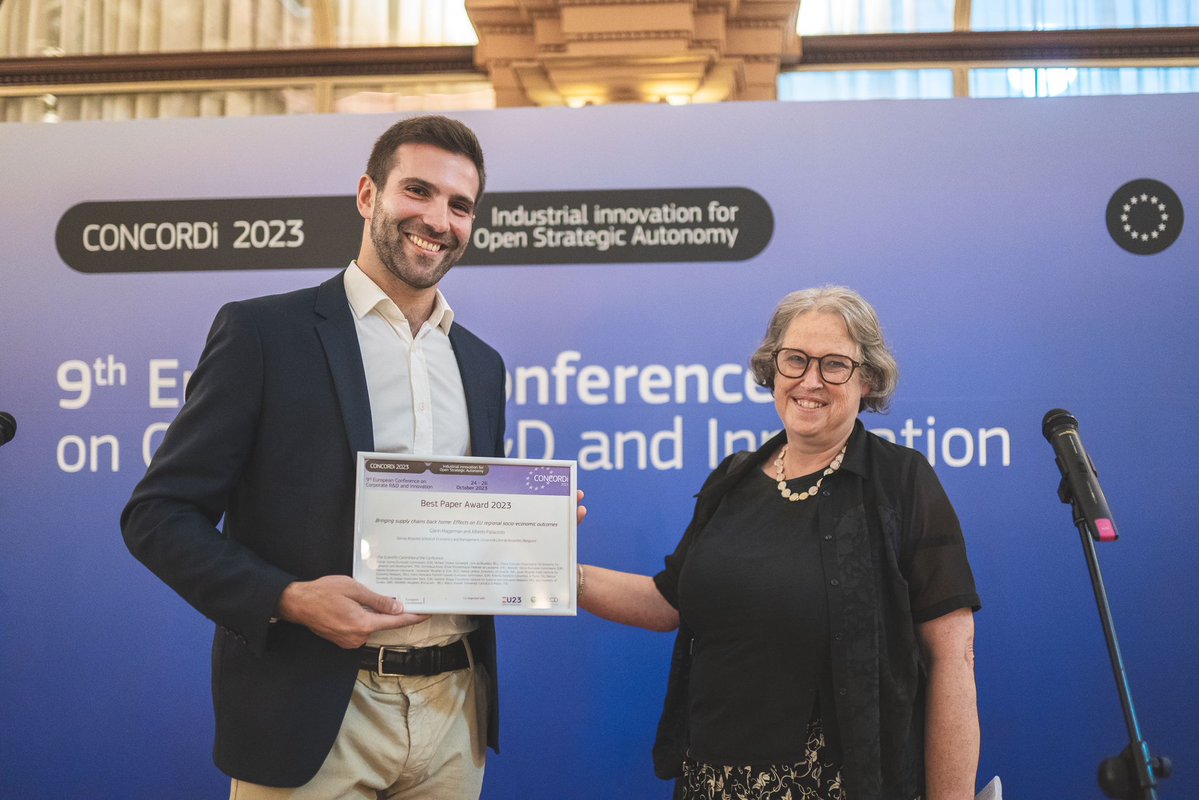
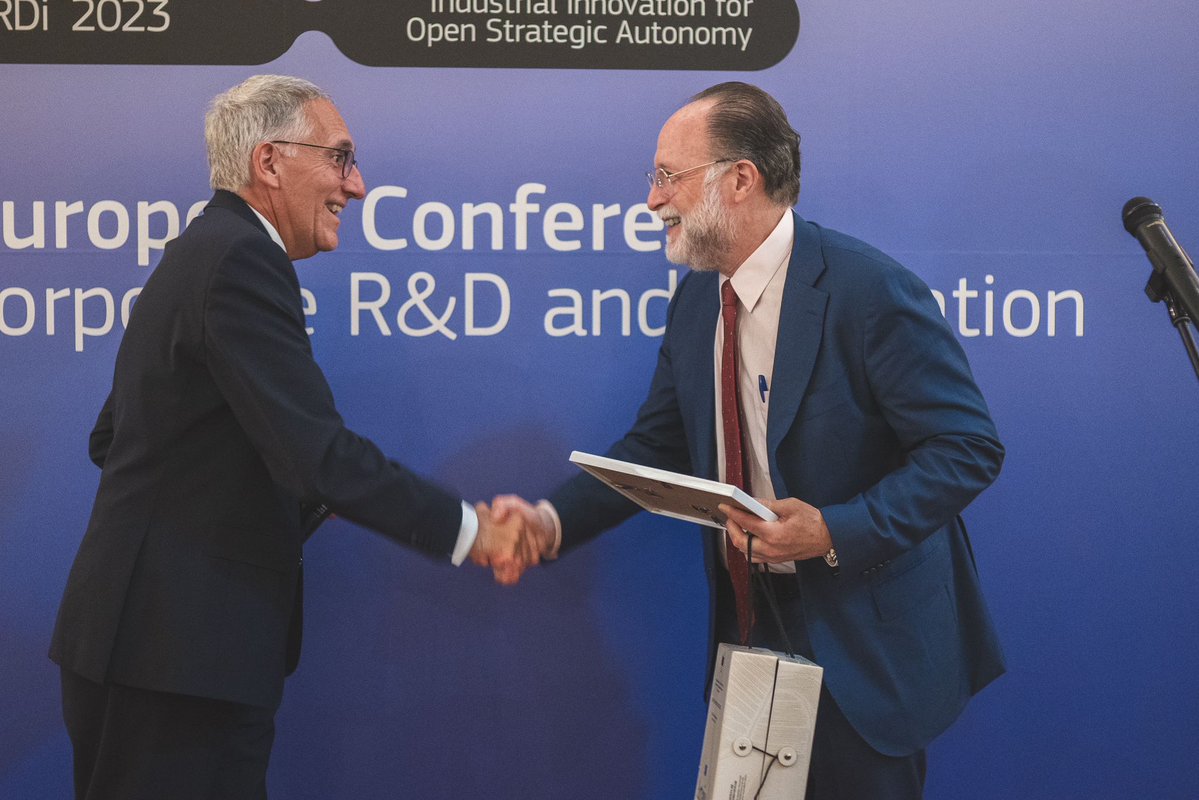
It’s been an honour to receive the Best Paper Award 2023 prize for our paper on EU industrial policies and regional inequalities at the #CONCORDi conference in Seville this week. Thanks to the @EU_ScienceHub and to my co-author and supervisor @GlennMagerman!
Congratulations to @GlennMagerman and @albepal for the Best Paper Award 2023 of the 🇪🇺 Conference on Corporate R&D and Innovation #CONCORDi
Also to @ricardo_hausman for receiving the first ever Fair and Sustainable Economy Award 💫
#Science4Policy
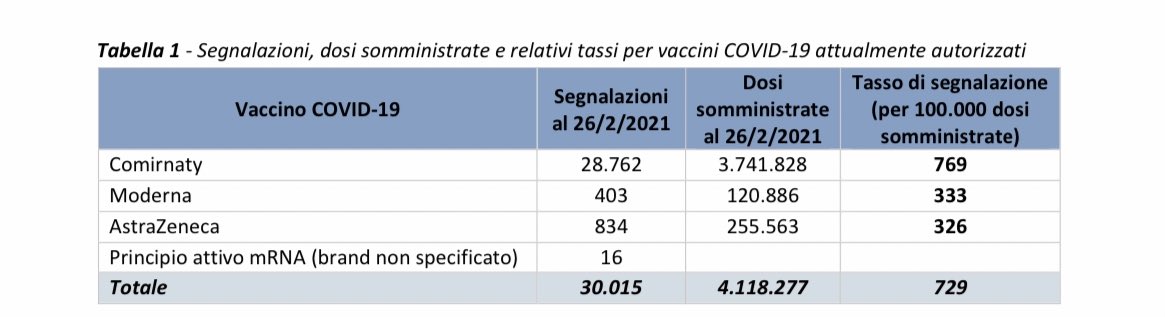
Per il Rapporto sulla Sorveglianza dei vaccini Covid dell’@Aifa_ufficiale, da dicembre a febbraio le segnalazioni di sospette reazioni avverse per AstraZeneca sono le più basse, meno della metà rispetto a Pfizer. Adottare questa policy è molto rischioso, altro che precauzionale.
Il pm che indaga sulla morte del militare morto poco dopo essersi vaccinato dice che finora "non c'è alcuna relazione tra il vaccino e il decesso" e che il giorno in cui ha ricevuto la denuncia si è vaccinata con Astrazenca: “Bisogna avere fiducia nei vaccini”. Giù il cappello.
La nuova moda è "terrorizzare con la variante". Vorrei farvi notare che varianti virali emergono continuamente e, fino a prova contraria, non rappresentano un pericolo. In particolare non c'è nessun elemento che ci faccia pensare che quelle già individuate (1/2)