It's Robotaxi's moment. Here are the important points to keep in mind in the very short term (June-July):
Post-launch, this is a critical time period for Tesla to demonstrate the viability of its autonomous driving technology to both itself and the global market.
Questions and hopes/expectations:
1. When will invite-only finish and real commercial use begin? Adjustments should be minimal, so I hope invite-only lasts until Thursday this week tops.
2. I counted 11 unique license plates yesterday, so 11 robotaxis (some could have not been uploaded to X, but I am guessing not more than 15 in operation in total yesterday), so exactly what Elon announced in the recent past. When will Tesla expand this very small fleet? And how rapidly? I hope they expand to 20-40 in 1 or 2 weeks.
3. When will they expand the geofence area? I hope for end of July at the latest. And I expect for it to cover much of Austin (at least the whole city, maybe not the metro area yet).
4. By the end of July, has Tesla's proof of concept been validated? Tesla shareholders and tech enthusiasts hope it will be but it is not certain at this point. This would mean: no significant safety issues caused by Robotaxis after hundreds of rides, great service quality reported by users, and proven rapidly scalability (both in service area and in number of cars).
(The "Tesla observer" sitting in the passenger seat should also disappear soon, although I don't think that issue is important.)
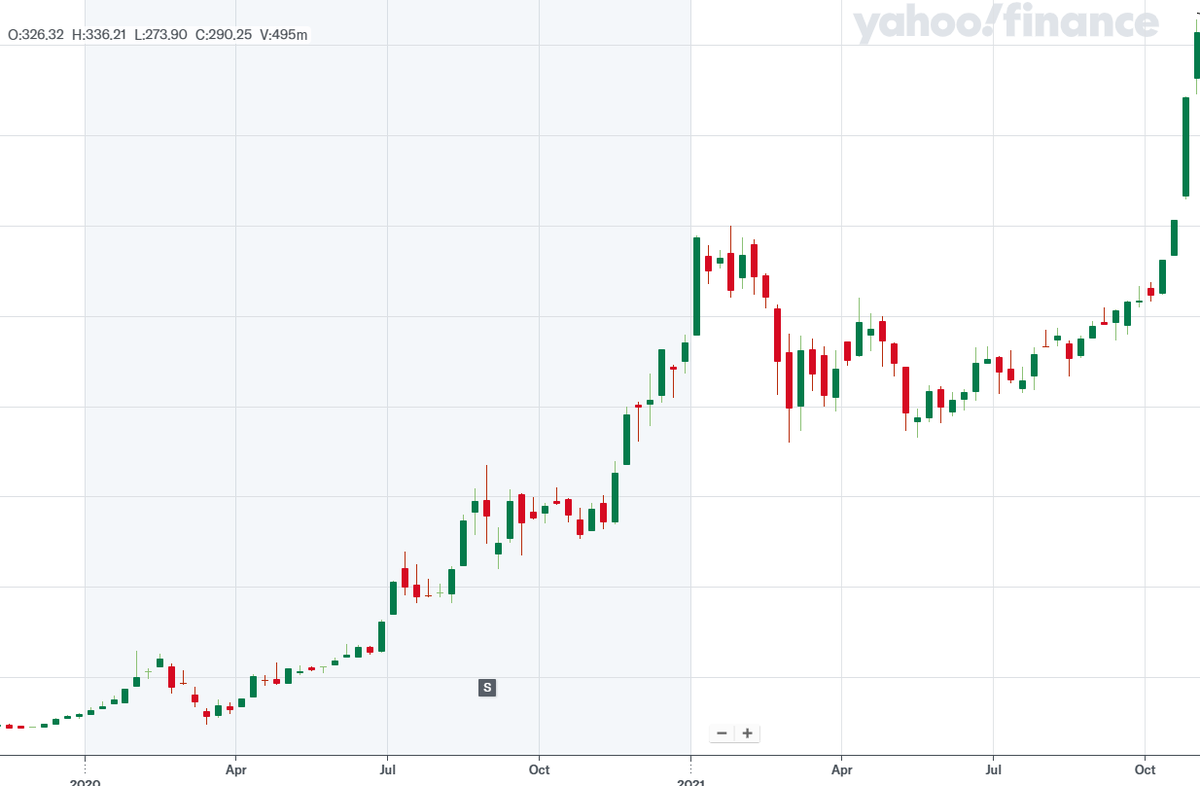
If those expectations materialize, they will imply a high step-change in $TSLA 's value and the start of a real (not speculative) stock price's secular rise, similar in form to what we witnessed in 2020-2022.
A few thoughts and predictions after Tesla's first day of robotaxi operations:
1) It's hilarious watching the clown show that is $TSLAQ and others that try to present themselves as "unbiased" that CLEARLY have an anti-Tesla bias take one clip from Rob's video and parade it to mean the day was a failure. This could not be further from the truth, overall the day was a major success
2) The safety monitors were not doing anything. They could have been out of the car entirely and the day likely would have looked exactly the same
3) The overwhelming sentiment is that Tesla's robotaxis are already smoother than Waymo's on day one. Waymo still does some things better - but it's mostly app operation and that will be an easy fix for Tesla
4) While $4.20 obviously won't be the real cost of Tesla's rides for long, it will be EASY for Tesla to undercut Waymo. This is still the most overlooked thing about this entire conversation - Tesla's cost structure for its robotaxis. It's already 4-5x lower now, and that will improve significantly with the Cybercab next year. Don't forget, Waymo isn't making a profit yet, and to date it's been WITHOUT Tesla competing in its markets
5) Then when you layer in Tesla's software advantage and vertical integration - the ability to have a customers' apps and playlists preloaded (and eventually Grok) - the customer experience will be superior and at a better price point
Now for some predictions:
1) Tesla will remove the safety monitors in the cars sometime in August
2) Waymo plans to have 3,500 cars in its fleet by the end of 2026. Tesla will surpass this number in Q2 '26 (and there's a good chance it happens sooner). It may feel like a slow ramp for Tesla fans throughout 2025 compared to what we know the tech is capable of (safety first) but the parabolic expansion will happen sometime in 2026. When it does, Tesla will quickly have orders of magnitude more robotaxis in operation than Waymo
3) Tesla will have a larger geofenced area than Waymo in Austin by Q4 of this year
4) By the end of 2026, it will no longer even be up for debate that Tesla has the superior approach to autonomy $TSLA
Photo cred: @DominicBRNKMN
tessara's memory regime score hit 88, an all-time high for memory tightness. DRAM contract prices nearly doubled in Q1 2026. NAND jumped over 50%. the memory wall is repricing the entire AI stack.
some quick notes:
1/ compute FLOPs scaled ~8x from A100 to B200. memory bandwidth scaled ~4x. capacity, just 2.4x. every generation widens the gap between what the chip can do and what memory can feed it.
2/ the memory hierarchy has four tiers. SRAM on-chip, sub-nanosecond, ~$5000/GB in chip area. HBM on-package, ~1 TB/s per stack. DDR5 on the motherboard. NAND off-board entirely. each step down trades speed for capacity.
3/ HBM is the tier that runs AI. a B200 carries 192 GB at 8 TB/s across eight stacks. that bandwidth is what keeps the GPU fed during inference, when the chip has to re-read ~140 GB of weights for every new token from a 70B model.
4/ three companies make all of it. SK Hynix (~50% share), Samsung (~30%+), Micron (~10-20%). both SK Hynix and Micron have confirmed 2026 supply is fully sold out. Samsung and SK Hynix raised 2026 contract prices ~20%.
5/ HBM alone is ~45% of B200 manufacturing cost, roughly $2,900 of ~$6,400 total. and the packaging chokepoint sits on top of that. NVIDIA consumes ~60% of TSMC's CoWoS capacity. more HBM output means nothing if packaging stays full.
We're spending trillions a year to build digital Super Intelligence, and people expected calm, orderly markets?
This is the biggest event any of us will live through. Bigger than PCs, the internet, mobile. People have to participate. It's too big to sit out.
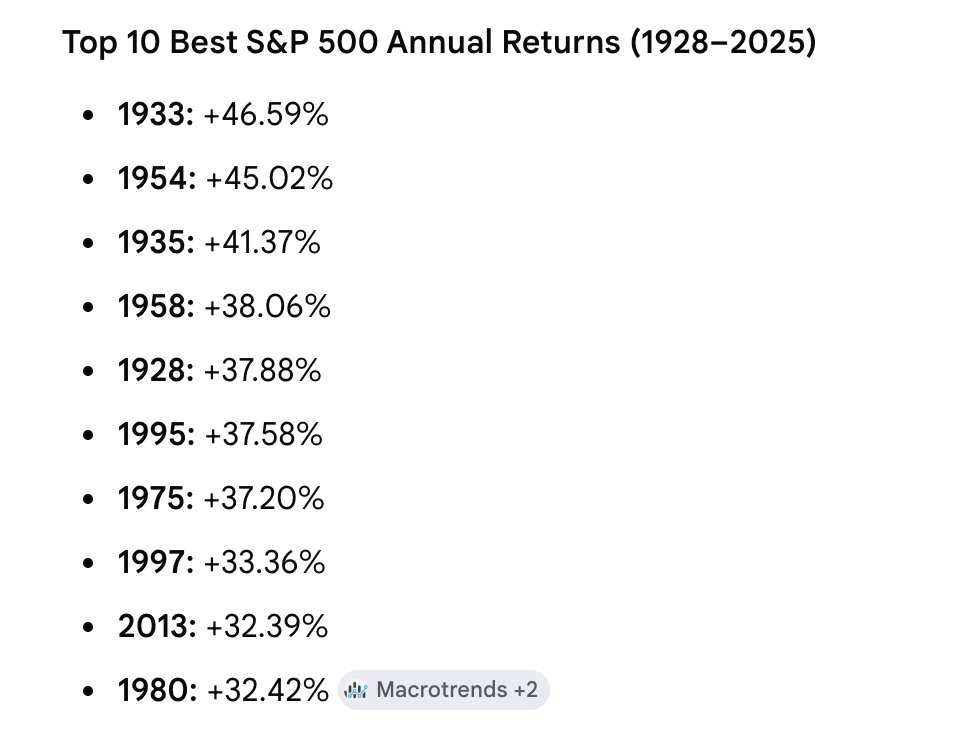
S&P $10k this year isn't crazy. I can see a >35% year
@Alisvolatprop12@BSPK_ Exactly. And since: 1. Intelligence is here to stay, 2. We want more and more of it and 3. Until someone invents a completely different type of memory the current tech (with its natural evolution) is indispensable for 1 and 2, memory with high prices is here to stay.
It’s been an honor my friend. 🫡
I think this X community, and in the future, this 🍋 shareholder community, has been very lucky in having YOU, supposedly human head with a paper bag over it, as leader and standard-bearer. We couldn’t have asked for more.
And I’ll be seeing/reading you.
Great interacting with you, fellow Lemonade investors! Best of lucks in the wars to come.
@crux_capital_ The problem with the pipeline for investors is that it might translate to sales or it may simlli vanish into thin air. In then end, I would not pay attention to that at all.
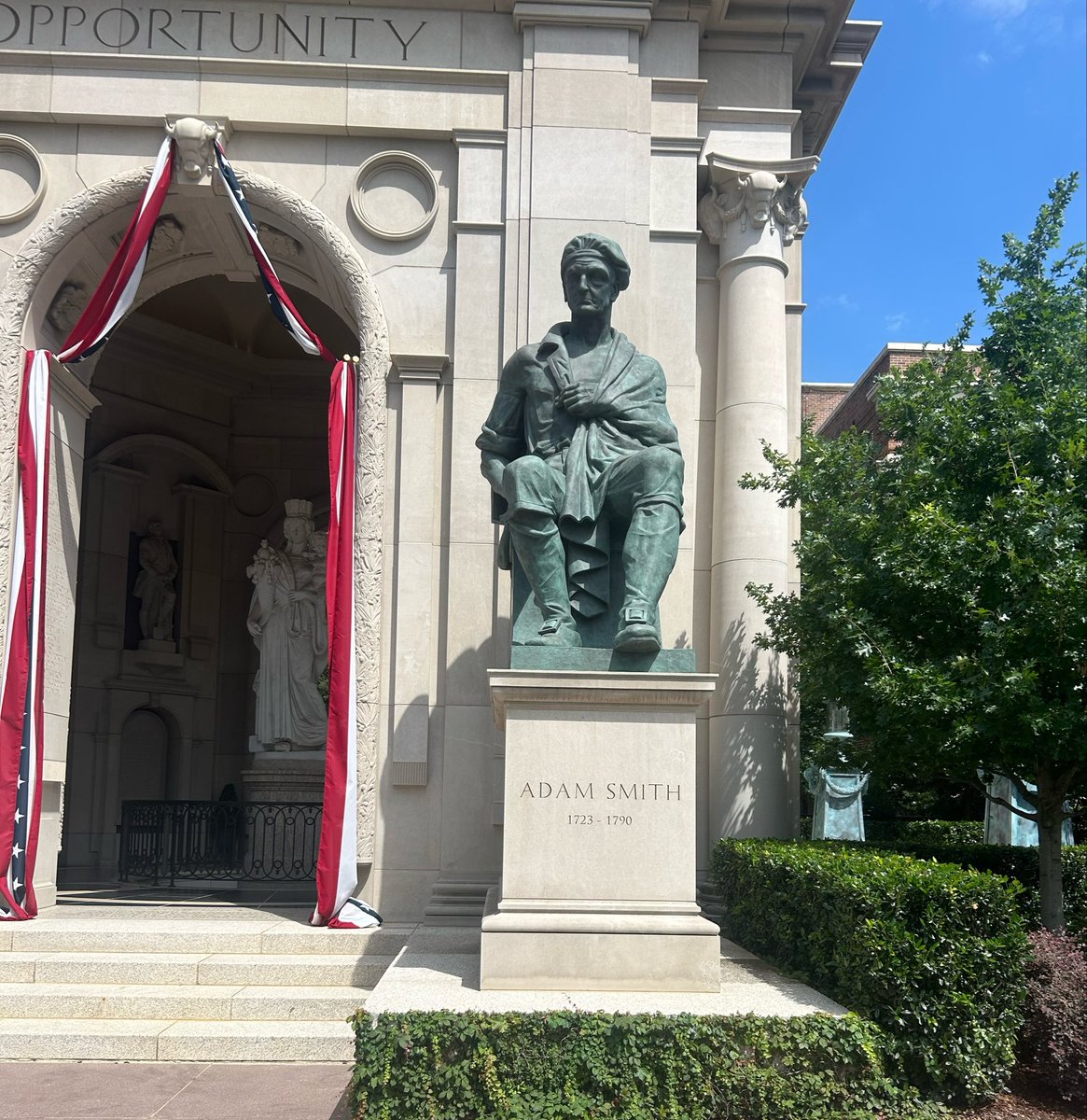
2026 is not only the 250th anniversary of American independence, but also the 250th anniversary of the publication of Adam Smith’s highly influential Wealth of Nations, which represents a clarion call for economic independence from previously failed systems.
@zephyr_z9@jukan05 I’ve been in this game (stock market: on X “only” 7 years) for many years, and @jukan05 is one of the best follows possible. All signal; no noise.
HBM isn’t getting cheap.
DRAM is getting scarce and now the marginal shock.
The HBM premium over standard DRAM peaked at 18.4x in mid-2025. Now it’s just 2.6x.
The memory cycle is extending from AI-specialty memory into the whole DRAM stack.
you should realise that the most counterintuitive thing in memory is that the market is pricing two opposite stories at once
on one hand we have memory satellite plays (RMBS, BESI): 40-60x P/E, priced as secular growth with no cycle discount.
and on the other hand, the leaders (Micron, Hynix): 6-9x forward P/E, priced like peak-cycle memory names about to roll over.
the satellites are priced like the structural winners.
the actual winners are priced like cyclicals
That is the real mispricing in the market today.
Not in the beta memory plays (probably fully valued)..
But in the boring leaders that the market still refuses to believe will have durable earnings for the next few years. $MU