Physics professor, University of Ljubljana. NMR, PER. If u got any Q's, just ask.
Editor: Presek, OMF.
Not a member of a bomb squad. Like: photography.
A Brown professor gave his students a take-home midterm exam. After suspecting many cheated using AI, he made the final in-person. The orange dots are the midterm scores and the gray dots are the final scores. Looks like all but 3 cheated on the midterm.
um, it seems that Sci-Hub .se domain has been finally blocked.
P.S. You can access Sci-Hub by alternative addresses such as https://t.co/HEgPDPvYtP (yes, this world needs alternative DNS and independent legal systems to ensure freedom - not a single world government)
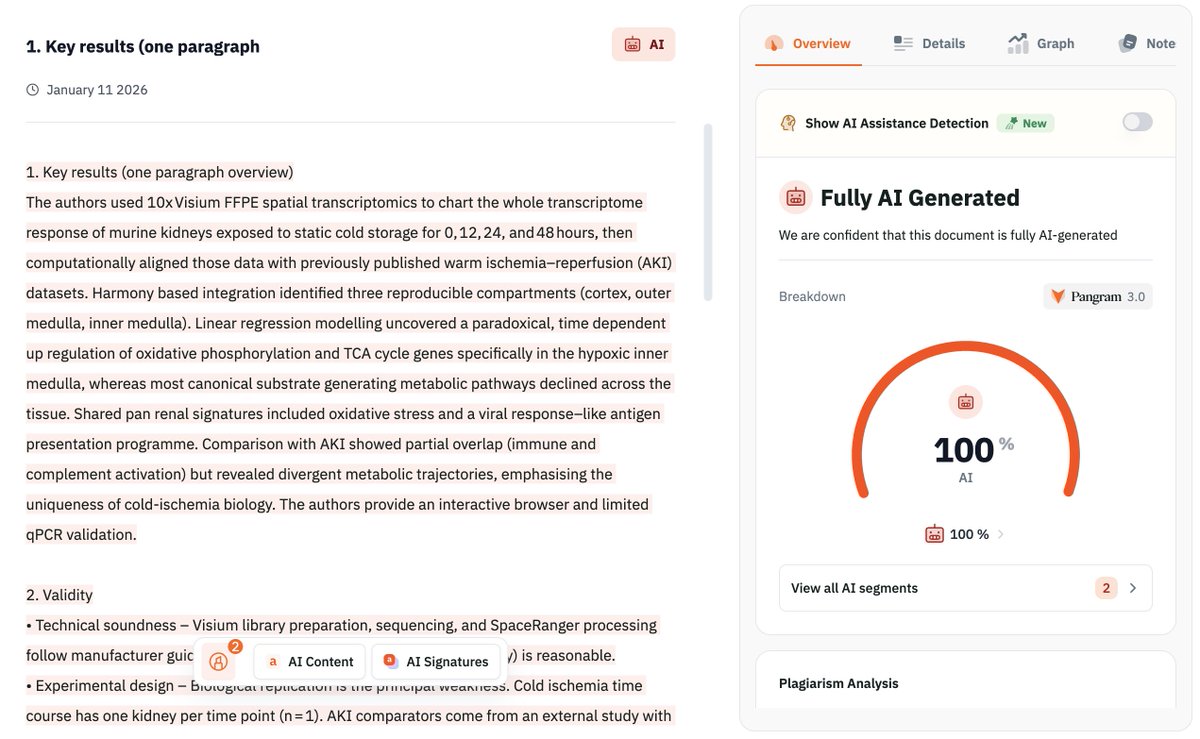
Newfound disappointment both as a scientist and as an editor: receiving shallow peer reviews that are entirely AI-generated. The whole point is critical feedback from YOU as a real expert.
If reviewers are outsourcing to AI, I think we've lost the plot 🤷♀️ Not sure the solution.
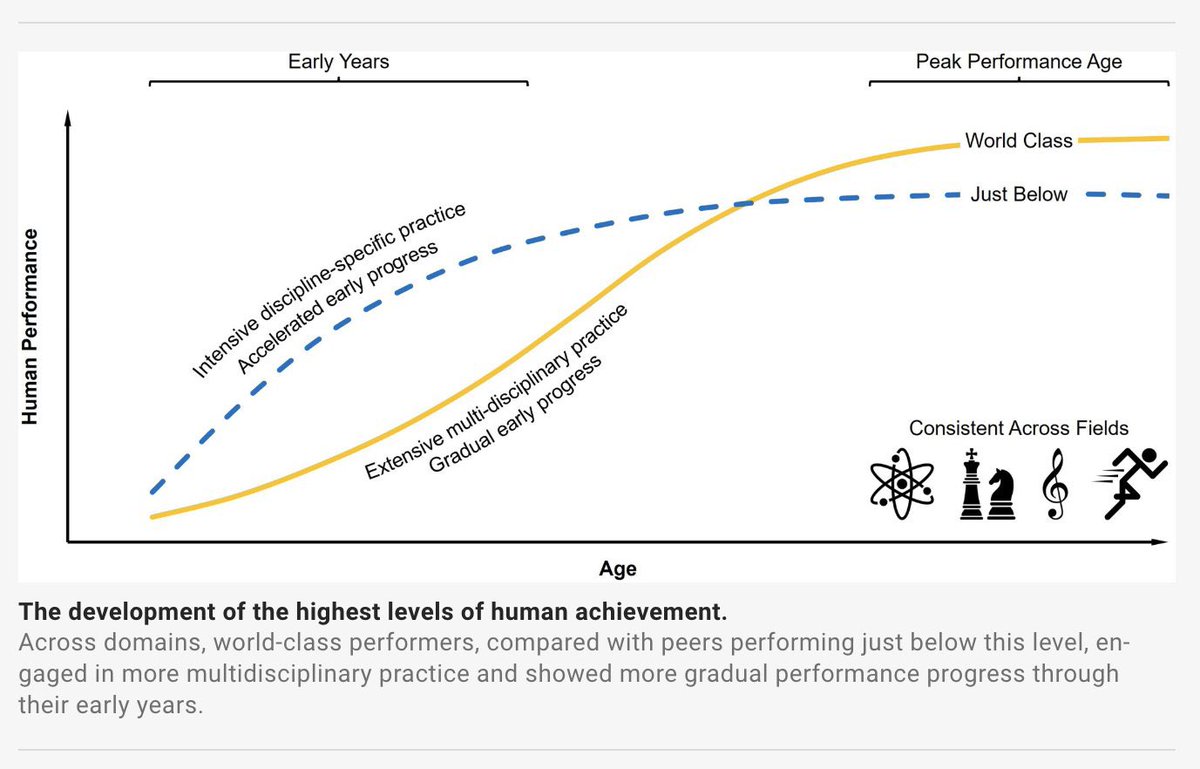
Fascinating paper just published in Science.
The authors analyze the career trajectories of top performers across multiple domains, including Nobel laureates, elite chess players, Olympic gold medalists, and more.
Their central finding challenges a common belief.
Intensive, single-discipline training at a young age does confer an early advantage, but this advantage fades over time.
By contrast, individuals exposed to multidisciplinary practice early in life tend to start more slowly. Yet, over the long run, they are more likely to reach world-class performance, eventually overtaking early specialists, who often plateau just below the very top.
An important reminder that breadth early on can be a powerful investment in long-term excellence.
Link to the paper in the first reply.
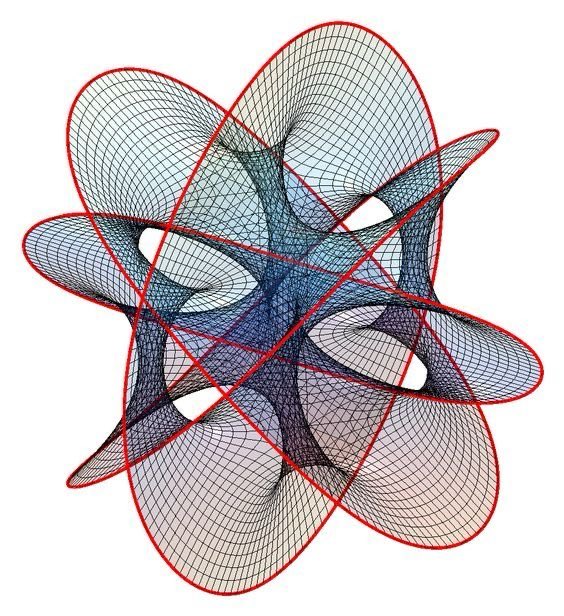
A reset button for rotation could change how we control them all.
Is it possible to cancel out a complicated spin without painstakingly reversing every single move? Surprisingly, the answer is yes.
Mathematicians Jean-Pierre Eckmann (University of Geneva) and Tsvi Tlusty (UNIST, South Korea) recently proved that almost any object—whether it’s a spinning top, a tumbling satellite, a twisted protein, or even a scrambled Rubik’s Cube—has a hidden “reset button” for its orientation.
Instead of undoing the motion step by step in reverse order, you can take the entire original sequence of rotations, scale it by a certain constant factor (make every turn bigger or smaller by the same proportion), perform that scaled version once, then do it again—and the object snaps perfectly back to its starting orientation. Two scaled copies of the same motion are enough to erase it completely.
It feels deeply counterintuitive. We’re used to thinking that rotations in 3D space don’t commute and that the only safe way to return home is to retrace your path exactly backward. Yet this new result reveals a previously unknown geometric symmetry: certain scaling factors turn the rotation group into something that has a kind of built-in “double and cancel” feature.
The discovery applies to any rigid body moving in three dimensions and may simplify algorithms in robotics (for reorienting a robot arm without tracking every prior move), computer graphics, molecular dynamics simulations, spacecraft attitude control, and even some problems in quantum mechanics.
In short, nature has been hiding a remarkably simple trick: sometimes the fastest way to undo a complex dance of spins isn’t to moonwalk backward through every step; it’s to perform an enlarged (or shrunken) version of the same dance twice.
["Walks in Rotation Spaces Return Home when Doubled and Scaled." Physical Review Letters, 2025]
You’re looking at neurons growing and connecting in real time 🧠. A 65-hour recording of hippocampal activity in a rat brain.
The hippocampus plays a crucial role in memory and learning. In this footage, neurons extend their dendrites and axons, building and reshaping connections across days. Capturing this process live offers a rare view into how neural circuits form and reorganize.
Why this matters ⬇️
1️⃣It’s a continuous, multi-day recording of living hippocampal neurons under the microscope
2️⃣You can clearly see dendritic branching and network formation
3️⃣It reveals the dynamic processes that drive brain development and plasticity
Observing growth at this resolution helps researchers understand how neurons connect—and how disruptions in these processes might contribute to neurological or psychiatric conditions.
Credit to Louis Romet and Dr. Christophe Leterrier for the video
Kaj lahko dodamo?
"Če bo špičasto – bodo vile,
če bo ploščičasto – bodo lopate,
če bo okroglo – bodo kolesa,
če bo votlo – bodo lonci,
če bo dolgo in votlo – bodo piščali..."
https://t.co/x2EAZMobOe
Back when i was a professor, early on I used to get bad reviews occasionally. My institution was extremely critical of this. So, what did I discover was the easy solution? I watered down my course and made everything easier. Magically, I started to get near perfect evaluations in what was a symbiotic hustle.
Teach an easy course, crack a few jokes during lecture, and give everyone an A --> good evaluations from students. And students evals are the only way teaching is judged.
Of course, students learned much back in the days when I hassled them more with hard projects.
Most researchers have nothing on Larry Richardson. Racking up more than 130 citations in 4 years, he seemed like a scientific superstar in the making. Except the studies were gibberish—and Larry is a cat.
This “exercise in absurdity” is an eye-opening look at byzantine world of scientific rank, and just how easy it is to manipulate. https://t.co/fRPjH9gGsY #NationalCatDay
The "Universe 25" experiment ranks among the most chilling scientific studies ever conducted, using a mouse colony to shed light on human societal dynamics.
Researchers set up an ideal habitat for a group of rats, complete with plentiful food, water, nesting supplies, and generous space for roaming and interacting.
At first, the rats flourished, their population surging quickly. But as their numbers swelled, social issues cropped up. The rats grew more hostile, possessive of territory, and withdrawn.
Male rats displayed rising aggression, which drove females to hide and to a waning interest in reproduction. Birth rates plummeted while death rates among younger rats climbed.
Then emerged a peculiar group of male rats dubbed the "beautiful mice." These males shunned mating with females and avoided territorial disputes, focusing solely on eating and resting. Eventually, these "beautiful males" alongside reclusive females dominated the population.
Over time, juvenile deaths hit 100%, and breeding dropped to nothing. Among the struggling survivors, same-sex pairings appeared, and cannibalism spiked—even with food still abundant.
John Calhoun ran this experiment 25 more times, and the outcome never changed.
As temperature decreases, the kinetic energy of molecules decreases.
This is a visualization of the transformation of water into ice, seen at molecular level.
[🎞️ CSIRO’s Data61]


![Rainmaker1973's tweet photo. A reset button for rotation could change how we control them all.
Is it possible to cancel out a complicated spin without painstakingly reversing every single move? Surprisingly, the answer is yes.
Mathematicians Jean-Pierre Eckmann (University of Geneva) and Tsvi Tlusty (UNIST, South Korea) recently proved that almost any object—whether it’s a spinning top, a tumbling satellite, a twisted protein, or even a scrambled Rubik’s Cube—has a hidden “reset button” for its orientation.
Instead of undoing the motion step by step in reverse order, you can take the entire original sequence of rotations, scale it by a certain constant factor (make every turn bigger or smaller by the same proportion), perform that scaled version once, then do it again—and the object snaps perfectly back to its starting orientation. Two scaled copies of the same motion are enough to erase it completely.
It feels deeply counterintuitive. We’re used to thinking that rotations in 3D space don’t commute and that the only safe way to return home is to retrace your path exactly backward. Yet this new result reveals a previously unknown geometric symmetry: certain scaling factors turn the rotation group into something that has a kind of built-in “double and cancel” feature.
The discovery applies to any rigid body moving in three dimensions and may simplify algorithms in robotics (for reorienting a robot arm without tracking every prior move), computer graphics, molecular dynamics simulations, spacecraft attitude control, and even some problems in quantum mechanics.
In short, nature has been hiding a remarkably simple trick: sometimes the fastest way to undo a complex dance of spins isn’t to moonwalk backward through every step; it’s to perform an enlarged (or shrunken) version of the same dance twice.
["Walks in Rotation Spaces Return Home when Doubled and Scaled." Physical Review Letters, 2025]](https://pbs.twimg.com/media/G7V5AsFXEAEFeMc.png)