Full Tweet
Zoom has released updates for a critical Windows desktop client vulnerability, tracked as CVE-2026-53412, that could allow unauthenticated attackers to remotely take over user accounts.
🚨 ZERODAY: ImageMagick 🚨
Our autonomous pentester https://t.co/zHUcIkHqvr just dropped multiple zeroday chains in ImageMagick that achieve RCE and File Leak from a single .jpg or .pdf file, bypassing EVERY security policy (Default, Limited, AND Secure). 🤯
💥 Affects Ubuntu, Debian, WordPress & millions of servers globally. Happy Monday and Happy Hunting! 🥰
https://t.co/nNAvFAvPOx
I really enjoyed reading this writeup.
It's very cool to see how very small findings could be chained to achieve a critical impact.
https://t.co/OKxiXF1q0i
Today, @washingtonpost covered critical vulnerabilities @depthfirstlabs found in TikTok. These vulnerabilities allowed hackers to access anything on a user’s device that TikTok itself could access, including the camera, microphone, payment information, photos, and the user’s entire TikTok account.
Read more in the thread 🧵
At a high level, this was the full exploit chain.
1. HEIC/HEIF upload
2. ImageMagick decoding
3. Heap overflow on libheif
4. RCE on https://t.co/gxAS3NLZ3q
5. Critical OpenAI SSO flaw
6. ChatGPT/Codex takeover
7. Connected GitHub access
8. Internal repo PR #1186742
[8.8] CVE-2026-22812: OpenCode RCE
Unauthenticated HTTP server exposes /session/:id/shell, /pty, /file/content. Permissive CORS allows arbitrary command execution.
Dark Exploit found it.
Fix: Update to v1.0.216+
🔗 https://t.co/7dOVYmC398
---
🔗 https://t.co/pJWHoCMDix
Running a Figma plugin is enough to land cross-platform zero-click RCE on Figma Desktop...
Read the writeup on the Critical Research Lab https://t.co/16w1iiWEmF
And thanks @Dav3nn for the incredible post, what an amazing chain! =)
I'm pleased to share that CVE-2026-41238 has been assigned to a Prototype Pollution >> XSS vulnerability I identified in DOMPurify, affecting versions 3.0.1 through 3.3.3.
If your web application renders user-supplied HTML, there's a very good chance it relies on DOMPurify.
With 24m downloads per week, it's the de facto HTML sanitiser for the JavaScript ecosystem — used across React, Vue, Angular and Node.js applications.
Only 10 prior CVEs across 7 years speaks to the quality of the library and the rigour of its maintainers at Cure53.
The issue was patched in version 3.4.0.
Coordinated disclosure handled through Cure53 — thanks to the team for a smooth process.
Full technical writeup and GHSA below.
Write-up
https://t.co/xUcDvy2DKV
GHSA
https://t.co/wtkOKkeLY7
#Antgravity - an AI code editor from Google that has access to your entire codebase and terminal had a Remote Code Execution (#RCE) vulnerability - a great find and write-up by @HacktronAI earning them $10k #BugBounty!
#BugBountyTips
👇
https://t.co/L6KXzmTlBu
$312,500 worth of stored/reflected XSS vulnerabilities in Meta’s Conversions API Gateway allowed Javascript code to run on any Facebook domain and millions of third-party websites. The flaw enabled zero-click Facebook account takeover and more:
https://t.co/7gWpR4LQ8x
Had some recent success using untranslatable Unicode in place of a "?" when attacking URL parsers for SSRF/OAuth issues.
What worked was...
\udfff -> � -> ?
Therefore...
{"redirectUri":"https://attacker\udfff@[victim]/"}
Equals...
Location: https://attacker?@[victim]/
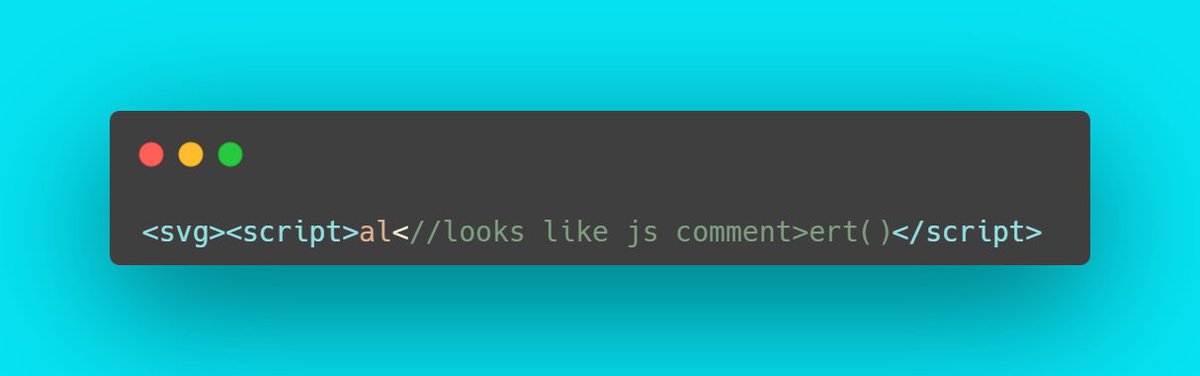
Inside <svg><script>, only child text nodes become JS code, while comments or SVG elements are dropped.
So <//…> (a bogus comment) lets you sneak comment-looking sequences into executable JS.
https://t.co/PKDT0U9f4w
#xss





![luckyhacker43's tweet photo. [8.8] CVE-2026-22812: OpenCode RCE
Unauthenticated HTTP server exposes /session/:id/shell, /pty, /file/content. Permissive CORS allows arbitrary command execution.
Dark Exploit found it.
Fix: Update to v1.0.216+
🔗 https://t.co/7dOVYmC398
---
🔗 https://t.co/pJWHoCMDix https://t.co/6aAXwHpMdY](https://pbs.twimg.com/media/HOdf6mCXsAA52mE.jpg)


![samwcyo's tweet photo. Had some recent success using untranslatable Unicode in place of a "?" when attacking URL parsers for SSRF/OAuth issues.
What worked was...
\udfff -> � -> ?
Therefore...
{"redirectUri":"https://attacker\udfff@[victim]/"}
Equals...
Location: https://attacker?@[victim]/ https://t.co/IDL41DJPKE](https://pbs.twimg.com/media/EU45ABnXYAAUYgS.png)