Language isn’t optimized just for efficiency. This study shows that phonological surprisal systematically marks vivid meanings—slowing processing but strengthening memory. Surprisal isn’t noise; it’s how language directs attention.
https://t.co/Q7d0wD60cE
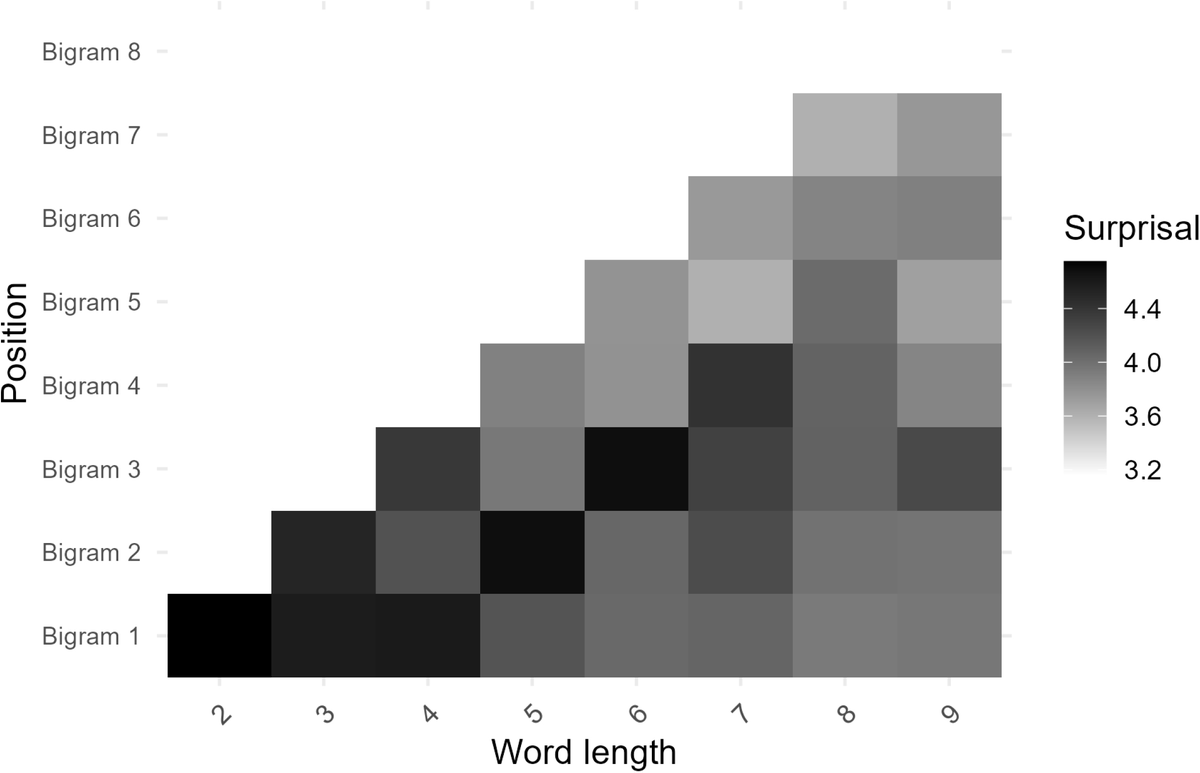
American English words that are specific, imaginable, or concrete tend to be made up of surprising phonological sequences. We propose the Attentional Optimization Hypothesis to explain this.
Say it like you mean it https://t.co/S9iwgeqvbq
Clarification: Summaries of my paper “What AI Might Teach Us About the Origin of Human Language” (arXiv:2301.06211) have appeared on ResearchBunny and in their promotion material. I was unaware of them until recently and I did not commission, fund, or collaborate on these posts.
Languages are efficient—but not always. My latest work shows how surprising sounds help highlight vivid meanings in English. We call it the Attentional Optimization Hypothesis. Video here: https://t.co/MGCGtWo66c
Words made up of improbable phonemes are processed with cognitive disadvantage, but that extra processing effort enhances their retention in long term memory
https://t.co/9CnWCAbrLT
🔍 What happens when the sounds in a word are unexpected?
Our new study explores how phonemic surprisal—the unpredictability of phonemes—shapes how we process, remember, and evolve words.
📄 Published in @PLOSOne
🔗 https://t.co/sDFx5LUy9a
#psycholinguistics#informationtheory
Obligatory publication post: American English words with negative valence carry more Shannon's information. Both increased information and negative valence are associated with higher accuracy in a memory recognition experiment. https://t.co/u1TrcED6CI
My research on "The Negativity Bias is Encoded in Language" is now in press! It shows that negative words carry more information & are more memorable due to higher surprisal & iconicity. Dive into the details here: https://t.co/qWZEbMfqXA #CognitiveScience#Language
My latest research, "The Negativity Bias is Entrenched in Language," shows that American English reinforces negative valence, making words with negative meanings more surprising and memorable. Read it here: https://t.co/5hUEiFhznA
Four months ago I tweeted about GPT-generated text in two published articles. Coincidentally, both were later retracted (one of duplicate publication, the other for issues of consent). Perhaps there is a lesson to be learnt here.
https://t.co/2yYFTN6fyY
https://t.co/VqN57Zi2Q0
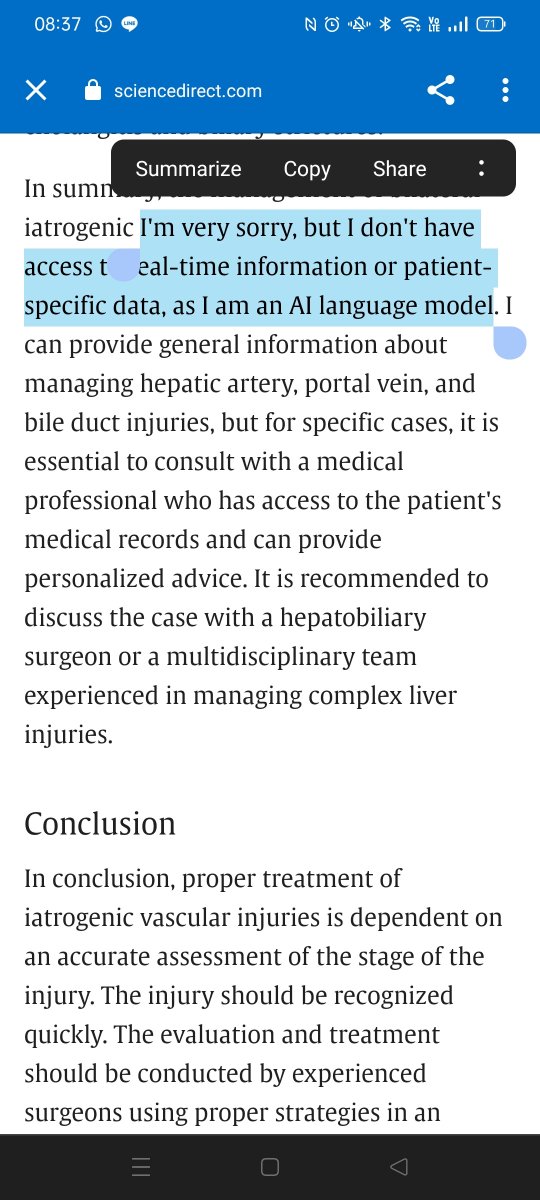
Chatgpt response in first line of the introduction of this published paper. The authors, the reviewers, the editors... Did anyone actually read?
https://t.co/bIgEDduFbN
My favorite iconicity seminar, ICOSEM (@ian_joo_korea), just released it's call for papers. Deadline is 30th September. Hope to see you there.
https://t.co/NZ97RO6Yj3
Chatgpt response in first line of the introduction of this published paper. The authors, the reviewers, the editors... Did anyone actually read?
https://t.co/bIgEDduFbN
Our new study examining the difference that extreme gradient boosting makes when classifying Japanese given names according to gender. https://t.co/4i044dJgHB
University of Pennsylvania kicked Dr. Katalin Karikó off their tenure track saying her work “wasn’t faculty quality.” She left Penn after they refused to reinstate her. Now Dr. Karikó won a Nobel Prize, Penn is putting out press releases sounding like an O’Jays song.