In honor of the 10th anniversary of observing gravitational waves, I assembled this little video showing the observations over time. Come give a listen to the sound of the Universe!
https://t.co/plCByXNTxP
Multiband parameter estimation with phase coherence and extrinsic marginalization: Extracting more information from low-SNR CBC signals in LISA data. https://t.co/rDvR3fuyKt
The @NASASwift Science Ops Team has been awarded the 2025 Innovation Prize by the @AAS_Office@AAS_HEAD for inventing new mission capabilities on-orbit for time-domain and multi-messenger astrophysics.
Best team in the world. 💕🛰️
https://t.co/5MW7Mz5hMM.
Published now in ApJL: new @NASASwift capability!
< 10s response time on-orbit to astronomical events detected anywhere+initial application to chasing gravitational waves across the sky in real-time.
Do you have an idea for radical new science at the fastest timescales? Propose!
This is so true! I owe a lot to all the collaborators I have worked with over the years. Finding someone you aren't afraid to make mistakes with is super important.
Misty Sunday morning #GravitationalWave candidate #S240908bs
If real, the source is probably a binary black hole
False alarm rate 1 in 100 yr
GraceDB https://t.co/Ix1U0fb7K6
GCN https://t.co/6fNVTXOfZS
Rating 🍁⏺️🍦
#O4IsHere
Sunday morning #GravitationalWave candidate #S240825ar@LIGOWA is back!
If real, the source is probably a binary black hole
False alarm rate 1 in 10 yr
GraceDB https://t.co/e6Em6139JN
GCN https://t.co/KYeuAUubrV
Rating 🌻🍧
#O4IsHere
finally defended my Ph.D. @IUCAAstro! 🎓Now I am officially a Dr. :)
I thank everyone, my thesis advisor, committee members, collaborators (within and outside the LVK collaboration), family, and friends for their support at various stages of my Ph.D.
A tale of two black holes: same astrophysical origin, same observational signatures, completely different fate to their cosmic journeys.
Our new paper led by @shobhitrastro + friends @alexandernitz, @GravityKelly & Curt Cutler.
https://t.co/tGmt3HI0Xa
I had a great time sharing my work in #GWPAW2024 at @unibirmingham
I discussed the efficient search strategies for ultra-low mass binaries. These strategies could also be used for detecting GW sources in the third-generation detector era! #GravitationalWaves#cosmicexplorer
Enjoyed sharing insights at #GWPAW24 about the detection of orbital eccentricity—a hot topic! 🌌 Our optimistic forecasts suggest we might detect eccentric neutron star binaries with a few years of observing with post O5 upgrades. Exciting times ahead for #GravitationalWaves ✨
@thephysicsmill You don't need this with overleaf either. You can check out a git repo that is synced to it (and you can push from too). You can also label versions directly in the gui. Is this maybe a free vs paid version issue?
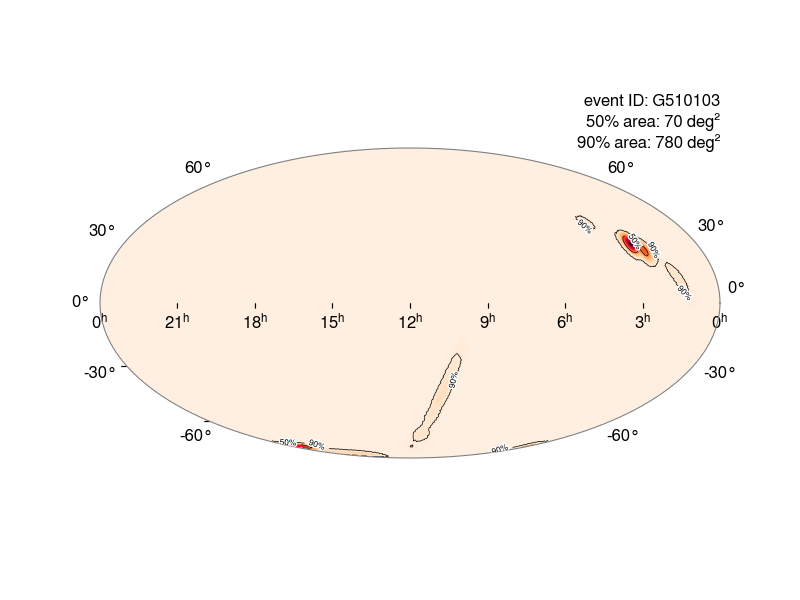
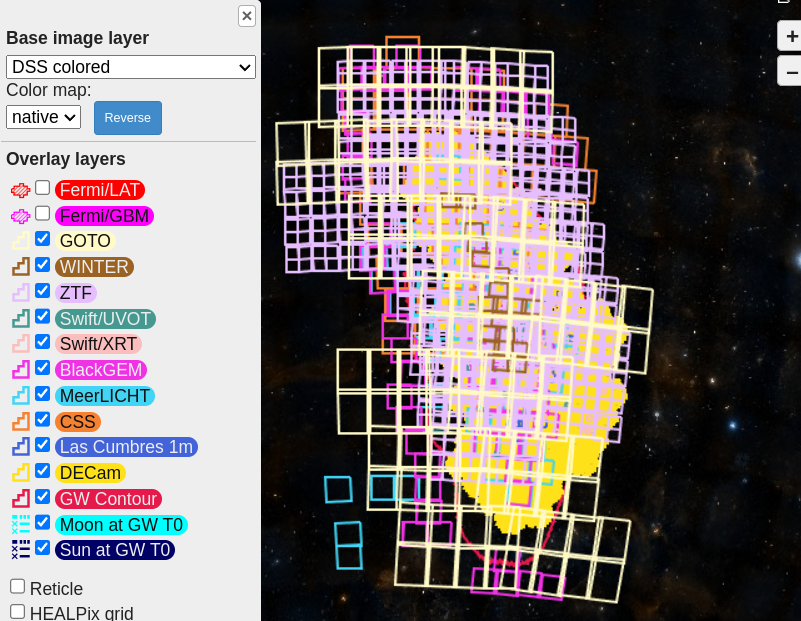
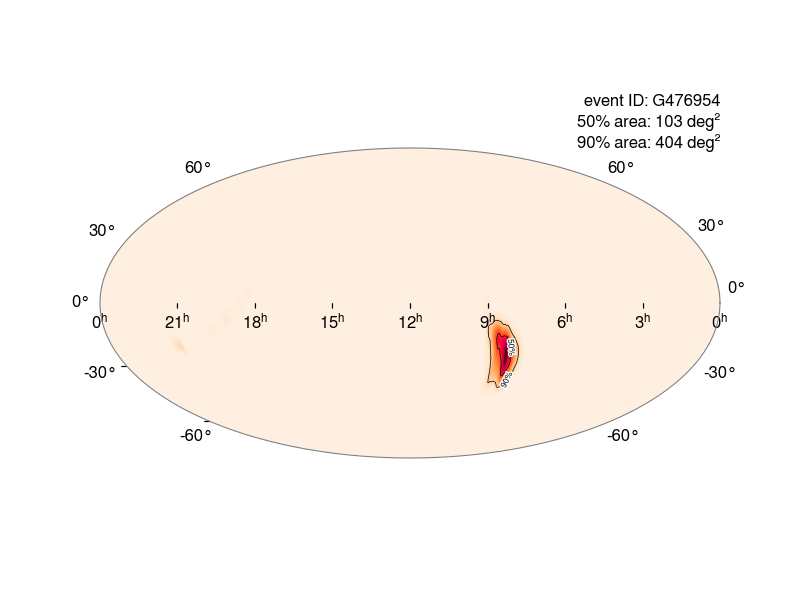
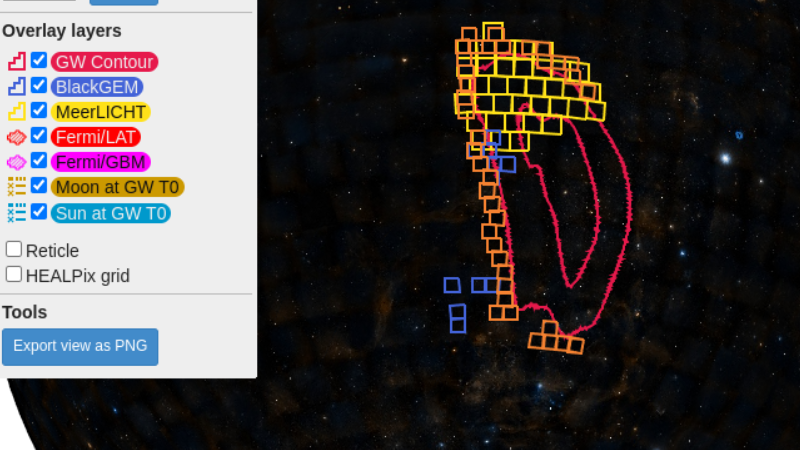
If there is no counterpart found, it wouldn't be for lack of trying. There's been a lot of hard work by teams of astronomers to hunt for potential transients. The treasuremap has a really cool view of the ~1000 pointings so far.
There doesn't appear to be a likely counterpart at the moment, but people are still looking. This system is still very interesting though! It's chirp mass is likely quite low ~ 1.7, implying that it could be something like a 1.4 solar mass NS merging with a 2.7 solar mass BH.
A potentially very interesting gravitational wave alert. A possible neutron star black hole merger with low enough mass that there may be an electromagnetic counterpart! Happy hunting!
🚨⚫️⚪️✴️
This could make it similar to the recently published GW230529 but at potentially lower mass. The lower "mass gap" would appear to not exist. It would be very interesting to see what the measurement of the black hole spin is as well. Is it still consistent with zero?
@sylvia_bisco Yeah, super interesting especially since the chirp mass is even lower ~1.7 (detector frame). So something like a 1.4-2.7 might be possible.