How Lemonade is Automating 40% of Their Internal Tickets:
We're so excited to share the story of Lemonade, one of our longest running closest design partners, and talk about how they're using Unthread to automate their internal tickets.
https://t.co/JhdZodvTKp
At Cruise I built robotaxis that completed 250k driverless rides, including the first rides ever in a major city.
With the Tesla event coming up, many people have asked for my thoughts. I truly hope they get robotaxis working. Autonomy is the fastest and most effective way to eliminate car accidents, and we desperately need this.
I don’t know what we will see tonight. What I know is that it takes a non-trivial amount of work to go from making a car mostly drive without interventions to safe, robust, and legally compliant robotaxi network that meshes well with local communities.
So here are 15 key things to look for from new robotaxi players:
1) Getting stuck - is there a method for remote operators to relocate unoccupied vehicles that are blocking traffic or emergency vehicles? What happens if there are no available remote operators and the vehicle becomes stuck?
2) Detecting collisions - is there a high recall system that can detect collisions, including minor contact with cycles or pedestrians? Does this comply with local, state, and federal reporting requirements?
3) AI override - is there a way for remote confirmation of critical, long tail decisions (is it safe to stop on these railroad tracks, was that a collision or not, is it ok to enter this emergency scene, is that officer telling me to stop)?
4) First responders - is there a way to remotely unlock cars and provide access to first responders who need to relocate a stuck vehicle? Is there a training program in place? Is there live phone support?
5) Connectivity dropouts - do these cars have Starlink, cellularly redundancy, or some other way to remain connected? What happens if telemetry is lost for an active but unoccupied vehicle and it gets stuck?
6) Sensor cleaning - is there a way to clear blocked or dirty sensors? Are various forms of degraded performance detected and mitigated?
7) Degraded states - in the event of a computer, sensor, or software failure, can the vehicle utilize a backup system to safely pull out of traffic or otherwise reach a safe stopping location? Is there coverage for all known or plausible faults? Will this work properly on highways where pulling over is not necessarily a safe option?
8) Congestion control - will vehicle take diverse routes to avoid creating traffic jams? If 20 vehicles arrive at a busy concert venue is there any “air traffic control” to ensure they don’t get stuck in a cluster?
9) Emergency vehicle detection - do vehicles correctly pull over or yield to emergency vehicles? Can they traverse active emergency scenes when necessary or appropriate?
10) Long tail detections - do they avoid flooded areas, downed power lines, wet cement, caution tape, crossing guard hand motions, open pits or manhole covers?
11) Liability - who is at fault when a vehicle causes property damage or injury? Are there high recall data logging systems in place as needed to absolve the owner of liability when the other driver was truly at fault?
12) Regulation and permitting - will these vehicles operate in states with public reporting requirements and meet all requirements? If vehicles do not have a steering wheel or traditional controls, will they be self-certified by Tesla as FMVSS compliant?
13) Bad weather - does the system correctly degrade its performance in the event of sudden changes in weather? What happens if a trip is in progress when weather becomes severe? Will it refuse to operate if conditions are too severe?
14) Pullovers - does the system avoid pulling over in bus stops, restricted areas, or in front of private driveways? What happens someone needs the car to be moved from their driveway?
15) Local laws - does the system obey local traffic laws, and who pays the ticket if there is a violation?
Tesla will undoubtedly solve all of these eventually. Have they done it yet? Who knows. I’m still very excited to see what they’ve been cooking up.
The “everything sucks” doomerism of the far left and right is wrong. Worse, it needlessly radicalizes people. Today is better than yesterday and tomorrow is going to be even better. So here’s a list of 50 areas where we're seeing progress. 1/
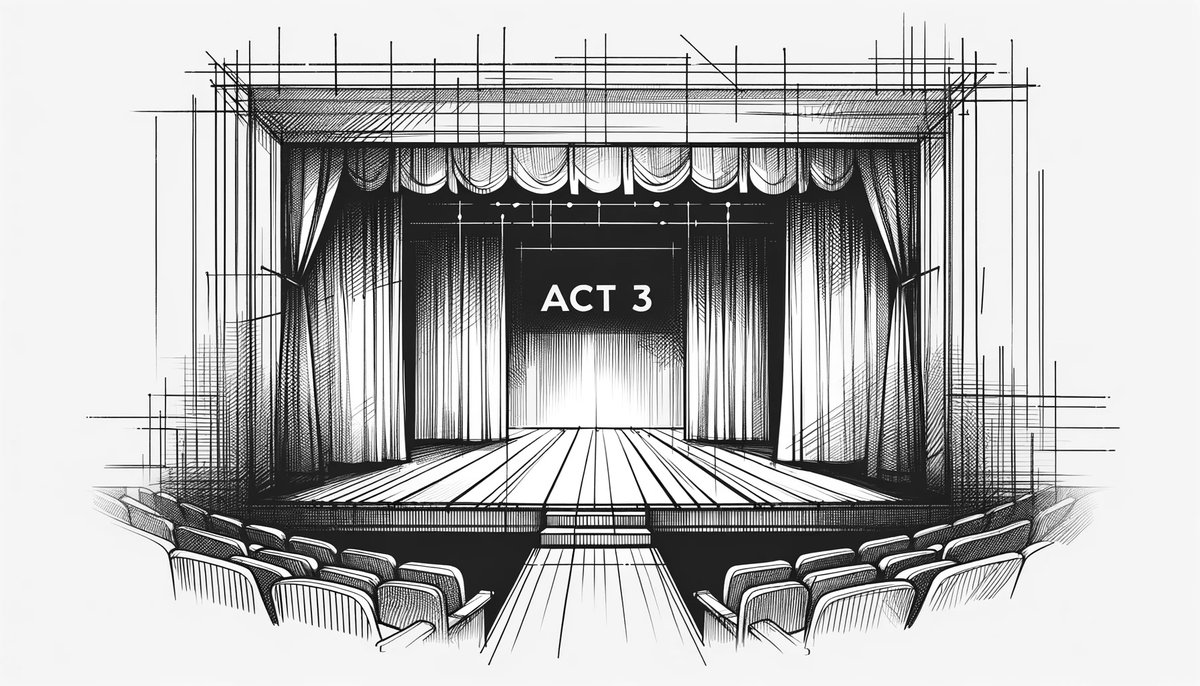
In 2011, Marc Andreessen famously proclaimed, “Software is Eating the World.” The thesis was that internet startups were “poised to take over large swathes of the economy,” and make all the failed dreams of the dot-com era (Act I) finally come true.
Andreessen was at least half right. In the decade that followed (Act II), software companies like Apple, Microsoft, and Google ascended to become the most valuable in the world. Billions of people did indeed buy smartphones, as predicted. And entire industries—news, entertainment, travel, communications, retail, productivity, finance, and more—were swallowed whole by software.
But software still hasn't eaten everything. The industries that form the foundation of the American economy—healthcare, logistics, construction, transportation, manufacturing, etc—are still waiting for the revolution. Just ask any consumer trying to find the right specialist at a hospital, or get insurance for a leaky roof. All across America, we are confronted with the type of antiquated, complex bureaucracies that we thought software would fix. The pandemic revealed how brittle our systems are. It’s now clear our foundations are crumbling.
But there’s good news: we are now on the precipice of Software's Third Act, in which startups will finally deliver on the dream of transforming the economy’s foundational industries. Identifying, backing, and supporting these companies is my life’s work, and inspires everything we do at The Council Fund.
In the full essay (linked below), I cover:
⏳ why Act III is finally the time for software to transform essential industries
🦿 which founders will have a leg up in Act III
�� why Silicon Valley will still be center-stage in Act III
🧗 how companies can scale vertically vs horizontally
🌟 how we @thecouncilcap support them
20. Japan’s life expectancy is more than five years higher than that of the US, while the latter spends more than double on healthcare per capita.
Japan reached the US’s current life expectancy more than 30 years ago.
Recently, I decided I wanted to read every page of one of my favorite websites, @OurWorldInData.
I’m about halfway now.
Here are the 30 most surprising things I’ve learned about the world so far! 🧵
Life luxuries without kids:
1. Traveling to exotic places
2. Dining at nice restaurants
3. Frequent hangouts with friends
4. Free time for personal hobbies
5. Clean house and peace of mind
Life luxuries with kids:
1. Actual silence
2. A full night's sleep
3. Going to the bathroom in peace
4. Getting out of the house on time
5. Watching them grow up, learn new things, and experience the world
I wouldn't trade #5 for anything in the first list.
@AdamSchefterDL@cbrut@Makaleee False. I'll post the exact message I sent Mark in our group chat.
Meanwhile, we have a rule in place for replacements whereby first dibs goes to the highest scoring team in DL2 (if they pass, it then goes to #2, etc.). @cbrut is 10th in line at the moment.
The reason to deliberately do hard things is so that when non-self-elected challenges arrive (& they will), you can tell yourself: “I don’t know how this is all going to turn out, but I am certain I can do hard things.” Don’t self injure. But doing hard things is always worthwhile.
Today we are publishing a white paper that presents the human driver crash rate we use as a safety benchmark.
It is the most precise study of human driving performance ever conducted, and it shows @Cruise AVs outperform humans in a comparable driving environment. More 👇(1/5)
If someone offered you a billion dollars with the only catch being that you’d have a pretty bad cold for the rest of your life, would you take it?
Definite no for me and, I’d guess, for many of you. Really highlights how much more important health is than everything else.
I've loved the support I've received from @BoostVC for my startup and have been so impressed by all of the founders in their network.
If you are an investor interested in Deep Tech, I'd highly recommend RSVP'ing for their upcoming demo day.
🔥 30 Seed stage Deep Tech companies coming your way! 🔥
Join us for our next online @BoostVC Deep Tech Demo Day on Tuesday, October 3rd, 2023 at 9:00am PT! 🚀 Investors, register here: https://t.co/zdkterlVzV
We've curated 30+ seed stage startups nominated by our growing consortium of Deep Tech VC funds, to hand select the best and most exciting startups in Deep Tech that are solving the world’s biggest problems including: aerospace, climate, robotics, crypto, bio, AI/ML, gaming, spatial computing (AR/VR), and more.
In addition to startups from the Boost VC portfolio, we've received incredible nominations from @PathbreakerVC, @cantos, @drapervc, @spacecadet, @EarthlingVC and more to be announced soon.
Our team has been hard at work behind the scenes to build a new platform and we can't wait to show it off on October 3rd! @AdamDraper@MaddieCallander@GusDomel
Be sure to register here! 👉 https://t.co/zdkterlVzV
AI dazzled the public with its human-like responses, and developers with its emergent abilities. In spite of the hype, it hasn't changed your life yet. Why is that? And how to invest in an era of wizardry
https://t.co/tS63uwYPfl
We ran this full-page ad in @nytimes and several local papers today.
Human drivers aren't good enough. America can do better, and it is time we fully embrace AVs.