I took @TheTuringPost blog as seed and made a wiki on JEPA variations with @NousResearch manim animations so that I can connect autoresearch on JEPA concepts
Open sourcing everything at https://t.co/zpUcReDVNO (check the files tab for the source)
Bought a new Mac mini to properly tinker with claws over the weekend. The apple store person told me they are selling like hotcakes and everyone is confused :)
I'm definitely a bit sus'd to run OpenClaw specifically - giving my private data/keys to 400K lines of vibe coded monster that is being actively attacked at scale is not very appealing at all. Already seeing reports of exposed instances, RCE vulnerabilities, supply chain poisoning, malicious or compromised skills in the registry, it feels like a complete wild west and a security nightmare. But I do love the concept and I think that just like LLM agents were a new layer on top of LLMs, Claws are now a new layer on top of LLM agents, taking the orchestration, scheduling, context, tool calls and a kind of persistence to a next level.
Looking around, and given that the high level idea is clear, there are a lot of smaller Claws starting to pop out. For example, on a quick skim NanoClaw looks really interesting in that the core engine is ~4000 lines of code (fits into both my head and that of AI agents, so it feels manageable, auditable, flexible, etc.) and runs everything in containers by default. I also love their approach to configurability - it's not done via config files it's done via skills! For example, /add-telegram instructs your AI agent how to modify the actual code to integrate Telegram. I haven't come across this yet and it slightly blew my mind earlier today as a new, AI-enabled approach to preventing config mess and if-then-else monsters. Basically - the implied new meta is to write the most maximally forkable repo and then have skills that fork it into any desired more exotic configuration. Very cool.
Anyway there are many others - e.g. nanobot, zeroclaw, ironclaw, picoclaw (lol @ prefixes). There are also cloud-hosted alternatives but tbh I don't love these because it feels much harder to tinker with. In particular, local setup allows easy connection to home automation gadgets on the local network. And I don't know, there is something aesthetically pleasing about there being a physical device 'possessed' by a little ghost of a personal digital house elf.
Not 100% sure what my setup ends up looking like just yet but Claws are an awesome, exciting new layer of the AI stack.
not the players - blame the game.
In Web2, the founder is public. every investor knows who you are, who you’ve talked to, what you’re doing. you can’t just “raise in public”. securities law exists for a reason (since the 1930s)
so you raise from angels / privately from pros
and you also can’t just ragequit, you vested. Bad side even a good founder in a good project gets stuck for years, couldn't leave. I have severals in my portfolio
web3 flips it.
•be anonymous
•put no real skin in
•still raise huge sums from the public retaill (basically retail never gets real safety )
•then “exit” fast with liquid / unlockable tokens
•and move on to the next project
This is amazing.
I clicked through a few different block builders - Agave, Firedancer, BAM, and Harmonic. All four show different scheduling logic. We also have Paladin and Rakurai, each with their own versions.
From a market-microstructure perspective, in TradFi, you have an unconstrained system: orders arrive continuously and are executed FIFO by a single matching engine. This continuity is what allows market makers to cancel quotes without constantly risking being picked off. No priority fees needed, and the makers can quote sub-1 bp spreads on single trades worth millions of dollars.
At first glance, Solana looks constrained by ~380ms slot times. That’s true, but to an extent. Thanks to Turbine, validators shred transactions every ~15–20ms and propagate these shreds across the network. Once a shred is produced, ordering within that batch is fixed. With current block utilization well below CU limits, Solana behaves much more like a batched FIFO system than the slot length would suggest.
However, shredding is only part of the picture. The other major constraint is scheduler design. Different block builders implement meaningfully different scheduling logic: how votes and non-votes are interleaved, when non-vote txs are included within the slot, and how economically related txs are clustered. For prop AMMs, this introduces uncertainty. Even when blocks are half-empty and no txs are dropped due to low priority fees, ordering still varies from slot to slot depending on the builder.
Prop AMMs need quote updates and taker txs to be ordered predictably within a shred. With heterogeneous schedulers, that ordering is non-deterministic across slots, making it difficult to reason about execution guarantees.
One could imagine mitigating this with maker priority or speed bumps for taker flow. But if the goal is ICM on Solana, this problem needs a more systemic solution.
Realizing there is an issue is the first step toward solving it, so the IRBL explorer is a very valuable resource.
LeCun's JEPA has evolved into a vision-language model, with 1.6B parameters rivaling the 72B Qwen-VL.
Instead of predicting words directly, the proposed VL-JEPA learns to predict the core "meaning" of a text in an abstract space, ignoring surface-level wording variations.
This method outperforms standard token-based training with 50% fewer parameters. It beats models like CLIP & SigLIP2 on video classification/retrieval tasks and matches larger VLMs on VQA, while using a decoder only when needed to cut decoding ops by nearly 3x.
VL-JEPA: Joint Embedding Predictive Architecture for Vision-language
Paper: https://t.co/rGglBXvKex
Our report: https://t.co/TXEHRquSBr
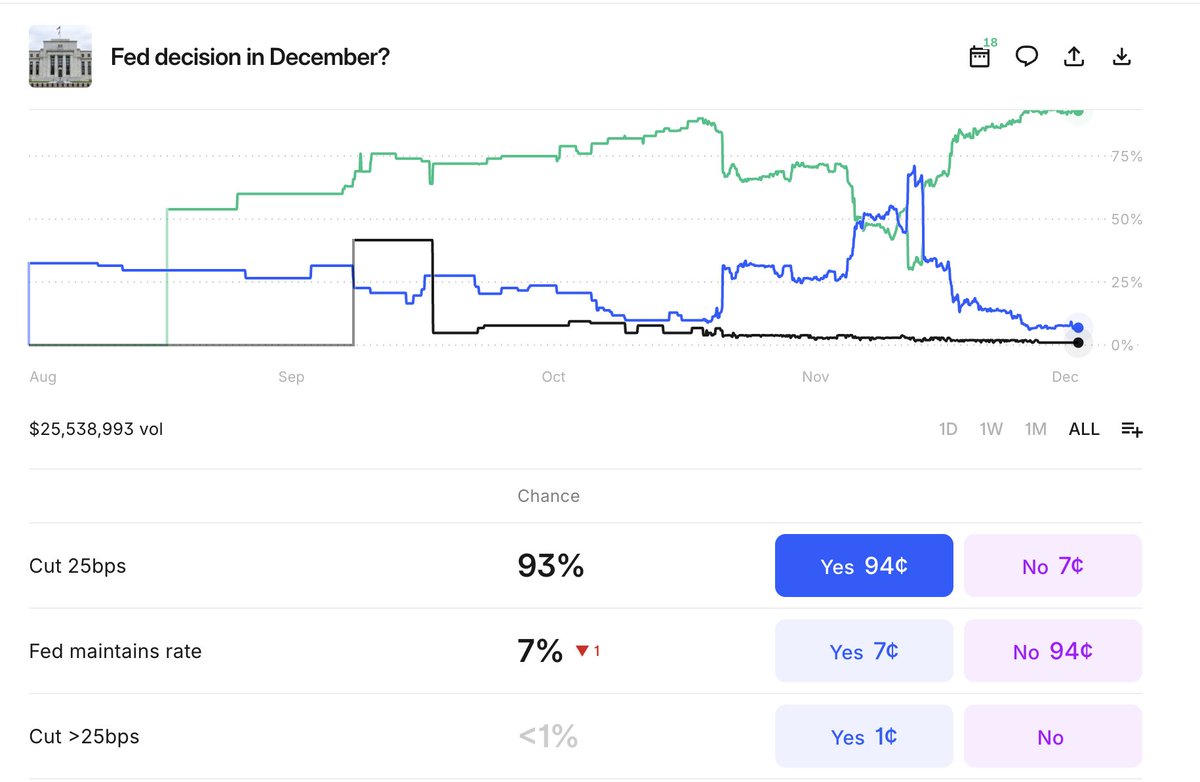
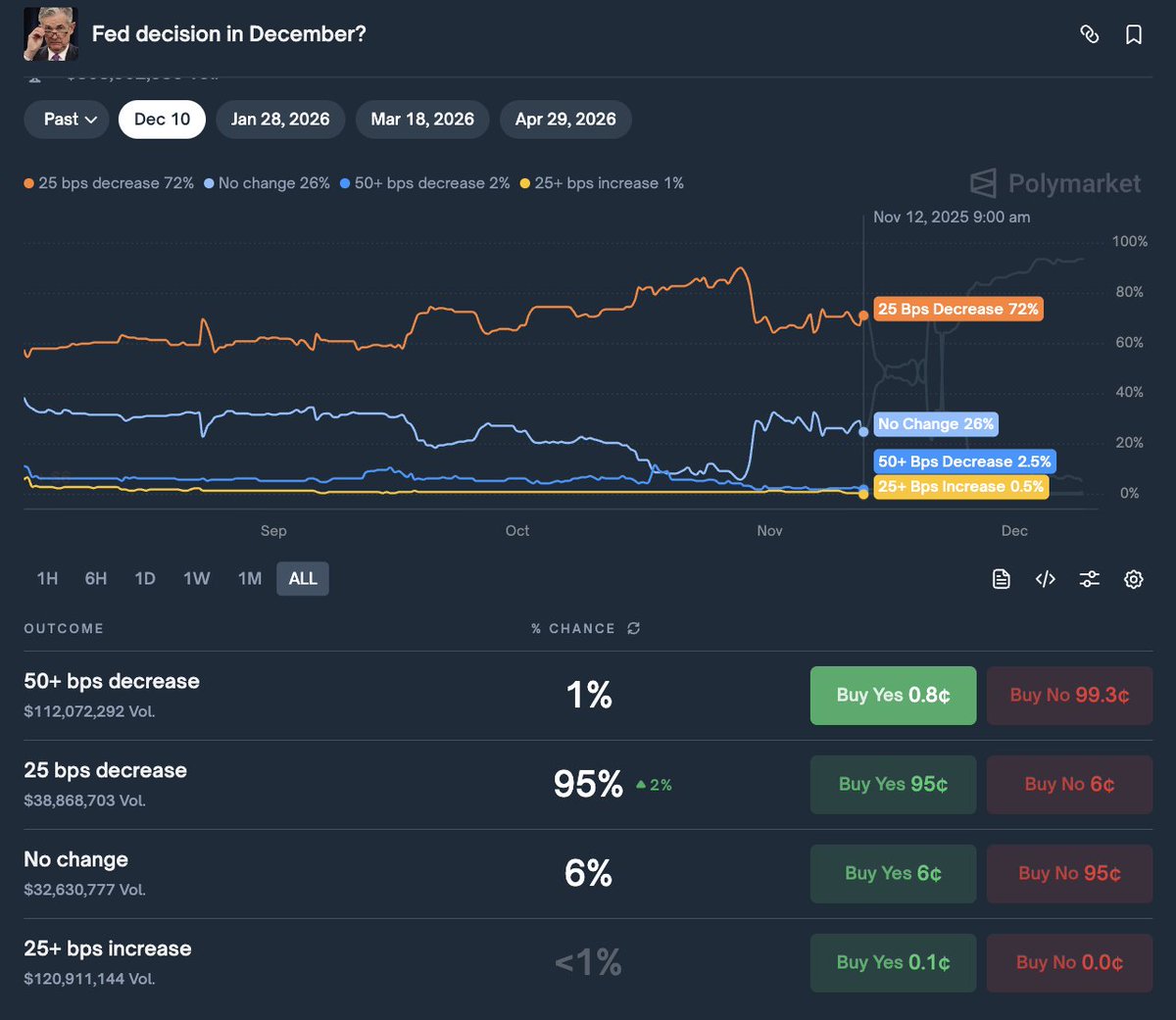
a much larger issue here is that both kalshi and polymarket report volume on notional, not actual dollars traded
if you buy a 1% chance for 1 cent it shows up as $1 volume!
prediction markets are potentially misreporting volumes by 100x, not 2x
@jmrphy The same vibe. When you began creating your own skills and sub-agents that followed your vision, you realized that communicating and achieving alignment with people is often more difficult than doing so with the Claude agents.
@levelsio In the EU, the younger generation has a different mindset. Many young people want to build careers as bureaucrats, and that’s an understandable social ladder.
While cross-country skiing this morning, Dr. Karp decided to launch a new program: The Neurodivergent Fellowship.
If you find yourself relating to him in this video — unable to sit still, or thinking faster than you can speak — we encourage you to apply.
The final round of interviews will be conducted by Dr. Karp personally.
Application link coming soon.
Thank you and good luck.
Luxury brands mostly exist to signal status
but feeling the need to signal status is actually low status
the highest status people I’ve met look like they got dressed in 5 minutes at Uniqlo
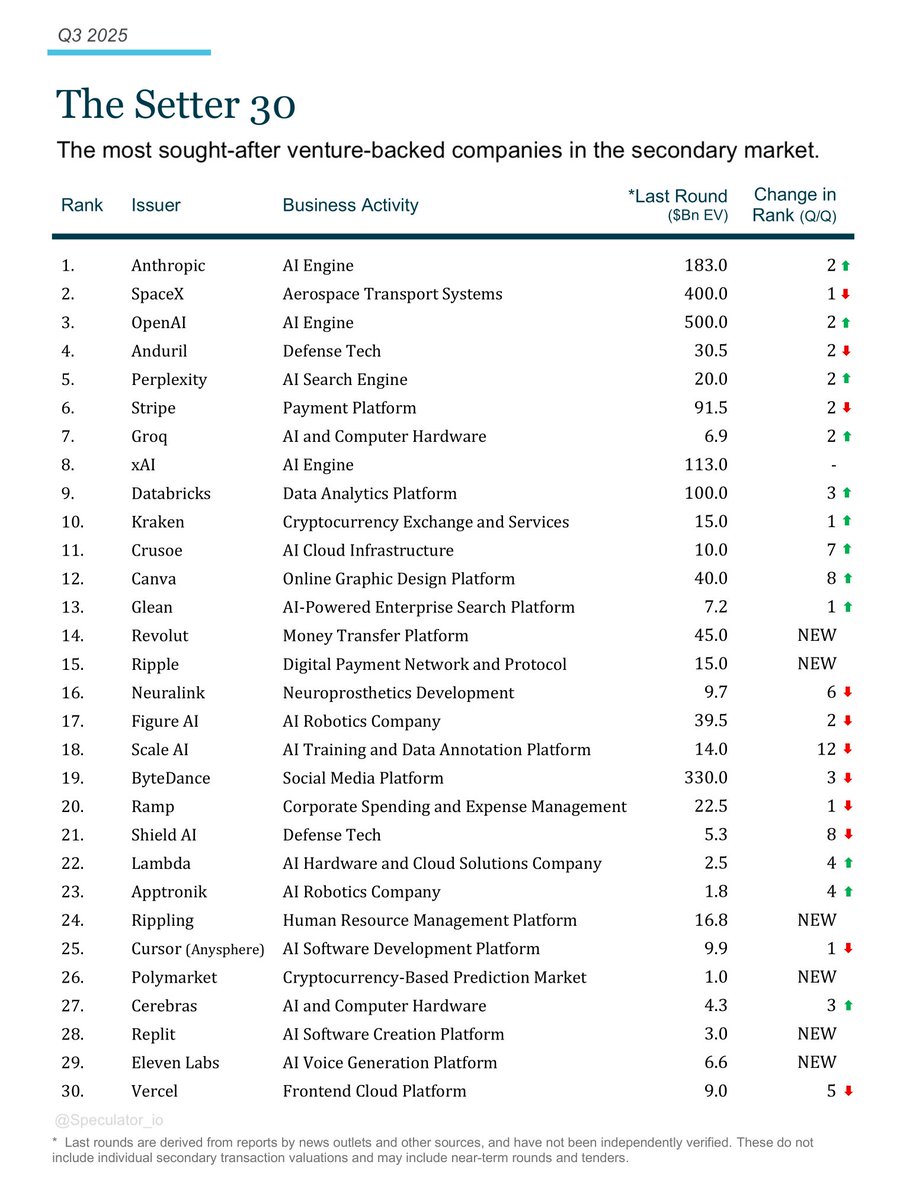
The real frenzy starts once the most hyped companies go public.
Space: SpaceX
Defense: Anduril
Al: OpenAl, Anthropic, xAl
Robotics: Figure Al, Apptronik
Fintech: Stripe, Revolut
Crypto: Kraken, Ripple
Chips: Groq, Cerebras
Cloud: Databricks
We haven't seen anything yet...