Most of the things we worry about in life are insignificant. Most of them we can’t control anyway. It’s the Almighty’s way of showing us who is at the helm. So let's focus on being the best version of ourselves. Hand over the rest to Him.
I met a pregnant woman whose scan showed her baby was already smaller than expected for the pregnancy stage.
When I asked about her diet, her answer shocked me.
“I don’t want this baby to be big. My husband said I must deliver normally this time.”
Her first baby was delivered through cesarean section because the baby was big.
So now, she believes eating less will guarantee a vaginal birth.
But here’s the truth:
👉 Starving yourself during pregnancy does NOT guarantee a normal delivery
👉 It only increases the risk of a weak, poorly grown baby
👉 And you may still end up needing a cesarean section
PCOS will now be called Polyendocrine Metabolic Ovarian Syndrome (PMOS).
Dear Women,
What If PCOS Was Never Really About “Cysts”?
READ. REPOST. SHARE TO EVERYONE YOU KNOW.
Medicine, sometimes, behaves like an old relative who has known you for years and yet keeps calling you by the wrong name. And because the family has repeated it for so long, the name begins to sound true. Familiar. Permanent.
And so for decades, we have called this condition Polycystic Ovarian Syndrome, PCOS. We have said it in clinics and lecture halls and whispered it into frightened consultations. We have printed it on blood request forms and ultrasound reports and fertility referrals. And yet, perhaps, the name has always been telling only half the story. Because many women diagnosed with PCOS do not actually have cysts.
And the condition, as many gynaecologists know too well, is not merely an ovarian affair. It does not politely sit inside the pelvis and mind its business. No. It spills. Quietly. Persistently. Into the entire body.
Into hormones. Into metabolism.
Into insulin resistance and weight regulation and ovulation and fertility. Into the skin that suddenly erupts with acne at twenty-eight. Into the chin that grows hair where softness once lived. Into exhaustion. Into mental health. Into long-term cardiovascular risk.
And so experts have begun asking a difficult but necessary question:
What if we have been naming the condition incorrectly all along?
Which is why there has been growing discussion around renaming PCOS to:
Polyendocrine Metabolic Ovarian Syndrome, PMOS.
And at first glance, it sounds like one of those intimidating medical names that make patients blink twice before pronouncing it. But if you lean closer, if you listen carefully, the name is actually trying to confess something medicine should perhaps have admitted earlier. That this condition is bigger than the ovaries. That multiple hormonal systems are involved. That metabolism matters. That insulin resistance is not a side note but often part of the central plot.
That the ovaries are affected, yes, but they are not the entire story.
And perhaps most importantly, that this syndrome wears different faces in different women.
Because one woman may struggle with irregular periods and infertility. Another may battle acne so stubborn it chips away at confidence one mirror at a time.
Another gains weight despite trying, despite dieting, despite walking past bakery aisles with the discipline of a saint.
And another may look slim, the kind people casually call “healthy”, and yet carry profound insulin abnormalities quietly beneath the skin. That is the thing about this condition. It refuses simplicity.
And names matter more than we sometimes realize.
Because when a patient hears the words polycystic ovary, she may understandably think:
“So… I just have cysts?” And language, once planted wrongly, can narrow understanding. It can delay diagnosis. It can create stigma. It can make a woman feel her symptoms are disconnected accidents instead of chapters from the same book.
But a more accurate name can widen the lens. And widened lenses save people. Now, to be clear, PCOS remains the globally recognized medical term today. PMOS is still part of ongoing scientific discussion and evolving understanding. So this is not a “new disease.” Nobody woke up with a fresh diagnosis because medicine decided to rearrange some words.
It is the same condition.
The same women.
The same struggles.
Only that medicine, perhaps, is finally trying to describe them more honestly. And honesty matters in healthcare.
Because sometimes the difference between suffering silently and seeking help early begins with something as deceptively simple as a name.And perhaps that is the deeper lesson here: That women’s bodies have too often been simplified. Reduced. Misunderstood. And when science finally learns to name a condition more completely, what it is really doing is learning to see women more completely too.
“It’s serious, but we can treat it.”
For one brief moment, life is worth living again. Then comes the next sentence:
“But, you'll need to pay before we can begin.”
And just like that, hope vanishes. For many Nigerians, that’s where the story ends. People walk into the hospital carrying their pain and their last shred of hope, only to be turned back by their pockets.
Especially now, when many are forced to choose between surviving hunger and surviving illness.
We once had to pay the bills for a mother who was nursing her son with sickle cell disease for years. It wasn't a pleasant sight.
But it’s exactly why the @AD__Foundation is raising funds for patients who are exactly one donation away from getting the care that will save their lives.
If you can give, please give. Even a little changes everything for someone who has nothing.
Kindly Support us: 0139722962 | Sterling Bank | Aproko Doctor Foundation
If you can’t give right now, please RT. Your voice might reach the person who can. Help us give hope
Thank you!
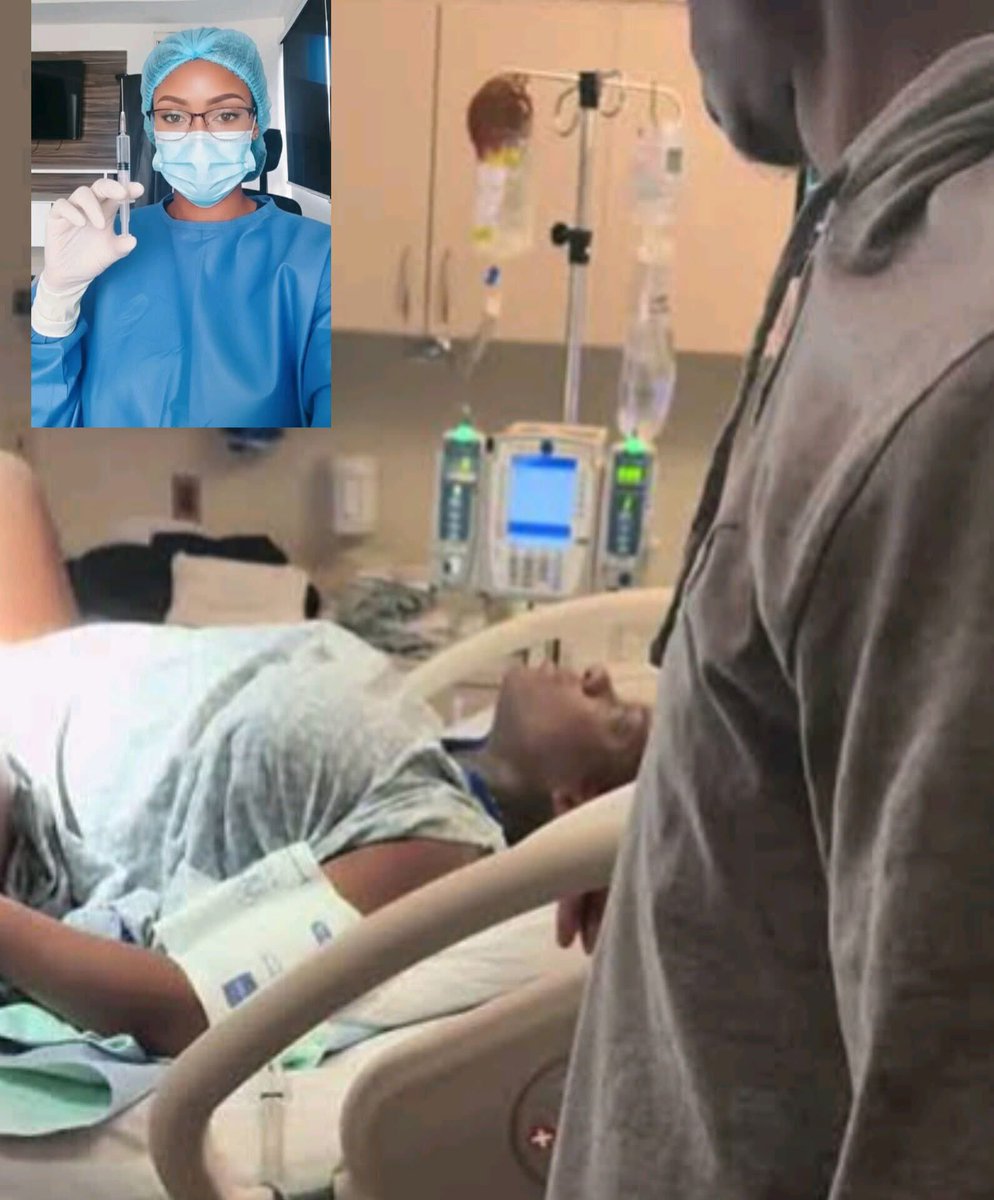
Yesterday in our hospital, I saw something that shook me.
Not because someone was blééding.
Not because someone stopped breathing.
But because a mother looked at her newborn… and turned her face away
She delivered safely.
Normal vagînal birth. Healthy baby boy. Strong cry. Good weight.
Everything went perfectly.
Her husband was dancing outside the labour room. Family members were calling non-stop.
It was a celebration.
But when we placed the baby on her chest…
She didn’t hug him.
She didn’t smile.
She didn’t cry.
She just stared at the ceiling.
At first, we thought she was tired.
Labour can do that.
But hours passed.
She wouldn’t breastfeed.
Wouldn’t carry him.
Wouldn’t even look at him.
If the baby cried, she covered her ears.
That was when I felt it.
Something was wrong.
I sat beside her and said gently,
"Your baby is beautiful."
She whispered back,
"I know."
But her eyes were empty.
Later that yesterday evening, when the room was quiet, she finally spoke.
And what she said broke me.
"I don’t feel anything."
Tears rolled down her face.
"I waited four years for this baby… and I don’t feel like his mother."
Postpartum depression.
It doesn’t always look dramatic.
Sometimes it looks like silence.
Sometimes it looks like distance.
Sometimes it looks like guilt eating a woman alive.
Her husband didn’t understand.
He kept saying, "Just be happy. The baby is fine."
But she was drowning inside her own head.
That very night, everything escalated.
The baby was crying loudly.
She started shaking.
Breathing fast.
Then she screamed,
"Take him away! I’m scãred I might hūrt him!"
The room froze.
Her husband looked shocked.
The grandmother started crying.
But I knew this wasn’t wickedness.
It was a mind under attãck.
And the stakes were high.
Because untreated postpartum dépréssion can steal both mother and child.
We moved quickly.
Doctor involved. Mental health team called. Medication started. Constant monitoring.
But the hardest part wasn’t the treatment.
It was convincing her she wasn’t a bãd mother.
She kept saying,
"Maybe God made a mistake giving me this baby."
That sentence hūrt.
Because I have seen women lose babies they prayed for.
And here she was, afraid of her own thoughts.
But this morning, something small happened.
The baby started crying while I was adjusting the cot.
Before I could move
She stood up.
Walked over.
And picked him up.
Naturally.
Instinctively.
She held him close.
And for the first time…
She didn’t look afraid.
She looked connected.
The baby stopped crying almost immediately.
And she started crying instead.
But this time, it was different.
She whispered,
"I can feel him now."
I had to turn away because my eyes filled with tears.
Recovery didn’t happen overnight.
It was gradual.
Therapy. Support. Prayer. Medication. Encouragement.
But by the time she was discharged, she was breastfeeding confidently.
Smiling. Holding him without fear.
The same woman who once covered her ears now sang to him softly.
Yesterday reminded me that not all emergencies blééd.
Some are silent.
Some are inside the mind.
Some don’t scream on monitors.
But they are just as dangérous.
And just as deserving of miracles.
To every mother reading this:
If you don’t feel connected immediately, you are not wîcked. If you feel empty after delivery, you are not broken. If your thoughts scãre you, speak up.
Postpartum dépréssion is real. But it is treatable. And it does not define you.
You are not a bãd mother for struggling.
You are a human being who needs support.
And hear this clearly:
Your mind will not defeat you. Your baby will not lose you. Darkness will not win in your home.
Even when love feels distant…
Healing is possible.
And sometimes the greatest miracle isn’t a loud cry in theatre.
Sometimes it is a mother whispering,
"I can feel my baby now."
Share this with a mother who needs to know she is not alone.
Cc: Preshcute utonwa
Almighty. Grant us comfort amid our hardships and challenges. Give us the strength to weather the storms passing by. We know You’re on our side. Although we are overwhelmed at times, we are not in despair. Make us content and humble as we lay our full trust in You.
When you believe, it doesn’t mean the road ahead is smooth all the way. Far from it. Expect the Almighty to test you if you’re true to your word. Remember, faith is not the belief that He will do what you want, it is the confidence in knowing that He will do what’s best for you.
Let me tell you the kind of environment I grew up in.
My Dad use to Cook while we were growing up even till now he still cooks sometimes, On Saturdays Many times he usually goes to the market alone to buy Stuffs for cooking, comes home Cooks stew while my mum cooked soup then we all ate.
My Dad will carry broom many times and sweep the house.
My Dad is the gateman of the house 😂✨ When anyone is going out or when anyone comes back he is the one that opens the gate, he steps out before anyone even flinches, even when I have a friend over and we're going out, my dad would tell the friend to enter the car and he will open the gate for us to go.
When I told my dad there are some men who says they can't cook for their home, he said toor na that one concern them. He said he Used to stand by his mother when she was cooking and his mother use to always tell him to watch her so that he'd learn. (Mother train your male children)
My dad have always used the least phone in the house (na just now we force am to buy iPhone 😂😂).
He never gives people money in public, He calls you to one side and hide it and give you.
He doesn't even wear any fancy thing. (His personal choice).
No one owns any car in the house, we have 4 cars and anyone can take any car out. I mean I can just say I'm going out and carry Toyota Prado and zoom off.
When we had only 1 car, my mum then wasn't doing white collar job, he gave her the car to be using and was using public transport to go to work and come back and him go trek tire, people called him foolish and names saying my mum gave him something to eat that's why he's doing that, he didn't care. He said why would he be driving a car while his family is entering public transport.
There's nothing like this is Daddy's cup etc, everything is owned by everyone.
Is he perfect? No, is He a good father?, yes and that's how it's supposed to be.
This is just the tip of the iceberg and what he does.
Does he also have downsides yes he does as all human being does, however he is a good father.
I’ve been in debt since 2024 (about 2M) and my creditor loves me because I have never failed to pay, but right now I do not have the capacity to carry on. (Today is January 14 and I have not received a single credit alert this year) And I have used all I have to settle my debt, I am 350k away from being debt free.
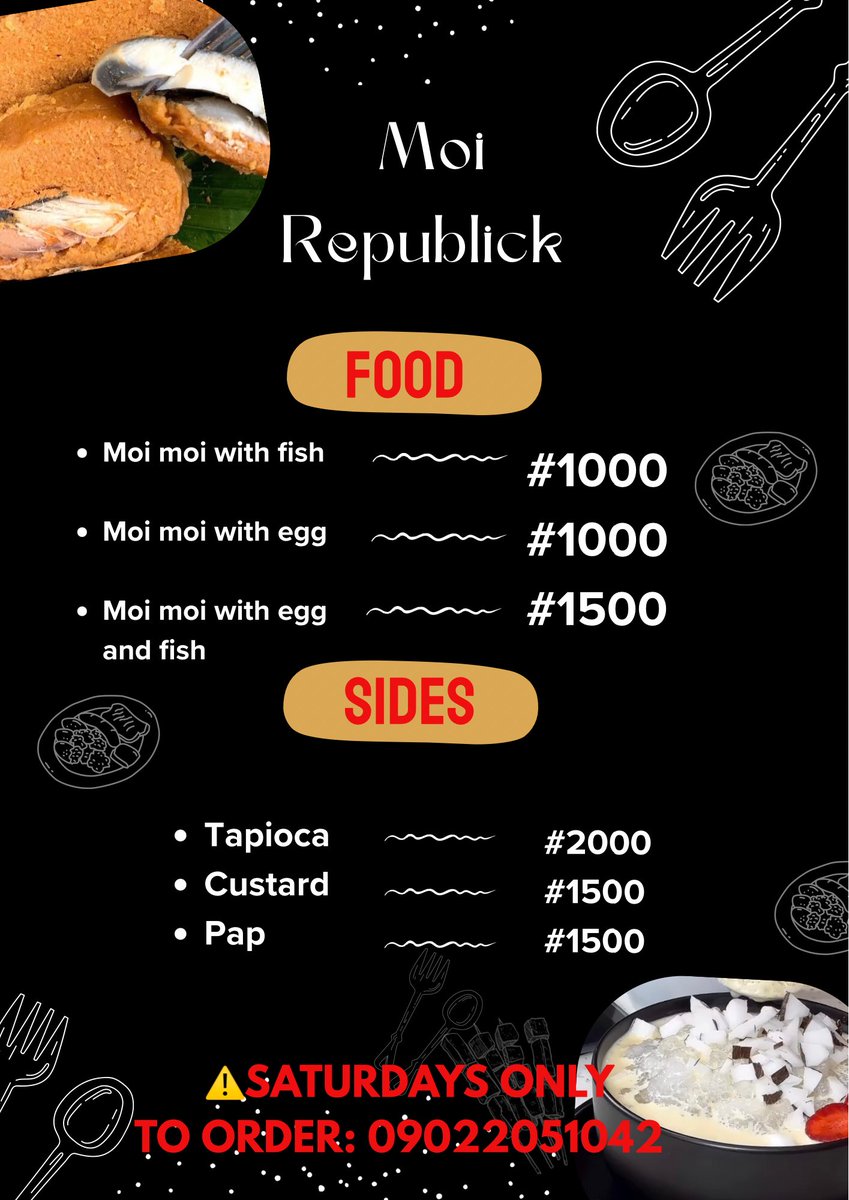
I have beans (a lot of it), I want to take orders for moi moi this Saturday, PLEASE if you’re in Ilorin try to place an order starting from today till Friday.
If you’re out of Ilorin, you can pls help me retweet. This will help me get started this year.
Pls don’t drag me, I am sincerely begging 🙏🏿
Thank you ❤️
Late last year has been a rollercoaster, and life hasn’t given me a break since I lost my job. But what’s most paramount to me right now is what I’m about to share with you.
We found out my mom has ovarian cancer. I was in serious disbelief until more tests showed it’s at stage 4, and nothing has been the same since for her.
We’ve already spent a lot on tests and medications to help her regain weight before she starts major treatment. Each day has been pain upon pain for her, and it has broken me into pieces every single day. We’ve spent about ₦1.1M already in total, without the actual procedure even starting.
At this stage, we need ₦15.45M for the next four months for her procedure. The diagnosis and cost breakdown are below this tweet.
I know this is a crazy situation, but please, I want to save my mom. She called me crying in pain, begging if there’s any way I can help her, and this is my only option at the moment. Please, I’m begging with everything in me, help me. Either by donating or retweeting, it will go a long way.
Please, #SaveTinaFromCancer 🙏
Alhamdulillah, 2025 was challenging yet fruitful. MTech in the bag, also added COREN to the name and didn't leave my husband's house even though he tried pursuing me🤣🤣🤣.
2026, please be more fruitful, successful and fulfilling 🙏🙏🙏