Mathematics algorithm SVM (Support Vector Machine) is a classic nonlinear classifier in Machine Learning.
Download 640-page PDF "Learning with Kernels: Support Vector Machines, Regularization, Optimization, and Beyond" here: https://t.co/TnVPiSiXfo
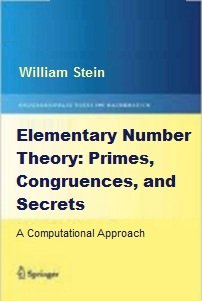
Explore this huge curated collection of some of the best mathematics books ever written — spans classical foundations, probability, analysis, geometry, and problem-solving texts used by mathematicians, scientists, engineers, & AI researchers: https://t.co/7ixaFw1vfi
The list is organized by these topics:
Math
Machine Learning
Physics
Econometrics
Optimization
Information Theory
Signal Processing
History
Probability
📚 Open Access (free)
Kockelman, P. (2025). Mathematical Models of Meaning: A Dynamical Systems Approach to Possible World Semiotics. MIT Press. https://t.co/2gp2NSj115
Noether's Theorem is arguably the single most elegant bridge between symmetry and conservation in physics, showing that deep symmetries aren't optional, they dictate what must be preserved.
It was discovered by Emmy Noether in 1918 (published amid World War I chaos, her work initially overlooked due to gender barriers), it states: Every continuous symmetry of the action (a functional encoding the system's dynamics) corresponds to a conserved quantity.
Time-translation symmetry → energy conservation; spatial-translation symmetry → momentum conservation; rotational symmetry → angular momentum conservation.
This theorem flips causality: conservation laws aren't primitive observations or axioms they're inevitable mathematical consequences of nature's indifference to when/where/how we look at a system.
Rationality upgrade: our "priors" about why things like energy don't just vanish aren't ad hoc; they're tied to timeless symmetries.
Breaking a symmetry (e.g., in the early universe or particle physics) means the corresponding conservation fails, explaining phenomena like baryogenesis.
Noether, a brilliant algebraist forced to lecture under Hilbert's name at Göttingen, proved this at Einstein's urging her result underpins virtually all modern theoretical physics, from quantum field theory to general relativity.
Without it, we'd treat conservation as empirical coincidence rather than deep necessity.
I think it must be a very interesting time to be in programming languages and formal methods because LLMs change the whole constraints landscape of software completely. Hints of this can already be seen, e.g. in the rising momentum behind porting C to Rust or the growing interest in upgrading legacy code bases in COBOL or etc. In particular, LLMs are *especially* good at translation compared to de-novo generation because 1) the original code base acts as a kind of highly detailed prompt, and 2) as a reference to write concrete tests with respect to. That said, even Rust is nowhere near optimal for LLMs as a target language. What kind of language is optimal? What concessions (if any) are still carved out for humans? Incredibly interesting new questions and opportunities. It feels likely that we'll end up re-writing large fractions of all software ever written many times over.