🦾reBot Arm T701🦾 — An #opensource dual-arm solution for #PhysicalAI, currently in Beta.
We’re continuing to open up CAD, BOM, machining files, SDK, and tutorials.We believe open source isn’t just uploading a few files to GitHub.
It’s about letting others build on your work and keep moving forward.
⭐️reBot Arm T701
https://t.co/odCVM16m9L
👉Also check reBot B601
https://t.co/q97cYsNF1W
📚 Free robotics learning hub
https://t.co/AvzoVTjI24
If you’re working on embodied AI, LeRobot, imitation learning, or dual-arm systems — drop a Star and join us.
#EmbodiedAI #Robotics #LeRobot #reBot #SeeedStudio
My hot take on robotics is that most of the future value of robotics won't actually accrue to the robotics companies. The value will be realized by the companies that use robotics to carry out physical work.
there is no ChatGPT moment for robotics
capability can skyrocket “overnight” but adoption is the long horizon
all the opportunity belongs to those who can make adoption work. its a game of march of 9s (reliability), the last mile (deployment), and keeping it running (support).
We present OpenTac, an open, full-stack ecosystem for 3D tactile sensing on any robot surface.
Anyone can design and fabricate high-density tactile skins for any part of their robot, then read them out, simulate them, and share data across different sensors.
A researcher is teaching our Solo AI kit to pick any manufacturing part, in any orientation, from a simple prompt. Feedback from labs like this one shaped our 2026 physical AI lineup. Their workflow:
https://t.co/nekMakscgu #Robotics#RobotLearning#ImitationLearning
Why this reseracher chose our Solo AI kit for his lab: clear docs, a data collection SDK, LeRobot support and US-based parts. Now he is teaching it to pick any part, in any orientation, from a simple prompt. Read full post: https://t.co/eyYKm156co
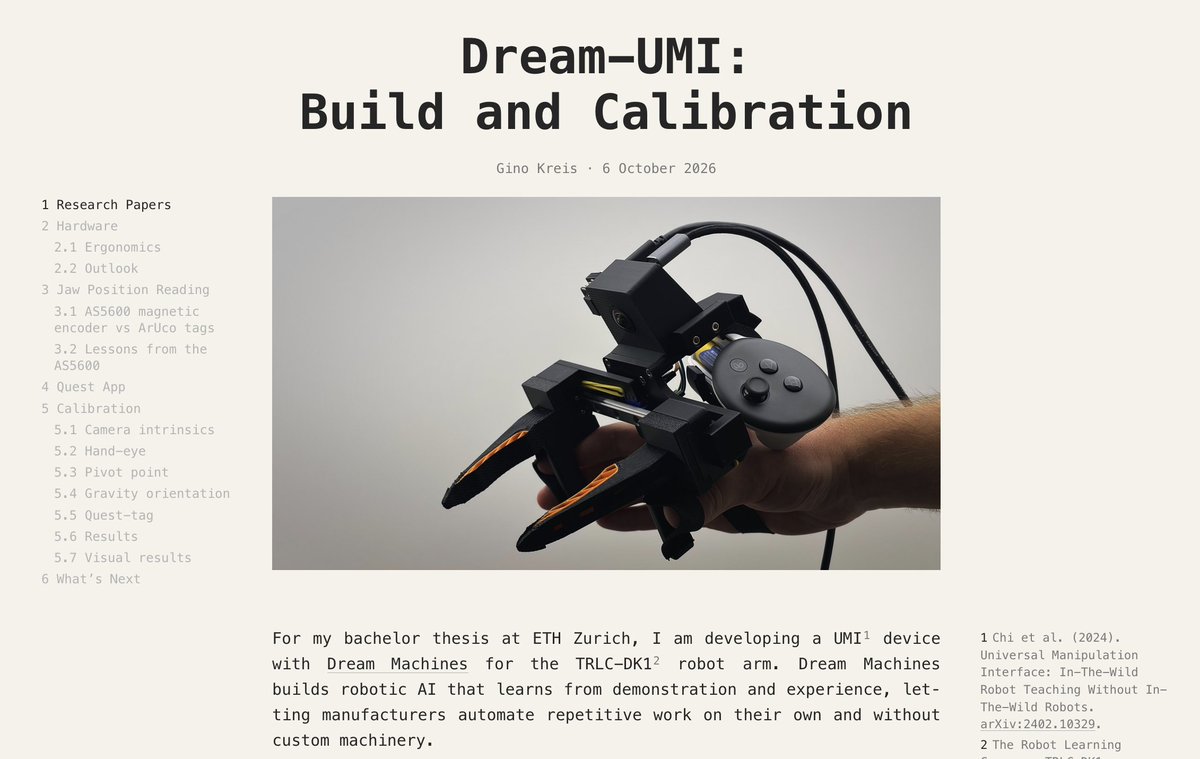
I've been building my own UMI gripper for the past month. Papers usually skip that initial phase, so I put everything in a blog post. https://t.co/w1gpL6IoCO
Unsure whether to use ArUco tags or an encoder? Unsure how to calibrate the VR controller? Have a read!
Meet Mistral Large 4, aka Le Chonk.
• 1T parameters, natively multimodal. 49B active.
It is the best open weights model from US or Europe on aggregated benchmarks.
• State-of-the-art on critical workloads, including cyber defense, manufacturing and finance and it surpasses closed frontier models on visual grounding.
• Forged in Europe end-to-end and is deployable from Europe via our own Mistral Cloud infrastructure.
• Available to all via API today. Working with cybersecurity partners privately.
Open weights release end of October.
Introducing S1, our new foundation model that learns from one example.
It can be taught 10-minute long tasks that it has never seen before, from one video prompt without any fine-tuning.
Watch S1 operate in real-time via in-context learning:
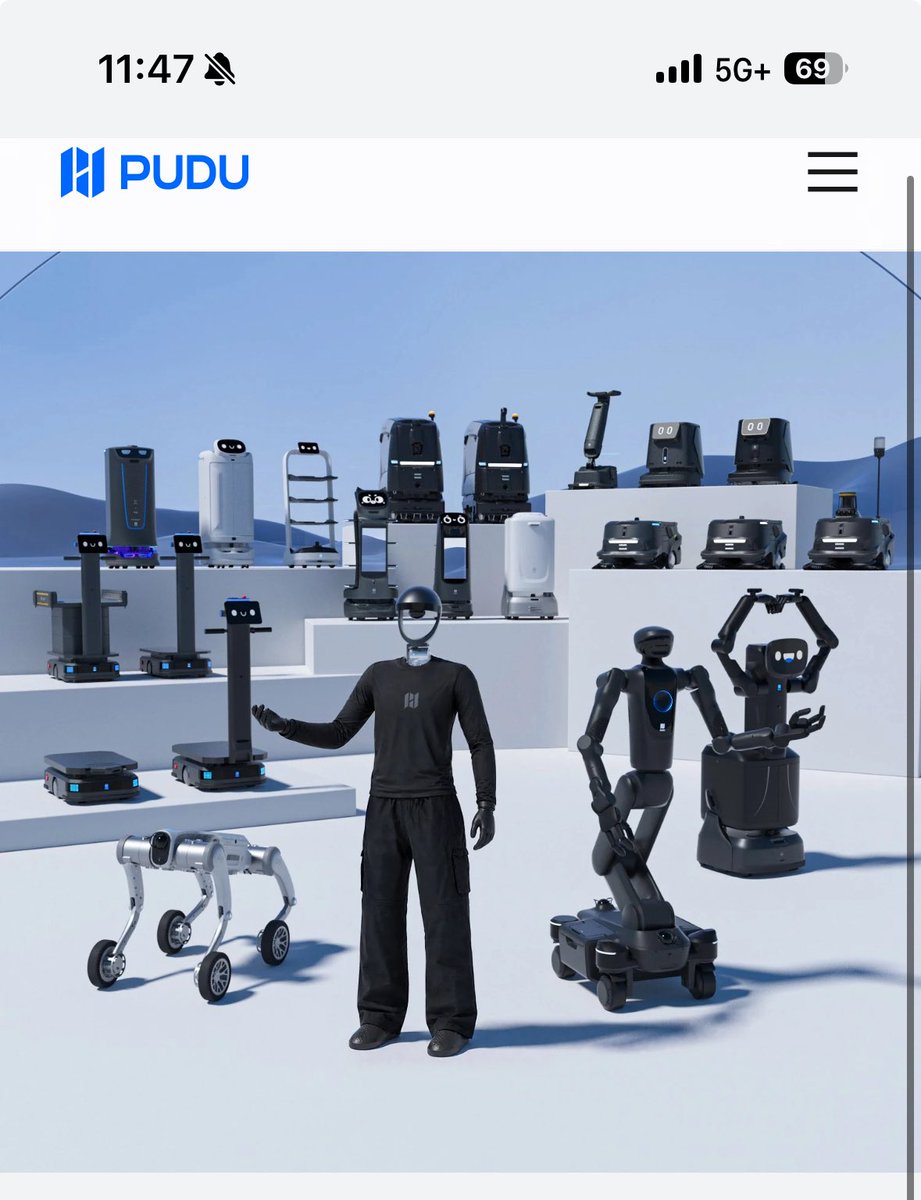
We are getting our asses kicked in robotics in the US
Pudu is a Chinese company most people haven’t heard of and they have > 130k robots deployed. Tens of thousands of those in the US
The sweeping robots sell for the price of a small new car ($35k)
No reason why we can’t build them here.
We need more robotics companies, and we need to build the hardware here. It’s possible.
the robotics middleware layer is about to have its kubernetes moment and almost nobody in physical AI twitter is paying attention. right now every robotics startup builds their own orchestration stack from scratch. task planning, error recovery, fleet management, sensor fusion, all custom, all fragile.
it's like watching every SaaS company in 2010 build their own deployment infrastructure before AWS and kubernetes ate everything. the companies building the middleware between the robot's policy network and the actual hardware are solving the most boring and most important problem in physical AI.
standardized skill libraries that work across different robot morphologies. universal error handling that knows when to retry vs escalate vs call a human. fleet orchestration that can coordinate 50 robots in a warehouse without them crashing into each other.
there's maybe 5 startups working on this layer right now and they're all criminally underfunded because the demos don't go viral. meanwhile the infrastructure they're building makes every other robot work 10x more reliably. the VCs who figure this out early are going to look very smart in 3 years.
Introducing GEN-1.5, a one-shot learner.
It can learn new tasks in a few seconds. Show it what to do, and it generalizes.
This capability emerged from pretraining on physical data at scale, as a step towards our mission of building general intelligence for the physical world.
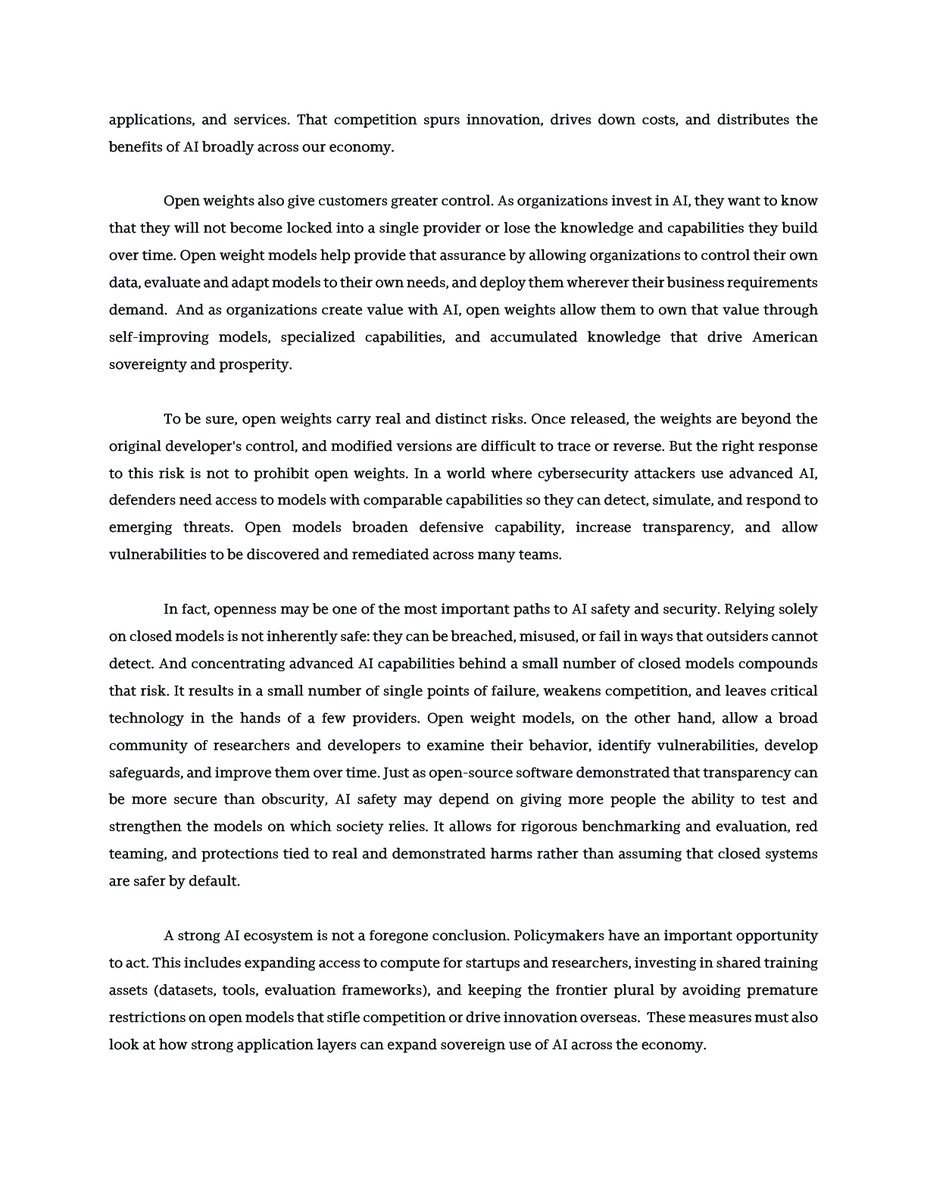
Very happy to support this on behalf of Google. We have long benefited from open source, are big contributors to open source and in fact have consistently made open weights models with Gemma available from @GoogleDeepMind@demishassabis . Onwards!
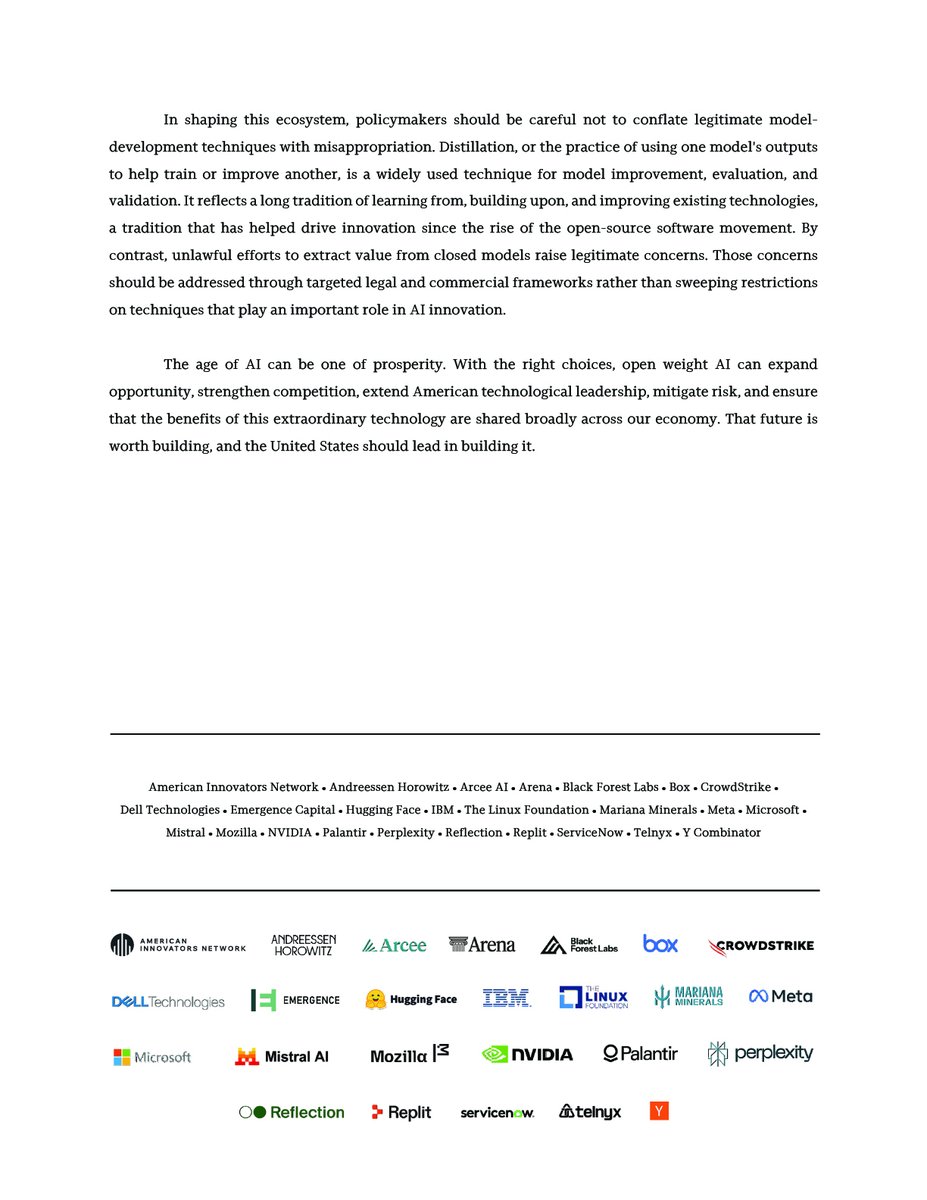
Open-weight models are essential to a healthy AI ecosystem. Together with others across our industry, we are outlining a path for open-weight models to strengthen American competitiveness and expand economic opportunity, while protecting national security. https://t.co/Tr0sAzAxTD
For my first post, I’m sharing a letter @NVIDIA signed on why open models matter.
AI will transform every industry, power every company, and be built by every country.
Open models strengthen safety and cybersecurity, accelerate innovation and diffusion, and enable sovereignty.
The world needs both frontier closed models and frontier open models.
https://t.co/AUKzoQ5Ikb
Thank you to the entire team @trossenrobotics! Our research lab recently purchased a SoloAI kit for embodied AI research! I also wrote a blog post detailing my experience setting up the Trossen Robotics arms and how physical AI systems learn👇