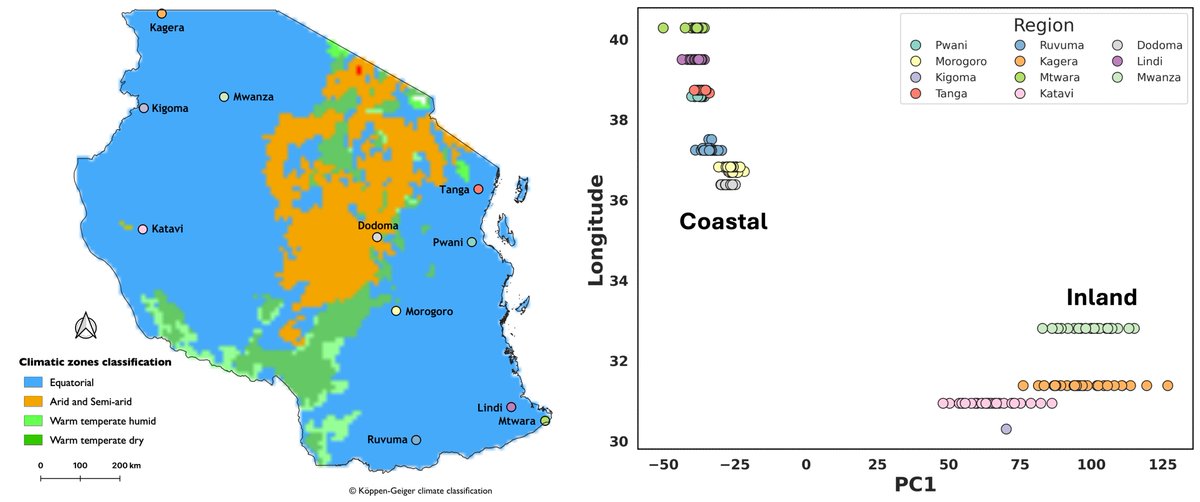
🚨NEW PREPRINT🚨We sequenced the genomes of 334 mosquitoes in Tanzania to investigate the population genomic structure of Anopheles funestus, a dominant malaria vector in eastern and southern Africa.
https://t.co/ptCBsvbG52
New research on Anopheles funestus in Africa reveals high genetic diversity, widespread insecticide resistance, and promising targets for gene drive vector control. 🦟
Read the full pre-print on the genomic diversity of this important malaria vector
https://t.co/fVm4iZh2h1
The cryptotype paper is out!
A genomic epidemiology puzzle: how do parasites separated by thousands of km share more than 20 co-inherited loci across the genome? What is the function of this complex genetic background?
Read about it on The Lancet Microbe! https://t.co/tTUGH3VqvE
Curious to learn more about the work that went behind making BELKA accessible through Polaris? Learn more about Dataset v2.0 and how we’re helping scientists focus on research, not on data wrangling. 👇🧵
Read the blog: https://t.co/EgJsM8Ueye
Access BELKA: https://t.co/AyK9mNluKX
📢 Exciting news! 📢
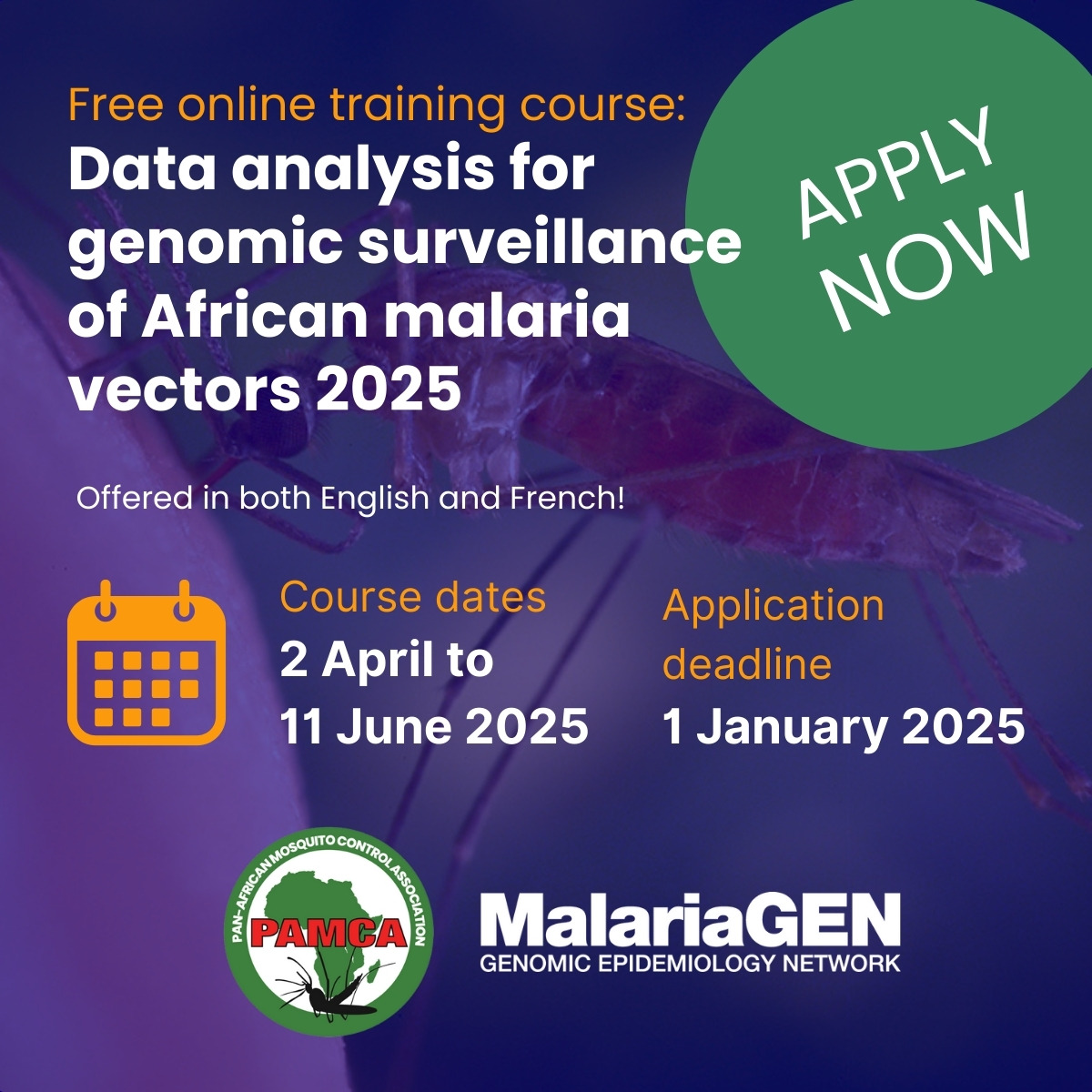
Applications are now open for the 4th iteration of the @pamcaafrica-MalariaGEN virtual training course in data analysis for genomic surveillance of African malaria vectors 🦟
More info about modules, key dates, and how to apply: https://t.co/VJlTBmzGv5
What a difference an algorithm makes! I added an implementation of Philip Clausen's dynamic neighbour-joining to anjl, so simple yet crazy fast. Short blog post on NJ algorithms, plus a couple of small things I learned about accelerating Python code with @numba_jit ...
https://t.co/jVB0rgyyui
Growing capacity for genomic data analysis in Africa = improved #malaria vector control 🖥️
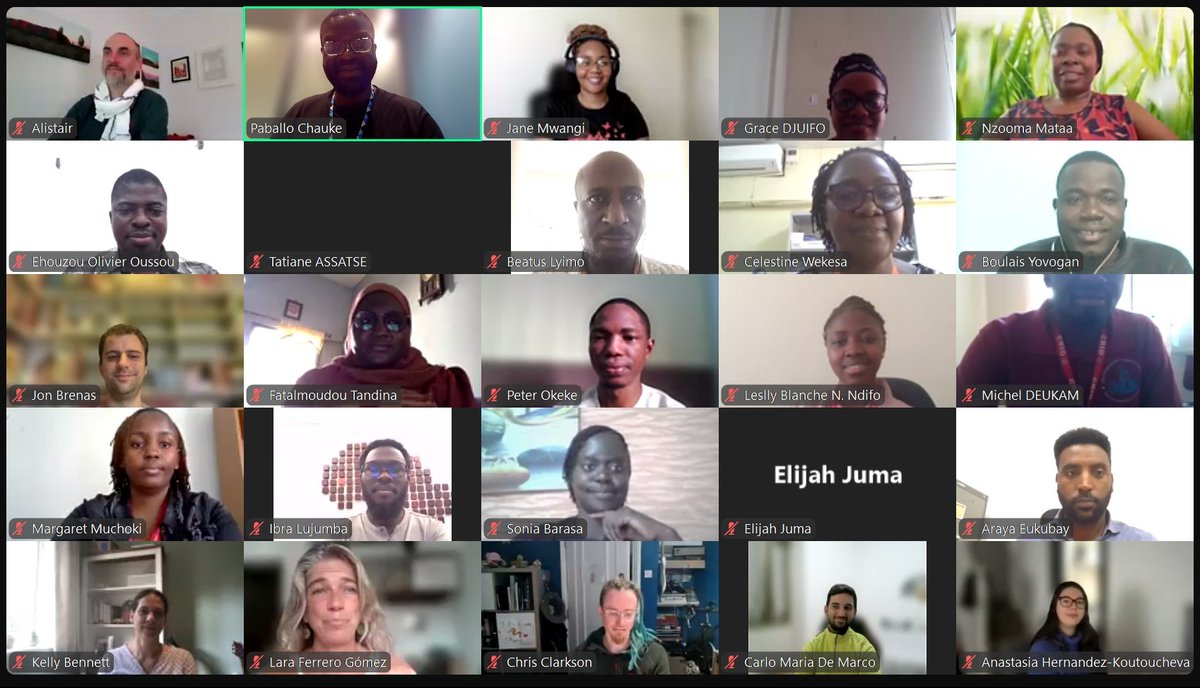
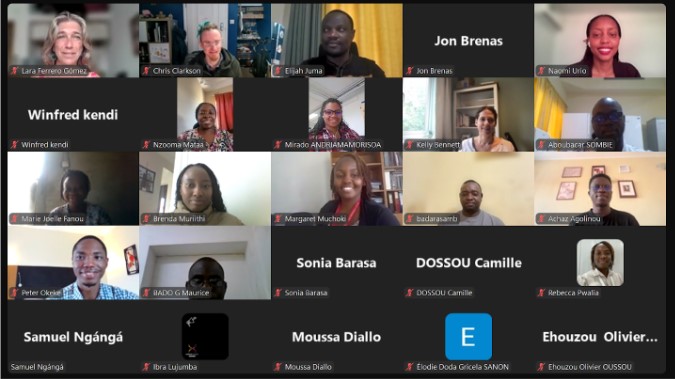
Today, participants from the 3rd cohort of the @pamcafrica-MalariaGEN training course in data analysis for the genomic surveillance of African malaria vectors met for a virtual hackathon👏
🚀 We are thrilled to announce the release of the Icechunk storage engine, a new open-source library and specification for the storage of multidimensional array (a.k.a. tensor) data in cloud object storage.
Read our blog post about Icechunk here: https://t.co/S8MTgJT5lz
@mufernando_ Hi @mufernando_! Yes I did switch to city block as the default, I find in practice it is a little better at showing population structure, and has a simpler interpretation (number of allele differences).
I've made a small Python package which provides fast implementations of neighbour-joining. Includes an implementation based on the rapid algorithm which scales pretty well and should work on ~10,000 samples or more. Also interactive plotting with plotly.
https://t.co/0EGe0MemDs
How do you use MalariaGEN data resources?
We're collating information on how MalariaGEN resources are being used to build an evidence base for their importance. This will help secure further funding for their maintenance and growth.
Fill out the survey📝
https://t.co/xFKJ014fVR
Today, participants from the 3rd cohort of the @pamcafrica-MalariaGEN training course in data analysis for genomic surveillance of African malaria vectors presented their research at a mini-symposium.
It’s exciting to see #malaria genomics capacity continue to grow in Africa! 🧬
Jacob Tennessen of @HarvardChanSPH discusses insights from the Ad1000G project, which has sequenced over 1000 samples of A. darlingi mosquitoes, the primary malaria vector in South America. Preliminary analysis notes potential signs of insecticide resistance 🦟
#GEM2024
New 📄 in @MalariaJournal: Whole-genome sequencing reveals new insecticide resistant variants in malaria mosquitoes in Burkina Faso https://t.co/vEIgkI3xVh
This work was led by Mahamadi Kientega @mkient54, who is presenting a poster on the findings from this study at #GEM2024
Kicking off the first session at #GEM2024 with a deep dive into the Malaria Vector Genome Observatory🦟
Read more about this collaborative effort to sequence the genomes of thousands of Anopheles mosquitoes to improve malaria control: https://t.co/C9PHBaPi36
My commentary on the closure of @VectorBase. Join me in rallying for its sustainable continuation. Comment, repost, and circulate. Let’s ensure this vital resource remains accessible for our global #VectorBiology research community.
3 PhD fully-funded studentships in vector genomics at LSTM/KEMRI/UVRI/ GSU-WSI with @eochomo@EricRLucas@alimanfoo@kwambo_2@TonahN Chris Clarkson and Jonathan Kayondo. Details https://t.co/hWAMdQGdtJ