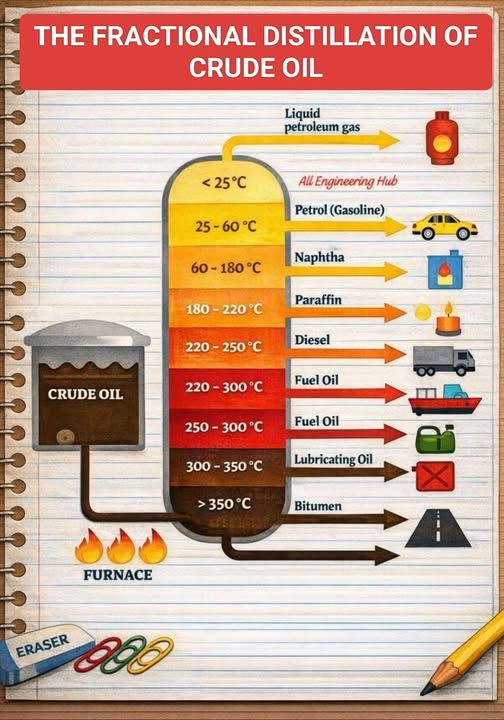
🚨 The Diesel Engine Was Designed for Hemp Oil – Not Petroleum! ⛽️🌱
Rudolf Diesel didn’t invent his revolutionary compression-ignition engine in the 1890s to burn fossil fuels. He explicitly envisioned it running on vegetable and seed oils, with hemp oil frequently cited as a prime candidate due to its abundance, energy density, and local producibility.
At the 1900 Paris World’s Fair, a diesel engine ran smoothly on peanut oil (demonstrated without modifications), proving the concept. Diesel himself stated that vegetable oils could one day rival petroleum in importance, empowering farmers to grow their own fuel and creating decentralized, independent power sources.
Why This Matters for Profits Today
•Hemp’s Edge: Industrial hemp produces high yields of seed oil suitable for biodiesel. Modern tests show hemp biodiesel converts at ~97% efficiency and performs well in cold temps compared to other feedstocks. It grows on marginal land, requires less water/pesticides than many crops, and offers dual revenue (fiber + seeds).
•Market Opportunity: With global push for renewables, low-carbon fuels, and energy independence, hemp biodiesel aligns with ESG investing, government subsidies (e.g., RIN credits in the US, renewable fuel standards), and rising diesel demand in trucking, shipping, and heavy equipment. Petroleum volatility + carbon taxes = upside for bio-alternatives.
•Technical Reality: Straight hemp oil works in modified older diesels (higher viscosity needs heating/pre-treatment), but transesterified hemp biodiesel drops seamlessly into modern engines. Energy content is close to petroleum diesel, with cleaner burn (lower particulates, sulfur).
Fundamental Analysis:
•Supply side: Hemp legalization (2018 Farm Bill onward) unlocked US production. Yields can hit 100-200+ gallons oil/acre depending on variety/region. Scalable with genetic improvements.
•Demand side: Diesel consumption remains massive (trillions of miles driven annually). Biofuel blending mandates and net-zero goals create structural tailwinds. Hemp avoids food-vs-fuel debates better than soy/corn.
•Risks: Processing costs, competition from cheaper oils (soy, palm, used cooking oil), regulatory hurdles on THC traces. But falling hemp biomass costs + tech (e.g., better extraction) improve margins.
Technical Setup for Traders/Investors:
•Watch hemp-related equities or ETFs tied to agrotech/biofuels (e.g., seed processors, biodiesel refiners). Chart patterns on broader energy/commodity indices often show inverse correlation to crude oil spikes.
•Entry signals: Breakouts on renewable diesel news, positive USDA hemp reports, or oil price surges.
•Profit Maximization Play: Long-term position in scalable hemp biodiesel producers or vertical integrators (farm-to-fuel). Pair with short-term options on volatility from energy policy announcements. Diversify into complementary plays like renewable natural gas or EV infrastructure for hedge, but diesel isn’t going away soon—bio-diesel can capture share.
Diesel’s original vision was suppressed by petroleum interests (conspiracy or not, the shift to cheap fossil diesel happened). Today, with better tech and policy support, hemp oil could finally deliver on that promise.
Actionable Advice: If you’re bullish on energy transition, allocate 5-10% portfolio to biofuel/ag innovators with strong balance sheets and IP in hemp processing. Monitor crude inventories, RFS volumes, and hemp acreage reports for timing. This isn’t “green hype”—it’s a high-margin, high-yield crop meeting real industrial demand.
Who else knew the diesel engine was meant to run on hemp? Drop your thoughts—let’s discuss the investment angle. 💰🌿
#HempDiesel #BiofuelProfits #EnergyIndependence #DieselHistory #RenewableFuel
China built 18 superlarge LNG storage tanks, more than twice the rest of the world combined. Each one holds 9.5 million cubic feet, bigger than Madison Square Garden. Keeping natural gas liquid at minus 162��C demands 9% nickel steel plates, concrete outer containment, and specialized cryogenic welding where every joint is ultrasonically inspected. The material expands 600-fold when it warms back to gas, so the tolerances are extreme. This is heavy industrial skill, not something you improvise. South Korea is now building seven tanks of the same size south of Seoul, with Japan following.
https://t.co/YTDIt597cq
A gas turbine operates at temperatures higher than the melting point of the metal it is made of. The real bottleneck is the Foundries. There are only a handful of facilities on Earth capable of casting Single-Crystal Superalloy Blades.
These blades are grown from a single grain of metal to ensure they do not shatter under the centrifugal force of a spinning 400 tonne machine. These foundries also make the blades for Jet Engines (LEAP/GE9X).
Because of surging demand from AI data centers, there is increasing competition for blade production capacity b/w the Aviation & Power divisions at companies like GE & Siemens. High demand for power generation turbines is putting pressure on the shared supply chain that also supports jet engine production & repairs.
Le parcours classique d'un entrepreneur français :
> Diplômé d'une école de commerce à 25 ans (37 000€ de crédit étudiant)
> Stage non rémunéré chez Capgemini "pour l'expérience"
> Premier poste : Chargé de mission digitale (1 400€/mois)
> Rupture conventionnelle pour "se lancer"
> Suit trois formations Bpifrance "Entrepreneuriat & Innovation"
> Crée une micro-entreprise domiciliée chez lui
> Découvre l'URSSAF, la CFE, et que son adresse a fuité partout
> Rejoint un incubateur dans un tiers-lieu écolo avec un babyfoot
> Levée de fonds de 25 000€ (subvention régionale)
> Dépense 9 000€ en expert-comptable pour rester "conforme"
> Ne se verse aucun salaire pendant 3 ans
> Reçoit un redressement
> Dépose le bilan, doit 14 000€ sur 0€ de chiffre d'affaires
> Décroche un poste de chargé de mission innovation dans une collectivité territoriale
> Met à jour LinkedIn : "Ex-Fondateur | Intrapreneur | Facilitateur Innovation Publique | Transformation Digitale des Territoires"
> 30 commentaires hypocrites : " Bravo Michel!👏"
Alors, ça donne envie ?
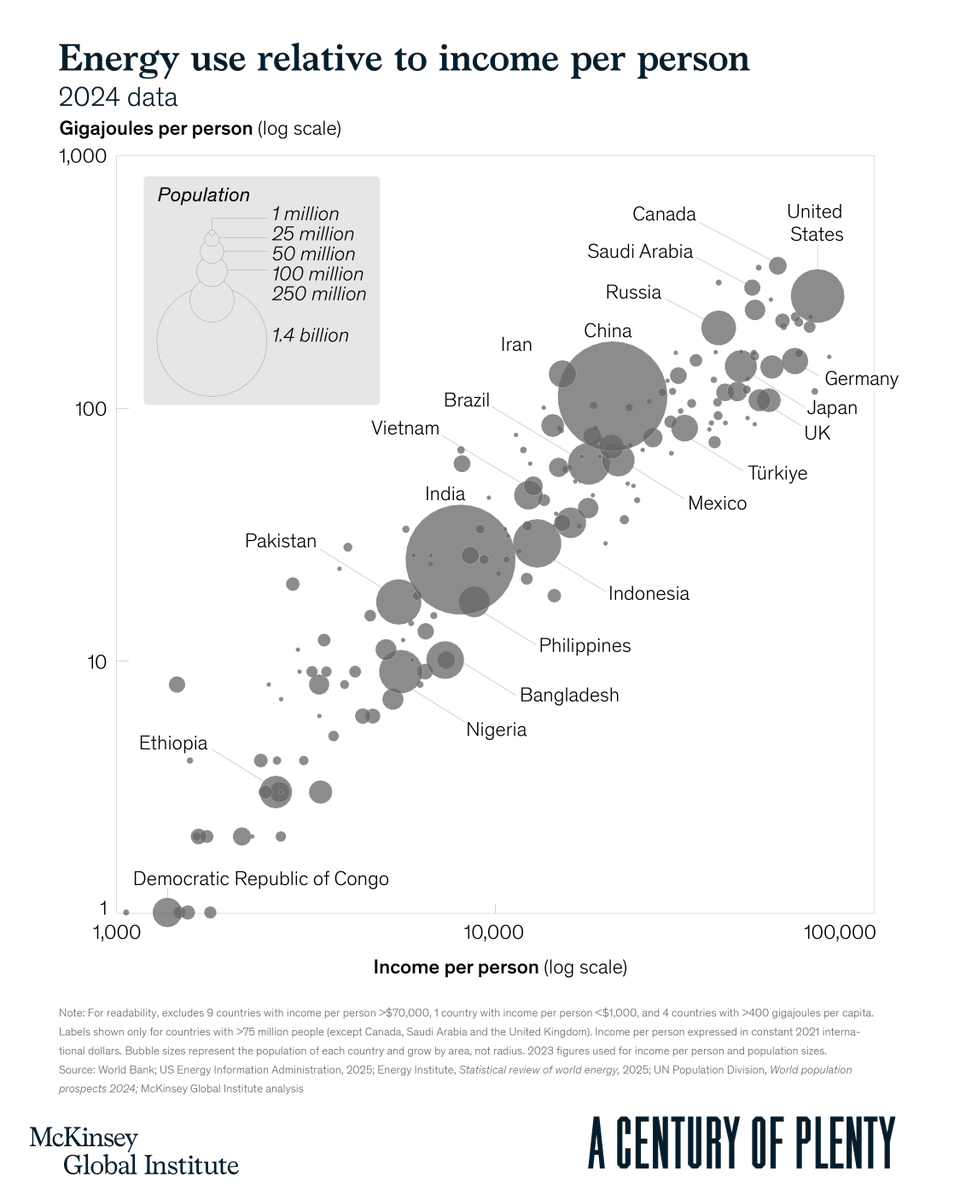
Energy has always been the quiet partner in rising incomes.
More energy enabled higher productivity, healthier lives, and larger opportunity.
That link hasn’t disappeared. What’s changed is the need to rebuild energy systems to scale cleanly and reliably. We need an energy transition, but also an energy expansion. https://t.co/UXX4nonnWX
Great quote from @shellenberger:
“A gallon of jet fuel contains 34 kilowatt-hours of energy in a package weighing six pounds.
A lithium-ion battery storing the same energy weighs 250 pounds.
That density gap is why every military on earth runs on liquid hydrocarbons,
why every container ship crossing the Pacific burns bunker fuel,
why every combine harvester in Iowa runs on diesel,
and why every 747 landing at Heathrow runs on kerosene.
The fact that nobody wages war over solar panels is evidence of their limitations not superiority.”
Bottom Line: The laws of physics and thermodynamics are laws, not mere suggestions.
La voiture à air comprimé inventée par Guy Nègre, promettait une mobilité plus propre en ville avec zéro émission et une mécanique simplifiée, consommant 1€ au 100 km.
Le partenariat avec Tata Motors a suscité beaucoup d’espoirs, mais le PDG est mort après une chute d’un hôtel.
I am pleased to announce that the Equal Earth world map is now available in Slovenian, plus 17 other languages. You can download them for free here: https://t.co/mCHI9I8NBQ
@thecavemommy Very easy ! your friend (+), your enemy (-):
Your friend's friend = your friend (+)
Your enemy's friend = your enemy (-)
Your friend's enemy= your enemy (-)
Your enemy's enemy= your friend (+)