The Plateau State Government cannot continue to pretend that violence becomes a crisis only when there is a reprisal.
The most disturbing part of the worsening insecurity in Plateau is not only the killings themselves, but the selective outrage and apparent institutional silence that follows them. When Fulani civilians are killed in their hamlets, the response from government often appears muted, or completely absent.
But the moment there is a reprisal, the government suddenly finds its voice, its condemnation becomes loud, and the incident becomes the centre of attention. Thats when everybody wants America and Isreal to know.
That is a dangerous double standard.
A government cannot afford to treat the death of one community as routine while treating the death of another as a national emergency. Every innocent life lost in Plateau should carry the same weight, whether the victim is Fulani, Berom, Mwaghavul, Hausa or any other community.
The continued silence surrounding attacks on Fulani communities is particularly dangerous because it creates the perception that some victims do not matter. Once communities begin to believe that government will not protect them or seek justice for them, they naturally lose confidence in the state. And that is where the cycle of violence becomes almost impossible to stop.
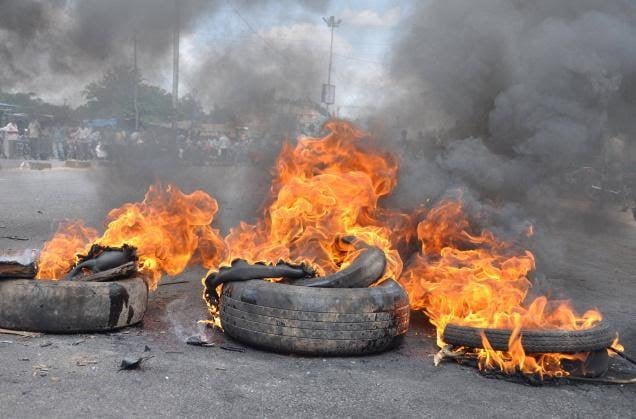
Government cannot condemn the fire while ignoring who lit the match. It is unacceptable for authorities to condemn reprisal attacks without equally confronting the attacks that preceded them. You cannot keep condemning the smoke while refusing to investigate the fire. If a farmer is killed, arrest the killers. If a herder is killed, arrest the killers. If a village is attacked, investigate it. If livestock are destroyed deliberately, investigate it. If innocent civilians are massacred, bring those responsible to justice. The identity of the victim should never determine the urgency of the government’s response.
Silence is not neutrality
The state government’s apparent reluctance to speak forcefully when Fulani civilians are killed is not helping reconciliation. If anything, it risks convincing affected communities that they have been abandoned. That perception is combustible. A government that genuinely wants peace must be prepared to tell its own supporters uncomfortable truths. It must condemn wrongdoing even when the perpetrators come from communities considered politically sympathetic.
Leadership is not defending your people when they are right. Leadership is confronting them when they are wrong too. Anything less is political convenience masquerading as peacebuilding.
The Plateau Government should wake up before the situation deteriorates further. Every unresolved killing becomes another grievance. Every unpunished attack becomes another justification for revenge. Every selective statement from government deepens suspicion.
And eventually, the state risks becoming an observer in a conflict it has a constitutional duty to prevent. It is not the responsibility of the Military alone all the time. The government must stop waiting for reprisals before becoming interested in violence.
@DHQNigeria@HQNigerianArmy
Kolmani, the first oil drilling site in Northern Nigeria holds an estimated 1 billion barrels of crude oil, with 500 billion cubic feet of gas deposit.
Is the Kolmani oil drilling on hold or in progress ?
To uncover the true status of the project, Trust TV journeys to the Kolmani oil field and speaks to an insider deeply involved in the oil drilling.
#trusttvnews #Documentary #KolmaniOil
🇳🇬KANO RANKS AS NIGERIA’S SAFEST STATE WITH JUST ONE RECORDED FATALITY — 2026
Fatalities (27th Jan — 26th Feb):
1 🔴Kano — 1
2 🟣Ekiti — 1
3 🟤Bayelsa — 1
4 🔴Nasarawa — 2
5 🟤Delta — 2
6 🟢Anambra — 2
7 ⚫️Adamawa — 2
8 🟢Abia — 2
9 🟣Oyo — 3
10 🟣Ogun — 3
Total Fatalities — 1,003
🔴NW 🟢SE 🟤SS 🟣SW
When Nigerians think of the safest states, the immediate assumption points South.
Kano did not just perform well for a Northern state—it tied for the absolute lowest number of fatalities in the entire country.
Sharing the #1 spot with Ekiti and Bayelsa, Kano proves that severe insecurity is not a geographical guarantee in the North.
#Statisense
(ACLED)
Somewhere in Northern Nigeria 📍
A serene and quiet patient relaxation area, complete with a fountain, unveiled as part of the recent redesign and beautification of the hospital landscape.
Can you guess the state and the hospital? First correct guess wins! 🎯
JUNGLE JUSTICE: THE HYPOCRISY OF THE SOUTHERN NIGERIANS!
By Salihu Tanko Yakasai.
Everywhere you look in this country, you can see rot in the system. The complicity of those who should know better is evident, and the vices that have become normalized persist across different parts of Nigeria. From chronic underdevelopment in all six geopolitical zones, including the oil producing states and the so-called economic hubs, to the regions that pride themselves on their religiosity, there’s no shortage of poor leadership.
However, one thing I find both amusing and troubling is how quickly the South amplifies the problems of the North, often presenting them as unique or exclusive to us, totally oblivious to theirs.
For clarity, I am not excusing the North. I have addressed our issues many times, particularly regarding insecurity. In fact, some readers may recall that I was arrested by the DSS in 2021 during the administration of late President Buhari after I criticized the handling of the Tegina schoolgirls’ abduction. I have also written openly about the failures of northern leaders, including my 2012 article, "19 Northern Governors: The Certified Parasites." I have consistently urged young
northerners to build capacity and equip themselves to add value to Arewa and the country as a whole. Yes, we have been vocal in our criticisms and have held our leaders accountable.
What I rarely see happen, is that same objectivity from many in the South. Whenever something occurs in the North, they swiftly condemn all northerners collectively, presenting it as if the entire region is guilty or that such acts are widespread and culturally accepted.
Take jungle justice as an example. The killing of Deborah in Sokoto is often cited as a favorite reference point by Nigerians from the South. For the record, my position has always been clear: Deborah should have been handed over to the authorities if she committed any crime. No one has the right to pass judgment outside the law. Her killing was jungle justice, plain and simple. Does that mean blasphemy is condoned? Absolutely not. But it should be the courts, not a mob, that decides.
However, here’s the hypocrisy: that same jungle justice is also widespread in the South. Burning people alive with tires, stoning them, or using cutlass to unailve them is rampant all over the South.
Many high-profile killings of northerners have occurred there in recent years. Harira Jubril and her four daughters were murdered in Anambra in 2022 by suspected ESN operatives. Sixteen northerners were lynched and burned in Uromi, Edo State, in 2025. The violence at Sasa market in Ibadan in 2021 left many Hausa residents dead and displaced. In the same year, armed separatists shot dead northern traders in Orlu and Umuaka, Imo State. These are not rumors; these are facts.
Yet, somehow, these incidents are downplayed or ignored. When you mention them, some people respond by saying Deborah was killed “in the name of Islam,” as if that magically makes the killing of northerners acceptable merely because it
wasn’t done “in the name of Christianity,” even though the perpetrators were Christians.
Even in the Southwest, where many present themselves as morally superior, the jungle justice carried out by the Oodua People’s Congress (OPC) is conveniently forgotten. OPC began as a rights group but quickly morphed into a vigilante outfit linked to violent clashes across Lagos in the late ’90s and early 2000s. Human Rights Watch documented killings ranging from beheadings, torture, arson, and ethnic attacks in areas such as Ketu, Mile 12, Ajegunle, Idi-Araba, Ojo, and Isolo. Northern traders, civilians, and even police
officers were victims, with official estimates of the death toll nearing 500. Yet this history rarely makes its way into their moral lectures. Curiously, their memory seems to begin and end with Deborah or similar acts in the North.
1/2
When I heard Senator Kevin Cramer say, "The Christians in Nigeria today are probably feeling pretty good about Donald Trump's position", I decided I had to let him understand a few things.
The Halifax International Security Forum's audience certainly enjoyed this one.
The language of manufacturing consent:
🇮🇱: Preemptive strikes
🇮🇷: Escalation
🇮🇱: Warns
🇮🇷: Threatens
🇮🇱: Targets
🇮🇷: Attacks
🇮🇱: Government
🇮🇷: Regime
🇮🇱: Right to self-defense
🇮🇷: Condemnations
🇮🇱: Sophisticated military (has nukes)
🇮🇷: Nuclear threat (has no nukes)