Millions of people across 13 hunger hotspots are expected to face worsening food insecurity between June and November 2026.
Conflict, economic pressures and shrinking humanitarian funding are deepening crises, warn @FAO and @WFP.
https://t.co/o8r9sAez5R
Nineteen years ago, the International Health Regulations (2005) entered into force—establishing the global framework providing the foundation for international cooperation, transparency, information-sharing and collective action against risks that can spread rapidly across borders.
On this anniversary, @WHO calls on all State Parties and partners to treat the #IHR not as a reporting obligation, but as a national investment. Health security is not built during a crisis. It is built through sustained commitment, collaboration and investment long before one begins. #Together we can prevent infections from spreading.
From fighting for survival to finding hope again:
through lifesaving nutrition services, @WHO, with support from @eu_echo, is helping vulnerable children in #Yemen recover and regain their childhood.
Read more: https://t.co/uhlk9l8JxB
#HealthForAll
Millions of people across #Sudan remain beyond the reach of humanitarian assistance and essential health services.
Nearly six months into 2026, the numbers remain staggering:
• 33.7 million people need humanitarian assistance.
• 21 million require urgent health support.
• 13.5 million have been displaced.
• 19.5 million face acute hunger.
• 825,000 children are suffering from severe acute malnutrition.
• 14 areas across Greater Darfur and Greater Kordofan remain at risk of famine.
Access remains one of the greatest challenges. Tens of thousands of families in conflict-affected and hard-to-reach areas, especially in the Darfurs and Kordofans, are cut off from health care, food, nutrition services and protection.
The health system is under immense strain. Nearly 40% of health facilities are non-functional, while attacks on health care continue. Since the conflict began, @WHO has verified 220 attacks on health care.
WHO and partners continue to support the delivery of lifesaving essential health services and disease outbreak response. But humanitarian action alone cannot end this crisis.
The people of #Sudan need peace. They need safe and sustained access to health care and humanitarian assistance. They need the world's attention, and they need it now.
Our latest regional situation report on the Middle East conflict highlights the continued toll on populations and the health systems that serve them.
Attacks on health care continue in #Lebanon despite the ceasefire. Disease outbreaks, including measles in #Syria and Crimean-Congo haemorrhagic fever in #Iraq, are placing additional pressure on health systems.
@WHO continues to support countries through emergency medical supplies, disease surveillance, emergency care, mental health services, and preparedness efforts.
Protecting health and sustaining essential services must remain a collective priority.
https://t.co/CK2erkWRJu
Join the Public Health Intelligence Community of Practice webinar to learn from Oman’s experience in building a comprehensive Public Health Intelligence ecosystem.
🗓️ Thursday, 11 June 2026
🕚 11:00–12:30 (Cairo time)
🎙 Speaker: Ruqaiya Al Shehhi, Head of Integrated Disease and Injuries Surveillance, Centre for Disease Control and Prevention, Ministry of Health, Sultanate of Oman.
Discover practical lessons, challenges and opportunities in strengthening intelligence, surveillance and outbreak control to better prepare for future health emergencies.
📲 Scan the QR code to register or visit: https://t.co/8cu3eCZ7cg
Q: How does the #Ebola virus spread from one person to another?
A: Ebola spreads through direct contact with the blood, body fluids, or tissues of an infected person, including someone who has died from the disease. It can also spread through contaminated objects such as bedding, clothing or medical equipment. Health workers and caregivers are at higher risk if infection prevention measures are not strictly followed.
Q: What are the common signs and symptoms of #Ebola infection?
A: Common symptoms include sudden fever, weakness, headache, muscle pain and sore throat. As the disease progresses, patients may develop vomiting, diarrhea, rash, stomach pain and, in some cases, bleeding. Symptoms can appear between 2 and 21 days after exposure to the virus.
Q: Which groups of people are most at risk of getting #Ebola?
A: People most at risk include hunters, family members caring for infected relatives, health workers without adequate protective equipment, laboratory personnel handling samples, and individuals involved in unsafe burial practices. Communities with frequent population movement or limited access to healthcare may also face increased risk during outbreaks.
Learn more about #Ebola disease:
https://t.co/iKFx4gqIrL
The 79th World Health Assembly is underway and the energy inside the Palais des Nations tells the whole story. 🌍
Day 1 of #WHA79 brought together ministers, negotiators, advocates, and experts in the corridors of @UNGeneva — each conversation a reminder of what’s at stake and what’s possible when the world chooses to act together.
Follow along this week. 🔗 https://t.co/db8lkLVnEV
Did you know Somalia is facing one of the world’s worst malnutrition crises?
Nearly 2 million children are acutely malnourished, including almost half a million severely malnourished.
Scaled-up assistance is critical to prevent further deterioration. Act now❗
Ten years after @UN Security Council demanded the protection of healthcare in conflict, it is still under attack.
‼️ Hospitals. Clinics. Ambulances.
‼️ Health workers. Patients.
Facing violence, attacks and threats.
Healthcare must be protected.
#NotATarget
Preparedness gaps rarely stay invisible for long, and the consequences are too often measured in lives lost.
The IHR State Parties Self-Assessment Annual Report (SPAR) for the Eastern Mediterranean Region-@WHOEMRO- launched at #WHA79, highlights major disparities in countries’ ability to detect and respond to public health events of national and international concern.
In 2025, preparedness scores in high-income countries exceeded 90%, compared to 30-40% in countries facing conflict and fragility. The Region’s average preparedness index declined from 68% in 2022 to 65% in 2025, indicating that gains made during #COVID19 are slipping as investments and attention decline.
SPAR remains the only mandatory annual reporting mechanism under the International Health Regulations (2005), helping countries assess 15 core capacities needed to detect and respond to public health risks of national and international concern. For four consecutive years, all countries in the Region submitted SPAR reports despite ongoing challenges, demonstrating commitment to transparency, accountability and global health security.
Recent public health events such as #Ebola and #hantavirus are reminders that strong national capacities matter. In an increasingly complex risk landscape, sustained political commitment and investment in preparedness are more critical than ever.
Day 2 of the Seventy-ninth World Health Assembly, I’m proud to stand alongside @WHOEMRO Member States at a defining moment for the Eastern Mediterranean Region and the world.
From responding to emergencies and conflict to advancing pandemic preparedness, sustainable financing, mental health, noncommunicable diseases and polio eradication, the challenges before us are significant, but so is our shared determination to act.
#WHA79 is an opportunity for our Region to come together with one voice to champion equity, health security, humanitarian access and resilient health systems for all.
Together, we will work to ensure the priorities of our countries help shape a healthier, safer future for millions across the Eastern Mediterranean Region and beyond.
#HealthForAll
The declaration of a Public Health Emergency of International Concern for #Ebola caused by Bundibugyo virus in #DRC and #Uganda will help strengthen international coordination and cooperation to support surveillance, prevention and response efforts, and implementation of control measures.
This event also highlights the importance of strong International Health Regulations capacities in all countries, as well as continued adherence to @WHO evidence-based guidance to detect and rapidly respond to public health threats.
WHO statement:
🔗 https://t.co/A1aCBChxQt
As the global health community prepares to convene at #WHA79, countries across the Eastern Mediterranean Region continue responding to the cascading health impacts of conflict.
@WHO’s latest Middle East conflict situation report, now issued on a biweekly basis, highlights continued attacks on health care in #Lebanon despite the ceasefire, rising disease outbreaks in #Syria and #Iraq, and growing strain on fragile health systems across the Region.
The consequences of conflict do not end when the headlines fade. Attacks on health care, disrupted surveillance, damaged water and sanitation systems, and interrupted supply chains continue to place lives at risk.
Protecting health care and sustaining investments in preparedness and emergency response must remain central to the global health agenda.
Report covering 1–14 May 2026:
🔗 https://t.co/lZwu78HAbf
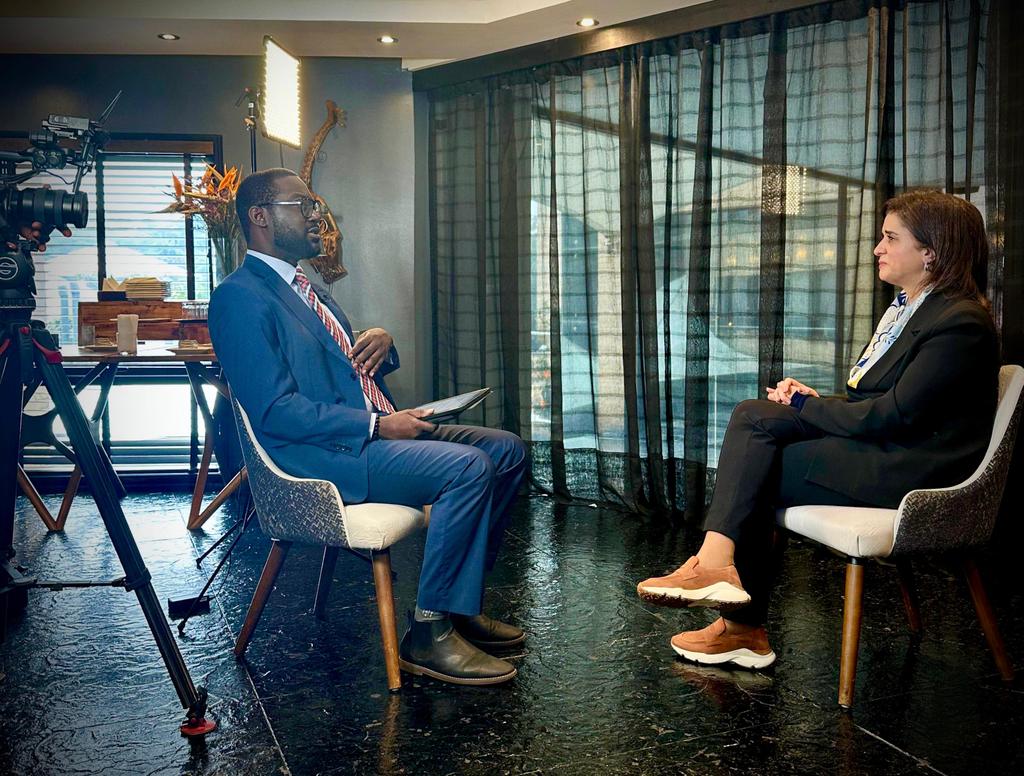
At the #WHSNairobi2026, I joined @bbcworldservice’s Daniel Dadzie to discuss the growing health and humanitarian challenges facing the @WHOEMRO Region, home to 22 countries, nearly 750 million people and more than half of global humanitarian needs.
We spoke about health security, resilient supply chains, protecting health care in conflict settings and the remarkable dedication of @WHO teams working across the Region to save lives every day. We also discussed the importance of strengthening local regulatory systems and advancing local production to build greater independence, preparedness and resilience across the Eastern Mediterranean Region.
Thank you @BBCWorld and Daniel Dadzie for this important conversation. Listen to the podcast 👇
https://t.co/5pQJmi69Vn
Hantaviruses are zoonotic viruses that naturally infect rodents and can occasionally spread to people.
Here’s what you need to know about #hantavirus: What they are, how they spread, the symptoms, and how to prevent infection
Across #Yemen, health workers and partners continue to save lives every day.
This is a story of resilience, impact, and hope.
🔗 Watch: https://t.co/zW7onOOkGV
#HealthForAll
New from @WHOEMRO: AI for Disaster & Emergency Response Surveillance Community of Practice—now live on the WHO Collaboratory Hub.
Helping countries respond to emergencies faster, smarter, and with better information when it matters most.
Connecting experts to shape how AI is used—responsibly and at scale.
Emergencies demand speed, accuracy and trust.
AI can deliver—but only if we invest in people, data and systems.
Join: https://t.co/6aetv0EbhF