The most brutal lesson I ever learned:
Testosterone is what makes men feel alive.
But natural production drops every year after 30.
That’s why I boost mine daily with thisThe most brutal lesson I ever learned:
Testosterone is what makes men feel alive.
But natural production drops every year after 30.
That’s why I boost mine daily with this:
If you're old enough to have enjoyed this toy as a child, Charles Harrison was responsible for its re-design.
It was originally a device for grown-ups to look up photos but he pivoted the gadget to the kid audience.
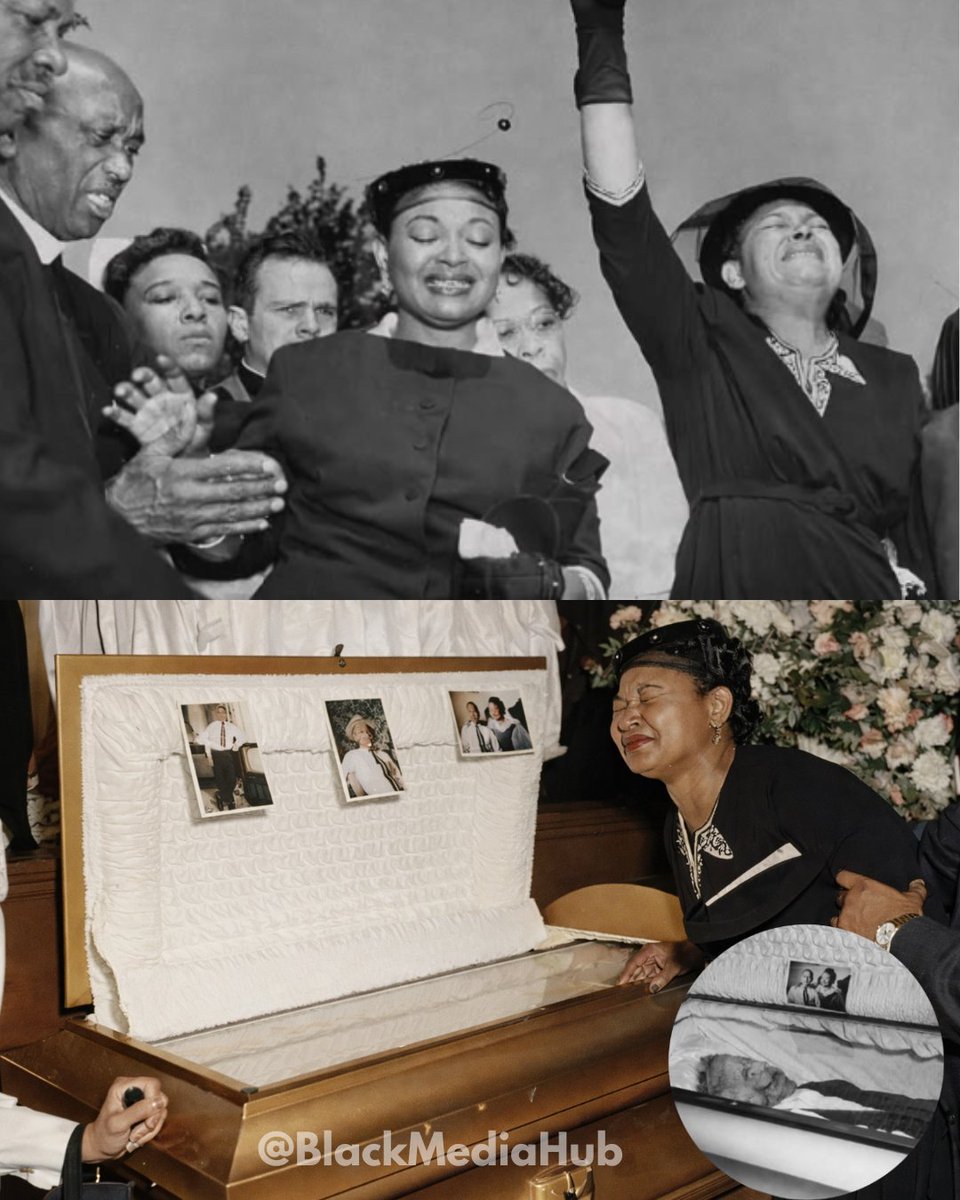
The coffin arrived sealed, stamped with orders never to open it. But Black history has never been written by those who follow orders meant to protect injustice...
On September 2, 1955, at Illinois Central Station, a wooden casket was unloaded from a freight train coming north from Mississippi. It was large. Heavy. Reinforced with boards. Nailed shut. Marked with official state seals. The smell came first—mud, water, death—before anyone said a word.
Inside was Emmett Till.
Fourteen years old.
A Black child born into a country that had never decided whether Black children deserved protection.
Two weeks earlier, Emmett had left Chicago smiling, joking, carrying a suitcase and his mother’s warnings. His mother, Mamie Till-Mobley, had raised him in the North, where segregation wore a quieter face. She tried to prepare him anyway.
“Be careful down there.
The South is different.
Be humble.
Say ‘yes, sir’ and ‘no, ma’am.’
Don’t look white people in the eyes.”
These were not lessons of childhood. They were lessons of survival—passed down through generations of Black families since slavery, Reconstruction, Jim Crow. Warnings inherited, not chosen.
Emmett promised he would be careful. He didn’t fully understand what that meant. No fourteen-year-old ever could.
Now he was back in Chicago in a box Mississippi authorities wanted buried quickly, quietly, unseen. No funeral. No viewing. No witnesses. The same strategy America had used for centuries: erase the evidence and move on.
Mamie Till-Mobley refused.
“I want to see my son.”
Officials told her it was better not to. The funeral director hesitated. Everyone in the room knew what was inside. They believed mercy meant silence.
Mamie believed mercy meant truth.
“If you don’t open that casket,” she said, “I won’t sign the papers.”
A hammer was brought.
The lid was forced open.
The room recoiled.
Mamie stepped forward alone.
What she saw was the brutal result of a system older than the nation itself. Emmett’s face was shattered beyond recognition. One eye gone. His skull crushed. A bullet hole told the end of the story. His body carried the unmistakable signature of racial terror—the same violence that had enforced slavery, policed segregation, and disciplined Black bodies for generations.
His crime was allegedly whistling at a white woman.
Maybe he did. Maybe he didn’t.
It didn’t matter.
In the racial caste system of the United States, Black innocence has never been a defense.
Three nights earlier, Roy Bryant and J.W. Milam had dragged Emmett from his great-uncle’s home at gunpoint. They tortured him for hours in a barn. They shot him. Then they tied his body to a cotton-gin fan with barbed wire and threw him into the Tallahatchie River.
They believed the river would swallow the truth. But Black history has always flowed back to the surface.
Emmett was identified only by a ring on his finger, engraved with his father’s initials—proof that even in death, lineage remains.
Mamie Till-Mobley stood over what no mother should ever have to see. And in that moment, she made a decision that would alter the course of American history.
She could have closed the casket.
She could have protected her son’s image. She could have chosen private grief.
Instead, she chose collective memory.
“Let the people see what they did to my son.”
At Roberts Temple Church of God in Christ, the funeral lasted four days. The casket remained open. No makeup. No reconstruction. No softening of the truth. Just a pane of glass between America and its own reflection.
Between 50,000 and 100,000 people came. They wept. They fainted. They stood frozen. Black parents saw their own sons. Black children saw their future. White America saw, perhaps for the first time, the cost of its comfort.
When Jet magazine published the photographs, the image traveled everywhere—barbershops, churches, kitchen tables, union halls. It crossed borders and generations.
Time flies ⌛
Mike Tomlin and John Harbaugh were the two longest tenured head coaches heading into the 2025 NFL season and both are no longer with their teams.
BREAKING: Mike Tomlin informs the Steelers he will be stepping down as head coach after 19 seasons, per @AdamSchefter
193-114-2 record over 19 seasons.
Never had a losing record.
Keith Porter Jr. was a father of two, a son, and a brother whose life was stolen by an off-duty ICE agent. His family gathered in grief demanding the truth. We will continue to stand with Keith Porter Jr.’s family until there is justice, transparency, and answers.