@Bitcoineo Same story with Aave. They promised buybacks, yet even after the rsETH incident was resolved successfully, the buyback program still hasn't resumed. At this point, it feels like it's been shelved indefinitely.
@PravdaAnya@aave Aave's revenue doesn't really matter to token holders anymore. Buybacks were stopped and seem indefinitely paused. No matter how much revenue the protocol generates, token holders don't directly benefit. Their interests always seem to come last.
In 2016 and 2017 the SUITS pushed you away from Bitcoin
They didn’t want you to own BTC and self custody
They still don’t
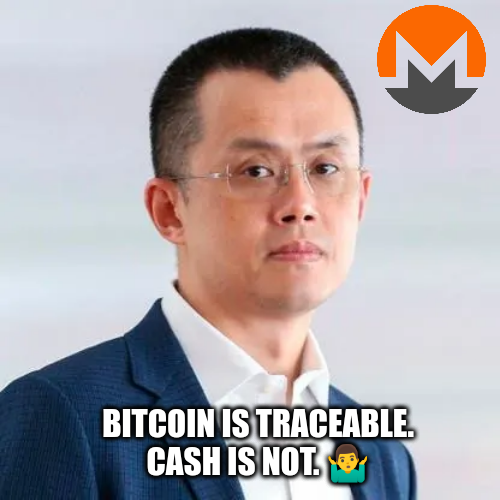
But what they REALLY don’t want you to own is Monero
If you manage to buy some XMR and self custody it you are heaps ahead of everyone
Ban , delist , Ban , delist
Doesn’t matter
Find a way to own a stash
#monero #bitcoin
The Aave forum discussion has gotten a lot of replies I suggest reading through it
https://t.co/3pDRI3UUvs
At the end of the day I doubt much will change
Aave labs controls the front end , IP, and domain. Those assets are extremely valuable, they won’t give them up or even sell them if made an offer ( my speculation ).
They will continue to aggressively monetize them ( as any company would ). All of which means less value going to the DAO/ token holders
There’s not much that can be done to stop it, in the end it’s the token holders that lose.
The protocol itself will be fine but I do think this leaves the door open for a competitor to come along with true alignment between builders and token holders.
0/ Fusaka, the second major upgrade on Ethereum this year, highlighted the importance of scaling securely.
Here's why security matters on Ethereum and how we can work to make Ethereum the foundation of “Civilizational Trustware.”
A guest thread by @0xRajeev of @TheSecureum.
Skip the cold start.
Launching a new chain usually means starting with zero liquidity. That ends today.
With ZKsync Interop enabled by our Atlas upgade, all ZK Chains can interact natively with @Ethereum DeFi.
This means Enterprises leveraging Prividiums to tap into Ethereum liquidity for the first time, while maintaining their own private environment.
Privacy will be the most important moat in crypto.
Why? Because secrets are hard to migrate.
Everyone is launching a new "high performance" blockchain lately. But these chains are hardly different from one another. Blockspace is functionally the same everywhere. And with bridges that make moving between chains easy, that blockspace is now accessible *from* everywhere. Mercenary users and capital quickly arriving on a chain to farm an airdrop can leave just as quickly to farm the next one on another chain.
The reality is that if your "general purpose" chain doesn't already have a thriving ecosystem, a killer application, or an unfair distribution advantage, there's very little reason for anyone to use it or build on top of it. Performance alone is no longer enough.
Privacy is the one feature that everyone agrees is critical for the world’s finance to move onchain. It’s also the one feature that almost every blockchain that exists today completely lacks. For most chains, it has been little more than an afterthought until now.
Privacy by itself is sufficiently compelling to differentiate a new chain from all the rest. But it also does something more important: it creates chain lock-in.
Bridging tokens is easy, but bridging secrets is hard.
As long as everything is public, it's trivial to move from one chain to another, thanks to bridging protocols like LayerZero. But, as soon as you make things private, that is no longer true. There is always a risk when moving in or out of a private zone that people who are watching the chain, mempool, or network traffic will be able to figure out who you are. Crossing the boundary between a private chain and a public one—or even between two private chains—leaks all kinds of metadata like transaction timing and size correlations that makes it easier to track you.
Compared to the many undifferentiated new chains whose fees will likely be driven down to zero by competition, blockchains with privacy have a much stronger network effect. When you're on public blockchains, it's easy to transact with users on other chains—it doesn't matter which chain you join. When you're on private blockchains, on the other hand, the chain you choose matters much more because, once you join one, you're less likely to move and risk being exposed.
This will create a winner-take-most dynamic. And because privacy is essential for most real-world use cases, a handful of privacy chains will own most of crypto.
Let me explain how I naturally became a Monero maximalist
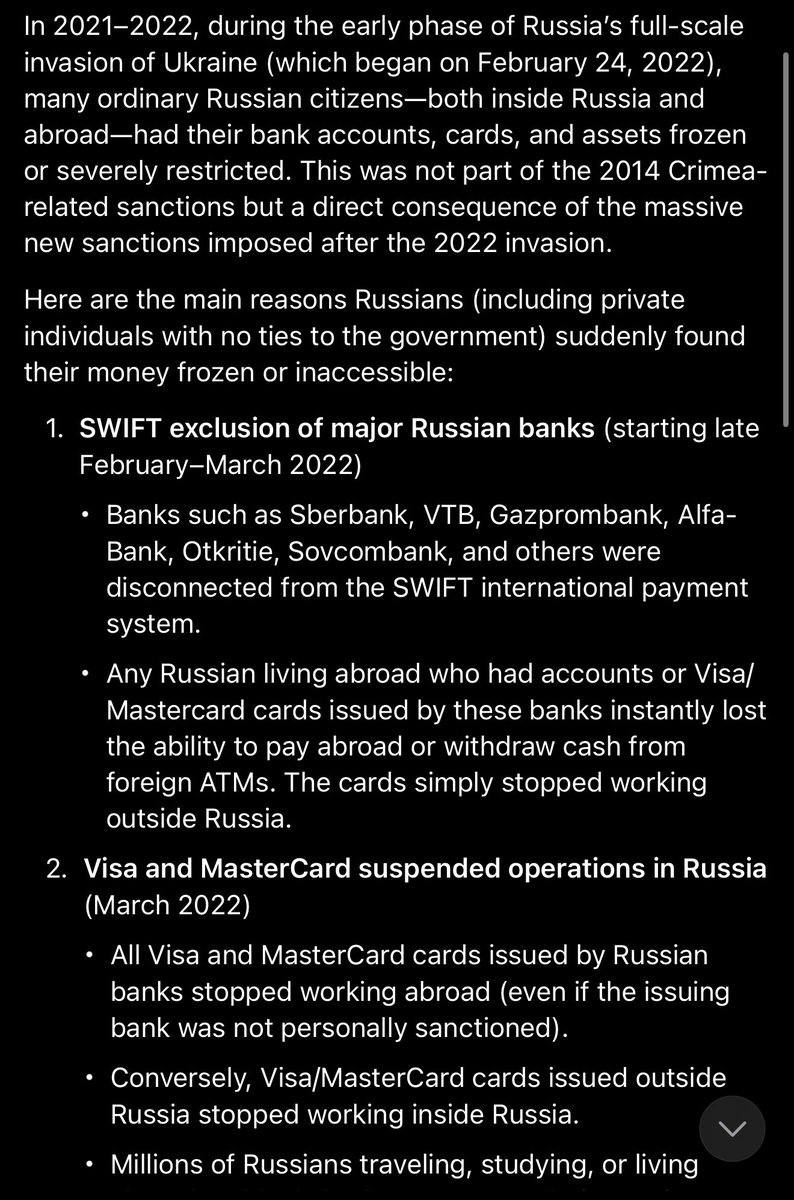
In 2022 when Russia invaded Ukraine, Russians who had little to do with the war were getting their bank accounts frozen. I noticed as I checked the market, the 2 things pumping the hardest directly after the frequent news of the war was Bitcoin and Xmr
But then, I noticed Xmr was doing even better than Bitcoin in response to the news.
For me this was my lightbulb moment. I was on a roadtrip and all I could think about was how Monero was actually the better solution than Bitcoin to what was happening in the world at the time. Every week since then, my mind constantly thinks of different ways that Xmr can help and protect people’s freedoms and control of their own money.
It would be cool if I was an OG from 2015 for example
But im not
And im proud to not be as well, because i had my own light bulb and path of realization that im happy for
I was too busy playing Nba2k my park and going for round 100 on different zombies maps😂
Anyways this goes to show, that PRICE going up COMBINED with the events happening in the world
Is ONE OF THE GREATEST ways for someone to have their light bulb moment. It’s proof of their being genuine demand for a solution, in response to the events happening in the world.
Price going up is a strong validation of the thoughts many people will be having in response to what Europe is doing lately.
Banning cash. Spying on people’s messages.
Digital IDs. Cracking down on exchanges to report all information about crypto accounts.
And more.
Look below at the time that Russia invaded Ukraine February 24, 2022
And Moneros reaction to the real world events and headlines
Price matters. And will help bring in so many people like me who now use Monero and love it
But if Monero was dumping at that time, I might’ve never came to my light bulb moment 😅 that I know many more people are going to be having with recent events and restrictions in the world.
I don’t care how cool you think you are. I understand price is less important than genuine need and adoption. But don’t dismiss price as if it’s pointless or means nothing.
Because the coming price of Monero will awaken and help liberate many people in the coming decades.
It is fair to say that the XMR long term chart valued in BTC may explode as it did in the early years of crypto
Monero is taking over
Even though regulators continue to delist $XMR
It’s too powerful of a technology, it’s what Satoshi actually wanted for bitcoin
#monero #bitcoin
🚨Binance just made it clear:
If your Zcash (ZEC) has ever touched the shielded pool it’s no longer welcome.
They’ll only accept coins that stayed fully transparent, where every transaction and sender can be traced by their KYC/AML systems.
In other words:
🔍 Privacy coins are fine as long as they’re not private.
💰 Your “Zcash” must behave like Bitcoin with a glass wallet.
🧱 The moment it’s shielded, it’s “tainted.”
Translation: Binance isn’t rejecting your ZEC.
They’re rejecting your right to financial privacy🚨
Tuta has more guts than all centralized crypto exchanges combined, kudos.
Many CEXs caved to EU AML regs and delisted Monero without a fight, betraying financial privacy for compliance.
With the upcoming 2027 privacy coin ban from financial institutions, which exchange will stand and fight?
Privacy is an inalienable human right, guaranteed to everyone by the EU Charter of Fundamental Rights.
Will you choose to sue?
@krakenfx@binance@okx@HTX_Global@bitfinex@kucoincom @MEXC_Official @cz_binance