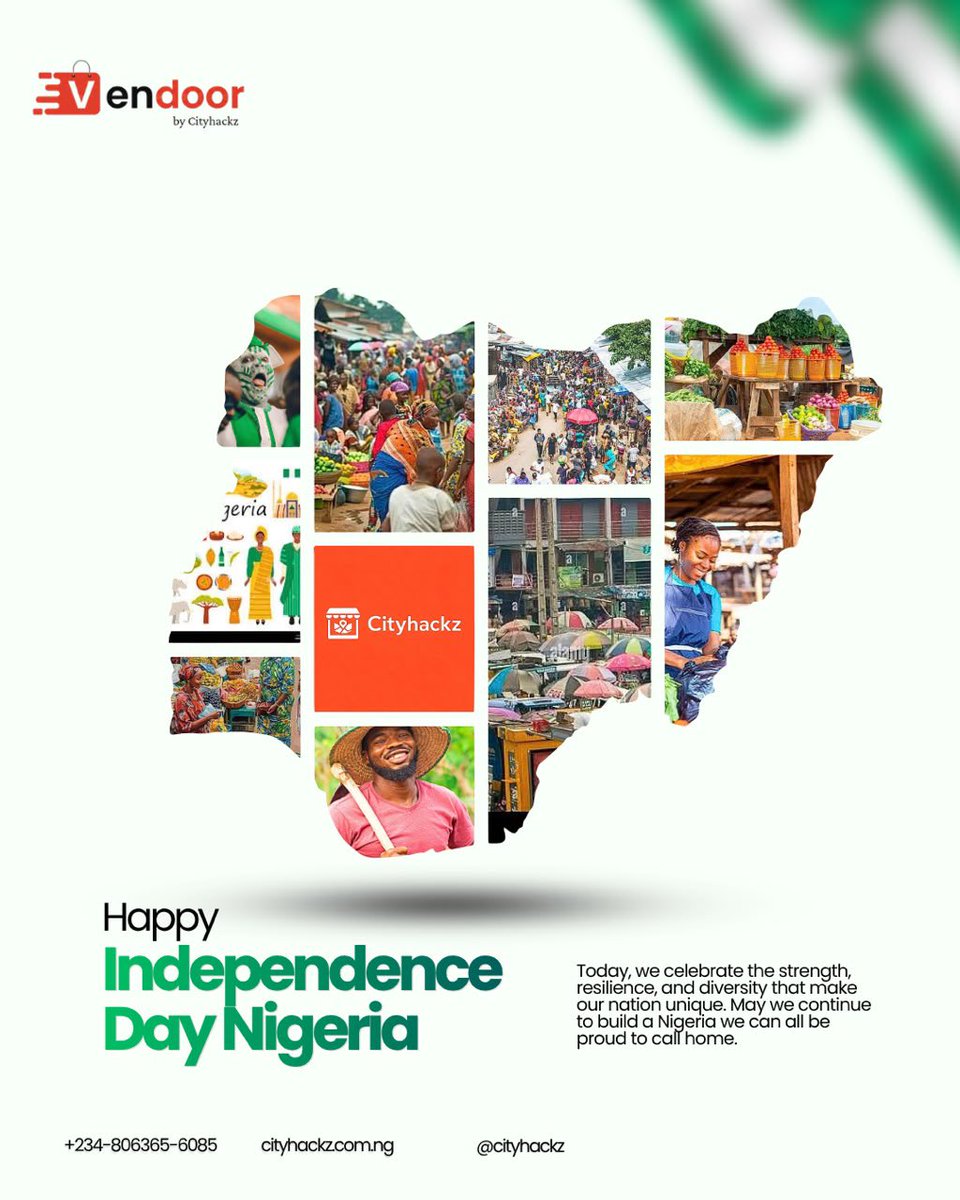
🇳🇬 Nigeria at 66.
66 years of resilience, trade, enterprise and people keeping the economy moving.
At Cityhackz, we’re building toward a future where free trade is more accessible and technology connects more Nigerians to opportunities.
Happy Independence Day, Naija🇳🇬
Research from the Int’l Growth Centre found that digital record
keeping paired with personalised support increased adoption probability by
95%
Nigerian businesses are already comfortable with mobile tools. The gap is
tech that fits how they already work, not more tech in general
“The stories of how global trade and commerce will look in the next few decades are data-oriented, data-backed, and beautifully mysterious. We don't fully know how they'll unfold but it's a future I want to be part of.
There's a clear line between businesses that speak with confidence about what's happening inside them and those that hesitate because they lack insights. That hesitation is costly.
The edge will belong to those who understand their numbers, their movement, and their direction without guessing.
That edge is Vendoor by Cityhackz.
We're building this with you.
@cityhackz ”
-@realadeke
Stay ahead of them. Be your only competitor.
Ditch the notebooks, manuals, and ledger books. Take control of your business with Vendoor built to help you manage smarter, track better, and grow faster.
Join https://t.co/JHByM85NgU today. 🚀
#Vendoor#Cityhackz#SmallBusiness
I’m continuing my journey of sharing in public, and today I’m sharing a project we’ve been working on @cityhackz that I probably should have talked about much earlier.
The Informal Market Standardization Report (IMSR).
Nigeria’s informal markets power a huge part of our economy, yet there are still major inconsistencies around pricing, units of measurement, market practices, and how information is represented across different markets.
We decided to take a closer look at that problem.
Over several months, we researched markets, studied existing practices, documented gaps, and began developing models for how standardization could work not only for physical markets, but also for digital platforms.
The bigger vision is to bring together policymakers, researchers, businesses, writers, and government to have a serious conversation about how we can create practical standards for pricing and measurement across Nigeria.
It’s a big problem, and there’s still a lot of work to do.
But someone has to start.
The full IMSR is available here
Check link on @cityhackz Bio
I’ll continue sharing more of the work we’ve done at Cityhackz the ideas, the research, the products, the failures, and everything in between.
One step at a time. 🤍
#BuildingInPublic #Cityhackz #IMSR #NigerianTech #AfricanTech #StartupJourney #Innovation #InformalEconomy #Entrepreneurship
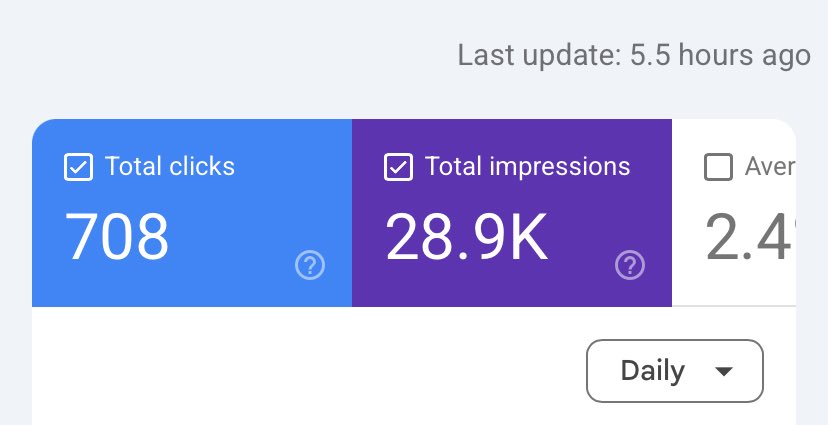
People are discovering Cityhackz, signing up, exploring the marketplace, and becoming part of what we’re building.
It’s an encouraging sign that the work is beginning to speak for itself.
To everyone who has signed up, shared, invited someone, or supported us in any way thank you
Hey Sep,
We already have Vendoor + IMSR installed for you. And honestly, this is only a fraction of what we can do for Nigeria’s informal markets.
The coming months? We’re bringing the energy, the market, the vibe and everything in between.
We can’t wait to show you what’s next
How Cost Impacts the Growth of Digital Marketplaces in Nigeria and Africa
By Adeke Msonter Samuel, Founder, @cityhackz
Last year, we had a partnership with one of the biggest supermarkets in Makurdi, New 24/7.
At the time, this partnership was part of a much bigger strategy: to establish Cityhackz across some of Nigeria’s growing cities and build a commerce platform that could connect physical markets to digital consumers.
It sounded straightforward.
Bring retailers online.
Give customers access to their products.
Create more visibility for vendors.
Make commerce easier.
But we encountered a problem that taught me something important about building digital marketplaces in Nigeria:
Price can determine whether a marketplace grows or dies.
The problem wasn’t simply getting vendors online.
The problem was getting the economics of going online to make sense.
We partnered with a top supermarket, but the prices of some products on the platform were not necessarily what our customers expected.
And this exposed a larger issue.
Many retailers see digital marketplaces as another channel that creates additional value for their business. Naturally, they want to capture some of that value through their pricing.
But there is a problem.
The customer doesn’t necessarily see the additional costs behind the marketplace.
They simply see:
“This product is cheaper in the physical store than online.”
And once that perception becomes established, it becomes difficult to convince customers that online commerce is valuable.
The hidden layers of digital commerce
A digital marketplace isn’t just a website where products are listed.
Behind every transaction are several layers:
Logistics
Payment infrastructure
Technology
Customer acquisition
Customer support
Vendor management
Inventory and data
Marketplace operations
All of these have costs.
At the same time, the marketplace is operating in an environment where customers already have access to physical markets.
And Nigeria is fundamentally a price-sensitive market.
The average consumer is constantly comparing prices.
If the same product is available at ₦X offline and ₦X + additional costs online, the customer needs a very compelling reason to buy online.
This is one of the biggest challenges facing digital commerce across Africa.
We need to change the way we think about online pricing.
One of the assumptions we need to challenge is:
“Anything bought online in Nigeria should be more expensive.”
Why?
The purpose of digital marketplaces should not be to create a second, more expensive version of the physical market.
The goal should be to digitize the existing market.
If a customer walks into a supermarket and sees a product at a particular price, the digital representation of that supermarket should, as much as possible, reflect the same market reality.
The marketplace should then build its business model around the infrastructure and services it provides rather than simply pushing additional costs onto the product.
There is an even bigger opportunity.
Africa’s markets are highly fragmented.
Millions of businesses operate without structured digital records, standardized inventory systems or reliable transaction data.
When these businesses work with digital marketplaces, something important happens:
Their physical market begins to generate digital data.
Sales become measurable.
Inventory becomes trackable.
Customer behavior becomes visible.
Business performance becomes easier to understand.
And eventually, this data can support access to financing, partnerships, logistics, insurance and other financial services.
More importantly, it creates the possibility of taking businesses beyond their immediate physical location.
A retailer in Makurdi shouldn’t have to remain limited to customers who physically walk into their store.
A properly structured digital marketplace can help connect that business to customers across cities and eventually across countries.
If you know what running a Nigerian business actually looks like, you’ll know why tools like this matter.
We’re starting with pharmacies, restaurants, and supermarkets businesses that deal with sales, stock, expenses, staff, suppliers and customers every single day.
If you know a restaurant, pharmacy, or supermarket owner, please help us out.
Connect us. Send them this.
We’re building Vendoor for the businesses that keep Nigeria moving. 🇳🇬
Who should we talk to? 👇
https://t.co/hztYlrcDII
Research from the International Growth Centre found that digital record
keeping paired with personalised support increased adoption probability by
95% versus basic information alone.
Nigerian businesses are already comfortable with mobile tools. The gap is
technology that fits.
Building a tool that gives every Nigerian business an AI operating layer turning
notebooks and WhatsApp chats into structured, actionable
business records with zero extra effort.
Works @cityhackz :
Waitlist closes any moment get in.
Beyond scaling startups like @cityhackz and @alphanstech to national prominence through Alpha Incorporation (CAC RC 8289090), I channel my passion for technology into solving real‑world problems at the crossroads of code, commerce, agriculture, health, Science and Technology. For the past five years I’ve engineered robust, scalable systems across the MERN and LAMP stacks, earned credentials as an AWS Associate Cloud Engineer, and embedded security best practices as a DevSecOps+ advocate. Today, my work dives deep into Artificial Intelligence and data‑driven insights, unlocking smarter decision‑making for businesses and communities alike. While tech is my craft, agriculture is my calling. As an Agricultural & Bio‑Systems Engineering student, I’ve contributed to Nigeria’s agri‑tech ecosystem most notably designing and prototyping a versatile oil‑extraction machine for groundnut, palm kernel, soybean, and sesame, boosting local processing capacity and farmer income. Day in, day out, I collaborate with my teams to forge partnerships, uplift the national economy, and craft innovations that resonate far beyond Nigeria’s borders. If you’re looking to turn visionary ideas into scalable, impact‑driven solutions
let’s collaborate and build something amazing together! You can reach me at
+234 8063656085 or [email protected].
Sharing on X: Last yr proj solving post-harvest losses in 🇳🇬 ag is on hold. Govt inst links fell short on agreement. Thx for support, hope to keep making y'all proud.
#buildinpublic#TechForGood
Our markets are beautiful. Every stall has a story. Every trader has a dream.
Join hundreds of Nigerians already sharing theirs and help shape the future of informal markets.
Read the IMSR 2025 report: https://t.co/kxLqwaaRwn
#IMSR2025#Cityhackz#Nigeria
@TTrimoreau Oh yeah! We're able notice alot of things and curb some odd balls before our customers (we don't want em frustrated). If it frustrates me then how much more my customers?
The Informal Market Standardization Report (IMSR) is live!
After 8 months of research, we’ve published one of Nigeria’s most comprehensive reports on informal markets exploring how standardization can improve trade and accelerate digital commerce
📖 Read: https://t.co/Lq6SMFq4FF