If you’re interested in learning a bit about Octopuses and their intelligence, check out @pgodfreysmith’s “Other Minds: The Octopus, the Sea, and the Deep Origins of Consciousness”.
I started reading it earlier this year and it is a hard book to put down!
https://t.co/CPKvDNwxwJ
This is mind blowing.
With GPT-3, I built a layout generator where you just describe any layout you want, and it generates the JSX code for you.
W H A T
I guess we now shouldn’t expect GPT-3 to be released (though few could even run it in the first place). There will be no external evaluation and scientific progress will be limited.
For students and others interested in expanding their knowledge of AI during this period, we thought it might be helpful to ask our researchers what they consider to be the most impactful and insightful resources available to use #AtHomeWithAI (1/9)
Polyscope for Python is now live 🎉 Visualize 3D data like meshes and point clouds with just a few lines of code. Now available on pip and conda. https://t.co/TvrhAcHmuJ
Air flow visualization created by @LaVisionInc to demonstrate the effectiveness of using a mask to prevent the spread of cough and sneeze particulates.
“Face masks are reducing COVID-19 infection risk”
https://t.co/EYBv1sBGkw
The Illustrated Self-Supervised Learning
Nice overview of recent examples of self-supervised learning with a focus on visual domains (colorization, superres, inpainting, video ordering).
There are endless possibilities of relying less on manual labelling https://t.co/JP3hdv9nUT
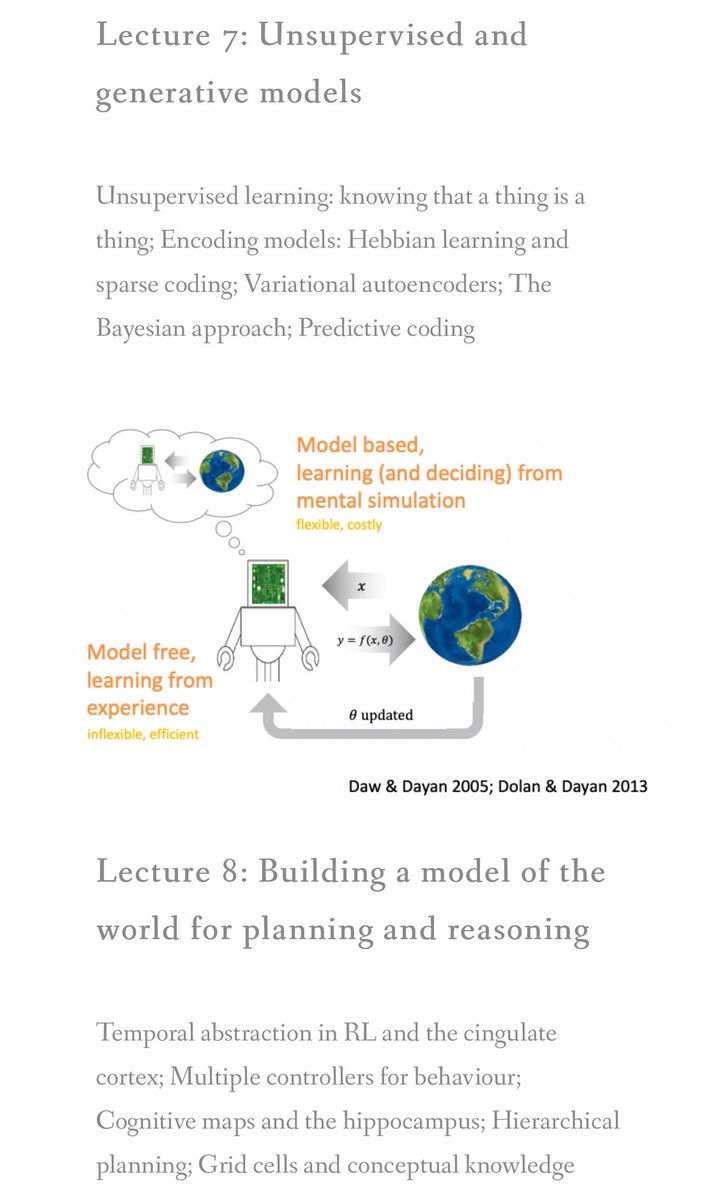
How to build a brain from scratch
Cool course taught by an experimental psychology dept. Overview of RL, deep learning, generative models, unsupervised learning and parallel topics in learning theory, neuroscience, mental simulation.
Lecture slides/notes https://t.co/tPFI7R6whg
RT to tell @SenateMajldr McConnell: bring the bipartisan Hong Kong Human Rights & Democracy Act to the Senate Floor this week! #HongKongProtests#StandWithHongKong
Machine learning portfolio tips
1. Good ideas come from ML sources that are a bit quirky.
- NeurIPS from 1987 - 1997
- Stanford’s CS224n & CS231n projects
- Twitter likes from ML outliers
- ML Reddit’s WAYR
- Kaggle Kernels
- Top 15-40% papers on Arxiv Sanity