“Without making mistakes, there won't be lessons learned. Without getting hurt, there won't be knowledge gained. The only way we grow is by learning from the past.”
"The Perishing Of Ethiopian Medical Doctors: Through The Lens Of Achille Mbembe’s Theory Of Necropolitics – OpEd" by @berhanu2006 for @EurasiaReview
https://t.co/c5gmtqoPMT
"World Council of Churches general secretary Rev. Prof. Dr Jerry Pillay strongly condemned the reported drone strike on the Abbay Giyorgis St Arsema Unity Monastery in Ethiopia’s Amhara Region on 22 July. The strike reportedly killed two civilians and injured several others, including women who had gathered to prepare food for a religious commemoration."
Ten Reasons Why Ethiopia is Still Poor and Aid Dependent – Abiy Ahmed’s gospel of prosperity is a myth.
Read more.
https://t.co/DCGKEQ10WW #Ethiopia#Poverty#Aid
Prince Asfa-Wossen Asserate: Reflections on Ethiopia’s Past, Present, and Future
Few contemporary Ethiopian public intellectuals combine historical depth, moral seriousness, and intellectual honesty as consistently as His Imperial Highness Prince Dr. Asfa-Wossen Asserate. In this remarkable interview, he reflects on Ethiopia’s past with candor and dignity while confronting the country’s present challenges with equal clarity. Speaking in the context of the immense human suffering experienced in recent years, including the documented atrocities and large-scale displacement affecting Amhara civilians reported by international and Ethiopian human rights organizations, he reminds us that Ethiopia’s crisis is not simply political, but profoundly moral and civilizational. His reflections deserve careful attention, not because one must agree with every conclusion, but because they are grounded in historical memory, personal experience, and an unwavering commitment to Ethiopia’s future.
The interview spans Ethiopia’s modern history, from the final years of Emperor Haile Selassie to the country’s current political crisis. Prince Asfa-Wossen acknowledges the Emperor’s extraordinary achievements in foreign affairs while observing that meaningful constitutional reform was neglected during the final years of the monarchy. The most moving moment comes when he recalls his father, Prince Asserate Kassa. In 1974, while representing Emperor Haile Selassie abroad, his son urgently sent him a telex advising him to remain safely in Europe because the revolution in Addis Ababa was rapidly deteriorating. His father nevertheless chose to return. When later asked why he had gone back despite the obvious danger, he replied with remarkable simplicity: “After all these years, after all what he has done for me, how can I leave the Emperor at his old age alone?” That single sentence captures a generation’s understanding of duty, loyalty, and personal honor more eloquently than any historical commentary could.
Equally compelling are the Prince’s reflections on Ethiopia’s unique civilizational heritage. He reminds us that Ethiopia has long been home to Judaism, Christianity, and Islam, whose communities coexisted for centuries and whose shared history remains one of the country’s greatest contributions to world civilization. Turning to the present, he identifies the 1995 Constitution and the institutionalization of ethnic federalism as the principal source of Ethiopia’s contemporary political fragmentation, describing it as an “apartheid constitution” that encourages ethnic identity at the expense of a common Ethiopian citizenship. Above all, he argues that the central question facing Ethiopia today is no longer monarchy versus republic, but the survival of the Ethiopian state itself. In his view, the country’s true sovereigns are the Ethiopian people, who should ultimately determine their future through a national referendum.
Selected Quotations
On Loyalty
“After all these years, after all what he has done for me, how can I leave the Emperor at his old age alone?” (13:26)
አማርኛ
“ከዚህ ሁሉ ዓመታት በኋላ፣ ላደረገልኝ ውለታ ሁሉ፣ እንዴት ንጉሠ ነገሥቱን በእርጅና ዘመናቸው ብቻቸውን እተዋቸዋለሁ?”
On Ethiopia’s Civilizational Heritage
“Ethiopia is the country of the three Abrahamic religions.” (22:13)
አማርኛ
“ኢትዮጵያ የሦስቱ አብርሃማዊ ሃይማኖቶች ሀገር ናት።”
On the Constitution
“It is this vile, evil constitution that brought the division in Ethiopia… an apartheid constitution.” (27:32)
አማርኛ
“በኢትዮጵያ ውስጥ መከፋፈልን ያመጣው ይህ አጸያፊና ክፉ ሕገ መንግሥት ነው… የአፓርታይድ ሕገ መንግሥት ነው።”
On the Sovereignty of the People
“I believe that the real sovereigns of Ethiopia are the Ethiopian people… there should be a referendum.” (31:38)
አማርኛ
“የኢትዮጵያ እውነተኛ ሉዓላዊ ባለቤቶች የኢትዮጵያ ሕዝቦች ናቸው፤ ሊጠየቁ ይገባል፤ ሕዝበ ውሳኔ ሊካሄድ ይገባል።”
On Ethiopia’s Present Crisis
“Today the question is being or not being; the question of the survival of the entire Ethiopian state.” (32:04)
አማርኛ
“ዛሬ ጥያቄው መኖር ወይም አለመኖር ነው፤ የመላው የኢትዮጵያ ሀገር የህልውና ጥያቄ ነው።”
Exclusive Interview with Asfa-Wossen Asserate https://t.co/cOg25hrxgU via @YouTube
“Calling all Canadian Amhara and Canadian Ethiopians. Sign this petition and be part of the solution.
#Ethiopia#Amhara
STOP 🛑 #AmharaGenocide
STOP 🛑 #WarOnAmhara
STOP 🛑 #War in Ethiopia”
Source: Beza
Briefing delivered by Yirga Gelaw Woldeys (PhD) (@YirgaGelaw), Director, Centre for Human Rights, Education, Curtin University, Australia on the briefing organized by the Tom Lantos Human Rights Commission of the United States Congress.
Briefing Topic: Ethiopia: The Enduring Human Rights and Humanitarian Crises
Date: July 08, 2026 | Time: 2:00 PM EST
Hosted by: James P. McGovern, Member of Congress Co-Chair, TLHRC & Chris Smith, Member of Congress Co-Chair, TLHRC
Full List of Panelists:
- Magnus Taylor, Deputy Director, Horn of Africa, International Crisis Group
- Abdullahi Hallakhe, Senior Advocate for East and Southern Africa, Refugees International
- Mahlet Gebremedhin, Co-founder and Board President, Omna Tigray
- Yirga Gelaw Woldeys, Director, Centre for Human Rights Education, Curtin University, Australia
Moderator: Lauren Ploch Blanchard, Specialist in African Affairs, Congressional Research Service
______________________
GPE Note: This is an excerpt reproduced by Genocide Prevention in Ethiopia (GPE) showing Dr. Yirga G. Woldeyes’ presentation. GPE prepared this excerpt for advocacy purposes.
We recommend viewers to watch the full Program found on the Tom Lantos Human Rights Commission YouTube channel https://t.co/OPflbBlNqa
@CurtinCHRE@TLHumanRights@RepMcGovern@AAA_Amhara
An Ethiopian @MiddleEastEye correspondent has spoken to Ethiopians currently held on death row in Saudi Arabia, as well as their families back in Tigray.
They are all set to be executed for minor drug charges, which they dispute.
An extraordinary report https://t.co/475sKJQPRs
The Diocletian of Ethiopia: The Ethno-Fascist Abiy Regime and Its Relentless Waves of State-Sponsored Anti-Christian Violence!
History repeats its most brutal chapters in Ethiopia.
Prime Minister Abiy Ahmed’s regime has assumed the role of a modern Diocletian - unleashing systematic, state-sponsored violence against Ethiopian Orthodox Christians. Wave after wave of attacks on churches, clergy, and faithful communities reveal a deliberate campaign of religious and ethnic persecution.
This is not collateral damage of conflict. It is policy.
The international community, human rights institutions, and all who value religious freedom must speak with clarity and urgency. Investigations, accountability, and concrete measures to protect Ethiopia’s ancient Christian communities are long overdue.
Silence is complicity.
#AmharaGenocide
@UNGeneva@UN_HRC@UNHumanRights@EU_Commission@EUCouncil@realDonaldTrump@StateDept@SecRubio@SenateForeign@HouseGOP@HouseForeignGOP@HouseForeign@POTUS@_AfricanUnion@Pontifex_es@JoelOsteen@EYakoby@WHLeavitt
Oromia Region security forces killed Ethiopian Orthodox parishioners police officers also beat Orthodox Christians wearing black in mourning and protest.
The U.S. Report on International Religious Freedom on Ethiopia (2023)
https://t.co/jsc0OmC9QH
This is a sweeping and indispensable study that every Amhara should read, own, and preserve, especially those seeking to understand the Amhara cause and what was unfolding in different parts of Ethiopia during the darkest years, long before social media brought these stories to wider attention.
The Amhara Genocide Ignored by the World: A Study of the Genocide and Ethnic Cleansing of the Amhara Ethnic Group from 1991–2015 is not merely a report; it is an important historical record and a document of memory.
I remain deeply grateful to Moresh Wogene and its Research and Study Department, among the pioneers who documented these issues when few others were willing to do so. Every Amhara should save a copy and keep it for future generations.
https://t.co/jqrmABPjnB
Horrifying war crime allegations in Amhara, Dega Damot:
Colonel Abera & Abiy Ahmed’s forces accused of systematically raping mothers & girls, then photographing them to blackmail & silence survivors.
Weaponized sexual terror as military strategy.
@UN_HRC@UNHumanRights@IntlCrimCourt@AfricanUnion@EU_Commission@StateDept
#WarCrimes #Amhara #Ethiopia #EndImpunity #StopRapeAsWeapon #AbiyWarCrimes
Every people deserves a historical record of its suffering, not to nurture hatred, but to preserve memory and seek justice.
This Was Once Your Home by photojournalist Jemal Countess is one such record. Through photographs and firsthand reporting, it documents the displacement, suffering, and often overlooked experiences of Amhara and Afar communities during the war in northern Ethiopia. It is a difficult book to read, precisely because it confronts the reader with stories that many would rather ignore.
At some point, there will be a fuller reckoning with this painful chapter of Ethiopian history. There will be demands for truth, accountability, and justice. Historical memory matters because transitional justice begins with documentation and testimony.
I encourage everyone interested in the Horn of Africa, human rights, and the recent history of Ethiopia to read this book. Buy a copy, share it as a gift, and preserve it for future generations.
Some books are not merely read; they become part of a people’s historical archive.
This Was Once Your Home is one of them.
@UN_HRC@CSISHumanRights
This Was Once Your Home https://t.co/LUw6mupo8a #Amazon via @Amazon
#The_European_Centre_for_Law_and_Justice
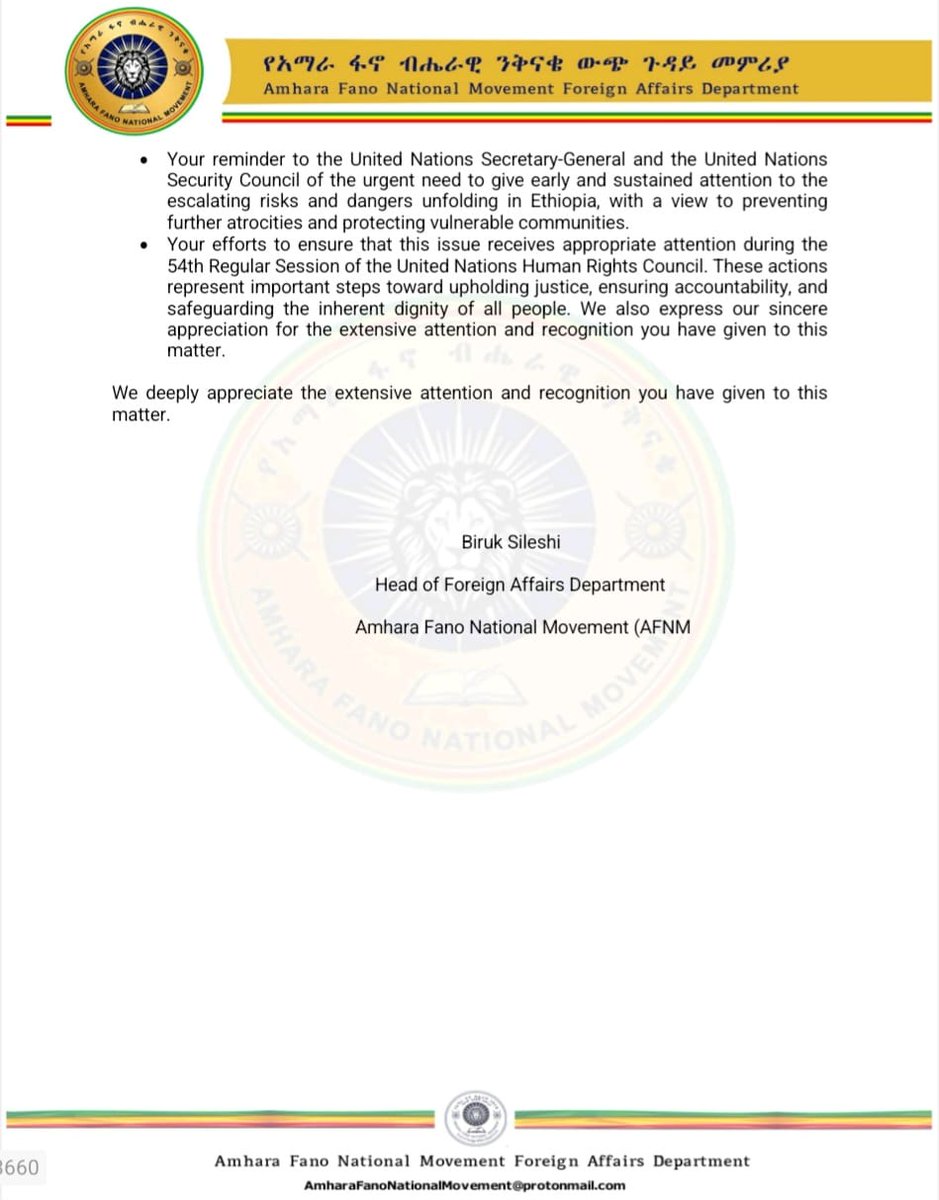
We would like to express our sincere gratitude for your attention to the ongoing massacres and grave human rights violations committed against the Amhara people and followers of the Ethiopian Orthodox Tewahedo Church.
Free satirist and comedian #MinaleYaregal.
One of Ethiopia’s most beloved comedians and social critics, Minale has long used humor and satire to give voice to ordinary people. His observations are often sharp, courageous, and deeply revealing. In one of his most memorable sketches, he joked that Ethiopian farmers had begun using drones instead of oxen to plow their fields, a biting commentary on war, displacement, and the realities facing Amhara rural communities.
Arrested last week, his whereabouts remain unknown.
His voice should not be silenced.
Of course his greatest crime is being an Amhara. #AmharaGenocide
#FreeMinaleYaregal
@pressfreedom
Free satirist and comedian #MinaleYaregal.
One of Ethiopia’s most beloved comedians and social critics, Minale has long used humor and satire to give voice to ordinary people. His observations are often sharp, courageous, and deeply revealing. In one of his most memorable sketches, he joked that Ethiopian farmers had begun using drones instead of oxen to plow their fields, a biting commentary on war, displacement, and the realities facing Amhara rural communities.
Arrested last week, his whereabouts remain unknown.
His voice should not be silenced.
Of course his greatest crime is being an Amhara. #AmharaGenocide
#FreeMinaleYaregal
@pressfreedom
Case Profile: The Price of Identity
In the Kellem Wallaga zone, a woman, anonymised to protect her from those who assaulted her, recounted the morning her life fractured. She was not a combatant; she was a mother, living a life defined by the rhythmic chores of a rural household. When the armed group arrived, they did not come for goods or land; they came to target her because of her ethnic identity.
They singled her out, making it clear through their language and actions that she was being punished not for what she had done, but for who she was. Her husband, held at gunpoint, was forced to witness the assault, turning his presence into a tool of psychological torture.
The perpetrators’ intent was transparent: to shatter the family unit by turning the sanctuary of their home into a site of profound humiliation, using her body as a proxy to dehumanize and terrorize her entire ethnic community.
For the months that followed, the survivor was held in conditions of sexual slavery, a period of systematic violation that left deep, permanent scars on her physical and reproductive health. When she was eventually able to escape, she did not return to a home, but to a life of forced exile.
Her livelihood was gone, her community was fractured by the same ethnic targeting that had destroyed her, and the medical infrastructure that might have offered her care; the "One-Stop Centers",lay in ruins.
Her testimony, one of many collected by Amnesty International, serves as a stark, human-centered indictment of a conflict that deliberately uses the bodies of women as a battlefield to purge or subjugate specific ethnic groups.
https://t.co/3reDsLpFos