@Boljmoder1@IvanSimic59@ForbiciGoran Torej ste mnenja, da bi vsaka oseba, zaposlena v zasebnem sektorju morala plačati izobraževanje sama, delavcem v javnem sektorju pa pripada javno šolstvo?
@JMacarolV Poteze vlade zadnje mesece spominjajo na fantiča na prvem zmenku z dekletom ob dveh zjutraj, ki poskuša še zadnje trike, da bi jo spravil v posteljo.
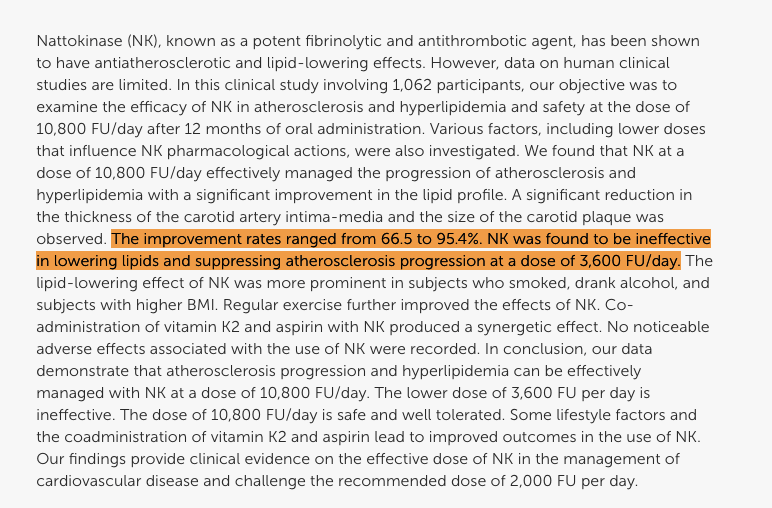
High-dose nattokinase (10,800 FU daily) reversed arterial plaque in 95% of patients over 12 months and had zero side effects.
Statins only suppress cholesterol while causing muscle pain and liver damage.
But you'll never hear about nattokinase because it can't be patented.
The Wear and Tear theory of aging is officially dead.
Aging isn't a hardware failure, it is a software corruption issue.
For years, the consensus was that we aged because of entropy, random damage accumulation, oxidation, and mutations that physically degraded the body.
The Information Theory of Aging (ITOA) argues that the cell still has the youthful code intact, but it has lost the ability to read it.
Epigenome is the regulatory software that tells a cell what it is.
A neuron and a skin cell have the exact same DNA, the difference is the epigenome turning specific genes on or off.
The study shows that Double-Strand Breaks (DSBs) act as a massive distraction event.
When DNA breaks, the cell hits the panic button.
It recruits proteins (like Sirtuins) from their normal jobs of regulating gene expression, and rush to the break site and repair the damage.
This is the Relocalization of Chromatin Modifiers (RCM) hypothesis. The repair crew fixes the break, but this is the critical failure mode, they don't all return to their original posts.
They get lost.
Over time, after billions of DNA breaks from all kinds of reasons, the epigenetic noise accumulates. The cell slowly forgets its identity. A liver cell starts expressing 5% of the genes for a kidney cell. It loses phenotypic sharpness. That loss of identity is aging.
Linoleic acid (the primary omega-6 in seed oils) is found in atherosclerotic plaques at concentrations 10x higher than in healthy tissue.
Not saturated fat. Linoleic acid.
When researchers analyse what's actually in the plaque buildup, it's seed oil metabolites.
This is direct physical evidence.
But we're still pretending dietary cholesterol is depositing in arteries like grease in a pipe.
That's not how biochemistry works.
Cholesterol doesn't just "stick" to arterial walls.
What happens: Seed oils oxidise, create inflammation, damage the arterial lining, and then LDL (carrying oxidised seed oils) gets trapped in the repair process.
The seed oils are the cause. LDL is just the cleanup crew.
But we arrest the cleanup crew and let the criminals walk free.
butyrate DESTROYS insulin resistance
can't lose weight? constantly tired? brain fog?
that's insulin resistance - and it's:
- making you store fat
- blocking your cells energy use
- driving you to diabetes
the fix? butyrate.
in a 2022 JAMA study, butyrate for 6 months improved insulin sensitivity by 25-35% and reduced waist circumference by 5cm
that's INSANE
your metabolism speeds up, energy returns, and fat starts burning.
🧵 here's exactly how to use it (and what else it does)
Nattokinase therapy can result in both increased D-dimer levels (due to release from increased clot breakdown), and reduced fibronogen levels (secondary to direct degradation). These markers may be used to assess nattokinase activity.
Nattokinase shrinks plaques in nearly 80% of people.
10,800 FU per day for 1 year:
➠ >95% of people improved total cholesterol
➠ >85% LDL
➠ >84% triglycerides
➠ >89% HDL
➠ >77% CIMT (plaque thickness)
➠ >66^ CPS (plaque size)
Most importantly of all, arterial thickness and plaque sizes substantially reduced.
Plaque area was reduced by nearly 40% in people taking aspirin or K2.
Thickness down >25%.
All due to nattokinase's:
➠ Anti-inflammatory
➠ Anti-clotting
➠ Antioxidant
➠ Hypolipidemic
properties.
Like an oil change for your blood: therapeutic plasma exchange (TPE) replaces old plasma with healthy fluid. Epigenetic clock analysis of a randomized controlled trial (N=42, adults 50+) found biweekly TPE with intravenous immunoglobulin (IVIG) most effective. Surprisingly, by the third blood draw epigenetic rejuvenation effects vanished suggesting compensatory mechanisms may counteract benefits after repeated sessions. Monthly TPE (alone) outperformed biweekly TPE in reducing epigenetic age. Overall, TPE was safe, though two adverse events occurred. Matias Fuentealba, Dobri Kiprov, David Furman (2025) Multi- Omics Analysis Reveals Biomarkers That Contribute to Biological Age Rejuvenation in Response to Single- Blinded Randomized Placebo- Controlled Therapeutic Plasma Exchange.
https://t.co/5m3yFvIac5





![Outdoctrination's tweet photo. Glycine + NAC reverse nearly all signs of aging + metabolic disease in 2 weeks. [study]
The two synergize to improve glutathione production, for some incredible results:
��� Glutathione synthesis rate ↑ ~120%
◈ Total glutathione ↑ ~55%
◈ GSH/GSSG ratio ↑ ~125%
◈ Plasma reactive oxygen metabolites ↓ ~50%
◈ Plasma F2-isoprostanes (oxidative stress) ↓ ~35%
It also improved metabolism:
◈ Fasted NEFA oxidation ↑ ~50%
◈ Fed NEFA oxidation ↑ ~70%
◈ Fed carbohydrate oxidation ↑ ~20%
◈ Suppression of NEFA oxidation (fed vs fasted) ↑ ~135%
◈ Stimulation of carbohydrate oxidation (fed vs fasted) ↑ ~690%
◈ Insulin sensitivity index ↑ ~35%
AND body composition:
◈ Fat mass: 21.6 → 20.0 kg
◈ Fat-free mass: 60.1 → 61.0 kg
◈ Muscle strength (dominant arm): 35 → 37
◈ Muscle strength (nondominant arm): 31 → 34
They did do megadoses - 9g NAC + 7g glycine, but a lower daily maintenance would work as well.](https://pbs.twimg.com/media/G5ajL7nWQAAlBb9.jpg)





